

Your architect just mentioned “integrated design” and you nodded like you understood. Meanwhile, you’re wondering if this is another $200,000 line item or something that actually matters. Here’s the truth: understanding the integrated design project approach could save you seven figures on your next build. More importantly, it separates the estates that appreciate from the ones that become cautionary tales at cocktail parties.
What Is an Integrated Design Project?

An integrated design project (IDP) brings architects, engineers, contractors, and interior designers together from day one. Traditional building processes work sequentially. The architect draws, then hands off to engineers, who hand off to contractors. Each handoff introduces delays, miscommunications, and budget overruns.
The integrated approach eliminates these handoffs entirely. Everyone sits at the same table from concept through completion. Decisions happen in real-time. Problems get solved before they become expensive change orders.
For luxury estate development, this distinction matters enormously. A McKinsey study on construction productivity found that large projects typically take 20% longer than scheduled and run 80% over budget. Integrated design projects consistently outperform these benchmarks.
Why Elite Developers Demand This Approach
Sophisticated buyers recognize that construction cost overruns stem from coordination failures. When your structural engineer doesn’t talk to your interior designer until month eight, you discover that the wine cellar can’t fit where you planned it. By then, the foundation is poured.
Integrated project delivery prevents these disasters through early collaboration. Your landscape architect knows about the underground utilities before designing the motor court. Your lighting designer coordinates with the architect on ceiling heights before framing begins.
The financial impact is substantial. According to research from the American Institute of Architects, integrated design projects achieve cost savings between 2% and 10% compared to traditional delivery methods. On a $15 million Hamptons estate, that translates to $300,000 to $1.5 million in savings.
The Hamptons Context: Why Location Amplifies These Benefits
Building in the Hamptons presents unique challenges that make integrated design even more valuable. Zoning restrictions vary dramatically between villages. Wetland setbacks can eliminate buildable area overnight. Historic preservation requirements in certain areas add another layer of complexity. [Related: Hamptons Building Permits Timeline Guide]
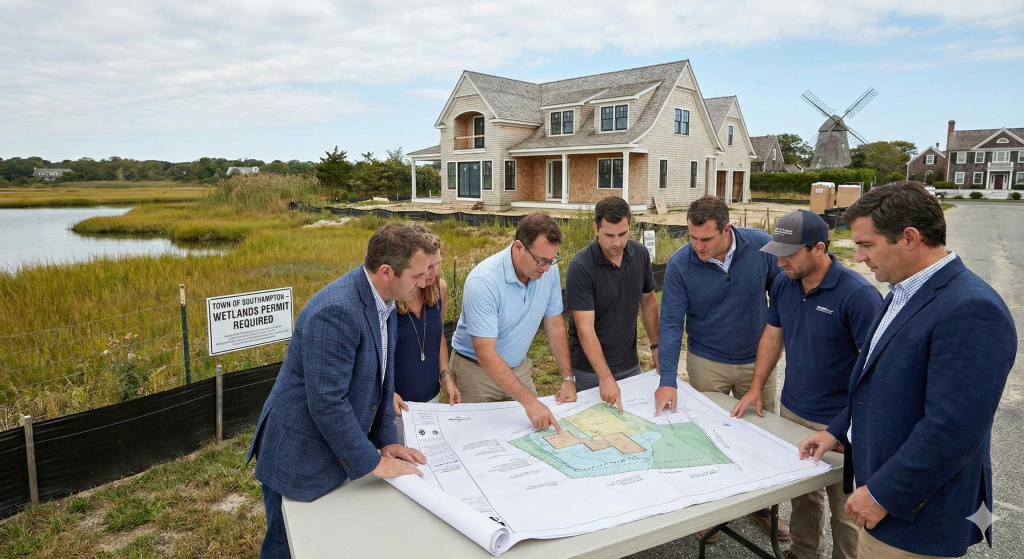
Local contractors understand these nuances. They know which building inspectors flag certain details and which materials perform best against salt air corrosion. Integrating their knowledge early prevents costly redesigns after permit rejection.
The construction season also matters. Hamptons summers bring traffic that doubles material delivery times. Smart integrated teams schedule heavy deliveries for shoulder seasons and coordinate with multiple trades to maximize productive summer months.
How the Integrated Design Process Actually Works
The process begins with a charrette, an intensive collaborative session where all stakeholders explore possibilities together. Unlike traditional kickoff meetings, charrettes produce actionable design directions in days rather than months.
Phase 1: Conceptualization (Weeks 1-4)
The full team evaluates site conditions, budget parameters, and lifestyle requirements simultaneously. Engineers assess soil conditions while architects sketch initial massing studies. Interior designers establish spatial relationships that will guide the entire project.
Phase 2: Schematic Design (Weeks 5-12)
Design development happens collaboratively. Weekly coordination meetings ensure that structural systems support architectural ambitions. MEP engineers design mechanical systems that complement, rather than compromise, interior layouts.
Phase 3: Design Development (Weeks 13-24)
Details get refined with full team input. The contractor provides real-time cost feedback on material selections. Value engineering happens proactively, before documents go out for final pricing.
Phase 4: Construction (Months 7-24+)
Execution benefits from months of coordinated planning. Trade contractors work from documents that anticipated their needs. Change orders drop dramatically because the team solved problems on paper rather than in the field.
What to Ask Your Team About Integrated Design
Not every firm claiming “integrated” capability delivers the real thing. These questions separate genuine practitioners from marketing claims. [Related: How to Choose Hamptons Estate Architects]
“How early do you bring in the general contractor?” The answer should be schematic design or earlier. If they say “after construction documents,” they’re running a traditional process with integrated branding.
“What’s your change order rate on integrated projects?” Top performers achieve less than 3% of contract value in changes. Anything above 7% suggests coordination problems.
“Can you share references from clients on similar-scale projects?” Integrated design requires specific experience. A firm excellent at $3 million renovations may struggle with $20 million new construction.
“How do you handle design disagreements between disciplines?” Listen for structured conflict resolution processes. “We figure it out” suggests ad hoc management that breaks down under pressure.
Red Flags: When Integrated Design Isn’t Being Followed
Even projects that start with integrated intentions can drift toward traditional dysfunction. Watch for these warning signs during your build.
Surprise discoveries during construction. If your contractor “just found out” about something the architect knew for months, communication has broken down. True integration prevents these information gaps.
Finger-pointing between consultants. Integrated teams share accountability. When your architect blames the engineer, and the engineer blames the contractor, the collaborative structure has failed.
Separate billing without coordination tracking. Professional integrated teams use shared project management platforms. If your consultants can’t show you a unified project timeline, they aren’t truly coordinating.
Resistance to owner participation. You belong in coordination meetings. Teams that exclude owners often hide problems until they become unavoidable. Harvard Business Review research on project transparency confirms that owner involvement correlates with better outcomes.
The Investment Case for Integrated Design
Integrated design typically adds 1% to 2% to upfront professional fees. This investment consistently returns multiples in construction savings. Bain & Company analysis of construction economics supports this value proposition across project types.

Beyond direct cost savings, integrated projects finish faster. Time savings compound for Hamptons buyers who may be renting during construction or missing seasons in their new home. Accelerating completion by even three months often saves more than the entire additional fee investment.
Quality outcomes also improve measurably. Integrated teams catch conflicts in modeling software before materials get ordered. The result is cleaner execution, fewer compromises, and estates that match their design intent. [Related: Luxury Home Builders East End Guide]
Frequently Asked Questions About Integrated Design Projects
What is the meaning of integrated design project?
An integrated design project is a collaborative approach that brings architects, engineers, contractors, and specialists together from the earliest planning stages. Rather than working sequentially, all disciplines contribute simultaneously to optimize outcomes for cost, schedule, quality, and sustainability.
What is integrated project design?
Integrated project design describes the methodology of coordinating all design disciplines under a unified process. This contrasts with traditional design-bid-build approaches where each professional works independently before handing off to the next team.
What does an integrated project mean?
An integrated project means that construction professionals share responsibility, information, and sometimes risk from project inception through completion. Contracts often align incentives so that all parties benefit when the project succeeds and share consequences when problems arise.
What does an integrated designer do?
An integrated designer coordinates across multiple disciplines to ensure design decisions account for structural, mechanical, aesthetic, and constructability factors simultaneously. They facilitate collaboration between specialists rather than working in isolation on a single aspect of the project.
Making Integrated Design Work for Your Hamptons Project
The integrated design project approach transforms estate development from a series of handoffs into a unified endeavor. For Hamptons buyers investing eight figures in their properties, this methodology reduces risk, accelerates timelines, and produces superior results. [Related: Southampton vs East Hampton Building Comparison]
Finding the right team matters more than understanding every technical detail. Look for firms with genuine integrated experience, ask the hard questions about their process, and insist on participating in coordination meetings. Your involvement signals that you value collaboration, which attracts the best professionals.
The estates that appreciate, the ones that become legacy assets rather than maintenance burdens, almost always benefit from integrated design thinking. Now you understand what your architect means. More importantly, you know the right questions to ask.
For inquiries regarding RE Development, Funding, Design, contact: Jon Cruz, [email protected]
Continue Your Research
• What High End Buyers Look for in Hamptons Real Estate
• Billionaire Lane in Southampton
Connect with Hamptons’ leading architects and developers at Polo Hamptons, where industry relationships are built over world-class sport.
For features, partnerships, and advertising inquiries, contact our team.
—
Subscribe to Social Life print edition | Join our newsletter | Support our journalism ($5)
Author

Written by
Recent Posts
Sectional Sofa vs. Regular Sofa: Which One is Best for You?

Sober and Injured: How to Manage Pain Treatment After a Massachusetts Slip and Fall
Flexible Liquidity Options Are Reshaping How Modern Professionals Handle Unexpected Expenses
5 Best At-Home Teeth Whitening Kits for a Brighter Smile in 2026

From Spa Retreats to Aesthetic Care, the Luxury Travel Itinerary Is Changing
Categories
- Art
- Articles
- Business of Luxury
- Celebrities
- Culture
- Entertainment
- Events
- Faces of Summer 2026
- Fashion
- Fashion & Style
- Featured
- Finance
- Food, Spirits, Wine
- Hamptons
- Hamptons Celebrities
- Health
- Health & Beauty
- Lifestyle
- Luxury Lifestyle
- Press
- Profiles
- Real Estate
- Technology
- The Chronicles
- Travel
- Uncategorized
- Weddings