
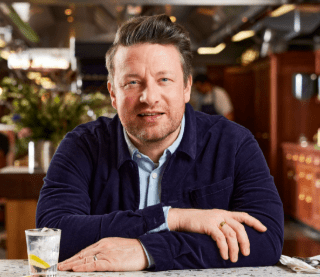
Jamie Oliver Net Worth 2025: Complete Financial Analysis
Jamie Oliver’s net worth in 2025 reaches approximately $200 million according to industry estimates and financial reporting. This figure reflects recovery from the 2019 restaurant collapse through continued television contracts, extraordinary cookbook sales, and restructured licensing arrangements that now emphasize capital-light revenue streams.
The composition of Oliver’s current wealth looks dramatically different from his pre-bankruptcy portfolio. Restaurant operations, once a significant focus, now represent minimal exposure. Media and licensing dominate completely.
| Revenue Stream | Estimated Annual Value | Cumulative Lifetime Value |
|---|---|---|
| TV Contracts (Channel 4, global syndication) | $15 million/year | $150+ million lifetime |
| Cookbook Royalties (26+ books) | $10 million/year | $100+ million lifetime |
| Product Licensing (cookware, food products) | $8 million/year | $60+ million lifetime |
| Digital Content and Apps | $5 million/year | $30+ million |
| Restaurant Operations (restructured) | Variable | Significantly reduced |
The restaurant line deserves particular attention. Oliver’s current restaurant involvement operates through licensing and consulting arrangements rather than equity ownership. The lesson of 2019 fundamentally changed his approach to hospitality investment.
The Origin Story: Dyslexic Outsider to National Treasure
Jamie Oliver grew up in Clavering, Essex, in a family that ran a pub. Working-class roots, no culinary dynasty connections, no inherited advantages. He struggled with dyslexia throughout school, enduring bullying and academic difficulty that might have derailed less determined students.
The learning disability that made reading difficult never prevented Oliver from cooking. He began working in his parents’ kitchen as a child and discovered that the tactile, sensory nature of cooking bypassed the challenges that plagued his academic performance. The kitchen became refuge.
After training at Westminster Catering College, Oliver worked at Neal Street Restaurant and the River Café, where a BBC documentary crew filming the restaurant captured footage of the young chef’s energetic personality. That footage led to everything that followed.
The Naked Chef: Television Star at Twenty-Three
In 1999, BBC launched The Naked Chef featuring twenty-three-year-old Jamie Oliver. The title referred to stripped-down, uncomplicated cooking rather than any state of undress, though the ambiguity certainly helped with publicity. The show made Oliver an immediate national celebrity in the UK.
The timing proved ideal. British food culture was transforming, moving away from formal dining toward casual, ingredient-focused cooking. Oliver’s enthusiasm and accessibility captured a generation tired of intimidating culinary television. He made cooking look fun rather than frightening.
American audiences discovered Oliver through subsequent Food Network distribution, though his following in the UK always exceeded his American visibility. The British market provided his financial foundation while international syndication added incremental revenue.
Jamie’s School Dinners: Food as Social Mission
In 2005, Jamie Oliver launched “Jamie’s School Dinners,” a campaign to improve nutritional standards in British school meals. The initiative went far beyond typical celebrity activism, involving direct engagement with schools, public advocacy, and ultimately influencing government policy.
The campaign generated massive media coverage and positioned Oliver as something more than entertainment figure. He became advocate, reformer, crusader against processed food in children’s diets. The British government eventually committed £280 million to school meal improvements partially in response to his campaign.
This mission orientation proved strategically valuable beyond its humanitarian purpose. It differentiated Oliver from celebrity chefs focused purely on entertainment. It created goodwill that survived subsequent business setbacks. It established authenticity that commercial activities alone could never generate.
The Food Revolution: Exporting the Mission
Oliver attempted to replicate the school dinner success in America through Jamie Oliver’s Food Revolution, which aired on ABC in 2010. The show documented his efforts to improve food culture in Huntington, West Virginia, one of America’s unhealthiest cities.
The American campaign faced greater resistance than the British original. Cultural differences, political opposition, and industry pushback limited Oliver’s impact. The show ran for two seasons before cancellation.
Despite limited American traction, the Food Revolution reinforced Oliver’s brand positioning as health advocate rather than mere entertainer. The mission mattered regardless of immediate results.
The Restaurant Empire: 60 Locations Before the Fall
At its peak, Jamie Oliver Restaurant Group operated approximately 60 locations worldwide under various brand names: Jamie’s Italian, Fifteen, Barbecoa, and others. The expansion seemed to validate the celebrity-chef-as-restaurateur model that competitors pursued aggressively.
The Jamie’s Italian chain represented the largest portion of the portfolio, offering casual Italian dining at accessible price points. Locations spread across the UK, Australia, and other international markets. Growth proceeded rapidly during the early 2010s.
Warning signs accumulated before the collapse. Comparable sales declined as competition intensified. Labor costs rose. Brexit uncertainty dampened consumer spending. The casual dining sector faced structural challenges that affected all operators, not just Oliver’s group.
May 2019: The Collapse
In May 2019, Jamie Oliver Restaurant Group entered administration, the UK equivalent of bankruptcy protection. The collapse eliminated approximately 1,300 jobs and destroyed an estimated £83 million in value. Only three restaurants survived the restructuring.
The public nature of the failure generated extensive media coverage. Oliver’s reputation suffered damage that less visible business failures might have avoided. The celebrity brand that made expansion possible also amplified the consequences of failure.
Oliver himself lost significant personal investment in the restaurant group. Unlike operations structured purely through licensing, he had substantial equity exposure to the businesses that failed. The loss was real, not merely reputational.
Why Media Income Survived Restaurant Collapse
While Oliver’s restaurants burned through capital and collapsed into administration, his television and publishing businesses continued operating normally. Understanding why requires examining how these different revenue streams actually work.
Television contracts pay Oliver directly for his personal services: appearing on camera, developing content, promoting programming. These payments have no relationship to whether separate restaurant businesses succeed or fail. The contracts represent separate legal arrangements with separate counterparties.
Cookbook royalties similarly flow to Oliver personally based on book sales. Publishers don’t reduce royalty payments because an author’s unrelated businesses struggle. The books continued selling throughout the restaurant crisis and afterward.
This structural separation protected the majority of Oliver’s net worth from the restaurant collapse. Had his entire fortune depended on restaurant equity, the bankruptcy would have been personally devastating. Instead, it destroyed a significant but not predominant portion of his wealth.
Lessons from the Collapse
The Jamie Oliver restaurant collapse offers several lessons for anyone building wealth through celebrity platforms.
Restaurants are capital-intensive and margin-thin. Even successful celebrity attachment cannot overcome fundamental hospitality economics. Labor, rent, food costs, and competition squeeze margins regardless of brand strength.
Media income and equity ownership carry different risks. Television contracts guarantee payment for services. Restaurant ownership only pays if operations generate profit. The risk profiles differ fundamentally.
Rapid expansion amplifies both success and failure. The same leverage that created 60 locations destroyed 60 locations. Slower growth might have revealed problems before they became catastrophic.
Celebrity brands face public accountability. Oliver’s restaurants would have attracted less attention failing quietly as investment vehicles. The celebrity association guaranteed coverage that magnified reputational damage.
Post-Bankruptcy Strategy: Licensing Over Ownership
Since 2019, Jamie Oliver has restructured his business approach to emphasize licensing arrangements over equity ownership. New ventures typically involve Oliver providing brand value, recipe development, and promotional support while partners provide capital and operational management.
This model mirrors the approach that Gordon Ramsay adopted after his own near-bankruptcy in 2010. The common lesson: celebrity chefs generate more sustainable wealth by licensing their brands than by operating restaurants directly.
Oliver’s current restaurant involvement occurs through selective partnerships where he maintains creative input without capital exposure. The asymmetric structure captures upside through fees while limiting downside to reputational association.
Cookbook Empire: 50 Million Books and Counting
Jamie Oliver has authored more than 26 cookbooks, selling over 50 million copies worldwide. This publishing success ranks him among the bestselling nonfiction authors in British history, a remarkable achievement for someone who struggled with dyslexia throughout childhood.
The cookbook sales continued through the restaurant collapse and recovered fully afterward. Book buyers apparently didn’t associate cooking instruction with business management capability. The products remained compelling regardless of corporate news.
Oliver’s publishing success demonstrates that cookbook appeal depends on recipe quality and personality connection, not business acumen. Readers want guidance on making pasta, not reassurance about the author’s balance sheet.
Jamie Oliver and the Hamptons: Farm-to-Table Philosophy
Jamie Oliver’s influence on Hamptons food culture operates through the farm-to-table philosophy he helped popularize. His emphasis on seasonal ingredients, simple preparation, and quality sourcing resonates with the values that define East End entertaining.
The health-conscious, ingredient-focused cooking style that Oliver champions aligns with wellness trends prevalent among affluent Hamptons summer residents. His advocacy for better food systems appeals to audiences increasingly concerned about what they eat and where it comes from.
For Social Life Magazine readers planning menus for summer entertaining, Oliver’s approach offers relevant inspiration: let quality ingredients speak for themselves, avoid over-complication, prioritize gathering over performance.
Experience culinary excellence at Hamptons events that embody these principles: Polo Hamptons brings together food, sport, and social connection in East End tradition.
Jamie Oliver Net Worth 2025: Final Assessment
Jamie Oliver’s $200 million net worth in 2025 represents remarkable resilience following public business failure. The 2019 restaurant collapse destroyed significant value and eliminated thousands of jobs. His media and publishing businesses survived untouched, demonstrating the structural advantages of personal service income over equity ownership.
His career arc offers both cautionary tale and success story depending on which aspect receives attention. The restaurants failed spectacularly. The television and cookbook businesses succeeded extraordinarily. Both things happened to the same person pursuing the same celebrity chef model.
For those studying celebrity wealth architecture, Oliver demonstrates why diversification across revenue streams with different risk profiles matters more than total expansion. His media income protected him when restaurant equity evaporated. Had he concentrated entirely in hospitality, the outcome would have been catastrophic.
The dyslexic kid who couldn’t read well sold 50 million books. The celebrity chef who built 60 restaurants watched them all close. Both facts are true. Together they reveal that celebrity wealth building requires understanding not just how to generate income, but how to structure exposure to the inevitable failures that accompany ambitious ventures.
Related Articles
- Gordon Ramsay Net Worth 2025: How He Built $220 Million
- Wolfgang Puck Net Worth 2025: Oscars, Vegas, and Licensing Empire
- Celebrity Chef Net Worth Rankings 2025: Who’s Really Making Money
- Net Worth vs. Liquidity: Why Cash Matters More Than Fame
For coverage inquiries, brand partnerships, and advertising opportunities, contact Social Life Magazine. Experience the Hamptons’ premier lifestyle events at Polo Hamptons.
Author

Written by
Recent Posts

Sofia Vergara Net Worth: The $180M Parallel Construction

Mel Gibson Net Worth: The $425M Architecture Lesson

Mariah Carey Net Worth: The $350M Renegotiation

Kevin Federline Net Worth: The $1M Cautionary Tale

Jennifer Aniston Net Worth: The $300M Post-Divorce Blueprint
Categories
- Art
- Articles
- Beauty & Skincare
- Celebrities
- Celebrities|The Chronicles
- Chronicles
- Event Photos
- Events
- Fashion
- Fashion & Style
- Featured
- Food & Beverage
- Food, Spirits, Wine
- Hamptons
- Hamptons Celebrities
- Hamptons Celebrities|Celebrities|The Chronicles
- Health
- Health & Beauty
- Lifestyle
- Luxury Lifestyle
- Press
- Profiles
- Real Estate
- Technology
- The Chronicles
- Travel
- Uncategorized
- Weddings