
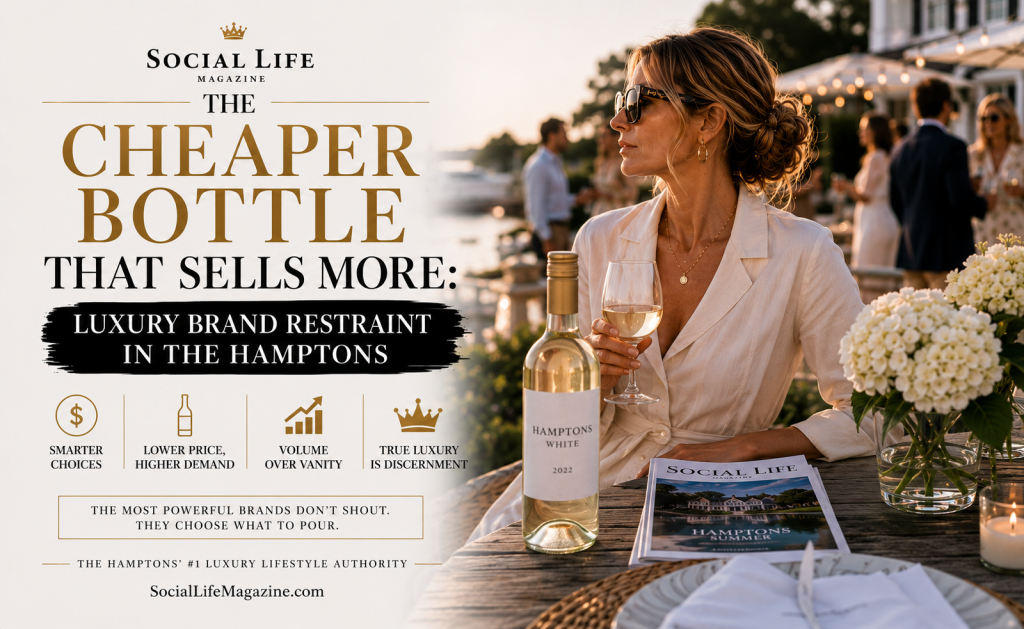
Back in the 1980s, a spirits brand tried something its marketing team considered professionally reckless. It was, specifically, facing a sales decline in a competitive market. Rather than investing in advertising or cutting price, it raised its price by 20 percent and stopped running ads. Entirely.
Sales increased, in fact.
Yet this outcome is not explainable by conventional marketing logic. In that model, price is a barrier and advertising generates awareness which generates trial. Instead, it is explainable only through the psycho-logic of expensive goods. In categories where the product cannot be evaluated independently of its perceived quality, price is not a cost to the buyer. It is information about the product’s position in the quality hierarchy.
The buyer choosing a $45 bottle over a $35 one, in a category where she cannot taste the difference, is not making an irrational decision. She is making a rational use of price as a quality signal. The $45 bottle is, in the absence of other information, more likely to be the better product. The premium is not a cost she is paying for quality. It is information she is buying about quality.
In the Hamptons luxury market, luxury brand restraint produces the same effect across multiple categories and marketing contexts. The brand that does less and charges more communicates, through its restraint, that it can afford it. That communication is the signal. In this market, the most valuable consumers read restraint as a quality signal. The brand that embraces it outperforms the brand spending its way to visibility.
How Restraint Works at the Event Level
At a Polo Hamptons activation, the restraint principle produces a specific design vocabulary. The brand that offers one very specific thing communicates more confidence than the brand offering six options across three categories. A pour of a single product chosen for this setting is the whole statement. The brand whose space looks like it belongs here communicates more cultural fluency than the brand importing its trade show infrastructure.
In fact, the activation that costs more but shows less of that cost registers as the most premium. Paradoxically. Because visible production cost communicates effort. And effort, in the Hamptons cultural economy, is a signal of insufficiency. The brands that belong here do not need to try this hard. The brands that are trying this hard are announcing that they do not yet belong.
This is the counterintuitive achievement: spending more to show less, and producing a higher-quality brand perception as a result. It is available to any brand willing to commit the resources and trust the psycho-logic over the spreadsheet.
For brands evaluating how to activate at Polo Hamptons 2026, the restraint principle is the most practical creative brief available. One specific product. A single service, specifically chosen. One reason for a guest to remember the encounter in September. Not six.
Where The Conversation Continues
The restraint premium is one application of the counterintuitive framework. Full hub: The Counterintuitive Hamptons.
Sibling spokes: The Un-Ad and Why the Most Exclusive Hamptons Events Don’t Advertise.
Pillar: Why Luxury Brands That Ignore Psychology Lose the Hamptons Every Summer.
Author

Written by
Recent Posts

AI for personal finance: where PennyGuard fits

How to Pick a Homecoming Dress for Your Body Type (and Feel Amazing in It)

World Cup Injury Attorney for Vancouver Events
What a 3-Carat Engagement Ring Actually Costs in 2026: The Real Numbers
The Skincare Habits That Make a Real Difference Over Time
Categories
- Art
- Articles
- Business of Luxury
- Celebrities
- Culture
- Entertainment
- Events
- Faces of Summer 2026
- Fashion
- Fashion & Style
- Featured
- Finance
- Food, Spirits, Wine
- Hamptons
- Hamptons Celebrities
- Health
- Health & Beauty
- Lifestyle
- Luxury Lifestyle
- Press
- Profiles
- Real Estate
- Technology
- The Chronicles
- Travel
- Uncategorized
- Weddings