
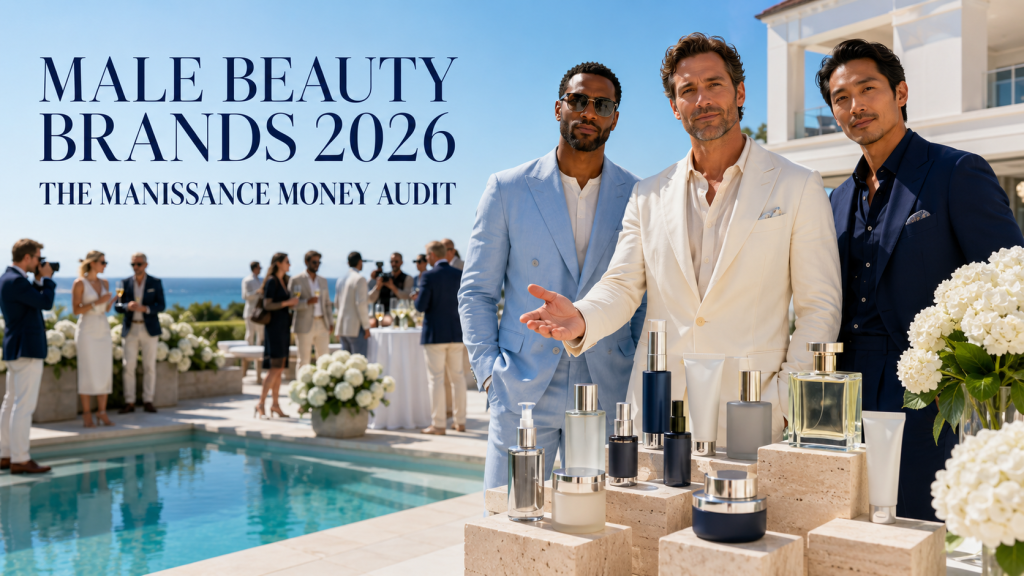
Men’s beauty spending grew 9.9 percent in 2024, nearly double the women’s rate, and the category is projected to hit $115 billion by 2028. So where are the male Rhodes? The honest audit of male celebrity beauty brands finds famous founders everywhere and billion-dollar exits nowhere. This piece explains the gap, because the gap is where the next fortune is hiding.
Meanwhile, the wider standings sit in the full beauty money board. Consider this the men’s annex, audited with the same skepticism.
The Market Math
Start with the demand side, because it is real. According to the trade’s Manissance report, 68 percent of Gen Z men now use skincare, and teenage boys have started splitting niche fragrance bottles like a group dinner check. Specifically, skincare for men compounds at over 10 percent a year.
The customer arrived, in other words. Yet no male-fronted brand has converted him at the scale the women’s side takes for granted. So supply, not demand, is the bottleneck. Equally, the tweakment curve is bending male, with clinics reporting steady growth in first-time men.
The First Movers
Pharrell went earliest and most seriously. Humanrace launched in November 2020 with a dermatologist partner, together with a three-product routine and wellness positioning years ahead of schedule. His broader empire, mapped in Pharrell’s portfolio breakdown, now includes the Louis Vuitton men’s creative directorship, which makes him fashion’s most institutionally powerful founder.
Soon after, Harry Styles arrived with Pleasing in 2021, selling nail polish and self-expression to an audience that had waited decades for permission. Jared Leto’s Twentynine Palms and Machine Gun Kelly’s nail line rounded out the experimental class. Certainly, ambition was never the missing ingredient.
The Pitt Experiment
The most instructive case grows on a vineyard. Brad Pitt’s skincare line launched in 2022 with the Perrin winemaking family, built on grape-based antioxidants from the same terroir behind the Château Miraval wine war. Shortly after launch, Bluemercury picked up wholesale distribution.
The price point told you the ambition: serums in the hundreds, aimed at the anti-aging money usually spent by women. Pitt’s $400 million rebuild did not need the revenue, which is precisely why the brand could aim luxury-first. Patience, again, is a rich founder’s advantage.
Still, nobody claims it is a Rhode. Luxury skincare for men remains a niche inside a niche, although the margins in that niche are spectacular.
The Couples Play
Idris and Sabrina Elba built S’Able Labs as a duo in 2022, wellness-first and inclusivity-forward. John Legend’s Loved01 took the sharpest positioning in the class, affordable care formulated for melanin-rich skin, a market legacy brands ignored the way they once ignored textured hair.
Notice the echo of the Cécred ownership standard. The underserved-market thesis built a $200 million year one in hair. Legend is running the same thesis in men’s personal care, at drugstore prices, and it is the bet most likely to scale.
Why the Category Underperforms
Now the audit’s hard part. No male celebrity brand has posted Rhode numbers, and the reasons are structural. Men buy on replenishment rather than discovery, so the viral flywheel that launches women’s brands barely spins for them.
The genderless positioning cut both ways too. Half these brands avoided saying men at all, which read as modern and marketed as vague. A customer who has never bought a serum needs instruction, not ambiguity. The celebrity beauty casualty list is full of brands that solved no one’s specific problem.
The Pricing Ladder Problem
Price architecture explains part of the stall. The category split to the extremes, with Pitt’s serums in the hundreds at one end and Legend’s drugstore pricing at the other. The $20 to $50 middle, where Rhode and Cécred built their fortunes, sits nearly empty on the men’s side.
That middle band is where habits form. A $34 moisturizer is an easy yes and a monthly reorder, whereas a $300 serum is a gift and a $10 cleanser is a commodity. Until a male brand owns the habit band, the category keeps renting customers instead of keeping them.
The 25 Percent Signal
Here is the number the category should study. A quarter of Haus Labs customers are men, the strongest male share in celebrity beauty, documented in the Haus Labs comeback file. The men are already shopping. They are just shopping at women’s brands.
That suggests the winning male brand may never market as one. Meanwhile the fragrance data points the same direction, since young men drive much of the 2026 bottle rush. Scent is the male entry product. Skincare follows it, not the reverse.
Who Wins the Manissance
The prediction writes itself from the data. The first breakout male celebrity brand will lead with fragrance, add three skincare products, and sell replenishment subscriptions with zero discovery theater. An athlete or musician with Gen Z reach fits the founder profile better than a movie star.
The playbook already exists across this cluster. Own the equity, hire the operator, keep the line short, and let the founder’s calendar do the marketing. Whoever runs it first for men takes a $115 billion market’s first-mover seat.
The Athlete Window
If the winning founder profile is an athlete, the logic is simple. Locker rooms normalized male grooming decades before TikTok did, and sports fandom converts to commerce with fewer steps than film fandom. Above all, athletes post daily, which solves the discovery problem movie stars refuse to solve.
The structure would follow the extension ladder mechanics every winner here used. Start with the signature product, keep the line tight, and let the season schedule run the marketing calendar. A playoff run is an earned-media budget no brand can buy.
The East End Grooming Economy
Out here the male customer is not hypothetical. He is getting peptide protocols from the provider map and quietly booking the same medspas his wife found first, part of the body transformation economy reshaping every summer wardrobe. His grooming spend is climbing faster than his golf spend.
For men’s wellness, grooming, and medspa brands, that is the opening. Nobody owns the East End male customer yet, in editorial or in advertising. The first sponsor to claim him gets a category to themselves.
Where The Conversation Continues
The standings live in the 2026 money rankings, where the male celebrity beauty brands wait for their first breakout entry. When it happens, this page gets the update first.
Until then, the market grows 10 percent a year with no owner. Categories like that never stay unclaimed long, in beauty or in July. After all, the Manissance is a race with no leader, and races like that reprice fast.
Author
Written by
Recent Posts

AI for personal finance: where PennyGuard fits
How to Pick a Homecoming Dress for Your Body Type (and Feel Amazing in It)

World Cup Injury Attorney for Vancouver Events
What a 3-Carat Engagement Ring Actually Costs in 2026: The Real Numbers
The Skincare Habits That Make a Real Difference Over Time
Categories
- Art
- Articles
- Business of Luxury
- Celebrities
- Culture
- Entertainment
- Events
- Faces of Summer 2026
- Fashion
- Fashion & Style
- Featured
- Finance
- Food, Spirits, Wine
- Hamptons
- Hamptons Celebrities
- Health
- Health & Beauty
- Lifestyle
- Luxury Lifestyle
- Press
- Profiles
- Real Estate
- Technology
- The Chronicles
- Travel
- Uncategorized
- Weddings