
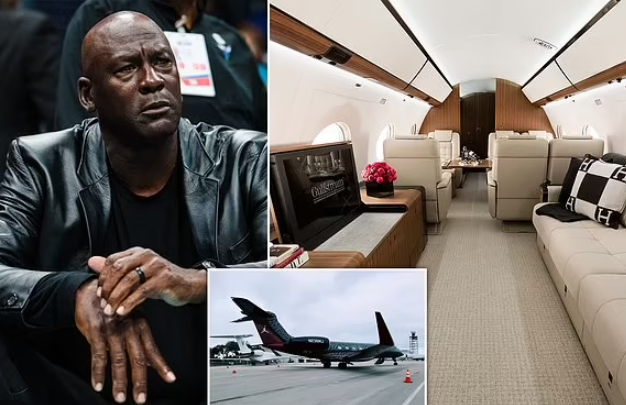
Nike offered a rookie $2.5 million to wear their sneakers. Michael Jordan wanted something else entirely. That negotiation in 1984 didn’t just launch a shoe line. It invented a new category of athlete wealth that forty years later has compounded into $3.8 billion.
The conventional story positions Jordan as the greatest basketball player who happened to make money from endorsements. Reality inverts this completely. Jordan architected a financial structure that generates more wealth annually than his entire playing career produced. His Airness understood something his contemporaries missed: royalty equity beats endorsement salary every single time.
The Hunger: Cut From Varsity
Before the six championships, before the billion-dollar checks, there was Laney High School in Wilmington, North Carolina. Sophomore year. The varsity roster went up. Jordan’s name wasn’t on it. Coach Clifton Herring chose a taller player for the final spot.
That rejection calcified into something permanent. Jordan has referenced this moment in nearly every documentary, profile, and interview for forty years. The slight became fuel. Control became the theme: of narrative, of brand, of wealth. Understanding how LeBron James builds wealth differently requires first understanding Jordan’s origin wound.
What looks like obsessive competitiveness in Jordan’s playing days reveals itself as strategic positioning in his business career. The same intensity that demanded perfection on the court demanded ownership stakes in boardrooms. Scarcity of approval early created insatiable hunger later.
The Contract That Changed Athlete Economics
Standard athlete endorsement deals in 1984 worked simply: wear our product, collect a fee, contract ends, move on. Nike was a distant third behind Converse and Adidas. They needed a Hail Mary. Jordan was that bet.
The structure Jordan’s team negotiated rewrote the playbook. Instead of a flat endorsement fee, Jordan demanded a revenue share on Air Jordan sales. Nobody had asked for this before. Nike, desperate for relevance in basketball, agreed. The initial terms: Jordan would receive a percentage of every Air Jordan sold, in perpetuity, as long as the line existed.
| Deal Component | Standard 1984 Deal | Jordan’s Structure |
|---|---|---|
| Upfront payment | $2.5M over 5 years | $500K annually + royalties |
| Revenue participation | None | 5% of Air Jordan revenue |
| Duration | Contract term only | Perpetual while brand exists |
| Lifetime value | $2.5M | $1.3B+ and counting |
First-year sales exceeded $100 million. Nike had projected $3 million. The royalty structure meant Jordan’s compensation scaled with success rather than remaining fixed. This single decision accounts for more of Jordan’s current net worth than any other factor, including NBA salaries and the Charlotte Hornets sale combined.
According to Forbes, Jordan currently receives approximately $150 million annually from Nike. He hasn’t played a professional game in over twenty years. The royalty structure he negotiated as a rookie continues generating wealth while he sleeps.
The Pivot: From Player to Owner
Retirement from basketball presented a choice Jordan’s contemporaries often fumbled: continue trading on past glory through diminishing endorsements, or convert fame into ownership. Jordan chose ownership.
The Charlotte Hornets acquisition in 2010 signaled this pivot definitively. Jordan purchased a majority stake for $275 million, becoming the first former NBA player to own an NBA franchise outright. The investment thesis was straightforward: professional sports franchises appreciate. Always. League economics, media rights growth, and scarcity of teams create reliable appreciation curves.
By 2023, Jordan sold approximately 95% of his Hornets stake for valuations approaching $3 billion. The math is stark: $275 million in, roughly $3 billion out, over thirteen years. That represents a 1,000% return, substantially outperforming the S&P 500 over the same period.
Understanding the difference between celebrity wealth and dynasty wealth illuminates why this matters. Celebrity wealth depends on continued visibility. Franchise ownership compounds regardless of whether Jordan ever appears publicly again.
The Portfolio: What Jordan Actually Owns
Public fascination with Jordan’s wealth often fixates on the Nike relationship while missing the diversified portfolio he has assembled. Each holding reflects the same logic: own, don’t rent; equity, not fees.
Nike/Jordan Brand
Jordan Brand generated $6.6 billion in revenue for Nike’s fiscal 2024, according to Bloomberg. Jordan’s ongoing royalty arrangement translates to approximately $150 million annually. This income requires no additional labor, no promotional appearances, no active management. The brand operates institutionally now, surviving any single marketing campaign or product launch.
Charlotte Hornets Exit
The 2023 sale to a consortium led by Gabe Plotkin and Rick Schnall valued the Hornets at approximately $3 billion. Jordan retained a minority stake, maintaining connection to the league while crystallizing the majority of his gains. The appreciation from his $275 million entry represented pure wealth creation, unrelated to his playing career or personal brand labor.
Real Estate and Development
Jordan’s real estate holdings span multiple states and include a Five-Star Resort development in the Bahamas valued at $3.5 billion total project cost. His Chicago-area compound, Florida properties, and various investment real estate positions exceed $500 million in estimated value. Real estate provides the stability and tax advantages that balance the concentrated equity positions in Nike and sports franchises.
23XI Racing
Jordan’s NASCAR team, co-owned with driver Denny Hamlin, represents both passion investment and calculated bet on motorsport growth. The team’s equity value exceeds $50 million, with upside tied to NASCAR media rights negotiations and potential team sale premiums. Racing connects Jordan to a demographic distinct from basketball, extending brand relevance across consumer segments.
| Revenue Stream | Estimated Value |
|---|---|
| Air Jordan royalties (lifetime) | $1.3B+ |
| Hornets appreciation (realized) | $2.7B gain |
| Annual Nike check | $150M |
| NASCAR team equity | $50M+ |
| Real estate + development | $500M+ |
The Dynasty Play: Building Generational Wealth
Jordan has five children across two marriages. The estate structure he has assembled reflects deliberate generational planning rather than simple wealth accumulation. Multiple LLCs shield various holdings. Trusts structure inheritance to optimize tax efficiency across decades.
The Air Jordan brand itself represents the most significant dynasty asset. Unlike most celebrity wealth, which depends on the continued relevance of the celebrity, Jordan Brand operates institutionally. Nike employs hundreds of people dedicated solely to Jordan Brand. Design teams, marketing divisions, retail partnerships, all function independently of Jordan’s personal involvement.
This institutional quality means Jordan Brand survives him. The estate can continue receiving royalties indefinitely, assuming the brand maintains market position. His heirs inherit not just accumulated wealth but ongoing income streams tied to one of the most recognized brands in global consumer products.
Comparing this structure to Serena Williams’ venture portfolio approach reveals different philosophies toward dynasty building. Jordan bet on one brand, maximized royalty participation, and let compounding work. Williams diversified across ninety-plus investments. Both strategies create generational wealth; the mechanisms differ substantially.
The Wealth Mechanism: Royalty Equity Over Endorsement Fees
Jordan’s financial architecture offers a masterclass applicable far beyond athletics. The core insight: percentage participation in success outperforms fixed compensation, provided you can negotiate it and the underlying business has growth potential.
When Nike offered that initial $2.5 million, accepting it would have made Jordan wealthy by 1984 standards. Demanding royalty participation instead created billionaire wealth. The difference isn’t marginal. Fixed endorsement: $2.5 million. Royalty equity: $1.3 billion and counting. The multiple exceeds 500x.
This principle extends beyond athlete negotiations. Harvard Business Review research on executive compensation consistently demonstrates that equity participation outperforms salary over long time horizons. Jordan intuited this before the research existed.
For readers considering their own compensation structures, consulting fees versus equity stakes, salary versus profit participation, Jordan’s Nike deal provides the ultimate case study. Take less upfront when the upside is genuinely unlimited. Own rather than rent your contribution to an enterprise.
The Pattern: What Separates Jordan From Other Athletes
Thousands of professional athletes have earned substantial playing salaries. Hundreds have secured major endorsement deals. A handful have attempted franchise ownership or brand building. Jordan’s outcomes exceed all of them. Understanding why requires examining the patterns his career reveals.
First, timing matters enormously. Jordan negotiated royalty participation when Nike desperately needed basketball credibility. Leverage existed because Nike’s alternative was fading relevance. Recognizing leverage windows and exploiting them defines much of Jordan’s business success.
Second, concentration beats diversification for wealth creation, though it increases risk. Jordan didn’t spread endorsements across dozens of brands. He concentrated on Nike, demanded ownership-style economics, and let that single relationship compound. Understanding how licensing deals create long-term wealth illuminates why this concentration strategy works when the underlying asset has genuine growth potential.
Third, post-career capital deployment matters more than career earnings. Jordan’s NBA salary totaled approximately $90 million across fifteen seasons. His Nike royalties alone have exceeded that by more than 14x. The Hornets appreciation added another 30x his playing salary. Career earnings were the seed capital. Post-career deployment created the fortune.
Applying Jordan’s Playbook
Business owners approaching exits, founders negotiating acquisitions, and executives considering compensation packages can extract practical wisdom from Jordan’s financial architecture.
The first lesson: percentage participation in growing enterprises beats fixed compensation. If you have leverage, use it to negotiate upside rather than maximizing guaranteed payments. Jordan took less upfront from Nike to secure royalties. That decision difference: $50 million versus $1.3 billion.
The second lesson: build institutional brands, not personal ones. Jordan Brand employs hundreds of people who have never met Michael Jordan. The brand operates independently of his daily involvement. When building enterprise value, design systems that function without you. Personal brands die with their namesakes. Institutional brands compound across generations.
The third lesson: convert fame to ownership before fame fades. Jordan used peak visibility to negotiate favorable ownership terms. Waiting until retirement to pursue ownership meant negotiating from diminished leverage. The Hornets acquisition came while Jordan’s brand still commanded premium valuations.
For those interested in how other athletes approach the fame-to-fortune transition, the hub article on athlete wealth building examines patterns across multiple elite athletes.
The Bottom Line
Michael Jordan’s $3.8 billion net worth represents the most sophisticated conversion of athletic fame into dynasty wealth ever achieved. The structure he built generates more annual income now than his entire playing career produced. Nike royalties alone exceed $150 million annually, forty years after signing the original deal.
Jordan didn’t just endorse products. He became an asset class. The distinction matters for anyone seeking to understand how modern wealth compounds. Celebrity creates attention. Ownership captures value. Jordan understood this before anyone taught it.
The numbers tell the story: $90 million in career NBA earnings, $1.3 billion in Nike royalties, $2.7 billion in Hornets appreciation. Playing basketball made Jordan famous. Owning things made him a billionaire. The lesson applies far beyond athletics, for anyone with leverage to negotiate and patience to let equity compound.
Author

Written by
Recent Posts

How to Choose Useful Tech Gifts for Employees and Clients in 2026
The Garage Question: Which Car Goes South for the Season?

VandS Clinic Review Treatment: How Seoul Injectable and Laser Options Compare for US Patients
Before Buying a View Home: What a Sloped Lot Means for the Purchase

Powerful Strategies to Stay Ahead in a Fast-Moving Real Estate Market
Categories
- Art
- Articles
- Business of Luxury
- Celebrities
- Culture
- Entertainment
- Events
- Faces of Summer 2026
- Fashion
- Fashion & Style
- Featured
- Finance
- Food, Spirits, Wine
- Hamptons
- Hamptons Celebrities
- Health
- Health & Beauty
- Lifestyle
- Luxury Lifestyle
- Press
- Profiles
- Real Estate
- Technology
- The Chronicles
- Travel
- Uncategorized
- Weddings