
The invitation says “cocktail attire,” and the dress in your closet is a knee-length wrap that worked well for a work dinner last spring. Is it dressy enough? Or perhaps you’re eyeing a satin midi and wondering whether it will look too formal for a Saturday evening reception.
A dress is cocktail-appropriate when its length, fit, fabric, and styling together land between casual partywear and full evening formality. No single feature settles it. The trick is knowing how those details work together and which ones matter most for the occasion.
What Actually Makes a Dress Cocktail-Appropriate?
Cocktail attire sits in the middle of the dress-code spectrum, often overlapping with semi-formal dressing. The two labels aren’t always used in exactly the same way, though. A closer look at cocktail attire vs. semi-formal attire helps explain where the expectations overlap and why the venue, timing, and overall styling can make a difference.
That flexibility is the key point. Formality comes from the overall impression, not a single rule. A smooth, structured fabric, a clean silhouette, and careful finishing details (a tidy hem, a lined skirt, a neckline that sits flat) all signal “dressed up.” When comparing cocktail dresses, look beyond the hemline and consider whether the fabric, silhouette, and finishing details suit the occasion.
There is also a ceiling. A floor-length gown with a train and heavy beading can look overdressed at a typical cocktail party, much as a casual sundress can look underdressed. The goal is polished, not ceremonial. When in doubt, read the invitation, the venue, and the start time, since all three hint at how dressy the room will be.
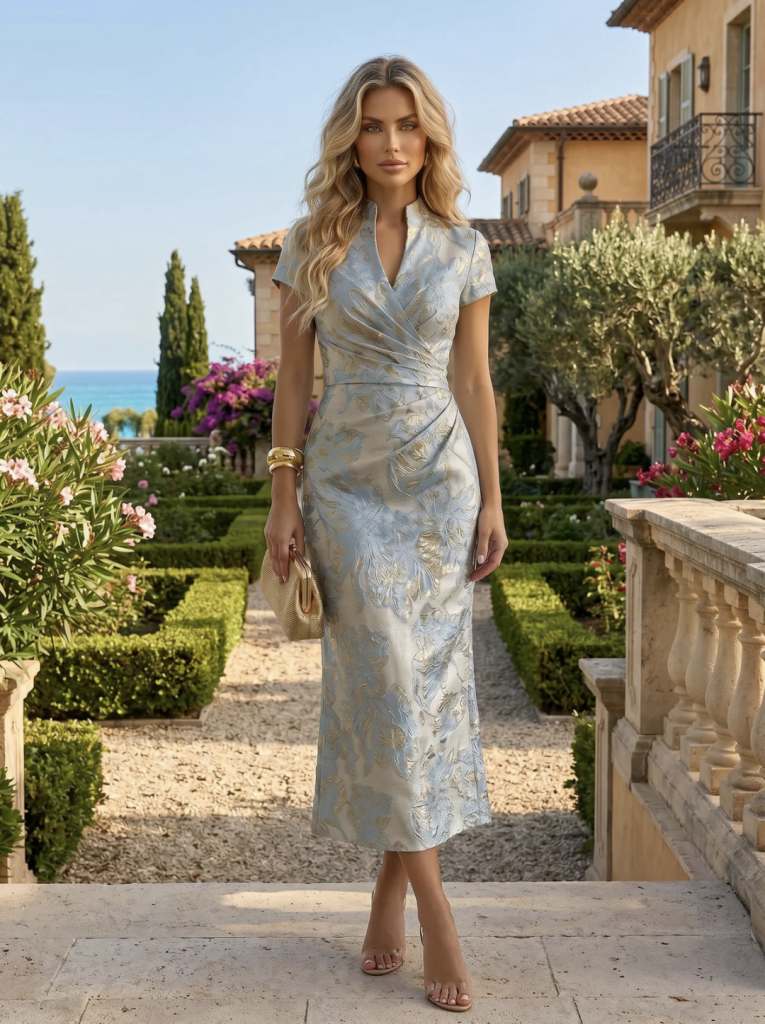
What Length Should a Cocktail Dress Be?
Knee-length is a traditional, dependable choice that works well for many cocktail settings. But it isn’t the only option.
- Above the knee or mini: Can work when the cut is clean and the fabric looks dressy, such as structured crepe or satin. A very short hem in a stretchy, casual fabric reads more like clubwear.
- Knee-length: A reliable middle ground for cocktail events, particularly when the invitation doesn’t offer much guidance.
- Midi, including tea-length: A natural fit for cocktail events. It tends to look polished and offers more coverage, which can suit conservative settings.
- Floor-length: Not automatically wrong, but it moves toward evening formal. A simple, unfussy long dress can work at some events; an elaborate gown may feel out of place.
Consider how one hemline plays in two settings. A short, fitted satin dress might be perfectly at home at a rooftop birthday party with a DJ and city views. The same dress might feel too casual at a conservative evening reception with older relatives and a seated dinner. The hem didn’t change, but the room did.
That is why length can’t be judged alone. Pair it with the fabric, the neckline, and the occasion before deciding.
How Should a Cocktail Dress Fit?
Good cocktail dress fit goes beyond “not too tight.” Start with the structure. A tailored sheath should skim the bust, waist, and hips without pulling across the stomach or gaping at the back. A flowing A-line or softly draped dress should still have some definition, because too much loose fabric can make the overall look feel unfinished.
Next, test the parts that move. Straps should stay put when you lift your arms, and a neckline shouldn’t need adjusting every time you lean forward. If you find yourself tugging at a hem or a bodice, the dress is working against you, and it will show in how you carry yourself.
Then run the real-world test. Sit down, walk a few steps, and reach for something on a table. A fitted midi can look flawless while you’re standing, yet ride up when you sit at a dinner table. If you expect to dance, check that the skirt allows you to move without restriction.
None of this points to a single “right” body type or silhouette. A well-fitted wrap, sheath, or A-line can all work. What matters is that the dress sits smoothly, stays in place, and lets you forget about it.
Which Fabrics and Details Make a Dress Look Dressy?
Fabric often does more for formality than length does. Satin and crepe have a smooth, refined surface that reads as dressier. Velvet adds depth and suits cooler months. Jacquard, with its woven pattern, tends to hold a structured shape. Lace and sequins bring visual interest, though they’re not required.
Here’s a useful contrast. A simple knee-length dress in structured crepe usually looks ready for a cocktail event. A jersey dress of the same length, with a soft, clingy drape, often reads as everyday wear. The silhouette is nearly identical; the fabric changes the message.
Embellishment works similarly, though the setting matters. A beaded neckline or sequined bodice can make a simple design feel more dressed up, and a fully sequined dress can be entirely appropriate for an evening cocktail party. For a quieter reception, a subtler finish may feel more at home. The amount of decoration matters less than how well it suits the occasion.
How Do You Style a Dress for a Cocktail Event?
Styling should support the dress, not compete with it. Start with shoes. Heels are common, but they aren’t mandatory. A dressy flat in satin, metallic leather, or an embellished finish can look entirely appropriate, especially for an event with a lot of standing or walking.
A clutch or compact evening bag keeps the look tidy; a large everyday tote usually undercuts it. For jewelry, balance is the rule: if the dress has an embellished neckline, choose simple earrings and skip a statement necklace. A plain dress can carry bolder pieces.
Layers matter too. A tailored wrap, a light shawl, or a dressy jacket handles cool evenings and air-conditioned venues. Time of day and setting also play a part. A late-afternoon garden reception can handle softer colors and lighter fabrics, while an evening event in a hotel ballroom may call for deeper tones and a more polished finish.
Here’s one complete look: a knee-length navy crepe sheath, metallic block-heel sandals, small drop earrings, a structured clutch, and a lightweight wrap for the walk from the car. Nothing in it is complicated, and every piece suits the others.
How Are Cocktail Dresses Different From Party Dresses?
“Party dress” is a broad clothing category that covers many styles, from casual and festive to dressy. Cocktail attire, on the other hand, describes an expected level of formality for an event. One is a type of garment; the other is a standard of dress.
The two overlap. Some party dresses, such as a satin or sequined dress in a polished midi or knee-length cut, suit a cocktail setting well. Others, like a casual jersey mini or a novelty festive style, are better saved for relaxed gatherings. The question to ask of any party dress is whether its fabric, cut, and finish match the event’s formality, not what it’s called.
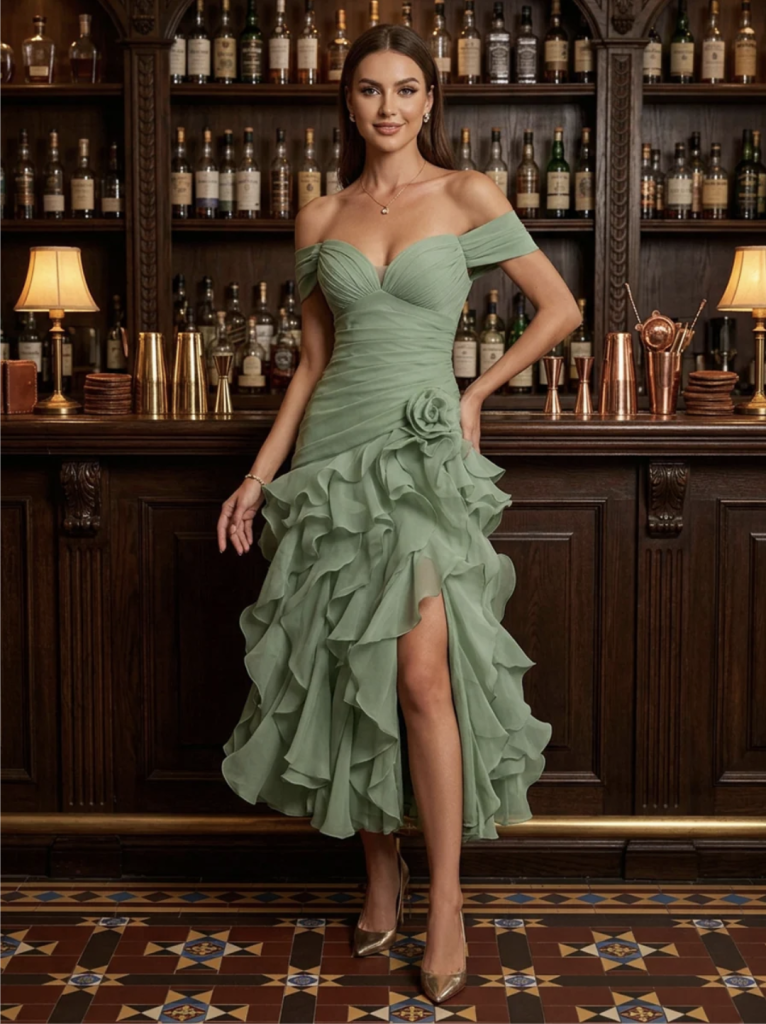
Common Questions About Cocktail Attire
Can you wear a mini dress to a cocktail party?
Often, yes, if the fabric is dressy and the cut is polished. Consider the venue and the event’s overall formality, and lean longer for more conservative settings.
Can you wear flats with a cocktail dress?
Yes. Choose a dressy pair in satin, metallic leather, or with an embellished detail, rather than casual everyday flats.
Can a longer dress count as cocktail attire?
It can, particularly a midi or a simple, unfussy long dress. A very elaborate evening gown may look overdressed for a typical cocktail event.
Choosing With Confidence
Before settling on a dress, check the invitation once more, then try the outfit on with the shoes and accessories you plan to wear. Sit down, walk around, and see whether anything needs constant adjusting. If the complete look feels appropriate for the venue and comfortable enough to enjoy the evening, you’ve probably made a good choice.
Author

Written by
Recent Posts
What Makes a Dress Cocktail-Appropriate? Length, Fit, and Styling Considerations

Jackie Tohn and Foodgod Join Chef Eric Greenspan for CHAIN and Absolut Tabasco’s “Hottest Brunch” at Mish Deli
Dr. Elena Alvarez-Henry Celebrated at Star-Studded Miami Gala
Kelly Bensimon Joins New York Kitchen & Bath for an Exclusive Evening At Their Flatiron Showroom
Slow Travel in Europe: Why Spending More Time in One Destination Can Make a Trip More Rewarding
Categories
- Art
- Articles
- Business of Luxury
- Celebrities
- Culture
- Entertainment
- Events
- Faces of Summer 2026
- Fashion
- Fashion & Style
- Featured
- Finance
- Food, Spirits, Wine
- Hamptons
- Hamptons Celebrities
- Health
- Health & Beauty
- Lifestyle
- Luxury Lifestyle
- Press
- Profiles
- Real Estate
- Technology
- The Chronicles
- Travel
- Uncategorized
- Weddings