
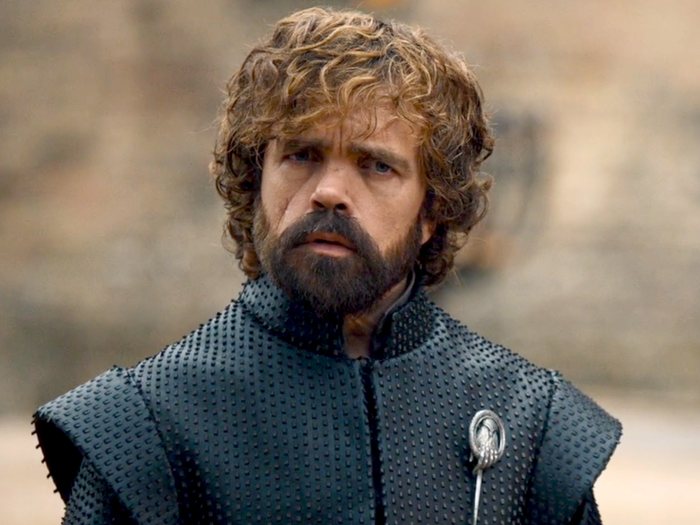
The Before: Morristown, New Jersey, and the Fifth-Grade Production That Started Everything
Where He Came From
Peter Hayden Dinklage was born June 11, 1969, in Morristown, New Jersey. His father, John, sold insurance. His mother, Diane, taught elementary school music. He grew up in Mendham Township — the historic Brookside section, in a family that encouraged creative expression without making it the household’s central project. His older brother Jonathan became a professional violinist. Peter became an actor. The family gave both children the same gift: permission to take the thing seriously.
Born with achondroplasia — the most common form of dwarfism, affecting bone growth so that limbs develop shorter than the trunk — he grew to four feet, five inches. In interviews, he has discussed the condition with characteristic directness: it made him angry as a child, then bitter as a teenager, and then, gradually, something else. Not resolved — transformed. Consequently, the anger became fuel rather than obstacle. That transformation is visible in his career from its very first professional decisions.
The Velveteen Rabbit and the Play That Decided Everything
His first theatrical success came in a fifth-grade production of The Velveteen Rabbit, where he played the lead. The audience’s response delighted him — not the applause specifically, but the particular quality of attention a room gives a performer who has made it forget it is watching a performance. That quality of attention became the thing he spent his career pursuing.
In 1984, at fifteen, he attended a production of Sam Shepard’s True West at Delbarton School. The experience settled the question. Subsequently, he attended Bennington College in Vermont, graduated in 1991 with a degree in drama, and moved to New York City with his friend Ian Bell to start a theater company. They failed to pay the rent and the theater company dissolved. Nevertheless, Dinklage took a job at a data-processing company and kept auditioning.
The Pivot: Six Years of Day Jobs and the Decision That Defined Everything
The Refusals
The data-processing job lasted six years — six years of spreadsheets and auditions, of keeping the work alive in the margins of a day structured around something else. He could have shortened that period considerably. The industry offered him roles consistently: leprechauns, elves, the specific register of comic or quasi-mythological small person that casting offices defaulted to when they needed someone his size. However, he refused all of them. Not out of pride, exactly, but out of an understanding that accepting those roles would establish a category he would spend the rest of his career unable to escape.
That refusal was, at the time, not obviously the right decision. It foreclosed opportunities and extended the period of financial uncertainty. Moreover, it required a specific quality of conviction. The kind that holds its position while the room keeps making the same offer — with increasing bafflement at why the answer keeps being no. Dinklage held it for years. The holding is the whole story.
Living in Oblivion and the Beginning
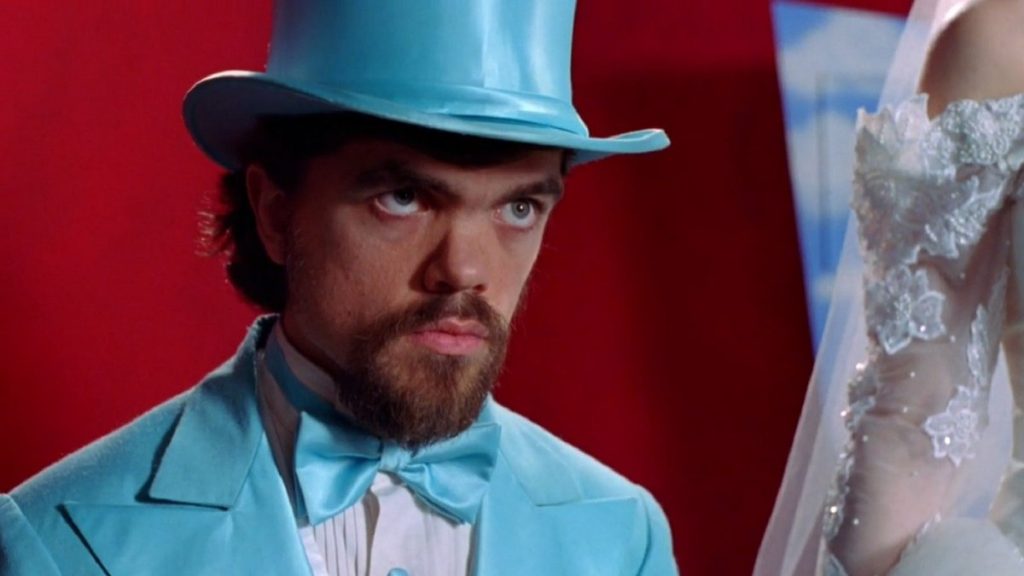
His film debut came in 1995 with Steve Buscemi’s Living in Oblivion — an independent meta-comedy about the chaos of low-budget filmmaking. The film earned critical notice and a modest cult following. Crucially, it also gave Dinklage his first evidence that the kind of role he had been waiting for was actually available. The roles existed. Someone was writing them. In other words, the strategy was not delusional — it was simply premature by about eight years.
The Station Agent: The Breakthrough That Built the Foundation
Finbar McBride and What the Role Required
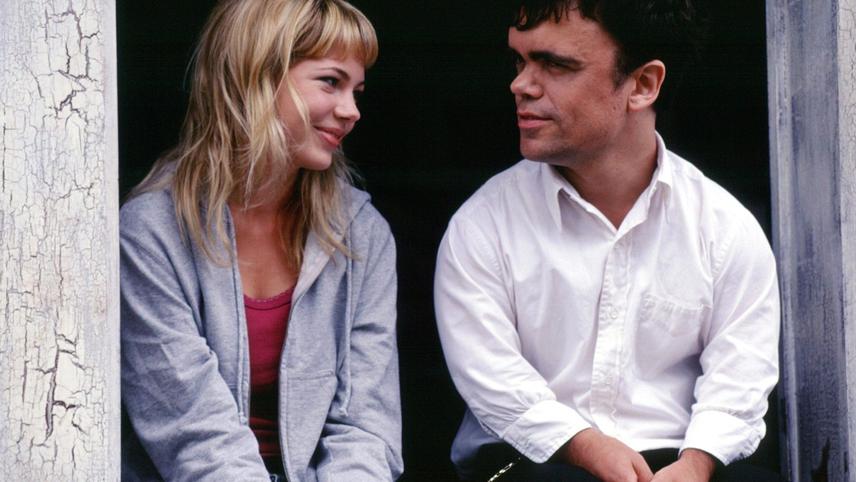
In 2003, Thomas McCarthy’s The Station Agent gave Dinklage his first starring role in a film of genuine artistic ambition. He played Finbar McBride — a man who inherits an abandoned train depot, retreats seeking solitude, and finds instead a community of equally isolated people who will not leave him alone. The film is quiet, precise, and deeply character-driven. Consequently, its central performance requires communicating a complex interior life through behavior and expression — through what is held back, through the grammar of a person who has decided to want very little and discovers he still wants things.
The role earned him an Independent Spirit Award nomination and a SAG nomination for Best Actor. It premiered at Sundance and earned over $8 million against a small budget. Most importantly, it demonstrated what he had been arguing for six years: that he could carry a film as a fully realized dramatic lead, not as novelty, not as comic relief. Andrew Sarris wrote in the New York Observer that Dinklage “projects both size and intelligence in the fascinating reticence of his face.” That description, in retrospect, describes Tyrion Lannister with reasonable precision.
The Years Between the Breakthrough and Game of Thrones
From 2003 to 2011, Dinklage built steadily. Elf (2003) demonstrated comic range and introduced him to a vastly larger audience. Find Me Guilty (2006), Death at a Funeral (2007 and 2010), and Narnia: Prince Caspian (2008) added further to a record of consistent, quality-selective work. Meanwhile, he played Richard III at the Public Theatre in 2003 and continued working in theater alongside film, maintaining the stage discipline that had structured his entire artistic development.

In 2005, he married Erica Schmidt, a theater director whose own work reflects the same commitment to serious dramatic material that has characterized his career from the beginning. They reside primarily in Greenwich Village, Manhattan, with a property in Ulster County, New York. Their daughter arrived in 2011 and their son in 2017. Both children’s names remain private by deliberate choice — consistent with Dinklage’s general relationship to public attention, which is one of firm and consistent refusal.
The Game of Thrones Chapter: Tyrion Lannister and What Four Emmy Awards Actually Mean
The First Actor Cast
Dinklage was the first actor cast in Game of Thrones. In 2009, Benioff and Weiss selected him before the show had a network commitment, before the budget was confirmed, before any other casting decisions were finalized. Consequently, the entire ensemble was built around him. That sequencing is not incidental. Tyrion Lannister is the show’s most intellectually complex character — the one who understands, with the most analytical precision, the system organized to destroy him. Casting that character first tells you what the showrunners understood the show to fundamentally be about.
Who Tyrion Was and What Playing Him Required
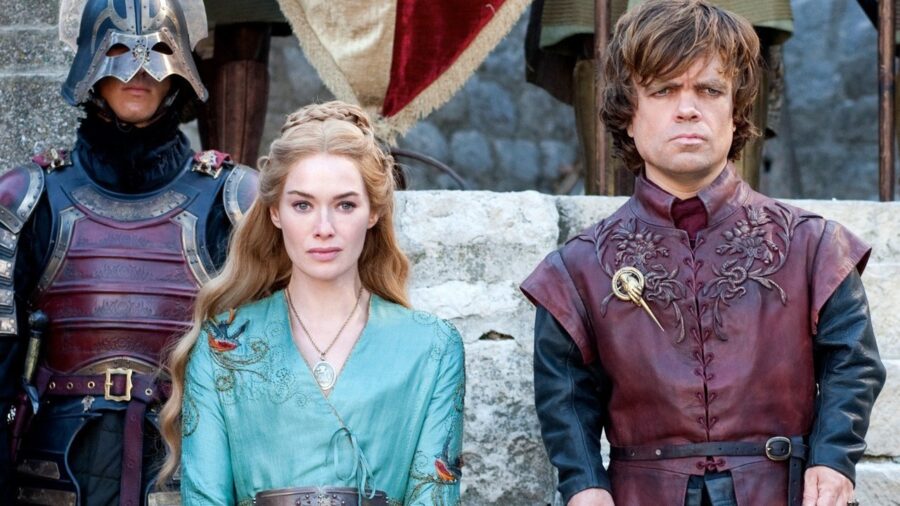
Tyrion Lannister is the youngest son of the wealthiest family in Westeros, born with dwarfism into a world that treats physical difference as either a joke or an omen. His father despises him. His sister regards him as a liability. Furthermore, the court he navigates treats his intelligence as suspect and his survival as an ongoing inconvenience. Nevertheless, he responds to all of this with wit, alcohol, and the strategic sharpness of a person who has spent his entire life reading rooms designed to exclude him.
In interviews, Dinklage noted that roles written for someone his size are typically “a little flat” — either comic or quasi-mystical, never sexual, never romantic, never genuinely flawed. Tyrion is all of the things those roles were not: romantically active, morally complex, capable of cruelty and tenderness in equal measure. Moreover, the show treats his intelligence as simultaneously his greatest asset and most reliable source of catastrophe. Sustaining that wit while the catastrophe accumulates — maintaining the sharpness while the political ground keeps eroding — across sixty-seven episodes constitutes a sustained technical achievement. The same instrument applied to a different era of power — corporate rather than Westerosi — defines Roger Sterling in our Mad Men complete guide.
The Emmy Record and the Salary Architecture
Dinklage won Outstanding Supporting Actor in a Drama Series in 2011, 2015, 2018, and 2019 — four wins across eight seasons, a record for the category. His salary trajectory tells the financial story precisely. For Seasons 1 through 4, he earned between $150,000 and $300,000 per episode. By Seasons 5 and 6, that figure reached $500,000. For Seasons 7 and 8, it rose to $1.1 to $1.2 million per episode. His total earnings from the show alone exceed $30 million — not including back-end residuals that continue accumulating as Game of Thrones streams globally.
He was also, notably, the first actor cast and the one whose presence signaled what the show intended to be. That originating importance is not reflected in the salary numbers, because salary numbers reflect leverage and screen time rather than foundational creative significance. The Emmy record is the more honest accounting of what the show actually needed from him.
After Westeros: Wicked, The Toxic Avenger, and the Career That Kept Refusing
The Post-Game of Thrones Portfolio
After Game of Thrones, Dinklage did not consolidate in the typical Hollywood sense — no franchise anchoring, no broad commercial leads. Instead, he continued making choices by the same logic that had structured his career from the beginning: the material first, the scale second. Three Billboards Outside Ebbing, Missouri (2017) placed him in an Oscar Best Picture nominee alongside Frances McDormand. Avengers: Infinity War (2018) brought him into the MCU as Eitri, the dwarf king who forged Thor’s ax. Subsequently, My Dinner with Hervé (2018) required him to play Hervé Villechaize — a person defined by his size in the public imagination — and to find in that person something real rather than simply representative.
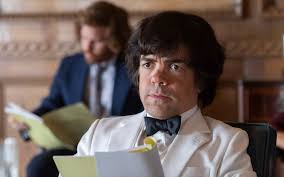
In 2019, he played the title role in Cyrano de Bergerac at the Daryl Roth Theatre in New York, a return to the stage that led to a 2021 film adaptation. The casting logic is almost too precise to be accidental: Cyrano is a man of extraordinary talent who believes the world will not allow him to be loved because of the way he looks. Notably, Dinklage played him without the traditional prosthetic nose that productions use as shorthand for the character’s self-perception. The absence of the prosthetic was the point.
Wicked and the Franchise Expansion
In the 2024 film adaptation of Wicked, Dinklage played Dr. Dillamond — a goat professor whose removal from school reflects the musical’s argument about political persecution of difference. He reprises the role in Wicked: For Good (2025), following the same internal logic as every significant role in his career: a character whose difference is the source both of persecution and moral authority. Additionally, he starred in The Toxic Avenger (2025) as the janitor turned mutant hero — his first formal franchise lead.
In 2025, he joined Dexter: Resurrection on Showtime as main antagonist Leon Prater — a return to prestige television opposite Michael C. Hall that generated immediate critical attention. His upcoming Roofman, directed by Derek Cianfrance alongside Channing Tatum and Kirsten Dunst, continues the pattern: serious directors, serious material, no wasted motion.
The Numbers and What They Prove
The $25 Million and Its Architecture
His Peter Dinklage net worth stands at $25 million as of 2025. The figure reflects over $30 million in Game of Thrones earnings — acting fees plus continuing streaming residuals — offset by the financial reality of a career that prioritized material quality over volume. Additionally, it reflects film work across three decades, voice acting credits including Destiny, Transformers: Rise of the Beasts, and Ice Age: Continental Drift, and producing credits through Estuary Films. He owns properties in Greenwich Village and Ulster County, New York, maintains no social media presence, and rarely gives interviews. None of this is accidental.
What the Refusal Strategy Built
The career argument Dinklage has made across thirty years is simple to state and difficult to execute: refuse the roles that define you by your difference. Wait for the roles that treat your difference as one fact among many. The six years at the data-processing company, the leprechaun offers declined, The Station Agent, the first casting in Game of Thrones — the sequence is coherent from beginning to end. Even so, no individual point in that sequence made the coherence visible until the sequence was complete.
He has been vegetarian since age sixteen, advocates for PETA, and remains a private father of two children whose names the public does not know. Once, he fronted a punk-funk-rap band called Whizzy at CBGB, where someone kneed him in the face and left a scar running from his neck to his eyebrow. He has described the scar as something he is fond of. That fondness is consistent with everything else in the record. He keeps what the world gave him and builds with it — without complaint, without the anxiety that makes people accept the first available room rather than wait for the right one.
The data-processing company was six years. The right room was worth it.
Return to the full Game of Thrones complete guide for all eight seasons. For the complete cast series, continue with Emilia Clarke, Kit Harington, Lena Headey, Jason Momoa, and Maisie Williams. Visit our Culture and Power hub for the full landscape.
Related Reading
- Game of Thrones: The Complete Guide to All 8 Seasons
- Industry Season 4: The Finance Archetypes Living the Tyrion Playbook Right Now
- Succession: When Old Money Runs Out of Room
- Emilia Clarke Net Worth: The $20M Mother of Dragons Story
Some careers are built on saying yes to every room that opens. This one was built on saying no to every room that wasn’t right. Social Life Magazine has covered the architecture of ambition and craft for 23 years. You read us because you understand that patience and standards are the same instrument.
If your brand, business, or story belongs in this conversation, we want to hear from you. Editorial features, strategic placements, and partnerships begin at sociallifemagazine.com/contact.
Ready to control your own narrative? Submit a paid feature and reach 25,000 print readers per summer issue at sociallifemagazine.com/submit-a-paid-feature.
Our email list reaches 82,000 subscribers — the people who study careers built on refusal rather than accommodation. Join the list here.
Polo Hamptons returns for summer 2026. Two dates. A room that already knows what it is. Sponsorship packages at polohamptons.com.
Five summer issues. Placed where the conversation actually happens. Print subscriptions at sociallifemagazine.com/subscription.
Independent editorial takes real resources. If this kind of journalism matters to you, a $5 contribution keeps Social Life in print and online. Donate here.
Author

Written by
Recent Posts
hiTechMODA Season 16
How to Keep Your Personal Number Private When Booking Events, Rentals and Services
Understanding Compensatory Damages in a Personal Injury Case

When Online Family Therapy Makes Sense for Modern Families

Carrier Oils, Essential Oils, and Oil Blends: What Beauty Brands Need to Know
Categories
- Art
- Articles
- Business of Luxury
- Celebrities
- Culture
- Entertainment
- Events
- Faces of Summer 2026
- Fashion
- Fashion & Style
- Featured
- Finance
- Food, Spirits, Wine
- Hamptons
- Hamptons Celebrities
- Health
- Health & Beauty
- Lifestyle
- Luxury Lifestyle
- Press
- Profiles
- Real Estate
- Technology
- The Chronicles
- Travel
- Uncategorized
- Weddings