


The Before: London, Oxfordshire, and the Show Boat Moment
Where She Started
Emilia Isobel Euphemia Rose Clarke was born October 23, 1986, in London, England. Her father, Peter, worked as a theatre sound engineer. Her mother, Jennifer, worked in marketing. The family lived in Oxfordshire. Peter’s work took him to theatres regularly, and Emilia came along. At age three, she attended a production of Show Boat. She decided, that evening, that she would be an actress. The decision arrived before she could fully articulate what it meant. However, it never wavered after that.
Her older brother, Bennett, later worked as a camera trainee on Game of Thrones itself — a detail that says something about the family’s gravitational pull toward the craft of making things. Clarke attended Rye St Antony School and then St Edward’s School in Oxford, appearing in productions of West Side Story, The Crucible, Macbeth, and Twelfth Night. After school, she enrolled at Drama Centre London. The Drama Centre is not a casual institution. It produces technically rigorous actors who understand character from the inside. She graduated in 2009.
The Early Work and the First Television Credit
Clarke made her television debut in 2009 with a guest role on the British medical soap opera Doctors. The following year, she appeared in Triassic Attack on Syfy. These were not career-defining credits. They were, however, exactly what they needed to be: professional experience, a working actor’s baseline, the kind of early credits that prove you can operate on a set without it being your first time. Screen International magazine named her a UK Star of Tomorrow in 2010. Shortly afterward, an HBO casting call changed everything.
The Pivot: The Daenerys Audition and the Role That Found Her
How She Got the Part
Clarke auditioned for Daenerys Targaryen in 2010, while still at Drama Centre. She was twenty-three. The character required an actress who could begin as a terrified, powerless exile and end — across multiple seasons and years — as someone capable of destroying cities. That arc demands range and structural patience. Both qualities had been forming in her since the Show Boat revelation at age three. Consequently, she got the part.
Daenerys Targaryen is, in the first season, almost entirely defined by her vulnerability. She has no agency. Her brother has sold her to a Dothraki warlord. The world the show places her in regards her as property. Clarke played all of this with a specific quality of interiority. She played a woman feeling everything while permitted to express almost nothing. From the very first episodes, that quality established something unusual was happening inside the performance. Critics noticed. Audiences noticed. HBO noticed in the form of salary increases.
Season 1: The Work and Then the Crisis
Season 1 finished filming in late 2010. Clarke had completed her first full run as Daenerys. The show would not air until April 2011. In February 2011, before a single episode had broadcast, she collapsed while working out at a gym. Emergency surgery followed for a subarachnoid hemorrhage — a ruptured brain aneurysm. During the recovery period, she sometimes experienced aphasia severe enough that she could not recall her own name. She was twenty-four years old. The most anticipated television series in years had not yet aired. She did not know yet whether she could act, or speak, or remember who she was.
She kept this secret for eight years. The show aired. She returned to work. She filmed Seasons 2 through 8. In 2013, during production, she suffered a second aneurysm and required a second surgery. She kept that secret too. In 2019, she published an essay in The New Yorker disclosing both medical crises. The piece was so precise and so composed that it read less like a confession than a report from the front. The composure was characteristic. It was also, by that point, the composure of a person who had been performing composure in front of cameras for eight years while carrying something nobody in those rooms knew about.
The Game of Thrones Chapter: Daenerys and What Eight Seasons Built

The Character and the Performance
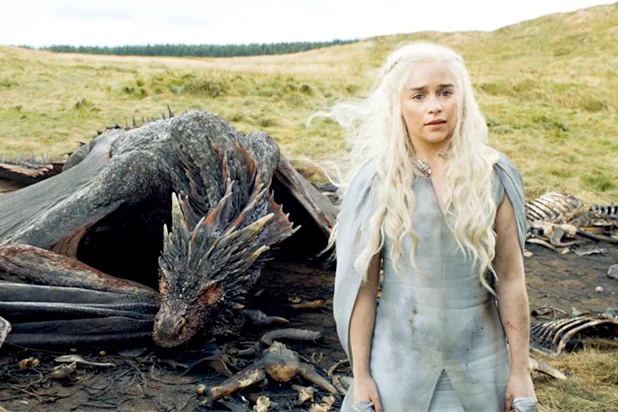
Daenerys Targaryen is, across eight seasons, one of the most structurally complex arcs in prestige television. She begins as a victim. Then she becomes a conqueror. Along the way, she acquires dragons, armies, advisors, and a fleet. She crosses an ocean and wins battles. Eventually, she falls in love. Eventually, in Season 8, she burns a city to the ground. Clarke played every stage of that arc without breaking its internal logic. Specifically, she played a woman whose capacity for violence was always adjacent to her capacity for justice. She maintained both simultaneously across eight years of work.
The arc’s final turn remains controversial. For how dynastic power and inherited wealth generate the same pattern of self-destruction in a contemporary setting, see our Succession cluster. However, that controversy is itself a testament to the quality of the earlier work. You cannot be that angry at a character’s ending if you haven’t spent eight seasons genuinely caring whether that character succeeds. Clarke generated that care. Furthermore, she generated it while managing her own neurological recovery in private, which adds a dimension to the performance that the audience did not know about until 2019.
The Emmy Record and the Salary Progression
Clarke received four Emmy nominations for Outstanding Lead Actress in a Drama Series — in 2013, 2015, 2016, and 2019. She did not win any of them. The nomination record places her in the same category as Jon Hamm before his 2015 win: an actor whose work the industry acknowledged repeatedly and declined to formally honour. Meanwhile, the salary record tells a different story. In the early seasons, she earned a modest per-episode rate. By Seasons 5 and 6, that figure had risen to approximately $300,000 per episode. For the final two seasons — fourteen episodes between 2017 and 2019 — she earned $1.1 million per episode. That rate placed her alongside Peter Dinklage, Kit Harington, Lena Headey, and Nikolaj Coster-Waldau as one of five leads earning equal pay. Her total Game of Thrones earnings exceed $30 million before taxes.
The Climb: Films, Broadway, and the Post-Westeros Career
The Film Catalogue
During and after Game of Thrones, Clarke built a film career in parallel. Terminator Genisys (2015) placed her as Sarah Connor in a franchise that grossed $440 million worldwide. Me Before You (2016) demonstrated romantic range in a film that earned $208 million globally and generated a devoted following. Solo: A Star Wars Story (2018) brought her into a second global franchise as Qi’ra — a character whose moral ambiguity clearly attracted her, given her parallel work inhabiting Daenerys’s increasingly complicated ethics. Last Christmas (2019) showed a lighter register. Secret Invasion (2023) on Disney+ added an MCU credit.
None of these films individually constitutes the kind of landmark that The Station Agent was for Peter Dinklage. However, collectively they demonstrate something important. She built a film career while carrying one of the most demanding television roles in history, managing two neurological crises in secret, without the public knowing the full picture. The restraint required for that is not incidental. It is the same quality that made Daenerys’s interiority legible on screen.
Broadway and The Seagull

In 2013 — during the years when she was filming Game of Thrones and keeping both brain aneurysms private — Clarke made her Broadway debut as Holly Golightly in Breakfast at Tiffany’s. The production received mixed critical reviews. Nevertheless, the decision to do it at all, while managing her health and her television career simultaneously, reflects the same theatrical commitment that had structured her training from Drama Centre forward. In 2020, she played Nina in Chekhov’s The Seagull at the Playhouse Theatre in London. It was a role of considerable dramatic weight — especially for a woman whose public persona was still primarily defined by dragons.
SameYou and What Survival Built
The Charity That Came From the Crisis
In 2019, Clarke founded SameYou — a charity supporting young people recovering from brain injuries and strokes. The founding was direct cause and direct effect. She had survived two aneurysms and experienced firsthand the inadequacy of neurological recovery support for young people. She built the infrastructure to address it. SameYou has since raised hundreds of thousands of pounds through fundraising campaigns, global partnerships, and Clarke’s own public advocacy. In 2020, the American Brain Foundation awarded her its Public Leadership in Neurology Award. She also serves as a sole ambassador for the Royal College of Nursing.
The charity is not a celebrity vanity project. It is a direct response to a specific experience. That specificity is what gives it credibility in rooms that would otherwise receive celebrity philanthropy with polite scepticism. Clarke has discussed her health crises publicly with the same precision she brings to a script — accurately, completely, without sentimentality. The result is a foundation whose mission is legible because its founder’s stake in it is unambiguous.
The Numbers and What They Reflect
The $20 Million Architecture
Her Emilia Clarke net worth stands at $20 million as of 2025. The figure reflects Game of Thrones earnings exceeding $30 million before taxes. It accounts for the financial reality of a career that includes periods of recovery, selective work, and significant personal investment in SameYou. It also includes film earnings across Terminator Genisys, Me Before You, Solo, and subsequent projects. Additionally, brand partnerships with Dior Fine Jewelry, Clinique, Dolce and Gabbana, and Chaumet contribute ongoing income. Her real estate portfolio includes a $4.64 million Venice Beach mansion and a London home valued at approximately £8 million.
In 2023, she received an MBE — Member of the Order of the British Empire — for services to drama and charity. The MBE arrives relatively early in a career that, given what she has survived to build it, is not yet close to complete.
What the Return Proved
The most important fact in this biography is not the salary. It is not the Emmy nominations or the box office or the real estate. The most important fact is that she finished filming Season 1, suffered a brain aneurysm severe enough to temporarily erase her own name from her memory, and came back. She came back for Seasons 2 through 8. Furthermore, she came back for Broadway, for film franchises, and for the stage in London. She kept coming back because the work was the point. That decision — made in a recovery room at twenty-four, without any guarantee that the work would still be possible — is the origin of every number that follows it.
Return to the full Game of Thrones complete guide for all eight seasons. Continue the cast series with Peter Dinklage, Kit Harington, Lena Headey, Jason Momoa, and Maisie Williams. Visit our Culture and Power hub for the full landscape.
Related Reading
- Game of Thrones: The Complete Guide to All 8 Seasons
- Industry Season 4: Power, Ambition, and the Cost of the Room
- Mad Men: The Complete Guide to the Show That Predicted Everything
- Peter Dinklage Net Worth: The $25M Tyrion Lannister Story
Some careers are built on talent. Some are built on survival. The most durable ones are built on both. Social Life Magazine has covered the architecture of ambition and resilience for 23 years. You read us because you understand that coming back is the hardest part of any story.
If your brand, business, or story belongs in this conversation, we want to hear from you. Editorial features, strategic placements, and partnerships begin at sociallifemagazine.com/contact.
Ready to control your own narrative? Submit a paid feature and reach 25,000 print readers per summer issue at sociallifemagazine.com/submit-a-paid-feature.
Our email list reaches 82,000 subscribers — the people who study how careers are built after the hardest chapters. Join the list here.
Polo Hamptons returns for summer 2026. Two dates. A room that already knows what it is. Sponsorship packages at polohamptons.com.
Five summer issues. Placed where the conversation actually happens. Print subscriptions at sociallifemagazine.com/subscription.
Independent editorial takes real resources. If this kind of journalism matters to you, a $5 contribution keeps Social Life in print and online. Donate here.
Author

Written by
Recent Posts
Galina Breslav: From Pension Fund to Executive Presence

Hermès Fake Authenticator: A Monopoly Mistaken for Expertise
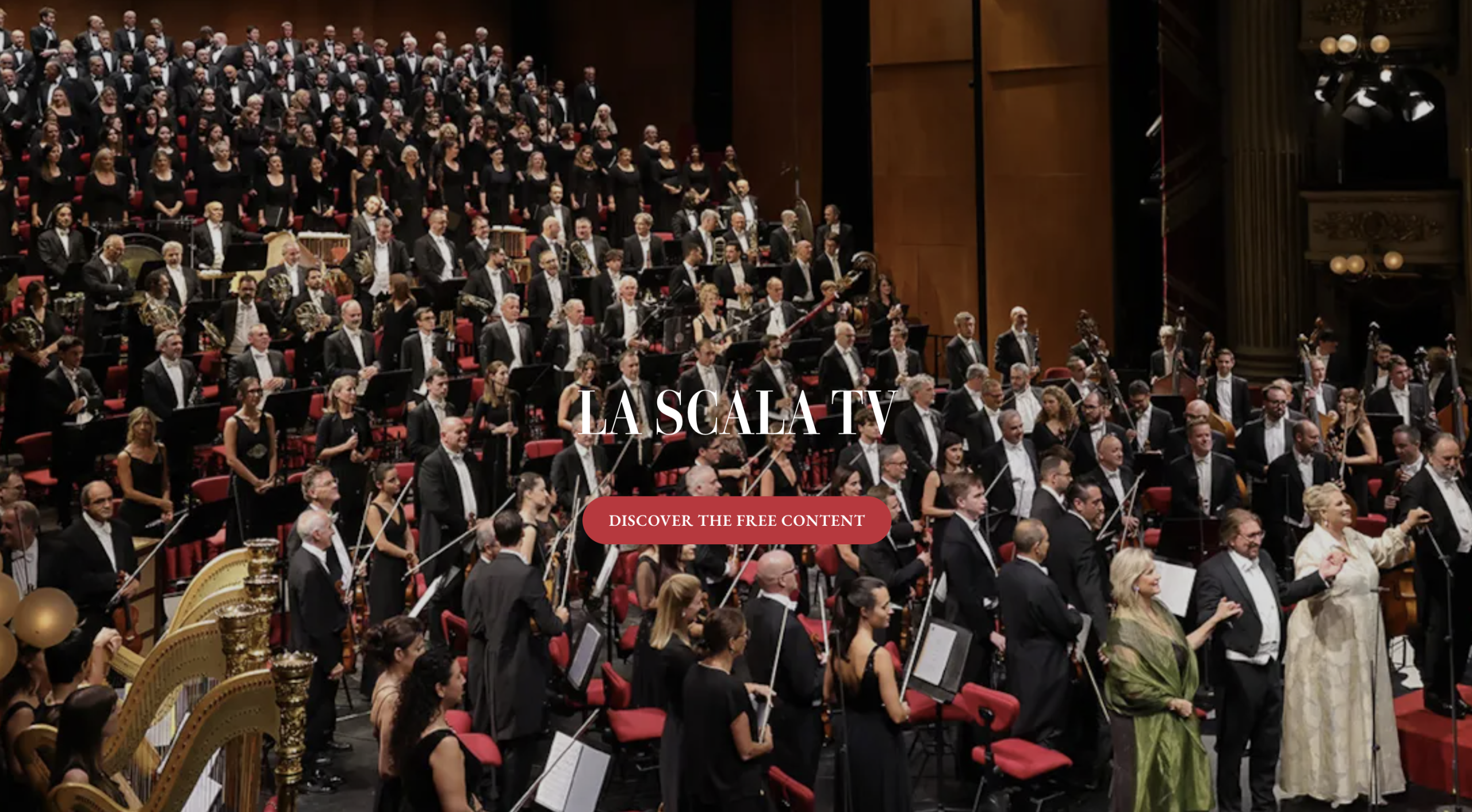
A Real Gift: How La Scala Found Its Community in New York Through the Teatro alla Scala Association of America (TASAA)

He Sold His Company, Got Everything He Wanted, but Lost His Purpose

OUT OF LINE
Categories
- Art
- Articles
- Business of Luxury
- Celebrities
- Culture
- Entertainment
- Events
- Faces of Summer 2026
- Fashion
- Fashion & Style
- Featured
- Finance
- Food, Spirits, Wine
- Hamptons
- Hamptons Celebrities
- Health
- Health & Beauty
- Lifestyle
- Luxury Lifestyle
- Press
- Profiles
- Real Estate
- Technology
- The Chronicles
- Travel
- Uncategorized
- Weddings