He mortgaged the house. Ten oceanfront acres in Carpinteria. The property where Kevin Costner planned to build his last home. The kind of property that anchors a fortune rather than depletes it. In 2023, at 68, the Oscar winner walked into a meeting with his accountant and announced he was using the equity to fund a Western nobody else would touch.
The Kevin Costner net worth conversation has never been simple. His accountant, by Costner’s own GQ admission, had a freaking conniption fit.
The number kept growing. Twenty million became thirty became thirty-eight. By the time Horizon: An American Saga, Chapter 1 premiered at Cannes in May 2024 to an eleven-minute standing ovation, Costner had personally funded $38 million of the $100 million budget. Reviews were mixed. The box office was worse. Chapter 1 grossed $38.7 million worldwide. Chapter 2 was pulled from its planned August release indefinitely.
Most actors with a $250 million Kevin Costner net worth do not mortgage oceanfront real estate to direct four-part Western epics that gross less than their personal investment. Few would split from a wife of 19 years at 68, pay $63,000 a month in child support, and watch their signature television role kill off the character because they refused to come back.
Costner is not most actors.
The man has been written off by Hollywood three times. He has come back twice. The third comeback is being shot in remote Utah right now, on his own dime, on his own schedule, on terms no studio in 2026 would extend to anyone else alive. This is how that math actually works.
The Lynwood Kid Who Watched His Father Climb Power Lines
Kevin Michael Costner was born on January 18, 1955, in Lynwood, California. His father William worked as an electrician for Southern California Edison. His mother Sharon worked as a welfare worker. The family moved constantly because William chased work. By the time Kevin reached high school, the Costners had relocated through enough Southern California neighborhoods to make him a quiet kid by default.
He was the youngest of three boys. His brother Mark died as an infant before Kevin was born. The family carried that loss without speaking about it. Kevin grew up believing he had been the replacement, which is the kind of psychology that produces an adult who needs to prove he deserves the space he occupies.
He played sports and sang in church choir. After Cal State Fullerton, he earned a marketing degree in 1978. That degree mattered for one reason. It told him he could draft a one-page sales pitch for an idea, and that skill would later allow him to walk into rooms full of studio executives and convince them to greenlight projects no rational financial analyst would approve.
A first signal of how his career would compound happened on his honeymoon. He met actor Richard Burton on a flight back from Mexico. Burton told him to commit, fully, or do something else. Costner committed.
The Cut Scenes That Made Him
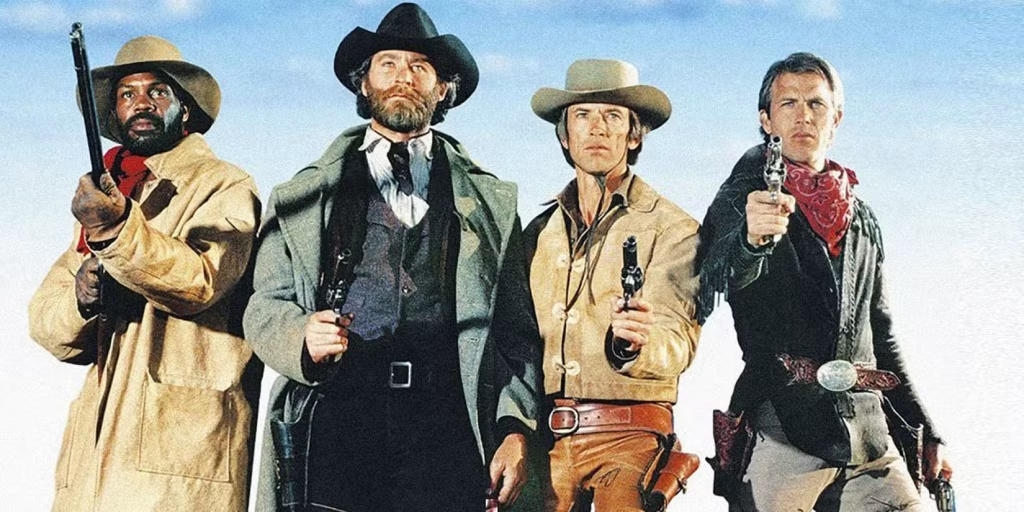
In 1983, Lawrence Kasdan cast Costner in The Big Chill. He played Alex, the friend whose suicide brings the entire ensemble together for a weekend reunion. The role required exactly one thing: appearing in flashbacks that establish why these people loved him so much. Costner shot every scene. Then Kasdan cut every scene. The final film opens with Costner’s wrists being prepared for an open-casket funeral, and that is the only frame of him in the movie.
For most actors, the experience would be career-ending humiliation. For Costner, it became the foundation. Kasdan felt guilty enough that he promised Kevin the lead in his next picture. That picture was Silverado. Those Big Chill cuts were the most valuable career setback in modern Hollywood, because they created an obligation that Kasdan honored.
His Kevin Costner net worth story turns on this moment more than any other. An actor who builds an empire is one who survives being told he was not necessary. Plenty of performers have been cut from prestige films. Most of them do not turn the rejection into the leverage that opens the next door. Costner did, because he understood that Hollywood operates on guilt and obligation as much as talent.
Silverado would change everything. Before that happened, he spent two more years working bit parts and waiting.
Silverado, 1985: The First Time Hollywood Saw Him
silverado-1985-poster
Kasdan released Silverado in July 1985. Costner played Jake, a manic gunslinger who steals every scene through pure reckless charisma. Box office cleared $32 million on a $26 million budget. Critical reception was respectable rather than transformative. Industry impact was something else entirely.
Casting directors had spent two decades waiting for a young leading man who could convincingly carry a Western. The genre had been dead since the early 1970s. Silverado revived it for one summer, and Costner walked away as the actor every studio executive wanted to meet. He was 30 years old. He had survived The Big Chill cuts. His personal balance sheet at this point sat in the low six figures, anchored by a small house in Hollywood and the kind of savings that come from a marketing degree and a working-class upbringing.
What followed was the rarest sequence in modern Hollywood. Between 1987 and 1992, Costner delivered six consecutive films that became permanent cultural references. The Untouchables. Bull Durham. Field of Dreams. Dances with Wolves. Robin Hood: Prince of Thieves. JFK. The Bodyguard. Seven films in five years, every one of them either a commercial blockbuster or a critical landmark or both. No actor of his generation matched that run, and his fortune began compounding with every domestic opening weekend.
The Untouchables Effect
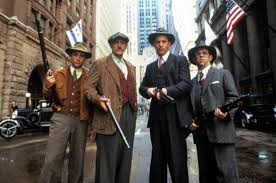
The Untouchables Cast
Brian De Palma cast him as Eliot Ness in The Untouchables in 1987. The decision was not obvious. De Palma needed an actor who could hold the screen against Robert De Niro playing Al Capone and Sean Connery playing the Irish beat cop who teaches Ness how to fight. Costner stood between two of the most magnetic actors of the 20th century and held his ground by underplaying every scene.
The film grossed $106 million worldwide on a $25 million budget. Connery won the Best Supporting Actor Oscar. De Niro got the press. Costner got the quiet respect of an industry that finally understood what he could do at the center of an ensemble.
David Mamet’s script gave him almost no big speeches. Costner played Ness as a man whose moral certainty was the only weapon in a city where everyone else had a gun. The performance has aged because it refused to perform. It exists in the same conversation as Tom Hanks’s quiet leading-man work from the early 1990s, where the wealth came from being the still center of films full of louder actors.
Untouchables math has compounded for nearly four decades through cable residuals, streaming licenses, and the kind of cultural permanence that keeps a film in active rotation forever.
The Bull Durham Effect
Bull Durham 1988 Kevin Costner Susan Sarandon
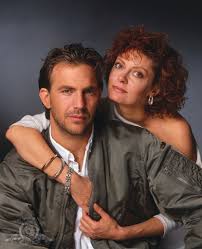
Ron Shelton released Bull Durham in June 1988. Costner played Crash Davis, a career minor-league catcher hired to mentor a young pitcher with a major-league arm and a bush-league brain. The role required the actor to be simultaneously the most experienced man in every room and the most overlooked. His performance is widely considered the finest of Costner’s career, including by Costner himself.
Bull Durham grossed $50 million on a $9 million budget. Sports Illustrated called it the greatest baseball movie ever made. American Film Institute included Crash Davis on its list of the most memorable characters in American cinema. Susan Sarandon, who played Annie Savoy opposite Costner, became one of his closest career allies and a future Oscar winner who would mention Bull Durham in her acceptance speech.
The film did something more important than make money. It established Costner as the actor who could carry a movie about something that mattered to American men over forty without ever announcing it. The audience that built his fortune into nine figures over the next decade was the audience that watched Crash Davis explain what he believed in and recognized themselves in the speech.
Bull Durham also launched Costner’s working relationship with director Ron Shelton, which produced Tin Cup in 1996 and several smaller projects across the next twenty years. The friendship was the asset.
Field of Dreams and the First Backend Deal
Kevin Costner Field of Dreams
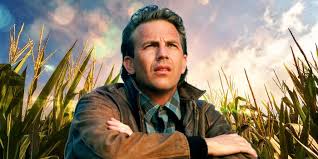
Phil Alden Robinson cast Costner as Ray Kinsella in Field of Dreams in 1989. The film was based on W. P. Kinsella’s novel Shoeless Joe and required an actor capable of hearing voices in a cornfield without inviting laughter. Costner had built his career on exactly this skill. He could play earnestness without irony, which is the rarest commodity in American cinema.
Field of Dreams grossed $84 million domestically on a $15 million budget. It earned three Oscar nominations including Best Picture. Cultural impact was disproportionate to the box office. James Earl Jones delivered the “people will come” monologue that has been quoted in business meetings, baseball broadcasts, and political speeches for thirty-five years.
This was the project where the Kevin Costner net worth architecture changed permanently. Costner negotiated a backend participation deal that paid him roughly $5 million when the standard upfront salary for a leading man at his level was around $3 million. That decision reflected what he had learned from his marketing degree and from watching Sean Connery negotiate The Untouchables. Backend participation on a hit was worth more than upfront cash on a flop.
Field of Dreams was a hit. The check kept arriving. Every cable airing, every home video sale, every eventual streaming license generated another quarterly statement that compounded. That model would define every major decision Costner made for the next thirty years.
Dances With Wolves: The Bet Nobody Wanted
dances-with-wolves-kevin-costner-1
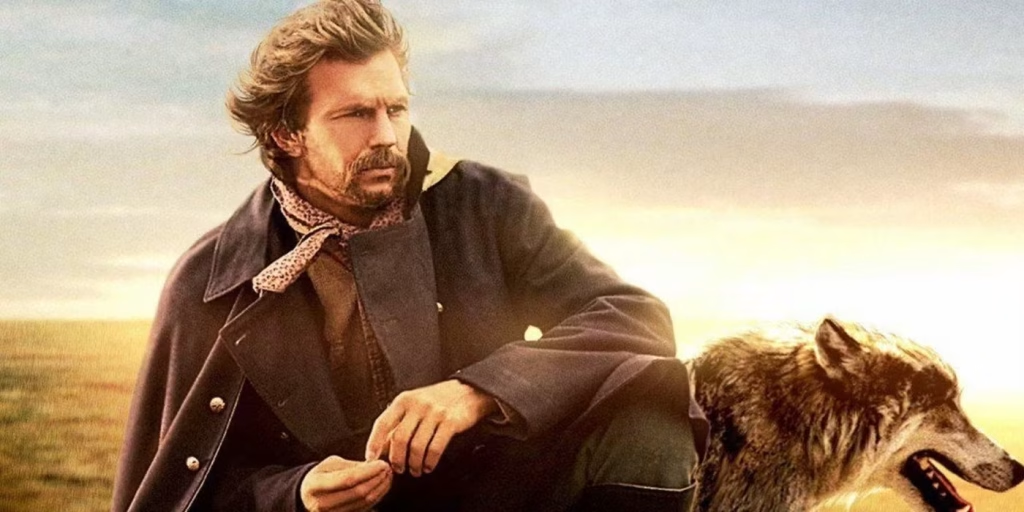
The studios said no. Every studio. For nearly two years between 1988 and 1990, Costner shopped a script written by Michael Blake about a Civil War officer who joins a Lakota tribe. The script ran three hours. It required subtitles for the Lakota dialogue. It needed buffalo herds, prairie locations, and a budget that no studio would approve for a Western, in 1990, directed by an actor whose previous directing credit was zero.
Costner financed the development himself. After convincing Orion Pictures to put up roughly $15 million, he took on the rest of the production risk personally. He directed, starred in, and produced the film simultaneously. The total budget reached $22 million by the time principal photography wrapped in South Dakota.
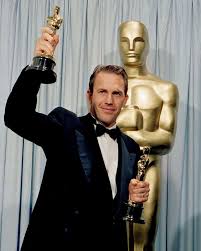
Dances with Wolves grossed $424 million worldwide. It won seven Academy Awards including Best Picture and Best Director. Costner won the Oscar for directing his first feature, which had only happened twice before in Academy history. His fortune jumped from comfortable nine figures into the territory where actors stop counting and start managing.
A lesson Costner internalized would define every subsequent risk he took. When studios refuse a project, the project is yours to own outright. The risk is total. The upside, if the audience shows up, is total too. Horizon would prove the logic could go either direction.
The Bodyguard: Whitney Houston and the Soundtrack That Outearned the Movie
Kevin Costner The Body Guard
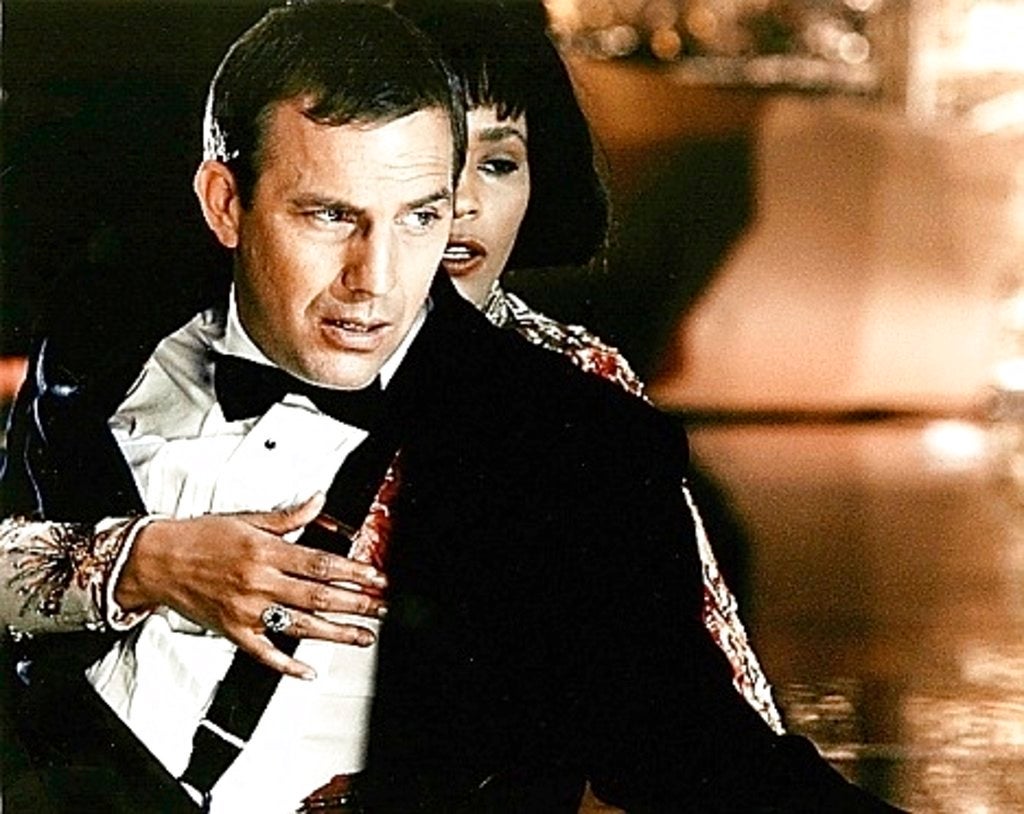
Mick Jackson released The Bodyguard in November 1992. The film paired Costner with Whitney Houston in her acting debut. Its script had been sitting at Warner Bros. since the 1970s, originally developed for Steve McQueen and Diana Ross. Costner pulled it off the shelf, rewrote the central romance, and convinced Houston to take the role her record label was actively discouraging.
Bodyguard grossed $411 million worldwide on a $25 million budget. Its soundtrack sold 45 million copies and remains one of the bestselling soundtracks in recorded music history. Houston’s cover of Dolly Parton’s “I Will Always Love You” sat at number one on the Billboard Hot 100 for fourteen consecutive weeks.
His Kevin Costner net worth from The Bodyguard alone runs into nine figures when soundtrack royalties, theatrical gross, home video, and streaming licenses are aggregated across thirty-three years. Costner produced the film through his Tig Productions banner, which gave him backend participation on the soundtrack as well as the picture. Such structure was deliberate. He had learned from Field of Dreams that ownership compounds and that compound interest is the only kind of wealth that survives a career downturn.
This film became the foundation of Houston’s adult crossover, which would later compound through her own catalog. Costner delivered the eulogy at Houston’s funeral in 2012. Their friendship was real. The financial relationship was the asset.
JFK and the Oliver Stone Years
Kevin Costner JFK
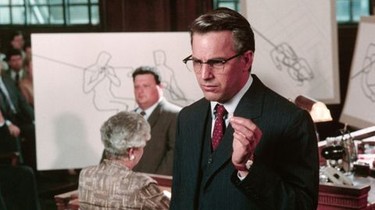
Oliver Stone cast Costner as New Orleans District Attorney Jim Garrison in JFK, released December 1991. Its runtime hit 188 minutes. The film made the case that Lee Harvey Oswald did not act alone, that the Warren Commission had concealed evidence, and that the assassination of John F. Kennedy was the founding crime of modern American politics. Costner delivered the closing argument, a 28-minute monologue, in a single Louisiana courtroom set.
JFK grossed $205 million worldwide on a $40 million budget. It earned eight Academy Award nominations including Best Picture and Best Director. Its closing argument scene is widely considered one of the most demanding pieces of monologue acting in American cinema, and Costner had to memorize it in pieces while shooting other scenes simultaneously.
His JFK paycheck was less significant than the cultural positioning. The film established Costner as an actor willing to carry political risk. Conservative critics attacked the movie for its conspiracy theories. Liberal critics defended it for its institutional skepticism. Costner stood in the middle of the controversy and let the box office speak.
His Stone collaboration would produce one more film, Wyatt Earp in 1994, which underperformed against Lawrence Kasdan’s competing Tombstone. Their relationship soured. Costner moved on. By the end of 1992, his fortune had cleared $100 million, three years after Field of Dreams, six years after Silverado.
Waterworld: When the Industry Wrote Him Off the First Time
waterworld-boat-kevin-costner
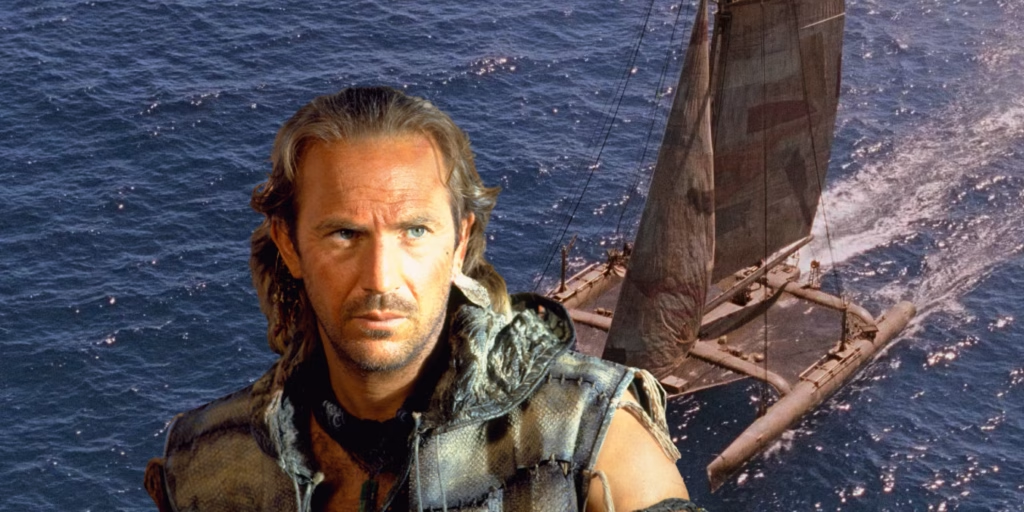
Kevin Reynolds directed Waterworld in 1995. Its budget reached $172 million, making it the most expensive film ever produced at that time. Costner starred as the Mariner, a mutated post-apocalyptic sailor with gills. Production filmed entirely on water off the coast of Hawaii. Sets sank. Hurricanes destroyed equipment. Reynolds and Costner clashed throughout production. Reynolds eventually walked off the picture, and Costner finished directing it himself, uncredited.
The film grossed $264 million worldwide. By any standard except the budget, that was a hit. By the standard of a film that cost $172 million plus marketing, it was a disaster. Hollywood spent the next decade calling Waterworld the worst financial decision in modern studio history, even though the film eventually broke even through home video and cable licensing.
Damage absorbed was reputational more than financial. Costner’s upfront salary on Waterworld was $14 million plus backend participation, and the film generated enough secondary revenue that his personal compensation cleared $30 million across the project’s full lifecycle. Reputational damage exceeded the financial damage by an order of magnitude.
For the first time since Silverado, Costner could not greenlight projects on his name alone. The Postman followed in 1997 and grossed $20 million on an $80 million budget. The industry verdict was final. Costner was finished as a marquee leading man. He was 42 years old. Most actors who get written off at that age never come back.
The Lost Decade Between Movies and Television
Between 1998 and 2017, Costner worked steadily without ever recovering his pre-Waterworld marquee status. For Love of the Game in 1999, directed by Sam Raimi, performed modestly. Thirteen Days in 2000 earned strong reviews and small grosses. Open Range in 2003, which Costner directed and produced, earned $68 million worldwide and proved he could still make a Western. The film cleared profit. It did not restore his quote.
His income during this period was sustained by three sources: the back catalog from his 1987-1992 run, his real estate holdings in Aspen and Carpinteria, and a series of supporting roles in films like Mr. Brooks, Hidden Figures, and the 2013 Superman reboot Man of Steel, where he played Pa Kent. That Pa Kent role paid roughly $2 million plus participation. Cultural impact was disproportionate to the paycheck. A generation of younger viewers who had never seen Bull Durham met Costner as the man who taught Clark Kent how to be human.
He started a country band. Kevin Costner & Modern West toured small venues and released three albums. The band lost money. His decision to tour anyway revealed something essential about the way Costner spent his money. He invested in things that interested him personally, regardless of whether the investment generated returns. Most actors at his level did the opposite, which is why most of them ended up wealthier than Costner and significantly less interesting to write about.
Yellowstone: The Comeback Nobody Saw Coming
Kevin-Costner-Yellowstone
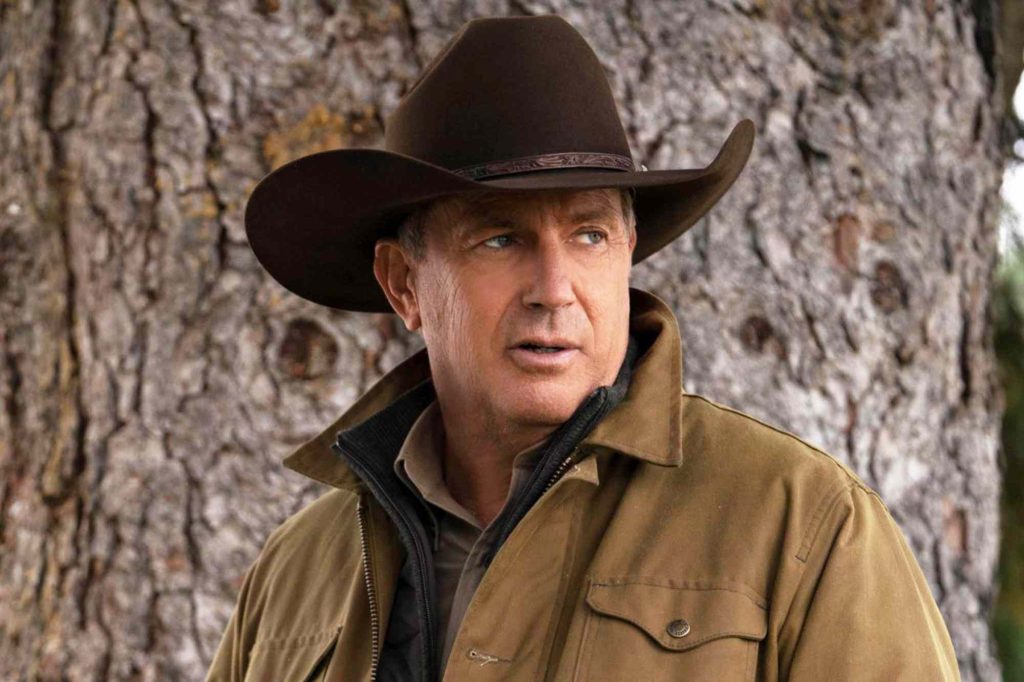
Taylor Sheridan pitched Costner the role of John Dutton in 2017. The pitch was simple. A modern Western family drama about a Montana cattle ranch under siege from developers, casino interests, and the federal government. Sheridan had written Sicario and Hell or High Water. Costner trusted the writer immediately. That trust was the asset that made the deal possible.
Yellowstone premiered on the Paramount Network in June 2018. The show built audience slowly through Season 1. By Season 3, it had become the most-watched scripted series on cable television. By Season 5, it averaged 12 million viewers per episode in live-plus-three ratings, numbers that broadcast networks no longer reach.
Compensation math during the Yellowstone run looked like this. Season 1 paid $500,000 per episode. Season 5 paid $1.3 million per episode across 16 planned episodes. According to Variety, Costner earned upwards of $12 million for Season 5 alone, with the Season 6 deal projected to push him over $1.6 million per episode if he had returned.
He did not return. His dispute with Sheridan over filming schedules became public in 2023. Costner needed time to direct Horizon. Sheridan needed Costner on set in Montana. The split was inevitable. Yellowstone killed off John Dutton off-screen in November 2024, and his largest single income stream went with him.
The $1.3 Million Per Episode Walkoff
Walking away from $25 million in guaranteed income across a Yellowstone Season 6 was not a financial decision. It was a Costner decision. The actor who had bet his entire reputation on Dances with Wolves was the same actor who would not split his attention between a Paramount Network production schedule and his own four-part Western epic.
His exit cost more than the lost salary. It cost Costner the loyalty of Sheridan, who would proceed to develop multiple Yellowstone spinoffs without him. 1923, starring Harrison Ford and Helen Mirren, became the new flagship. Sheridan never publicly trashed Costner, but the silence was its own message. Neither man has collaborated since.
His decision to leave Yellowstone reflected a pattern that runs through every major career move since 1989. When the math says stay and the project says go, Costner goes. The Field of Dreams backend deal was the same logic in reverse. He gave up upfront cash for ownership upside. He gave up Yellowstone guarantees for Horizon ownership upside. That first bet paid out for thirty-five years. Bet number two has not paid out yet.
His 2026 balance sheet reflects the cost of that consistency. He could be richer. He chose otherwise. Choice is the asset, even when the bank statement does not yet agree.
Horizon: The $38 Million Bet on His Own Mythology
horizon-an-american-saga-chapter-2
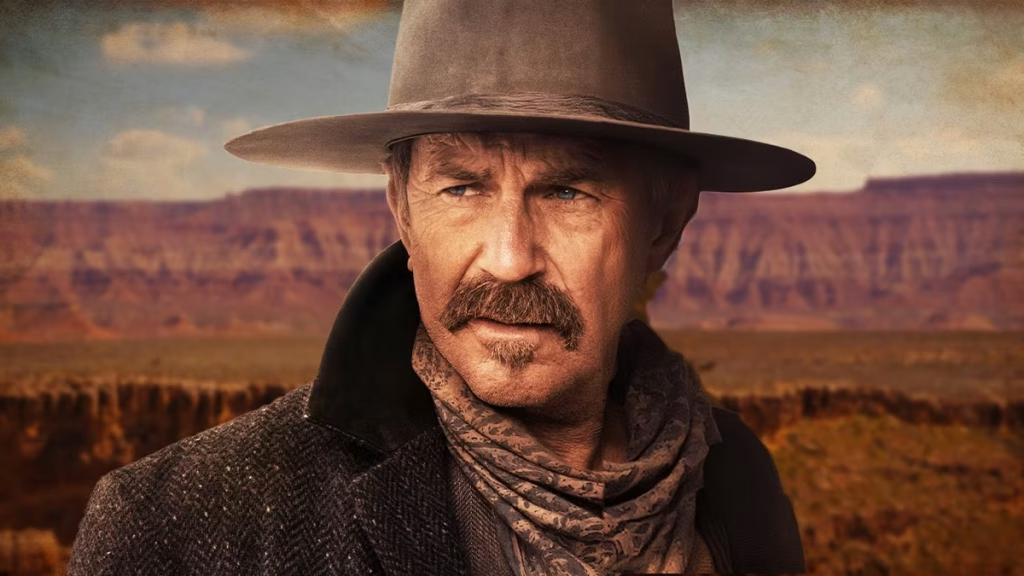
The full Horizon: An American Saga story has now been told publicly enough that the financial structure is no longer a secret. Costner committed $38 million of his own money to the four-chapter Western, mortgaging the 10-acre Carpinteria oceanfront property he had planned to retire on. Total budget for Chapter 1 and Chapter 2 reached approximately $100 million combined.
Chapter 1 premiered at Cannes in May 2024 to an eleven-minute standing ovation. Reviews were mixed. Some critics praised the ambition. Others noted that the film ended without resolution because it was the first installment of four. The audience did not show up. Chapter 1 grossed $38.7 million globally, against the $50 million Chapter 1 budget plus marketing.
Chapter 2 was scheduled for August 2024 release. Its studio pulled the date. The film has not yet received a theatrical release window in 2026, though Netflix streaming rights have been discussed publicly. Chapter 3 entered production in summer 2025 in Utah, again funded primarily through Costner personally.
His balance sheet absorbed the immediate hit. Real estate holdings in Carpinteria and Aspen remained intact, though leveraged. Streaming residuals from Yellowstone, Dances with Wolves, The Bodyguard, and Field of Dreams continued to compound. Costner told The Hollywood Reporter that Horizon would play for fifty years and that he was building for the long catalog rather than the opening weekend. Time will tell.
The Two Divorce Settlements That Cost Him $80 Million and a Marriage
Kevin Costner married his college sweetheart Cindy Silva in 1978. Their marriage produced three children and lasted sixteen years. They divorced in 1994 during the production of Waterworld. Settlement reportedly cost Costner $80 million, which at the time was one of the largest celebrity divorce payouts in California history. That figure represented roughly half of his net worth at the height of his marquee career.
He married Christine Baumgartner in 2004. Their marriage produced three more children. Baumgartner filed for divorce in May 2023. Proceedings became public quickly. Court documents revealed Costner’s prenuptial financial disclosure from 2003 had estimated his net worth at $102.7 million. Baumgartner’s attorneys argued his current net worth had reached approximately $400 million when including illiquid real estate and intellectual property.
The settlement included $63,000 per month in child support, a one-time $1.5 million spousal payment, and additional moving and rental contributions. Baumgartner did not request long-term spousal support. Proceedings concluded in early 2024.
His balance sheet has now been measured publicly through two separate court proceedings, which is unusual for a working actor. Both filings revealed an asset structure heavy in California real estate, light in liquid investments, and dependent on continued backend royalties from a 1987-1992 catalog that has now generated income for nearly four decades. That structure is unconventional. Its longevity is the point.
The 160-Acre Aspen Ranch and the $250 Million Offer
Costner began assembling his Aspen ranch in the late 1980s. His original purchase covered roughly 100 acres of land in Old Snowmass, Colorado, which he expanded over subsequent decades to 160 acres. That compound includes three guesthouses, a private lake, baseball and hockey facilities, and a main residence designed for both family use and high-end short-term rental.
According to Celebrity Net Worth and confirmed in his divorce filings, an unnamed buyer offered approximately $250 million for the Aspen property in the early 2020s. Costner declined. That decision aligned with every other Costner asset move since the 1990s. He does not sell. He holds.
His balance sheet structure depends heavily on this real estate philosophy. Carpinteria’s compound covers approximately 10 oceanfront acres near Santa Barbara, valued conservatively at $100 million before the Horizon mortgage reduced its equity position. His Aspen ranch alone, even at the rejected $250 million offer, represents more than the entire publicly-cited Kevin Costner net worth figure.
That property pattern echoes the structure described in Social Life Magazine’s analysis of celebrity wealth versus dynasty wealth. Costner’s holdings are concentrated rather than diversified, illiquid rather than fluid, and oriented toward long-term family use rather than financial optimization. Structure is the choice. Choice is the man.
The Real Kevin Costner Net Worth Math in 2026
Celebrity Net Worth currently lists the Kevin Costner net worth at $250 million as of early 2026. That figure represents the most conservative public estimate and reflects liquid plus moderately liquid assets only. Those 2023 divorce filings placed the total estate at approximately $400 million when including the Aspen ranch at fair market value, the Carpinteria compound, additional California holdings, and intellectual property positions in his back catalog.
Compositional breakdown looks roughly like this. Real estate represents approximately $250 million across the Aspen and Carpinteria properties, less the Horizon mortgage. Backend participation and residuals from his 1987-1992 catalog generate an estimated $5 to $8 million annually in passive income. Yellowstone Season 1 through Season 5 compensation reached approximately $35 million in total earnings before backend participation. His Costner oil-water separation technology, used during the Deepwater Horizon cleanup in 2010, generated an eight-figure payout that has since been reinvested into Horizon and other ventures.
Tig Productions remains operational and continues to develop projects. Costner’s investment in Autio, the location-based audio storytelling platform, represents a smaller but meaningful equity position whose long-term value depends on consumer technology adoption.
An honest figure for 2026 sits between $250 million and $400 million depending on which asset valuation methodology applies. The number is real either way. Concentration in real estate is the structural risk. Catalog is the structural asset.
What He Built That Hollywood Cannot Take Back
Those seven films from 1987 through 1992 will outlast every awards cycle, every studio regime change, every streaming platform consolidation, and every executive who currently believes Westerns are unfashionable. Bull Durham will play forever. Field of Dreams will play forever. Dances with Wolves will play forever. The Bodyguard will play forever. JFK will play forever.
His balance sheet in 2050 will look different from the 2026 math, but the catalog will continue compounding regardless of who controls the rights. That is the asset structure of an actor who understood, before most of his peers, that ownership beats employment and that the work outlives the contract.
What Yellowstone proved in 2018 is that the same audience that built him in 1988 was still there, thirty years older, still wanting to see a man stand on a piece of land and refuse to be moved. What Horizon is proving in 2026 is that the same actor who walked away from $25 million in Yellowstone Season 6 guarantees will walk away from anything to make the work he wants to make.
Most actors at 70 are managing decline. Costner is managing investment. The bet may not pay this decade. His catalog will pay forever. That is the architecture of a fortune no studio executive, no ex-wife, no box office report, and no streaming algorithm can fully measure. Compare the structure to patterns documented in the Brad Pitt net worth playbook, where Plan B production economics produced similar long-tail compounding, or to the Tom Cruise net worth model, where backend participation on Top Gun: Maverick generated nine-figure single-film returns. Different routes, same architecture: ownership, patience, and the refusal to optimize for the wrong decade.
Why This Story Matters Beyond One Actor
Every reader of Social Life Magazine’s celebrity net worth rankings understands intuitively what Costner figured out in 1989. The check is not the asset. A contract is not the asset. A film is the asset, and only when that film is owned by the people who made it. Most actors never reach that conclusion. Most actors who reach it do so too late to act on it.
Costner reached the conclusion before he had the money to act on it, then spent forty years acting on it consistently, even when the math said otherwise. Result: a Kevin Costner net worth that on paper looks merely large, and in catalog terms looks structurally unique. The lesson for the founders, fund managers, and entrepreneurs who read this magazine is the same lesson Costner learned at 30. Equity over salary. Patience over speed. Ownership over employment. Compounding over splash.
Today’s Kevin Costner net worth conversation will look different in 2030 once Horizon Chapters 2 and 3 receive their distribution windows. It will look different again in 2040 once the streaming consolidation has fully repriced legacy catalog rights. The number will keep moving. The principles that built it will not. That is the only kind of wealth worth writing about.
A fish does not notice the water. A reader does not notice the architecture. That is the entire point. Furthermore, it is the entire opportunity for the brand founder, fund manager, or fashion house creative director who has just read this far and is, without having fully realized it yet, about to scroll down and click one of the following links.
If you are a brand, a founder, a creative director, or an in-house marketing lead who has read this far and would like to be considered for an editorial feature in Social Life Magazine’s print or digital ecosystem, the editorial team reviews brand submissions year-round. Reach out via the Social Life editorial contact page.
Submit A Paid Feature
For brands ready to position alongside the culture that rewards patience over flash, the Submit A Paid Feature page is the fastest entry point. Our editors build the placement to fit your audience, not ours.
The 82,000-Reader Email List
Join the 82,000+ readers who receive the Social Life Magazine email digest weekly. The list reaches the affluent New York and Out East audience that drives luxury brand purchase decisions across beauty, spirits, hospitality, finance, and fashion. Sign up via the Social Life Magazine email signup form.
Polo Hamptons 2026
For brands ready to be present in front of the demographic that built the Kevin Costner net worth catalog economics in the first place, Polo Hamptons 2026 is the marquee summer activation. Title sponsor BMW returns for its eighth consecutive year. Tickets, cabanas, and remaining sponsorship packages are available now.
Print Subscription
Subscribe to the print edition of Social Life Magazine and hold 23 years of Out East cultural authority in your hands. Five summer issues delivered Memorial Day through Labor Day, plus the Fall and Winter editions reaching Upper East Side doorman buildings. Print subscriptions are available at the Social Life subscription page.
Support Independent Journalism
If this article sharpened your thinking, consider supporting independent luxury journalism. Donate $5 and keep the signal clean. Buy us a coffee here.
The Kevin Costner net worth story is the rare Hollywood case study where the catalog outlasts the contract, the ranch outlasts the marriage, and the man outlasts the industry that wrote him off. Print the architecture. Bookmark this page.
Written by CassWorld. Cass Almendral is Head of Business Development at Social Life Magazine and Co-Founder of Polo Hamptons. Reach editorial at [email protected].