
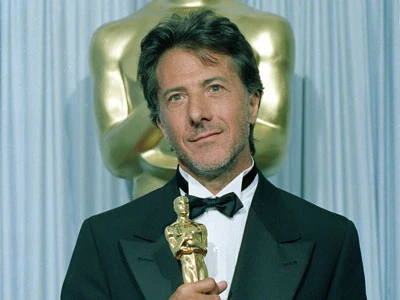
December 2026. Dustin Hoffman is 89 years old, still living in his Manhattan apartment on Central Park West, and still occasionally taking work he likes. The Dustin Hoffman net worth in 2026 sits at approximately $50 million. A number that registers as small for a two-time Best Actor winner with seven Academy Award nominations across five decades, and which obscures the actual architecture of how his fortune was built and distributed. Most of the headline figure was earned between 1976 and 1996, when he commanded $5 million to $12 million per film at peak. The 1996 number, $12 million for Sleepers, was his ceiling.
What followed was a quieter career. Smaller films. A directorial pivot that did not catch. Late-career sexual misconduct scandal in 2017 that altered the trajectory. A subsequent return to character work in projects like The Meyerowitz Stories and Confess, Fletch.
The fortune is real. Work is what compounded. The single film that anchors his cultural footprint in the Robert Redford universe is All the President’s Men, the 1976 Watergate procedural that turned investigative journalism into a Hollywood archetype that still runs the genre today.
The $50 Million Question
Headline number is $50 million. The texture is selective.
Hoffman peaked financially in the 1990s. Hook in 1991 paid him $5 million plus back-end participation. Outbreak in 1995 paid him $7 million. Sleepers in 1996 paid him $12 million. Wag the Dog in 1997 paid him $4 million plus points and earned him his sixth Oscar nomination. Mad City in 1997, paired with John Travolta, paid him $5 million. Sphere later that year was a $5 million payday on a $73 million flop.
The 2000s were structurally different. Finding Neverland in 2004 paid him a fraction of his 1990s quote in exchange for prestige. Stranger Than Fiction in 2006 was lower still. Last Chance Harvey in 2008 was a small-budget romantic drama that earned him a seventh Oscar nomination and a fraction of what Sleepers had paid. The dollar trajectory bent down. The reputational trajectory bent up.
His Manhattan real estate appreciated steadily through the entire arc. The Central Park West apartment he has held since the late 1980s is currently estimated at $20 million, a third of his net worth. The London property he sold in 2010 closed at approximately $14 million.
From Los Angeles To Mike Nichols
Dustin Lee Hoffman was born August 8, 1937, in Los Angeles, the son of a furniture salesman and a homemaker. The childhood was middle-class Jewish Los Angeles, Santa Monica High School, the Pasadena Playhouse, and a steady refusal to take the conventional acting path. He studied at the Actors Studio in New York under Lee Strasberg in the early 1960s, supported himself with restaurant and typing jobs, and spent most of the decade in off-Broadway work that paid in critical attention rather than money.

Mike Nichols cast him as Benjamin Braddock in The Graduate in 1967. Hoffman was 30, playing 21. The casting was structurally radical. The studio wanted Robert Redford for Braddock and Nichols refused. Hoffman’s salary was $20,000. The film grossed $104 million on a $3 million budget and made him a star at an age when most leading men have already plateaued. Oscar nomination came automatically. The career architecture, anchored on character work rather than leading-man-conventional, was sealed.
Midnight Cowboy in 1969 paid him $250,000. He played Ratso Rizzo opposite Jon Voight. The film won Best Picture, the only X-rated film ever to win the Academy’s top prize. His second Oscar nomination came with it. The pattern of the next 50 years was now visible. Take the unconventional role. Win the nomination. Build the body of work the leading-man-conventional cannot.
All The President’s Men With Redford

Alan J. Pakula directed Hoffman and Robert Redford as Carl Bernstein and Bob Woodward, the Washington Post reporters who broke Watergate. Redford produced the film himself, optioning Bernstein and Woodward’s book before Nixon resigned in 1974. He cast Hoffman as Bernstein, the more rumpled and instinctive of the two reporters. Redford played the more procedural Woodward.
The casting was deliberate. Hoffman brought urgency. Redford brought the studio leverage and the producing infrastructure. The film won four Oscars including Best Adapted Screenplay (William Goldman) and Best Supporting Actor (Jason Robards as Ben Bradlee). Hoffman did not win for it. He had already won Best Actor a couple of years earlier for nothing yet, and would win it twice in the years to come, but All the President’s Men did not generate his nominations. It generated the genre.
The film turned investigative journalism into a Hollywood archetype that still runs every prestige journalism film made since. Spotlight in 2015 was a direct descendant. The Post in 2017 was Pakula’s structural sequel. Career-defining work Hoffman did with Redford was the establishment of a Hollywood permission slip for adult procedural drama. The full architecture of Redford’s six-decade career and the casting of this film lives in the Robert Redford net worth pillar.
The Two Oscar Wins

Kramer vs. Kramer in 1979 won Hoffman his first Best Actor Oscar. He played a father navigating divorce and custody opposite Meryl Streep, who won Best Supporting Actress. The film also won Best Picture and Best Director (Robert Benton). Hoffman’s salary was $1.5 million. His back-end participation, structured aggressively by his then-agent Sue Mengers, generated an additional $5 million across the film’s domestic and international release.
Rain Man in 1988 won him his second Best Actor Oscar at age 51. He played the autistic savant Raymond Babbitt opposite Tom Cruise. Barry Levinson directed. The film won Best Picture, Best Director, Best Original Screenplay, and Best Actor. Hoffman’s salary was $5.7 million plus back-end participation that brought his total take to approximately $9 million on a film that grossed $354 million worldwide.
The two Oscars established Hoffman as the only actor of his generation to win Best Actor twice across the 1979-1989 decade. De Niro won once (Raging Bull). Pacino did not win until 1992. Newman did not win until 1986. Hoffman won twice in 10 years.
Lisa, Manhattan, And The 2017 Reckoning

Hoffman married attorney Lisa Gottsegen in 1980. They have four children. The marriage has held for 46 years. Manhattan apartment on Central Park West has been their primary residence since the late 1980s. The London property they kept across the 1990s and 2000s sold in 2010. Their summers historically included extended East End stays, though Hoffman has been less visible at Hamptons society events since 2017.
That year, multiple women publicly accused Hoffman of sexual misconduct dating to the 1980s and 1990s. Hoffman issued a statement that read partially as apology and partially as denial. He has not addressed the accusations in interviews since. His subsequent work has been smaller. The pre-2017 directorial film he produced, Quartet, did not lead to additional directing work. Trajectory of his late career is one of the genuinely complicated final acts in modern American cinema.
The Last Method Actor Of His Generation
The category Hoffman occupied is closing. Method-trained, character-driven leading man who could play 21 at 30 and 51 at 88. The figure refused the conventional A-list face for 50 years and built a fortune on character roles, is a Hollywood economic logic that no longer renews itself. Streaming algorithms reward franchise faces. Marvel is the IP. Mid-budget adult dramas are functionally extinct.
The Dustin Hoffman net worth ledger reads at $50 million. The category ledger reads larger. He outlasted the Method generation and produced a body of work no one in his cohort matched.
Where The Conversation Continues
Social Life Magazine has been covering Hamptons luxury legacy since 2003. Polo Hamptons sponsorships for July 18 and 25 in Bridgehampton are filling now. For brand directors looking for the prestige-procedural reference that still hits in 2026, Hoffman’s body of work is the index. Substance over spectacle. Character over face. Career over moment.
If your brand belongs in that conversation, the entry point is sponsorships@sociallifemagazine.com. The yacht has a finite manifest. Cabana sales are tracking ahead of last year. Categories already locked are auto (BMW), Hermès, and one real estate sponsor. The rest is open until it isn’t.
Author

Written by
Recent Posts

Richie Akiva Hosts Annual Fourth of July “The After” Beachfront Bash with Elie Tahari

Dispatch From the Season: The Great Hamptons Sorting
The Man Who Isn’t at Your Party: Howard Stern’s Hamptons
A Field Guide to the Hamptons Casualty

Aesthetic Medicine Distributor: The Foundation of Patient Confidence in Modern Aesthetic Medicine
Categories
- Art
- Articles
- Business of Luxury
- Celebrities
- Entertainment
- Events
- Faces of Summer 2026
- Fashion
- Fashion & Style
- Featured
- Finance
- Food, Spirits, Wine
- Hamptons
- Hamptons Celebrities
- Health
- Health & Beauty
- Lifestyle
- Luxury Lifestyle
- Press
- Profiles
- Real Estate
- Technology
- The Chronicles
- Travel
- Uncategorized
- Weddings