
Where a $115 Million Road Meets a $4 Tomato
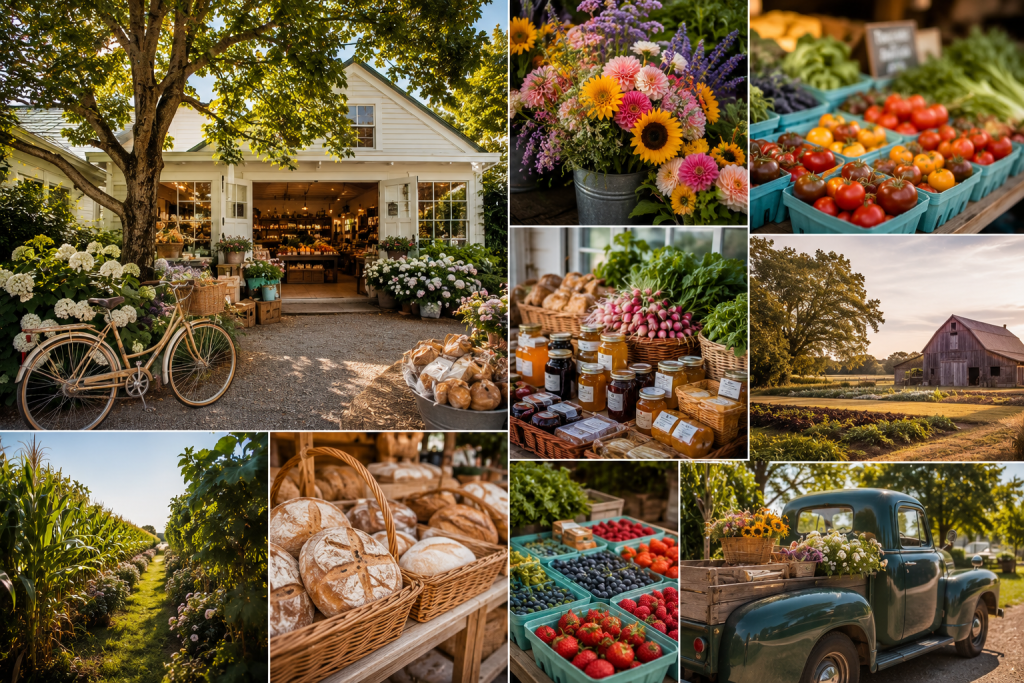
In Amagansett, the primary social institution is not a private club, a restaurant, or a theater. It is a farm stand. Amber Waves Farm, at 367 Main Street, occupies roughly 45 acres of working farmland across Amagansett and East Hampton, operates as a 501(c)(3) nonprofit, employs over 100 people at peak season, feeds more than 300 CSA families, and runs a daily market and cafe that functions as the hamlet’s unofficial town square. Indeed, on a Saturday morning in July the line at Amber Waves treats a Further Lane billionaire’s housekeeper and a Greenpoint ceramicist with identical indifference. Good produce doesn’t care about your net worth. Ultimately, that structural equality is what makes the farm stand Amagansett’s most important institution.
Understanding Amber Waves is essential to understanding why this hamlet feels different from every other village in the Hamptons. Southampton sorts by club membership. Sag Harbor sorts by taste. Bridgehampton sorts by visibility. Amagansett sorts by proximity: if you’re here, you’re in. And the place you’re in, more often than not, is the farm stand line.
The Founding Story: Two Apprentices and a Poet Farmer
Amber Waves began in 2008, when Amanda Merrow and Katie Baldwin met during an apprenticeship program at nearby Quail Hill Farm, run by poet-farmer Scott Chaskey. While learning to plant and harvest, they noticed something remarkable: Long Island’s diverse foodshed was missing a key ingredient. Nobody was growing culinary grains for baking or dough-making on the East End. Subsequently, the two women responded to a request from the Peconic Land Trust for agricultural business plans, proposing to farm the newly conserved land behind the Amagansett Farmers Market. As a result, in 2009 they were awarded a three-year lease on 7.7 acres, just a mile from the ocean.
Why They Called It Amber Waves
Naturally, the name came from the wheat. Baldwin and Merrow had reintroduced culinary grains to the East End, and the sight of wheat fields rippling near the Atlantic felt like something the region had lost and was only now recovering. The ocean’s proximity influenced the soil and terroir, producing grains with a depth of flavor that inland wheat couldn’t match. Essentially, Amber Waves named itself. The farm was wheat growing within sight of the sea, and the name captured that image before anyone had to think about it.
Since then, from those 7.7 acres, the operation grew steadily. Today, Amber Waves spans roughly 45 acres across a patchwork of fields in Amagansett and East Hampton. The staff has expanded from two founders to over 100 farmers, educators, cooks, and market employees at peak season. The CSA membership exceeds 300 families. Workshops and educational programming run year-round, including a dedicated outdoor classroom and a teaching curriculum for children and adults. In short, what started as a shared dream between two farming apprentices has become one of the premier educational farm operations in the country.
The Market and Cafe: 367 Main Street
The market at 367 Main Street is open daily and serves as Amagansett’s commercial anchor in a way that no restaurant or shop can replicate. Specifically, seasonal produce (heirloom tomatoes, sweet corn, zucchini, lettuces, stone fruit) fills the stands. Freshly milled wheat from the farm’s own grain program produces the pastries, breads, and baked goods in the kitchen. The cafe, open daily from 8 a.m. to the early afternoon, serves breakfast and lunch with ingredients sourced from the fields behind the counter.
The Saturday Morning Scene
Certainly, Saturday morning at Amber Waves between 9 and 11 a.m. in July is the closest thing Amagansett has to a civic gathering. The line forms before the market opens. Customers include year-round electricians, summer renters from Brooklyn, the housekeepers provisioning Further Lane dinner parties, and the venture capitalists who left Manhattan on Thursday and are now discovering that the best investment of the weekend is a $9 bag of heirloom tomatoes. As a result, conversations happen in line. Introductions happen in line. Indeed, the social architecture of the farm stand is built on the fact that everyone waits the same amount of time.
The Prospect Heights food writer arrives at Amber Waves at 9:15 on a Saturday.
Previously, she has reviewed three-star restaurants in Manhattan. She has eaten in Tokyo, Copenhagen, Lima.
The corn is still cold. The tomatoes are warm from the sun.
She buys a loaf of wheat bread baked from grain grown one mile from the ocean.
She tears a piece in the parking lot. She chews slowly.
It tastes like something she has been writing about for a decade without ever actually tasting.
Yet she does not write a review. Some things are beyond the assignment.
She comes back every Saturday for the rest of the summer. The bread is always the same.
The Educational Mission: Nonprofit by Design
Amber Waves is not a boutique farm selling $12 microgreens to a curated clientele. It is a 501(c)(3) nonprofit with a mission that extends well beyond the market. The farm’s educational programs include an apprenticeship program for aspiring growers, field trips and outdoor classrooms for children, workshops on sustainable agriculture, and community events that bring hundreds of visitors to the fields each season. Additionally, the farm donates fresh produce to nine local food pantry partners, serving more than 250 families weekly with organic vegetables that would otherwise be available only to those who can afford the market price.
Why the Nonprofit Model Matters
Importantly, the nonprofit structure is significant because it aligns the farm’s incentives with the community’s needs rather than with a profit margin. In a hamlet where real estate values range from $1.2 million to $115 million, the existence of a nonprofit farm feeding food pantries from the same fields that feed Further Lane dinner parties is not just admirable. It is structurally essential. In fact, Amber Waves is the connective tissue between Amagansett’s extremes. Consequently, the farm stand line is the one place where the hamlet’s full economic spectrum occupies the same square footage at the same time.
Round Swamp and Pike Farms: The Supporting Cast
Amber Waves is the headliner, but Amagansett’s farm stand economy includes two other essential operations.
Round Swamp Farm
For decades, Round Swamp Farm has been a Hamptons institution for decades, known for its prepared foods, baked goods, and pies that inspire a devotion bordering on religious. The pies alone have generated a word-of-mouth network that functions like a Michelin Guide for pastry. Blueberry, peach, strawberry rhubarb: each has partisans who will argue their preference with the intensity of someone defending a stock position. For the departing Sunday visitor, a Round Swamp pie is the souvenir that proves you were somewhere worth going. Naturally, buying two is standard protocol (one for you, one for the office).
Pike Farms
Meanwhile, Pike Farms on Windmill Lane rounds out the trio with seasonal produce and a quieter, more local-facing operation. Granted, Pike lacks the brand recognition of Amber Waves or the cult following of Round Swamp, but its presence completes the picture. Together, however, the three farm stands form Amagansett’s agricultural backbone. They are the institutions that survived the hedge fund era, the McMansion boom, and the general transformation of the Hamptons from farming community to luxury destination. Of course, the farms were here before the money arrived. In all likelihood, they will be here after it leaves.
The Farm Stand as Democratic Institution
Pierre Bourdieu, the French sociologist who spent his career analyzing how taste functions as a marker of social class, would have written an entire chapter about the Amber Waves line. Economic capital (the ability to buy the $115 million parcel on Further Lane) coexists with cultural capital (the knowledge of which heirloom variety to choose) in a space where neither confers an advantage. After all, you cannot buy a better tomato than the person next to you. You cannot reserve a spot in line. The farm stand is, by its architecture, immune to the hierarchy that defines every other Hamptons social institution.
Compare that to Southampton’s Meadow Club, where the waiting list IS the social mechanism. Or to Sag Harbor’s restaurant scene, where knowing the maitre d’ confers real advantage. Or to Bridgehampton’s event circuit, where sponsor tables sort the crowd into visible tiers. In Amagansett, the farm stand resists all of it. Produce is the product. Waiting is the process. And democracy is the outcome. After all, this is why Amagansett feels different. The primary social institution was designed, from the ground up, to treat everyone the same.
The Greenwich hedge fund partner stands in the Amber Waves line at 9:30 a.m.
Behind him, a year-round plumber from Springs. In front, a Bed-Stuy ceramicist.
His net worth exceeds $400 million. He is holding a canvas tote bag.
The tote bag has a small tear. He has owned it for nine years.
A teenager hands him a bag of zucchini. Four dollars.
He pays cash. He says thank you. He walks to his car.
This is the richest man in the line. Nobody knows. Nobody cares.
The zucchini is the same for everyone. That is the whole point of Amagansett.
Where the Conversation Continues
Social Life Magazine has covered the East End’s agricultural community for 23 years. Five summer issues, 25,000 copies each, distributed in the farm stands, restaurants, and hotels from Westhampton to Montauk. When the story is food, the story starts in the field.
If your brand serves the farm-to-table audience (organic food, sustainable agriculture, wellness, kitchenware, specialty provisions, culinary education), a feature in Social Life Magazine reaches the people already in the line. Learn more at sociallifemagazine.com/submit-a-paid-feature.
Polo Hamptons 2026 returns to Bridgehampton on July 18 and July 25. BMW North America sponsors. Christie Brinkley hosts. Reservations at polohamptons.com.
Subscribe at sociallifemagazine.com/subscription for every issue.
Two apprentices met in 2008. They planted wheat near the ocean. Seventeen years later, their farm stand is the most democratic institution in the Hamptons. Some things grow slowly. The best things always do.
Author

Written by
Recent Posts
The First Decision After a Collision Can Be the Most Important One
Two Weeks in Rome and Beyond: Turkish Airlines Itineraries from Boston, Chicago and Onward to India
Top 10 Hair Transplant Clinics in Turkey 2026
Artist Alley to Online Store: How Convention Artists Can Keep Selling After the Event
When an 18-Wheeler Crash Leaves Lasting Consequences
Categories
- Art
- Articles
- Business of Luxury
- Celebrities
- Culture
- Entertainment
- Events
- Faces of Summer 2026
- Fashion
- Fashion & Style
- Featured
- Finance
- Food, Spirits, Wine
- Hamptons
- Hamptons Celebrities
- Health
- Health & Beauty
- Lifestyle
- Luxury Lifestyle
- Press
- Profiles
- Real Estate
- Technology
- The Chronicles
- Travel
- Uncategorized
- Weddings