
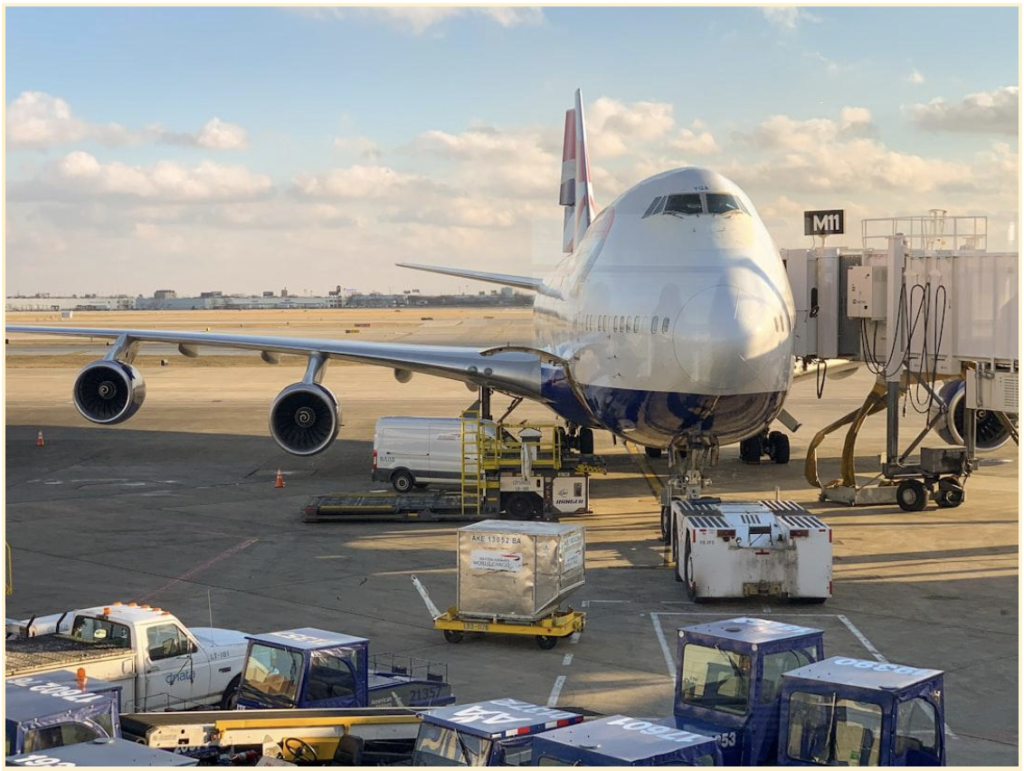
The ties between the Gulf and South Asia have rarely been closer. The two economies trade in energy, textiles and food, a large Pakistani community lives and works in Doha, and business and family interests now stretch easily across the water. For anyone who needs to move goods quickly between them, from a company shipping time-sensitive stock to a family sending something that cannot wait, the fastest route runs through the air. This is a look at how air cargo works on this route, what it suits, and when it earns its higher price.
Why the Qatar to Pakistan Corridor Is Busy
Qatar sits at one of the world’s great aviation crossroads. Hamad International Airport in Doha is the base of Qatar Airways Cargo, among the largest air-freight carriers anywhere, with frequent services to Karachi, Lahore and Islamabad. A flight between Doha and Karachi covers about 2,900 km in only around three hours, which turns a shipment that would spend weeks at sea into an overnight affair. Add the steady trade between the two countries and the roughly 200,000 Pakistanis working in Qatar, and the demand for a fast, reliable link is easy to understand.
When Speed and Care Justify Flying
Flying costs more than sea freight, so it makes most sense when time or value is the priority. Booking air cargo qatar to pakistan suits shipments that cannot wait or cannot risk a long, rough voyage: medical supplies, perishable food, documents, spare parts that keep a factory running, and high-value goods that need tight handling. For a business, the maths often favours the plane once the cost of delay is counted, whether that is a stalled production line or a missed selling season. Speed, in these cases, pays for itself.
What Travels Best by Air
Some cargo is made for flying. Pharmaceuticals and fresh produce depend on short transit and temperature control, both of which air freight handles far better than a container at sea. E-commerce parcels, garment samples and small electronics move quickly and cheaply enough by air to justify it. So do the urgent and the irreplaceable: legal papers, prototypes, and the sort of high-value items a sender wants tracked door to door. Bulky, heavy or low-value goods, by contrast, still belong on a ship, where the per-kilo cost can run 80 to 90 percent lower.
The Practical Side: Customs and Paperwork
Speed in the air can still be lost on the ground, where customs clearance can add a day or two. Shipments into Pakistan need accurate commercial invoices, correct customs codes and, for regulated goods such as medicines, the relevant approvals. Hold-ups far more often trace back to missing documents than to the flight itself, so precise paperwork is the single biggest lever on how fast a consignment clears. A freight partner who handles the customs work at both ends, rather than leaving it to the sender, usually pays for itself in time saved.
Air Versus Sea: Choosing the Right Mode
The choice comes down to what is moving and how fast it is needed. Sea freight from Hamad Port to Karachi or Port Qasim, a voyage of a week or more, remains the sensible answer for bulk goods, machinery and full containers, where cost matters more than days. The plane wins whenever speed, temperature or value tips the balance, and many businesses use both, sending the urgent and the delicate by plane while the rest follows by sea. Comparing the total cost, rather than the headline rate, usually makes the right call clear.
The Fast Lane Between Two Markets
As business and personal ties between the two nations deepen, the pressure to move goods quickly only grows. Air cargo is the fast lane, best reserved for what genuinely needs it and paired with careful paperwork to keep the advantage. Weigh speed against cost, match the mode to the shipment, and the distance between Doha and Karachi starts to feel a good deal shorter.
Author

Written by
Recent Posts

The First Decision After a Collision Can Be the Most Important One
Two Weeks in Rome and Beyond: Turkish Airlines Itineraries from Boston, Chicago and Onward to India

Top 10 Hair Transplant Clinics in Turkey 2026

Artist Alley to Online Store: How Convention Artists Can Keep Selling After the Event
When an 18-Wheeler Crash Leaves Lasting Consequences
Categories
- Art
- Articles
- Business of Luxury
- Celebrities
- Culture
- Entertainment
- Events
- Faces of Summer 2026
- Fashion
- Fashion & Style
- Featured
- Finance
- Food, Spirits, Wine
- Hamptons
- Hamptons Celebrities
- Health
- Health & Beauty
- Lifestyle
- Luxury Lifestyle
- Press
- Profiles
- Real Estate
- Technology
- The Chronicles
- Travel
- Uncategorized
- Weddings