
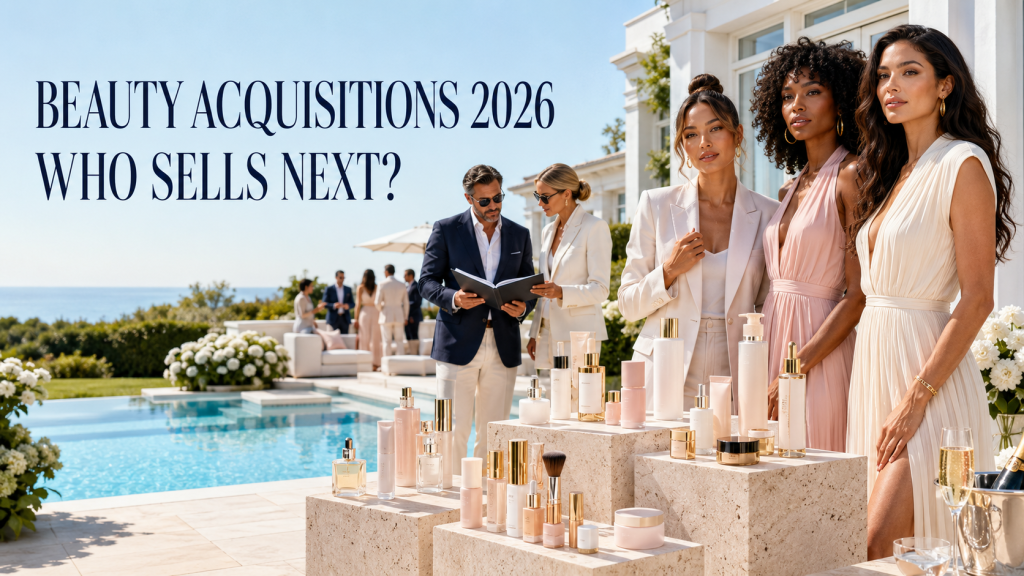
Beauty is the hottest table in consumer M&A, and the celebrity seats are filling fast. Deal volume hit 83 transactions in the first quarter of 2026 alone, up 40.7 percent from a year earlier. Since the Rhode sale reset expectations, every founder-owned brand in this cluster trades rumors weekly. So celebrity beauty acquisitions deserve their own buyer’s guide, and this is it.
The scoreboard behind every name here lives in the beauty empire index. This piece handicaps the next deals, because somebody at a Bridgehampton dinner is already discussing them.
The Deal Tape
Start with what already closed. L’Oréal paid $4 billion for Kering Beauté. Unilever took Grüns at $1.2 billion, while Henkel paid over a billion for Olaplex, per the Forbes deal roundup. Meanwhile private equity keeps circling, with Advent taking Salt & Stone.
The celebrity template remains the Rhode benchmark deal, up to $1 billion at roughly 3.8 times sales. Every founder in this file has read those terms. So has every buyer, which is why the phones keep ringing. Equally, the strategics’ own stock prices reward beauty deals now, which loosens board approvals.
The Earnout Era
Structure now matters as much as price. The Rhode contract normalized three-part deals, with cash at close, stock in the acquirer, and an earnout tied to growth. Sellers who beat their targets get paid twice, as the $57.6 million charge at e.l.f. proved.
Founders also negotiate the soft clauses harder. Creative control, title retention, and brand-voice approvals survived the Rhode close, so they became market standard overnight. The face stays under contract, and the buyer pays for the privilege.
Watch for reverse earnouts next. Buyers burned in the 2020 vintage now claw back value when growth stalls, which is why operating receipts beat projections in every negotiation.
What Buyers Pay For
The diligence list has standardized. Buyers want repeat purchase rates, owned community, omnichannel proof, and actual profitability, not follower counts. Cultural relevance matters, although it now needs receipts attached.
Notice how precisely that list describes the survivors of this cluster. The shakeout filtered out the rented faces, so the remaining founder brands are, almost by definition, acquisition-grade. Scarcity of credible targets is what pushes multiples up from here.
The Board: Who Sells Next
Handicap the sellers in order. First, the Rare Beauty question never closes, since the brand explored a sale once before and holds the cleanest billion-dollar profile in beauty. Every strategic buyer has modeled it twice.
Second, Orebella’s growth round put an institutional clock on the fragrance experiment, because Series A money eventually wants a door. Third, Scarlett’s quiet skincare asset fits the buyer checklist almost suspiciously well, although the founder shows no urgency.
Fourth sits Gaga’s two-door position, funding-light and free to hold or sell into the heat. The board updates as the earnouts season. Watch fiscal quarters, not red carpets.
The Buyers’ Bench
The acquirer side is deeper than it looks. e.l.f. proved the celebrity playbook works and shops with a rising stock as currency. L’Oréal and Unilever write the biggest checks, while Henkel just showed that surprise bidders exist.
Then come the funds. Private equity wants efficient brands with double-digit growth, and specialist vehicles now underwrite famous founders as a category. The Celebrands seed in Orebella was the tell, since specialist capital always precedes specialist exits.
The Multiple Math
Price the cluster with the current curve. Hype brands with viral engines clear three to four times sales, the Rhode zone. Habit brands with replenishment economics can price higher on profit, though usually lower on story. Fragrance franchises price on durability, because scent loyalty outlives algorithms.
Run those lenses across the file and the implied values stack into the billions. The interesting part is which founders would rather keep compounding. Ownership, as this cluster keeps proving, is the one asset buyers cannot manufacture.
For the finance readers keeping score, the arbitrage is visible. Private founder brands price below public consumer comparables, and the gap is the reward for illiquidity plus key-person risk. Underwrite the operator and half that risk disappears.
The Seller’s Calendar
Timing is the last variable, and history grades it brutally. Kylie sold at the market top and looks smarter every quarter, whereas the founders who waited through 2023 watched multiples halve. Category heat is a window, not a floor.
Right now the heat map reads clearly. Fragrance runs hottest, hair is proving durable, and minimalist skincare stays permanently bid. A founder holding assets in those lanes sells from strength, although the strongest may simply keep compounding instead.
Who Never Sells
Some names belong off the board entirely. The LVMH-locked Fenty complex already has its strategic partner, so a sale would be a reshuffle rather than an exit. Beyoncé’s fully owned hair machine was self-funded precisely so nobody could ever force the question.
Add Kim’s consolidation precedent to the never-sell list too, since her beauty line now exists to fatten a bigger valuation. The strongest founders treat acquisition interest as a compliment, not a plan. Their refusals set the ceiling everyone else negotiates under.
The Family Office Angle
Here is where this cluster meets our wealth readers directly. Beauty deals no longer belong to strategics alone, because family offices now operate like private equity funds, and consumer brands with cash flow fit their mandates. A $50 million minority position in a founder brand is exactly the profile they hunt.
The access problem is the usual one. The best deals never reach a banker’s deck, which is why deal flow travels through networks first. In this category, those networks convene at benefit dinners, not conferences. Increasingly, the checks arrive with patience attached, since family money has no fund-life clock.
The East End Table
Which brings the guide home. The founders on the seller board and the capital on the buyer bench spend July in the same three villages, and the introductions happen over rosé rather than pitch decks. Deal flow, out here, is a seating chart.
For wealth managers, brand corp-dev teams, and the family offices reading this, the implication is standing in the room. One magazine covers the money, the founders, and the tents where they meet. That is not media adjacency. That is deal adjacency.
Where The Conversation Continues
The names and numbers stay current in the 2026 wealth rankings, and this guide updates as the celebrity beauty acquisitions close. The next billion-dollar headline is already in somebody’s data room.
When it prints, the buyers who read this page first will not be surprised. Surprise, in M&A as in July, is for people who arrived late.
Author

Written by
Recent Posts

The First Decision After a Collision Can Be the Most Important One
Two Weeks in Rome and Beyond: Turkish Airlines Itineraries from Boston, Chicago and Onward to India

Top 10 Hair Transplant Clinics in Turkey 2026
Artist Alley to Online Store: How Convention Artists Can Keep Selling After the Event
When an 18-Wheeler Crash Leaves Lasting Consequences
Categories
- Art
- Articles
- Business of Luxury
- Celebrities
- Culture
- Entertainment
- Events
- Faces of Summer 2026
- Fashion
- Fashion & Style
- Featured
- Finance
- Food, Spirits, Wine
- Hamptons
- Hamptons Celebrities
- Health
- Health & Beauty
- Lifestyle
- Luxury Lifestyle
- Press
- Profiles
- Real Estate
- Technology
- The Chronicles
- Travel
- Uncategorized
- Weddings