
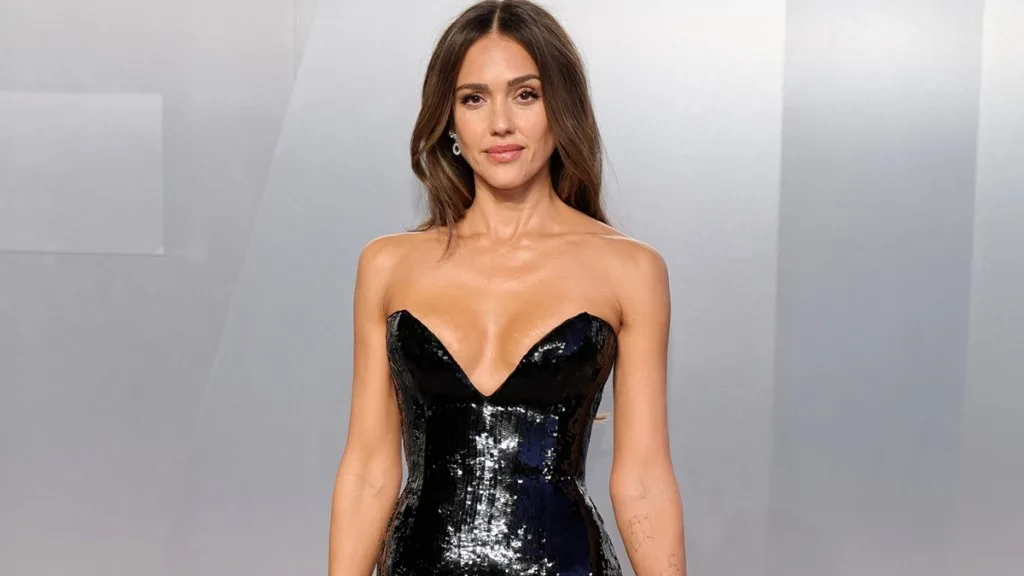
The Before: A Sick Kid From Pomona Who Watched Her Mother Read Labels
The Childhood Spent in Hospitals
Jessica Marie Alba was born in Pomona, California, in April 1981. Her father, Mark, was a third-generation Mexican-American serving in the United States Air Force. Her mother, Catherine, was Danish-French-American, working various jobs as the family followed Mark’s military postings. As a result, childhood meant moving every two years. Biloxi, Del Rio, back to Southern California by age nine.
Importantly, the constant move was not the formative wound. Rather, the hospitals were. Specifically, Alba spent significant portions of her childhood diagnosed with collapsed lungs, asthma, pneumonia (twice before age six), and a tonsillar cyst that required surgery. By her own account in subsequent interviews, she lived with a constant awareness. Her body was, at the cellular level, fragile in ways she could not control. Furthermore, her mother spent those years reading labels obsessively, looking for the chemicals and preservatives that might be making her daughter’s lungs collapse.
The Acting Habit That Started At Five

Notably, Alba began acting at age eleven after a chance enrollment in a theater class at the Atlantic Theater Company in New York. Subsequently, she booked her first commercial within a year. Then, by twelve, she had a manager. Then, by twelve, she had a manager. By thirteen, she had a lead role in a low-budget feature called Camp Nowhere. Additionally, she landed a recurring slot on Nickelodeon’s The Secret World of Alex Mack.
Notably, the career was not glamorous in those early years. Alba has described auditioning while sick and working through asthma attacks on set. Casting directors told her, repeatedly, that she was too ethnic for some roles and not ethnic enough for others. Importantly, the foundation those years built was not a Hollywood network. Rather, it was a working knowledge of how the industry quietly assigns young women to categories they cannot escape unless they build the exit themselves.
The Pivot Moment: Dark Angel and the Body That Wasn’t Hers
James Cameron’s Show Made Her A Star At Nineteen
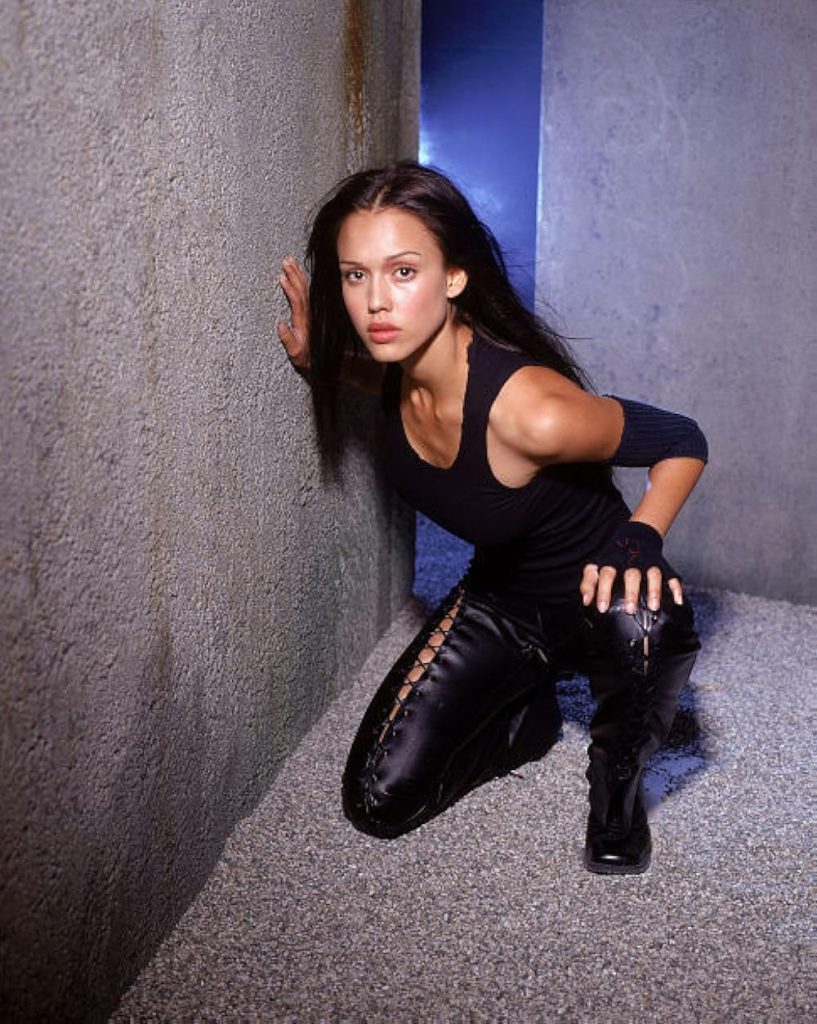
In 2000, James Cameron and Charles Eglee cast Alba as Max Guevara. Specifically, the role was a genetically engineered super-soldier at the center of Fox’s Dark Angel. The show ran for two seasons. More importantly, it made Alba, at nineteen, the kind of star whose body became public property in ways the role had not prepared her to navigate.
The Maxim covers came immediately. Then the FHM lists arrived. The FHM lists came next. Alba was named the sexiest woman in the world by multiple publications before she could legally drink in most of them. Specifically, she has spoken publicly about how the experience of being marketed primarily as a body, at an age when she was still learning to act, fractured her relationship to her own image. Ultimately, the dissociation took years to repair, in her own telling.
The Typecast That Followed
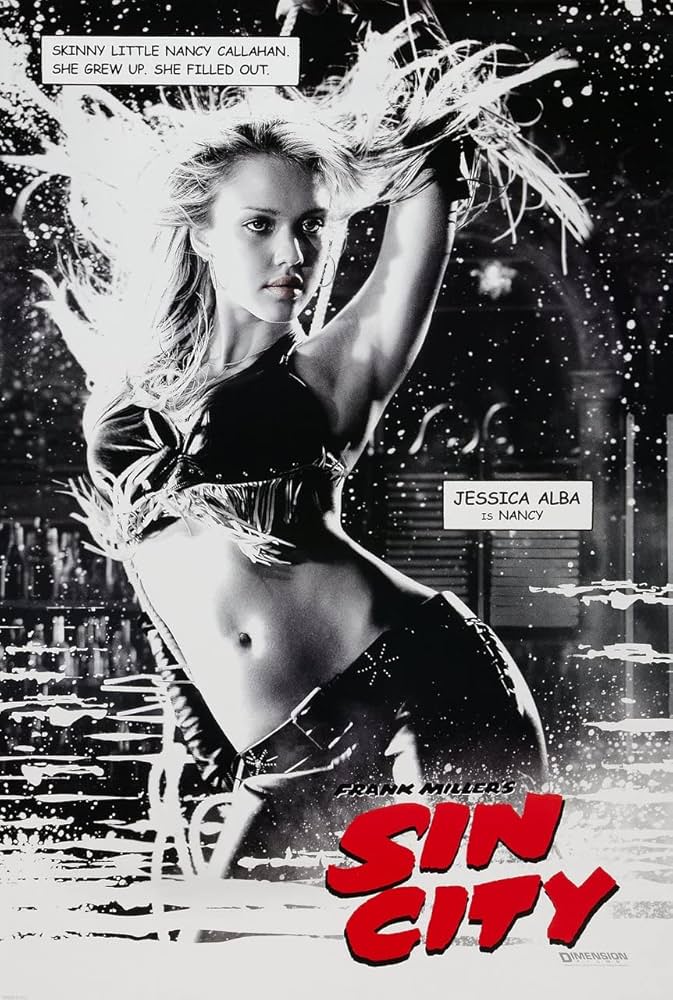
After Dark Angel, Subsequently, Alba booked steadily. Honey (2003), Sin City (2005), Fantastic Four (2005 and 2007), Into the Blue (2005), Good Luck Chuck (2007). The films grossed collectively north of $1.5 billion. Yet the roles, with rare exceptions like the noir stylization of Sin City, slotted her where the Maxim covers had: body foregrounded, character incidental.
By 2008, Alba had become one of the most photographed women in the world. Yet she was not getting cast as any of the things her contemporaries (Portman, Knightley, Witherspoon) were. Notably, the realization that arrived around her pregnancy with her first daughter, Honor, was that the industry would not retire her from the typecast on its own. The exit had to be built. The exit, as it turned out, would be a baby products company.
The Climb: How A Detergent Allergy Became A $1.4 Billion IPO
The Founding Story That Investors Heard A Hundred Times
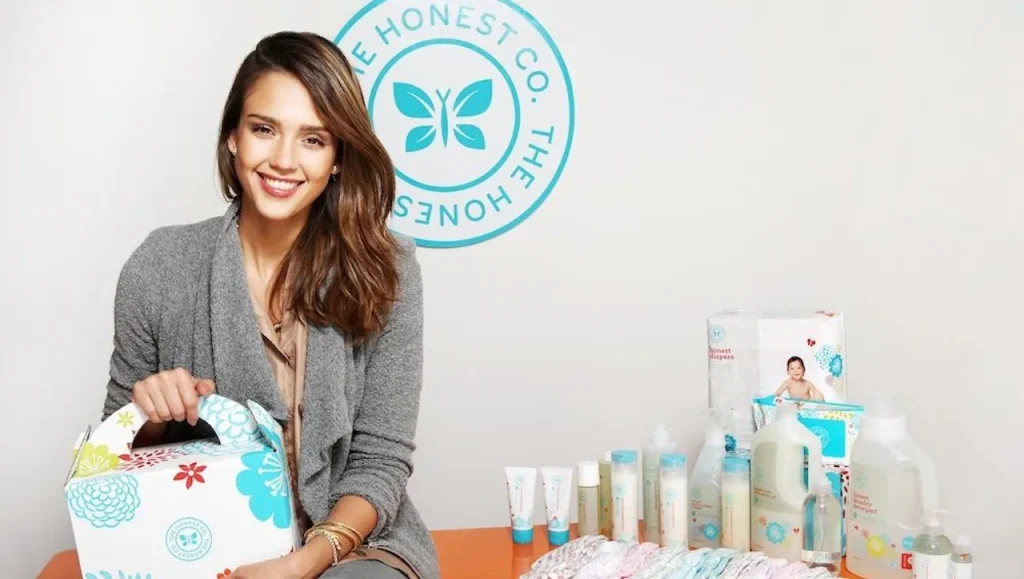
The origin of The Honest Company, as Alba has told it across hundreds of interviews, runs as follows. While pregnant with Honor in 2008, Alba washed a baby onesie in a detergent her mother recommended. Her skin broke out in welts. She read the label. The chemicals listed were the same chemicals her mother had spent Alba’s childhood reading labels to avoid. Furthermore, a realization arrived. The American baby products industry was selling parents the very thing those parents most feared. That realization became the seed of the company.
Specifically, the pitch was clean ingredients, transparent labeling, subscription delivery, direct-to-consumer. Procter and Gamble, Johnson and Johnson, and Unilever dominated the category at the time. All three had treated clean formulation as a niche concern. Alba’s bet, made formal with co-founder Brian Lee in 2011, was simple. The niche had become the mainstream. Furthermore, the incumbents had not noticed.
The Capital Stack That Built It
Initially, Specifically, Honest raised its Series A in 2011. The company raised approximately $52 million in subsequent rounds through Series C, with investors including General Catalyst, Lightspeed, Institutional Venture Partners, and Wellington Management. By 2014, Honest reported revenues exceeding $150 million. By 2015, the company was valued at $1.7 billion in private markets, per Wall Street Journal coverage.
The valuation overshot the fundamentals. Subsequently, Honest faced lawsuits over ingredient claims and a dust-up over sunscreen formulation. The company also hit the operational growing pains common to direct-to-consumer brands that scale faster than their supply chains. Subsequently, the company restructured between 2017 and 2019. Alba, importantly, never stepped away from the founder role. The business press openly questioned whether the company would survive. Notably, she stayed.
The IPO And The Exit That Wasn’t
The Honest Company debuted on NASDAQ in May 2021 at a $1.44 billion valuation, per Bloomberg’s IPO coverage. Alba’s stake at the IPO was reportedly worth approximately $115 million on paper. Likewise, Brian Lee’s was comparable. Notably, the IPO closed up 44% on day one.
However, the post-IPO trajectory has been volatile. Honest stock traded down significantly through 2022 and 2023. The shares then recovered partially in 2024 and 2025 as the clean beauty category continued to compound. Crucially, what mattered for Alba’s net worth was not the day-to-day ticker. Rather, what mattered was that she had successfully converted a typecast acting career into operating equity in a publicly traded consumer products company. The category she founded now generates approximately $370 million in annual revenue, per recent SEC filings.
The Placement Economy: Why Alba Stopped Being The Placed And Became The Placement
The Insight Hollywood Missed
Most actors in Alba’s tier accepted, by their late twenties, that the economics of celebrity ran in one direction. Talent gets placed. Brands pay for the placement. The talent collects an endorsement fee. Meanwhile, the brand collects the lift. Subsequently, the talent ages out, the deals taper, and the cycle resets with someone younger.
Alba read that economy and recognized two facts that most of her contemporaries missed. First, the brands were earning the larger return. The 10x to 100x lift documented in the broader placement economy went to the company, not the celebrity. Second, the structural barrier to a celebrity owning the company rather than just promoting it was not capability. It was the willingness to spend a decade being patronized by venture capitalists who assumed she was a vanity founder.
The Brands That Paid To Be Near Her
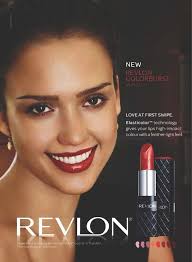
Before Honest, Alba’s placement deals followed the standard A-list template. Revlon signed her as a global ambassador in 2012, a multi-year deal reportedly worth $4 million annually, per WWD coverage. Windex ran a multi-year campaign with her as the face. Avirex and Baby Phat dressed her in the early 2000s streetwear era of Honey. Furthermore, Marvel’s Fantastic Four integrations carried Converse, Dell, and Audi placements through her on-screen wardrobe and props. None of those placements generated meaningful equity for her.
The aggregate value of those placements, calculated against the Wayfarer-Risky-Business framework, was significant. Alba generated several hundred million dollars in equivalent media value across the 2000s. That figure, by industry estimate, covered every brand she represented during the decade. Her share of that value, in equity terms, was zero. Specifically, the endorsement fees were nice. The compounding upside accrued elsewhere.
The Founder’s ROI Versus The Placement ROI
Then, Honest happened. Alba’s IPO-era equity was reportedly worth approximately $115 million on the day of the NASDAQ debut. Compare that to her cumulative endorsement income across her acting career. Industry estimates place that figure at $30 million to $40 million across all years and all brands. The founder route generated three to four times the lifetime value of the placement-as-talent route. Furthermore, the entire delta arrived in a single transaction event. Upfront capital investment was much smaller.
That math is the case study every emerging actress should internalize. So should every wellness founder. So should every brand-adjacent celebrity reading this article. Specifically, the lesson is that placement compounds for the brand. Founding compounds for the talent. The brand founder reading this should pause on the implication. Every celebrity ambassador deal on the table is, secretly, a deal the celebrity should be doing on their own equity. The fact that they are not, and you are getting them at endorsement-fee pricing, represents temporary arbitrage. That arbitrage closes the moment the talent reads this article.
The Los Angeles Chapter: What Alba Built In A 50-Mile Radius
The Beverly Hills Family And The Playa Vista Office
Alba and Cash Warren, her husband since 2008, have raised three children: Honor, Haven, and Hayes. The family lives primarily in Beverly Hills, with a residence valued in the high seven figures. The home is private. Their children attend Los Angeles independent schools. Public visibility runs primarily through Alba’s professional appearances and Warren’s own venture work, including his role at Pair of Thieves and other consumer brand investments.
The Honest Company headquarters sits in Playa Vista. The Westside Los Angeles tech corridor hosts Snap, Google, and a generation of California-grown consumer companies. Importantly, Alba’s choice of Playa Vista over a more traditional New York or San Francisco corporate footprint was deliberate. The Westside positioning kept the company close to the LA wellness and consumer brand ecosystem. Goop sits fifteen minutes north. ThirdLove maintains Westside presence despite Bay Area roots. The celebrity-adjacent founder community concentrates between Santa Monica and Venice. Consequently, that ecosystem became Alba’s primary professional network outside Hollywood.
The Honest Beauty Pivot And The Restructuring
By 2017, Alba and Brian Lee restructured the company’s product mix. Specifically, they leaned harder into clean beauty rather than diapers and household goods. Notably, Honest Beauty launched as a category extension in 2015 and quickly became the highest-margin product line within the company. Subsequently, the category expanded into skincare, color cosmetics, and bath products. Those lines now generate roughly 40% of total revenue, per the company’s most recent annual report.
Importantly, the pivot reflected a deeper insight. Notably, diapers are a high-volume, low-margin commodity. Clean beauty is a high-margin, defensible category where brand loyalty actually compounds. Alba had spent fifteen years being placed in beauty editorial as the subject. Consequently, she understood the category’s psychology in ways most consumer-products founders did not. Now, the category lift she had generated for Revlon and others was lift she could generate for herself.
The Founder Community She Built
Outside Honest, Alba serves on multiple advisory boards. She is an active participant in the LA-based founder community focused on consumer products, women-led ventures, and clean-category brands. Additionally, she has invested personally in several companies in the wellness and consumer products space. Furthermore, she co-founded Habit, a clean foods venture that subsequently sold to Viome. She has also been a sustained voice in conversations about clean ingredient regulation.
Importantly, the geography is legible. Specifically, Beverly Hills is family. Playa Vista is operations. The LA founder ecosystem from Santa Monica to Pasadena is the professional network. Hollywood is where Alba’s career began. She still books occasional film and television work there. However, the center of her economic life moved west of the 405 a decade ago and has not returned.
What She Built: The Net Worth Breakdown
The $200 Million-Plus Estimate
Current reliable estimates place Alba’s personal net worth at approximately $200 million to $250 million, depending on Honest’s stock movement on any given day. The composition breaks down approximately as follows.
Honest Company equity: approximately $80 million to $115 million, depending on share price. Alba retained a substantial founder stake through the IPO and subsequent dilutions. Importantly, the exact figure tracks the daily NASDAQ close. Crucially, this is by far the largest single line item in her net worth and the asset that most distinguishes her from her acting peers.
Acting salary and residuals: approximately $40 million lifetime. The peak earnings years ran 2003 to 2010. Films like the Fantastic Four sequels and various rom-coms generated $5 million to $8 million per picture in salary plus participation. Subsequent acting work has been more selective, including the L.A.’s Finest series with Gabrielle Union and her recent return to feature work.
Endorsement deals (pre-Honest): approximately $30 million lifetime, concentrated in the Revlon, Windex, and various fashion ambassador roles of the 2003 to 2015 period.
Real estate: approximately $25 million, primarily in the Beverly Hills family residence and adjacent investment properties.
Other equity stakes: approximately $20 million, including Habit (sold), Pair of Thieves equity through Cash Warren’s involvement, and various advisory shares in consumer products companies she has supported.
The Asset Composition Lesson
The architecture matters because it inverts the standard celebrity portfolio. Most actors in Alba’s tier hold roughly 80% of net worth in real estate and residuals. Smaller positions sit in endorsements. Almost nothing sits in operating equity. Alba’s portfolio runs the reverse. More than half her wealth sits in operating equity in a publicly traded company she founded. Real estate and residuals serve as supporting positions. Notably, the architecture is the lesson. The founder route, executed correctly, restructures the entire wealth profile of a celebrity career.
The Soft Landing: What The Alba Case Teaches Every Brand Founder
Three Lessons From The Pivot
First, the typecast is data. Alba’s recognition that Hollywood would not retire her from the body-in-the-foreground typecast was not a complaint. Rather, it was a market signal. The signal told her where the industry’s attention was concentrated and, by implication, where her own latent brand value sat unmonetized. Every founder reading this should ask the same question. Where is my attention being captured by someone else’s category? What would it look like to own that category myself?
Second, the founder route requires a decade of patience the placement route does not. Alba spent ten years building Honest before the IPO. Those ten years included lawsuits, restructurings, dilutions, and public skepticism about whether a celebrity could actually run a consumer products company. The placement route, by contrast, generates immediate cash with no operational risk. The asymmetry matters. Founders trade short-term certainty for long-term ownership. Most actors accept the trade backwards, taking the certainty and surrendering the ownership.
Third, the brand category determines the ceiling. Alba chose clean beauty and home goods, which sit in a high-margin, brand-loyalty-compounding part of the consumer products universe. Had she chosen perfume or fashion accessories instead, the ceiling would have been lower. Those categories are dominated by incumbents with deeper distribution moats. The category selection is the strategic decision. By contrast, the product execution is the operational decision. Specifically, founders confuse these two and pay for it later.
The Thesis That Outlasts The Stock Price
Alba’s case is instructive because it survives the stock price. Even on Honest’s worst trading days, the underlying thesis holds. A celebrity who founds a category-defining consumer products company captures the lift. Otherwise, that lift would accrue to the brand she was endorsing. The math compounds for the founder rather than the placement asset. That thesis does not depend on Honest’s specific quarterly performance. It depends only on whether the founder structure, executed across enough years, beats the endorsement structure across the same years. The data, at this point, is conclusive. The talent who owns the category wins. Everyone else rents.
The Alba Hub’s Spoke Architecture
The Alba hub anchors three significant spoke pieces in the cluster, each examining a co-star whose subsequent career architecture diverged from Alba’s founder-brand model. Bruce Willis’s $250 million across the Die Hard franchise and the late-career pivot represents the franchise-leading-man variant. Subsequently, Chris Evans’s $110 million Captain America exit represents the franchise-walk variant. Furthermore, Mickey Rourke’s $10 million cautionary case represents what happens when the auteur strategy fails. The three spokes collectively demonstrate that the same Alba-adjacent franchise architecture (Sin City, Fantastic Four) produced four structurally distinct career outcomes across the four actors who anchored those films.
Related Reading
- Hollywood’s $26 Billion Hidden Economy: How Product Placement Built Modern Stardom
- Bruce Willis Net Worth: $250M Built Across Die Hard, Pulp Fiction, And The Late-Career Pivot
- Chris Evans Net Worth: How Captain America’s $110M Exit Strategy Worked
- Mickey Rourke Net Worth: How $40M Comeback Became $10M Cautionary Tale
- Pierce Brosnan Net Worth: How Bond Built A $200M Brand-Asset Platform
- Natalie Portman Net Worth: How Dior’s 15-Year Contract Built $90M
How To Work With Social Life Magazine
A fish does not notice the water. A reader does not notice the placement. That is the entire point. Furthermore, it is the entire opportunity for the brand founder who has just finished reading an article and is, without having fully realized it yet, about to scroll down and click one of the following five links.
Six Ways To Connect
If you are a brand, a founder, a creative director, or an in-house marketing lead who has read this far and would like to be considered for an editorial feature in Social Life Magazine’s print or digital ecosystem, the editorial team reviews brand submissions year-round. Pitch us at sociallifemagazine.com/contact.
If you are a brand with a ready-to-run campaign and would like to move faster than the traditional editorial cycle, the Paid Feature program offers three tiers of guaranteed placement across Social Life Magazine’s digital properties, with pricing starting at $975. Full details at sociallifemagazine.com/submit-a-paid-feature/.
Every piece Social Life Magazine publishes reaches an email list of 82,000 pre-qualified affluent readers. The majority summer in the Hamptons and spend the off-season in Manhattan’s core luxury zip codes. The email blast is the single most efficient distribution mechanism in the Hamptons editorial ecosystem. Inquire about placement at sociallifemagazine.com/enflyer.
Events, Print, And Independent Editorial
Polo Hamptons 2026, Social Life Magazine’s flagship event property, returns for its 17th year in July and August 2026. Platinum, Gold, and Corporate Cabana sponsorship packages are available for select categories (automotive is locked by BMW North America, real estate is at capacity, all other categories open). Demographic data, sponsor decks, and custom activation proposals available at polohamptons.com.
Social Life Magazine’s print edition, now in its 23rd year, distributes 25,000 copies per summer issue across Westhampton, Southampton, Bridgehampton, East Hampton, Sag Harbor, Amagansett, and Montauk boutiques, restaurants, and private clubs. Annual subscriptions, including fall/winter Upper East Side doorman distribution, available at sociallifemagazine.com/subscription.
If you’d like to support independent luxury editorial in the age of AI-generated content farms and private-equity-owned media conglomerates, donations to Social Life Magazine’s editorial operations are received via PayPal. Every dollar funds original reporting, photography, and the kind of writing that brands send their marketing teams to study.
Author
Written by
Recent Posts
Legal Options for Investment Fraud Claims

How Custom DTF Printing Adds Ease and Color to Your Boutique
How Often Should You Actually Replace Your Towels?
Apartment Pet Policies: What to Know as a Pet-Owning Tenant
Why Reliable Airport Transportation Matters for Modern Travelers
Categories
- Art
- Articles
- Business of Luxury
- Celebrities
- Culture
- Entertainment
- Events
- Faces of Summer 2026
- Fashion
- Fashion & Style
- Featured
- Finance
- Food, Spirits, Wine
- Hamptons
- Hamptons Celebrities
- Health
- Health & Beauty
- Lifestyle
- Luxury Lifestyle
- Press
- Profiles
- Real Estate
- Technology
- The Chronicles
- Travel
- Uncategorized
- Weddings