

The Before
Youn Yuh-jung was born in 1947 in Kaesong, a city that would end up in North Korea after the Korean War redrew the map with the casual brutality of a diplomat who has never lived in any of the places being divided. Her family relocated to Seoul, where she grew up in the complicated middle class of a country still rebuilding itself from rubble, a country where the concept of a “career in entertainment” was approximately as practical as a career in time travel and about as likely to generate a pension.

She entered the Korean entertainment industry in the late 1960s, winning a talent competition hosted by TBC, one of South Korea’s major broadcasting networks. Her first major film role came in 1971 with Woman of Fire, directed by Kim Ki-young. The film was controversial, erotic, and exactly the kind of debut that marked an actress as either fearless or reckless, depending on whether the person making the judgment had seen the film or merely heard about it. She was 24 years old and already uninterested in playing it safe, which is a professional disposition that generates enormous artistic returns and very modest financial ones, at least initially.
The Economics of Korean Stardom, 1970s Edition
What Western audiences need to understand about Youn’s early career is the economic context that contained it. South Korea in the 1970s was a developing economy where being a major actress meant cultural influence, not financial independence. Film industry compensation bore no resemblance to Hollywood scales, which were themselves modest by the standards that would develop in later decades. Being famous in Korea in 1975 was roughly equivalent, in economic terms, to being a well-respected professor at a mid-tier American university: everyone knows you are important, nobody is paying you accordingly, and the retirement plan is essentially optimism.
The Pivot Moment
In the 1970s, Youn married singer Jo Young-nam and moved to the United States. The marriage ended. She returned to South Korea in the 1980s as a single mother of two sons, re-entering an industry that had largely moved on without her, which is the entertainment industry’s version of arriving at a party two hours late and discovering that your seat has been given to someone younger. In most career narratives, that is the part where the story ends with a sentence about what the person did instead. For Youn, it was a second act that would last four decades and eventually culminate in the most improbable Oscar acceptance speech in the ceremony’s history.
What It Means Now
She rebuilt her career in Korean television and film throughout the 1990s and 2000s, becoming one of the most respected character actresses in the industry through the simple, exhausting method of being better than everyone else in every scene she appeared in, year after year, until the accumulated weight of her excellence became impossible to ignore even for people who were actively trying not to pay attention.
The financial trajectory of a Korean actress over this period is instructive for understanding how the globalization of entertainment restructured career economics in real time. Korean entertainment compensation improved dramatically from the 1990s onward as the Hallyu wave industrialized Korean pop culture. But Youn’s generation built their careers in an era when the pay was modest, the international audience did not exist, and the cultural capital was the only compensation that mattered. She earned the equivalent of a comfortable middle-class income for decades while delivering performances that, had they been delivered in English and distributed by a Hollywood studio, would have commanded fees in the millions.
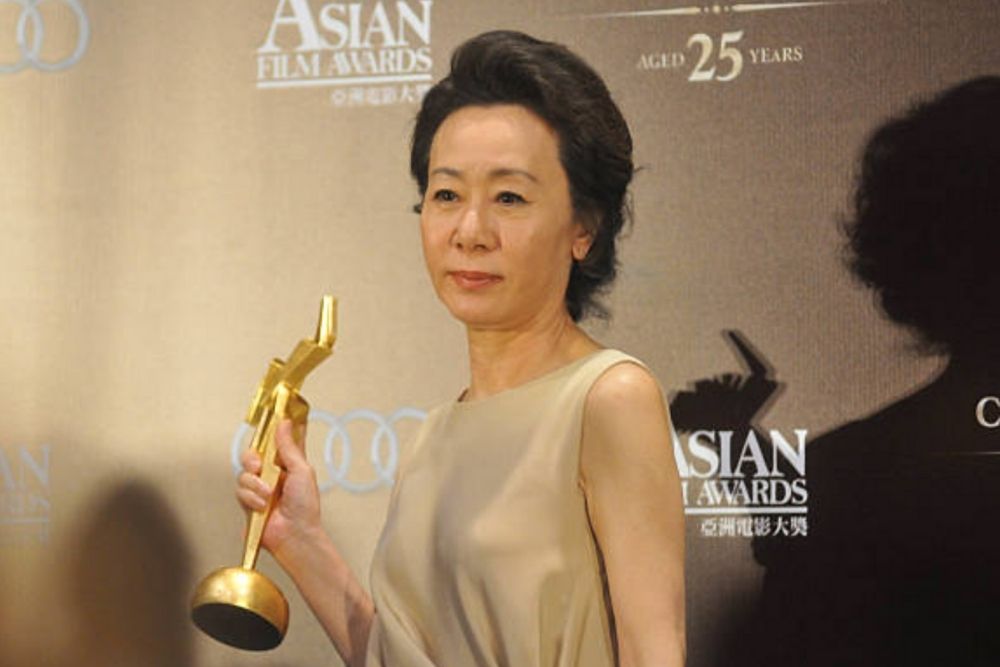
The post-Oscar opportunity cascade is worth documenting because it illustrates the economics of late-career recognition. International brand partnerships materialized at rates that reflected her new global visibility. Speaking engagements, festival appearances, and press circuits generated fees that her pre-Oscar profile could not have commanded. The Academy Award did not make her more talented. It made her more visible, and in the entertainment economy, visibility and value are connected by a pipeline that flows slowly but never stops.
The Climb
Youn’s career in Korea generated a body of work that most Western cinephiles are only now beginning to discover, which is less a reflection of their curiosity than of the international distribution infrastructure that simply did not exist for most of her career. She appeared in over 40 films and dozens of television series. In Korea, she won virtually every major acting award, some of them multiple times. She was cast consistently because directors knew she could elevate any material she touched, turning ordinary scripts into something that felt lived-in and true and utterly impossible to look away from.
The Financial Trajectory of Korean Prestige
The financial trajectory of a top Korean actress over this period is instructive for anyone attempting to understand how the globalization of entertainment has restructured career economics. Korean entertainment compensation improved dramatically from the 1990s onward as the Hallyu wave industrialized Korean pop culture and transformed it from a domestic curiosity into a global export worth billions. But Youn’s generation built their careers in an era when the pay was modest, the international audience did not exist, and the cultural capital was the real compensation.

Her work in films like The Housemaid, The Taste of Money, and The Bacchus Lady kept her in the conversation among Korea’s most serious filmmakers. Each role added to a reputation that was already bulletproof domestically but completely invisible internationally, which is the kind of market inefficiency that eventually corrects itself with the force of a dam breaking.
What She Built
Youn Yuh-jung net worth estimates in Western media range from $1 million to $5 million, figures that are incomplete in the same way that an iceberg is incomplete if you only photograph the part above the waterline. These estimates rarely account for Korean real estate holdings, decades of Korean entertainment income accumulated in a market with different tax structures and cost-of-living calculations, endorsement deals in Asia, or the post-Oscar surge in her global market value that transformed a career that was already legendary in one hemisphere into one that was recognized in both.
The Oscar Moment
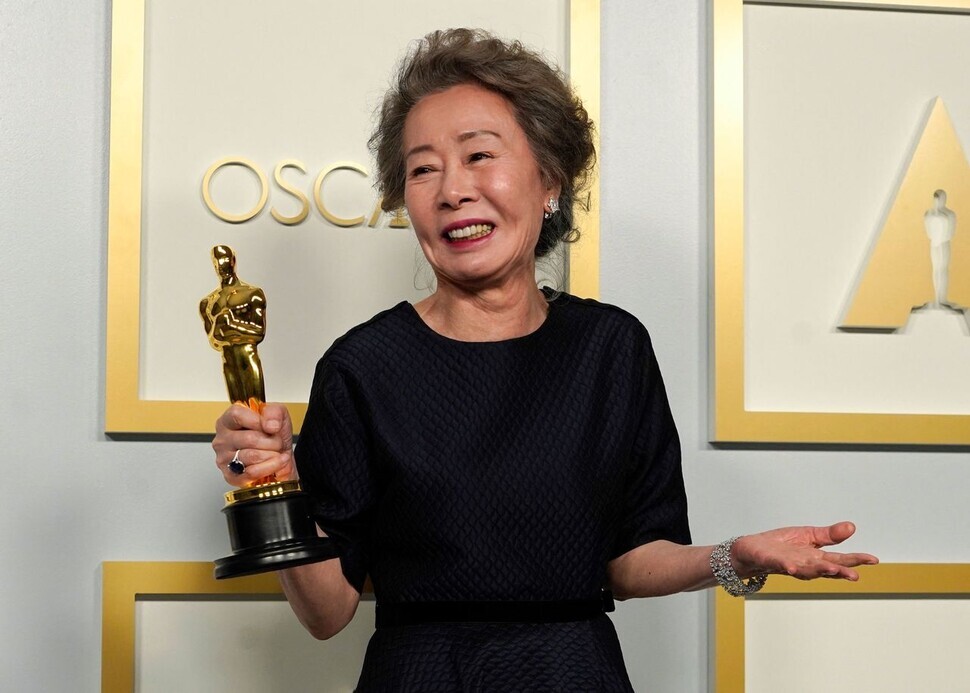
The Minari Oscar in 2021 did not make Youn rich in the traditional sense. A24 films do not pay the kind of salaries that generate instant wealth, which is part of the company’s business model and part of its appeal to actors who understand that some career investments pay in currency and others pay in positioning. But the Oscar made her globally famous at 76, triggering a cascade of opportunities that would have been science fiction even two years earlier. And the speech she gave, in which she thanked the director for making the journey to Korea to find her and told Brad Pitt she was honored to finally meet him, generated more earned media value than most studios’ entire awards campaigns.
The Soft Landing
Youn Yuh-jung does not perform the rituals of Western celebrity wealth because she has spent sixty years in an industry that operates on different rituals entirely. There are no paparazzi shots of luxury purchases. No lifestyle brand extensions. What there is, instead, is the quiet authority of someone who has been doing this longer than most of her audience has been alive and has nothing left to prove to anyone, which is the most expensive form of luxury there is.
The Cathedral Question
Her real legacy is structural. She is the first Korean actress to win an Academy Award. That fact will outlive every dollar she has earned or will earn. Every Korean actress who follows her to international recognition will cite her path, whether they know it or not. The net worth question, applied to someone like Youn, misses the point in the same way that asking about the resale value of a cathedral misses the point. The value is not in the asset. The value is in what the asset made possible for everyone who comes after, which is a return that accountants cannot calculate and economists cannot model but that everyone who cares about culture recognizes as priceless.
The Deeper Math
Read more about the Minari cast’s unlikely fortunes in our Minari A24 Cast Net Worth hub, or explore the full A24 Movies and Actors Net Worth pillar.
You are reading this because you already understand something most people scroll right past. The intersection of culture, money, and taste is not a Venn diagram. It is a mirror. Social Life Magazine has spent 23 years holding that mirror up to the people who shape the Hamptons, Manhattan, and the corridors between them. If you see yourself in these pages, we should talk. Reach out at sociallifemagazine.com/contact.
What It Means Now
If your brand, your launch, or your personal story belongs in front of 82,000 affluent readers and a digital audience that keeps growing, our editorial features are built for exactly that moment. Learn more at Submit a Paid Feature.
Our email list reaches 82,000 subscribers who actually open, read, and act. If your audience is high-net-worth, culturally engaged, and based between Park Avenue and Montauk, you are already in the right place. Join the list.
Polo Hamptons returns to Bridgehampton this July with 1,200 guests, Getty Images coverage, and seven years of BMW title sponsorship behind it. If your brand belongs in that conversation, visit polohamptons.com.
A print subscription to Social Life Magazine puts 25,000 copies per issue into the boutiques, lobbies, and living rooms where decisions get made, from Westhampton to Montauk every summer and Upper East Side doorman buildings for Fall and Winter. Subscribe at sociallifemagazine.com/subscription.
If this publication has added value to your world and you want to support independent luxury journalism, you can contribute directly at our donation page.
Author

Written by
Recent Posts

How to Choose Useful Tech Gifts for Employees and Clients in 2026
The Garage Question: Which Car Goes South for the Season?

VandS Clinic Review Treatment: How Seoul Injectable and Laser Options Compare for US Patients
Before Buying a View Home: What a Sloped Lot Means for the Purchase

Powerful Strategies to Stay Ahead in a Fast-Moving Real Estate Market
Categories
- Art
- Articles
- Business of Luxury
- Celebrities
- Culture
- Entertainment
- Events
- Faces of Summer 2026
- Fashion
- Fashion & Style
- Featured
- Finance
- Food, Spirits, Wine
- Hamptons
- Hamptons Celebrities
- Health
- Health & Beauty
- Lifestyle
- Luxury Lifestyle
- Press
- Profiles
- Real Estate
- Technology
- The Chronicles
- Travel
- Uncategorized
- Weddings