
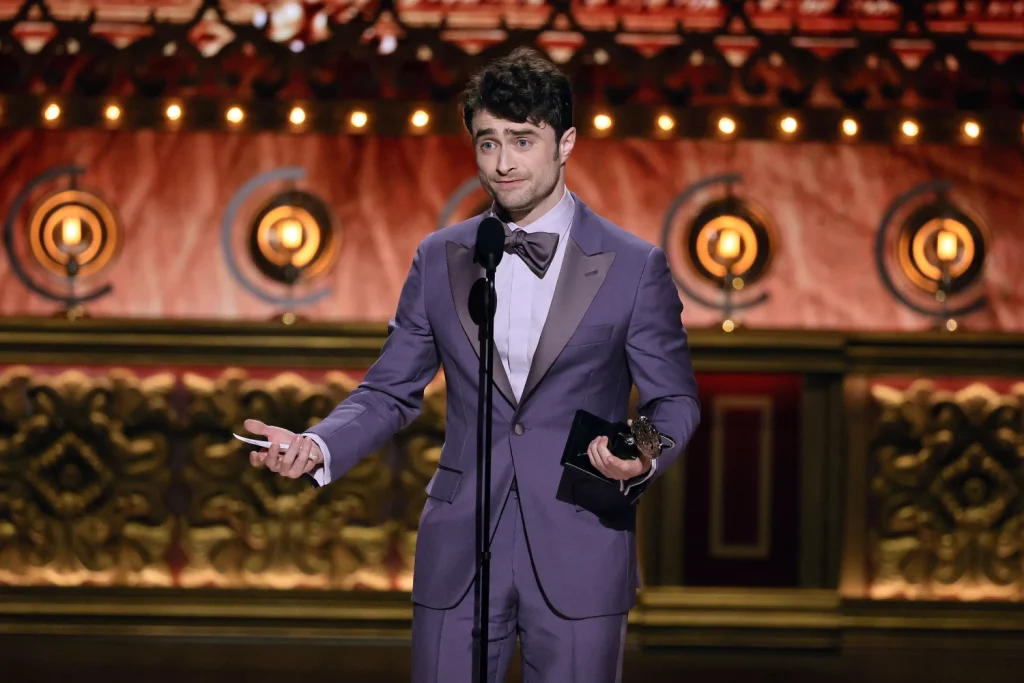
Daniel Radcliffe Net Worth: How a $110 Million Fortune Got Built By the One Child Star Who Refused the Franchise
The Before: A Fulham Boy With Eczema and Mild Dyspraxia
The Family That Almost Said No
Daniel Jacob Radcliffe was born in Fulham, London, in July 1989. His father, Alan, was a literary agent. His mother, Marcia Gresham, was a casting agent who had cast films like The Inspector Lynley Mysteries and various BBC productions. The Radcliffes were industry-adjacent without being industry. They knew how the casting process worked from the inside. Importantly, that knowledge made them more resistant, not less, to letting their only child enter it.
Daniel struggled with eczema as a child and was later diagnosed with mild dyspraxia, a coordination disorder that made handwriting difficult and tying shoelaces a multi-year project. The condition contributed to school being a place of moderate misery. His parents enrolled him in a series of private London schools, none of which fully fit. Acting, when it arrived, gave him something the schools could not. Specifically, it gave him a place where the dyspraxia did not matter and the eczema could be covered with makeup.
The Auditions That Almost Did Not Happen
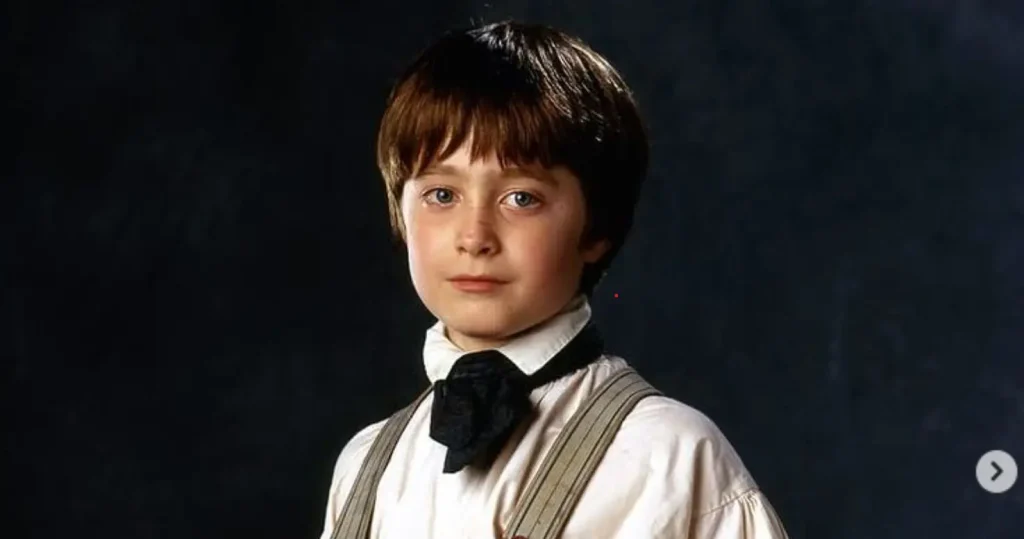
At ten, Radcliffe was cast as the young David Copperfield in BBC’s 1999 adaptation. The role required two days of filming. Marcia Radcliffe was reluctant to let her son audition for anything else. When the Harry Potter casting call went out in 2000, she initially refused to put him forward. The role’s seven-film commitment, the years of stardom, the loss of normal childhood. All of it ran against the kind of life the Radcliffes wanted for their son. Producer David Heyman ultimately spotted Daniel at a London theater and pursued him directly. The parents capitulated. The capitulation, in retrospect, made him richer than they could possibly have predicted and more isolated than they had hoped.
The Pivot Moment: The Casting That Changed Everyone Involved
Eleven Years Old, Already Famous

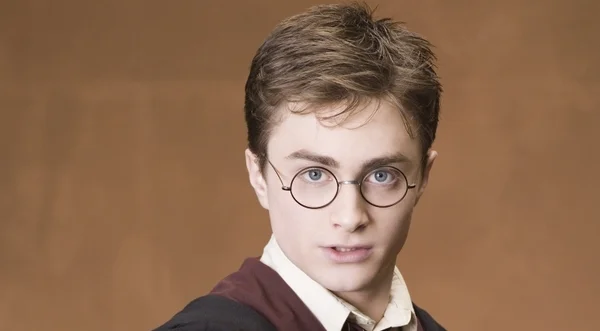
Radcliffe was eleven when filming began on Harry Potter and the Sorcerer’s Stone. By the time the film released in November 2001, he was the most recognizable child in the English-speaking world. Specifically, the franchise generated $7.7 billion at the worldwide box office across eight films, per Box Office Mojo’s accounting. Those numbers do not include the merchandising, the theme parks, the streaming residuals, or the Lego category. Radcliffe collected a percentage of the box office gross under the participation structure he and his parents had negotiated. Furthermore, he received salary that escalated significantly across the eight-film run.
The Salary Arc That Built the Fortune
For the first film, Radcliffe was reportedly paid approximately $1 million. By the second, his salary roughly tripled. The third tripled it again. Importantly, by the time the franchise reached Harry Potter and the Deathly Hallows: Part 2 in 2011, Radcliffe was earning a reported $30 million per film in salary plus participation, per Variety’s career retrospective. The aggregate compensation across the eight films, by industry estimate, ran north of $100 million. Notably, Radcliffe’s parents structured the receipts into trusts that he could not access until his 18th birthday. That structure, more than any single role choice, is what allowed him to do what he did next.
The Strategic Question Asked At Eighteen
When Radcliffe turned eighteen in 2007, he gained access to the Potter trust. By then, the franchise had three films left to shoot. The strategic question Radcliffe and his team faced, in private, was simple. He could parlay the Potter fame into a long franchise career. Action films, romantic leads, the standard British-actor-becomes-American-movie-star path. He could chase the second franchise. Most child actors who survive their first franchise then chase the second one as the only thing they know how to do. Radcliffe instead asked whether he could afford to never need a franchise again. The answer, given the trust structure, was yes. Subsequently, the question became what to do with that freedom.
The Climb: An Adult Career Built On Refusing Easy Money
Equus and the Public Repositioning
In 2007, while still filming Potter, Radcliffe took the role of Alan Strang in Peter Shaffer’s Equus at the Gielgud Theatre in London’s West End. The role required him to appear nude on stage. The production became the most-discussed theater event in London that year. Furthermore, it generated the kind of headline coverage that would have ended the careers of most child actors. For Radcliffe, it accomplished the opposite. The casting signaled that he was reading the room correctly. The Potter audience, by 2007, had watched him grow up on screen. Equus was the first move toward an adult career, and Radcliffe made it before the franchise had even ended.
How To Succeed In Business and the Broadway Pivot
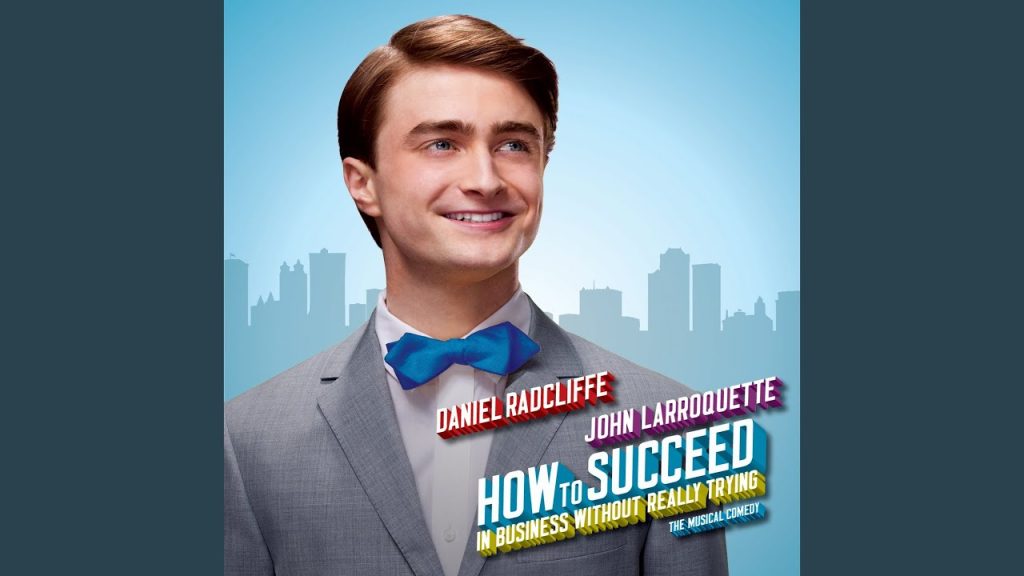
In 2011, the same year Potter ended, Radcliffe starred in the Broadway revival of How to Succeed in Business Without Really Trying. The production ran for nearly a year. Radcliffe took singing and dancing lessons for months in advance and reportedly turned down films during that period to commit to the show. Specifically, the choice was structurally identical to the Equus choice. Radcliffe was building an adult career on the stage rather than chasing it through Hollywood. The production grossed over $59 million, and Radcliffe’s salary plus participation, while not publicly disclosed, was substantial.
The Indie Era That Defined the Adult Identity
From 2012 forward, Radcliffe’s film choices have been almost entirely outside the franchise economy. The Woman in Black (2012) was a $17 million horror film that grossed $128 million. Kill Your Darlings (2013) was a $1 million indie about Allen Ginsberg. Swiss Army Man (2016) was a $3 million Daniels-directed feature in which Radcliffe played a corpse. Guns Akimbo (2019) was a $4 million action comedy. Weird: The Al Yankovic Story (2022) was a $12 million Roku original. None of these films generated franchise money. All of them generated critical capital that Radcliffe converted into the next opportunity.
By the early 2020s, Radcliffe had become something genuinely unusual in Hollywood: a former child star whose adult body of work was respected, financially sustainable, and entirely outside the franchise system that made him famous. The career was small by Tom Cruise standards. The career was, by any other measure, a remarkable construction.
The Placement Economy: The $7 Billion The Talent Did Not Capture
The Franchise Math On the Outside
The Harry Potter franchise sits among the largest placement-adjacent ecosystems in entertainment history. Specifically, the figures are as follows. Box office gross across eight films: $7.7 billion. Lifetime franchise merchandising revenue: estimated $7 billion to $25 billion, depending on which sources include licensing royalties versus retail sell-through, per various industry reports including Forbes coverage. Universal’s Wizarding World theme parks at Orlando and Hollywood: estimated $500 million to $1 billion in annual revenue. The Lego Harry Potter category alone: estimated $1 billion-plus in cumulative category value, per Lego Group’s anniversary reporting.
The aggregate downstream economy generated by the films across two decades runs into the tens of billions. Radcliffe’s participation across all of that is limited to his original acting contracts and standard residual structures. He does not receive theme park royalties. Merchandise royalties also do not flow to him. Likewise, Lego royalties stay with the studio. Furthermore, the streaming rotation that runs the films on HBO Max in perpetuity generates compounding placement value for Warner Bros that Radcliffe does not share in.
What the Talent Could Have Captured
Compare the Radcliffe outcome to what subsequent franchise leads have negotiated. The Marvel actors, beginning with Robert Downey Jr.’s Iron Man participation, captured significantly larger gross participation pieces of their franchises. Tom Cruise’s Mission Impossible deals run with first-dollar gross participation that can reach $50 million-plus per film. Hugh Jackman’s Wolverine deal across the X-Men films, while less lucrative than the Marvel cohort, included merchandising royalty layers Radcliffe’s deal did not. Specifically, the lesson is not that Radcliffe’s parents negotiated badly in 2000. They negotiated extremely well for the era. Rather, the lesson is that the franchise economy evolved across the 2000s and 2010s, and the talent who came up after Radcliffe captured a meaningfully larger share of the downstream value he had helped prove was capturable.
The Brands That Paid Radcliffe Anyway
Outside the franchise itself, Radcliffe has done relatively little brand work. He has appeared in some campaigns. He has been an ambassador for The Trevor Project in advocacy capacity rather than commercial. Notably, he has reportedly turned down most major endorsement opportunities, citing both authenticity concerns and a stated preference for not associating his name with products he does not personally use. The financial cost of those refusals, calculated against what a comparable celebrity at his recognition level could command, runs into the tens of millions. Radcliffe accepted the cost. The acceptance is, again, the lesson. He could afford the refusal because the trust covered the floor. Most actors at his tier cannot.
The West Village Chapter: A Walkup, A Subway, A Life Most Stars Would Refuse
The Apartment That Became a Meme
Since the early 2010s, Radcliffe has lived primarily in a West Village walkup apartment. The building is unremarkable. The neighborhood is, by Manhattan standards, cosmopolitan and dense and entirely without the kind of celebrity infrastructure (gated driveways, full-time security, valet parking) that most actors at his net worth tier consider standard. Photographs of Radcliffe on the subway, at neighborhood coffee shops, walking his rescue dog Princess Bobby Boots, surface every two years and go viral every time. Specifically, the virality is itself instructive. The premise of the viral moment is that nobody can quite believe a person with $110 million still rides the 1 train.
Erin Darke and the Family That Stayed Private
Radcliffe has been with American actress Erin Darke since 2012. They met on the set of Kill Your Darlings and have been together ever since, raising their first child together (a son, born 2023) in the same West Village neighborhood. The relationship has never been the subject of a publicist-driven press cycle. There has been no engagement announcement timed to a film release. Furthermore, there has been no wedding photographed in advance for an exclusive. The couple’s deliberate cultivation of privacy is itself a refusal of the celebrity economy. Privacy, in their case, has been built through years of declining the trades that normally give it up.
Broadway, the Theater District, and the Working Actor’s Manhattan
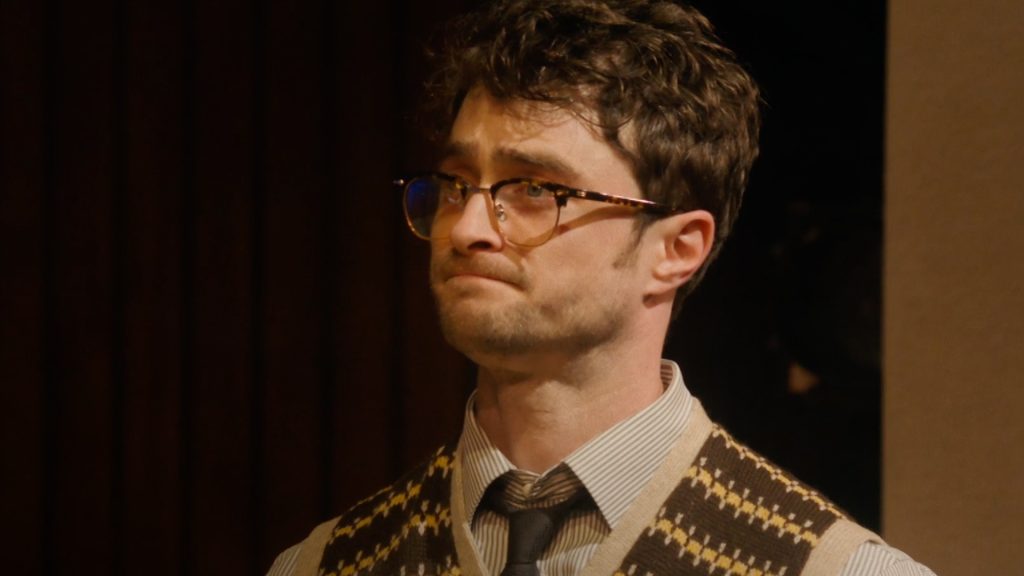
Radcliffe’s professional life centers on the Broadway theater district roughly three miles north of his apartment. The 2024 production of Stephen Sondheim’s Merrily We Roll Along, in which Radcliffe starred as Charley Kringas alongside Jonathan Groff and Lindsay Mendez, won him a Tony Award for Best Featured Actor in a Musical. The production was the highest-grossing Broadway musical of the 2023-2024 season. Importantly, the role was not a celebrity stunt. Radcliffe took singing lessons for over a year leading into the production. The Tony validated the entire choice he had made in 2007 with Equus, and again in 2011 with How to Succeed in Business. Specifically, the choice was that he would build a real theater career rather than a celebrity-on-stage career. By 2024, the choice had paid off in the only currency Broadway respects.
What He Built: The Net Worth Breakdown
The $110 Million Estimate
Current credible estimates place Radcliffe’s personal net worth at approximately $110 million, per cross-referenced reporting from Forbes and other industry tracking. The composition breaks down approximately as follows.
Harry Potter franchise compensation: approximately $90 million across the original eight films plus subsequent residuals. The original $1 million salary on the first film escalated to a reported $30 million on the final two films, plus participation. Specifically, this column represents roughly 80% of his total net worth and was largely earned by age 22.
Post-Potter acting income: approximately $15 million across his indie film and Broadway run since 2012. The films pay union scale plus modest backend. The Broadway productions pay weekly salary plus production participation. Furthermore, voice work (including the recent Weird Roku project) adds incremental income.
Real estate: approximately $5 million, including the West Village residence. Notably, Radcliffe has not acquired the kind of real estate portfolio his net worth would easily support. The asset class is underweight in his portfolio by design.
Investment income: the remainder, including conservative public-market positions managed by his long-term financial advisors. Radcliffe has spoken publicly about a deliberately conservative investment posture, and his advisors have reportedly steered him away from celebrity restaurant ventures, club investments, and other vanity holdings that have destroyed peer net worths.
The Asset Composition Lesson
The portfolio matters because it inverts the usual celebrity composition in a different direction than Alba or Portman did. Most celebrities at Radcliffe’s tier hold roughly 50% of net worth in real estate. Radcliffe holds approximately 5%. Most hold significant exposure to private investments and operating businesses. Radcliffe holds almost none. Specifically, the architecture is conservative to the point of being eccentric. The tradeoff is durability. His net worth has been remarkably stable across fifteen years of public visibility, which is something Hollywood peers with comparable original earnings cannot say.
The Soft Landing: What The Radcliffe Case Teaches Every Talent
Three Lessons From the Refusal
First, the windfall is not the asset. The asset is what gets done with the windfall. Radcliffe’s parents structured the Potter receipts into trusts he could not access until eighteen. That structure, more than any role choice, set the conditions for everything that came after. Specifically, the windfall protected the freedom. The freedom protected the choices. The choices built the career. Every brand founder reading this should ask whether their own version of the windfall is being structured to protect the next decade or being spent within the current one.
Second, restraint compounds. Radcliffe could have parlayed Potter into ten years of franchise leads. Each individual decision to take a $4 million indie instead of a $20 million action film looked, at the time, like leaving money on the table. Across fifteen years, the cumulative restraint built the only thing that lasts: a body of work the actor will not be embarrassed by at sixty. Furthermore, the same pattern shows up in his refusal of major endorsement deals. The cumulative refusal, valued at tens of millions in foregone fees, built something the fees would have prevented him from having.
The Franchise Trap Is Structural
Third, the franchise trap is structural, not personal. The Harry Potter films did not exploit Radcliffe. They paid him generously by 2000 standards and structured his receipts responsibly. The trap is that the downstream economy of the franchise, which dwarfs the production economy, has historically not flowed to the talent. Marvel changed that calculus. Mission Impossible changed that calculus. Modern franchise leads negotiate from a different starting point because Radcliffe (and the Star Wars original cast, and the early X-Men cast) demonstrated what the downstream looks like. Specifically, the lesson for the next generation of talent is simple. The franchise economy is real. Talent share of that economy is negotiable. Actors who show up to the negotiation knowing the math capture more than the ones who show up without it.
The Thesis That Outlasts the Headline
Radcliffe’s case is instructive because it inverts the standard celebrity thesis. The standard thesis says fame is the asset. Radcliffe’s case says fame is the trap, and what you do to escape it is the asset. The walkup apartment, the rescue dog, the rejected endorsements, the indie roles, the Broadway career, the deliberately small life. All of it is the same project. Specifically, the project is to convert the windfall into freedom and the freedom into a career nobody can take from you. Restraint compounds. Most stars learn that lesson too late to apply it. Radcliffe learned it at eighteen, while still finishing the franchise that had given him every reason not to.
The Radcliffe Hub’s Spoke Architecture
The Radcliffe hub anchors the cluster’s most fully developed spoke architecture, with four Potter-adjacent actors each examined separately. Emma Watson represents the brand-asset-stack variant through Burberry and Lancôme. Subsequently, Rupert Grint represents the property-compounding variant through his £24 million UK real estate portfolio. Furthermore, Ralph Fiennes represents the auteur-funding variant through his directorial filmography. Notably, Jude Law joins the Wizarding World ecosystem from the Fantastic Beasts trilogy, demonstrating that Potter-adjacent capital can compound through multiple operational architectures simultaneously.
Related Reading
- Hollywood’s $26 Billion Hidden Economy: How Product Placement Built Modern Stardom
- Emma Watson Brand Asset Economics: Burberry, Lancôme, And The Brown Detour
- Rupert Grint Net Worth: How Ron Weasley Built A £24M Property Empire
- Ralph Fiennes Net Worth: How Voldemort And Bond Funded A $50M Director’s Career
- Jude Law Net Worth: $70M From Refusing To Choose Between Prestige And Tentpole
- Joaquin Phoenix Net Worth Strategy: $80M Auteur Economics Of Joker
How To Work With Social Life Magazine
A fish does not notice the water. A reader does not notice the placement. That is the entire point. Furthermore, it is the entire opportunity for the brand founder who has just finished reading an article and is, without having fully realized it yet, about to scroll down and click one of the following five links.
Six Ways To Connect
If you are a brand, a founder, a creative director, or an in-house marketing lead who has read this far and would like to be considered for an editorial feature in Social Life Magazine’s print or digital ecosystem, the editorial team reviews brand submissions year-round. Pitch us at sociallifemagazine.com/contact.
If you are a brand with a ready-to-run campaign and would like to move faster than the traditional editorial cycle, the Paid Feature program offers three tiers of guaranteed placement across Social Life Magazine’s digital properties, with pricing starting at $975. Full details at sociallifemagazine.com/submit-a-paid-feature/.
Every piece Social Life Magazine publishes reaches an email list of 82,000 pre-qualified affluent readers. The majority summer in the Hamptons and spend the off-season in Manhattan’s core luxury zip codes. The email blast is the single most efficient distribution mechanism in the Hamptons editorial ecosystem. Inquire about placement at sociallifemagazine.com/enflyer.
Events, Print, And Independent Editorial
Polo Hamptons 2026, Social Life Magazine’s flagship event property, returns for its 17th year in July and August 2026. Platinum, Gold, and Corporate Cabana sponsorship packages are available for select categories (automotive is locked by BMW North America, real estate is at capacity, all other categories open). Demographic data, sponsor decks, and custom activation proposals available at polohamptons.com.
Social Life Magazine’s print edition, now in its 23rd year, distributes 25,000 copies per summer issue across Westhampton, Southampton, Bridgehampton, East Hampton, Sag Harbor, Amagansett, and Montauk boutiques, restaurants, and private clubs. Annual subscriptions, including fall/winter Upper East Side doorman distribution, available at sociallifemagazine.com/subscription.
If you’d like to support independent luxury editorial in the age of AI-generated content farms and private-equity-owned media conglomerates, donations to Social Life Magazine’s editorial operations are received via PayPal. Every dollar funds original reporting, photography, and the kind of writing that brands send their marketing teams to study.
Author

Written by
Recent Posts
What to Sort Early for a Wellington to Auckland Move
Why Local Skin Expertise Matters for Busy Schedules
Broadway And Tentpole: How Six Stars Built Eight-Figure Wealth Running Both Lanes
Jude Law Net Worth: $70M From Refusing To Choose Between Prestige And Tentpole
Mickey Rourke Net Worth: How A $40M Comeback Became A $10M Cautionary Tale
Categories
- Art
- Articles
- Beauty & Skincare
- Celebrities
- Celebrities|Movies
- Celebrities|The Chronicles
- Chronicles
- Entertainment|Culture
- Event Photos
- Events
- Fashion
- Fashion & Style
- Featured
- Food & Beverage
- Food, Spirits, Wine
- Hamptons
- Hamptons Celebrities
- Hamptons Celebrities
- Health
- Health & Beauty
- Lifestyle
- Luxury Lifestyle
- Movies
- Movies|Culture
- Movies|Hamptons Lifestyle
- Press
- Profiles
- Real Estate
- Technology
- The Chronicles
- Travel
- TV
- TV & Film
- Uncategorized
- Weddings