
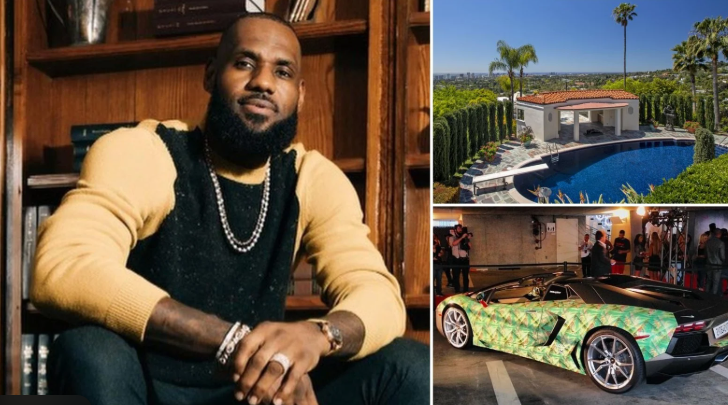
LeBron James was worth more off the court than on it while still being the best player alive. That sentence requires processing. Most athletes build wealth after their careers end. LeBron assembled a billion-dollar portfolio during peak playing years, gaining compound time that no retired athlete can replicate.
The $1.2 billion net worth represents something unprecedented in sports history: an active player who functions as chairman of a media empire, minority owner of multiple professional sports franchises, and venture investor across dozens of companies. His 2026 Olympic positioning, following Paris 2024 gold, extends relevance into his forties while the portfolio continues compounding.
The Hunger: Twelve Apartments Before High School
Akron, Ohio. Single mother Gloria James. Twelve different apartments before LeBron entered high school. The instability wasn’t just inconvenient. It was formative. Control became the theme of everything that followed.
Where Michael Jordan’s origin wound was rejection from varsity basketball, LeBron’s wound was chaos itself. The absence of stable foundation created an adult obsessed with controlling narrative, brand, and wealth. Nothing would be left to chance. Nothing would depend on someone else’s decisions.
This psychology explains LeBron’s unprecedented approach to career management. Free agency decisions that maximized not just salary but market size. Media production companies launched during playing years. Equity stakes negotiated into every possible deal. The kid who moved twelve times built a financial fortress designed to provide permanent stability.
The Contract: $1 Billion Guaranteed From Nike
In 2015, Nike offered LeBron James a lifetime deal valued at over $1 billion guaranteed. The first athlete in Nike history to secure lifetime status. The structure ensures income for decades, regardless of playing career, market conditions, or brand performance fluctuations.
But the Nike deal, as substantial as it appears, represents table stakes rather than the core of LeBron’s wealth strategy. The real wealth driver: equity stakes negotiated alongside traditional endorsement deals. Where Jordan pioneered royalty participation, LeBron pioneered equity accumulation across multiple investments simultaneously.
| Investment | Entry Point | Current Estimated Value |
|---|---|---|
| Liverpool FC stake | $6.5M (2011) | $90M+ |
| Beats by Dre | Undisclosed equity | $30M (Apple acquisition) |
| Blaze Pizza | $1M (2012) | $35M+ |
| SpringHill Company | Founder | $100M+ stake |
| Nike lifetime | $1B guaranteed | $1B+ |
The Liverpool FC stake illustrates the strategy perfectly. In 2011, LeBron invested approximately $6.5 million for a small ownership position in the English Premier League club. Today, Liverpool’s valuation exceeds $4 billion. LeBron’s stake has appreciated to roughly $90 million. He almost said no to the deal.
The Pivot: SpringHill Becomes a Media Empire
Most athletes who attempt media production create vanity projects. They produce documentaries about themselves, launch podcasts that attract initial curiosity then fade, partner with studios that use their name without sharing meaningful economics. LeBron built something structurally different.
SpringHill Company, founded by LeBron and longtime business partner Maverick Carter, raised $725 million in 2021 at a valuation that positioned it among legitimate media companies rather than celebrity passion projects. The structure matters: LeBron serves as chairman, not talent. He participates in company economics, not just individual project fees.
According to Financial Times reporting, SpringHill’s portfolio includes Uninterrupted (athlete media platform), The Robot Company (commercial production), and various film and television projects. The company produces content for Netflix, Disney, and other major platforms, generating revenue streams independent of LeBron’s personal participation in any single project.
This represents a fundamental departure from how private equity interacts with celebrity traditionally. Rather than selling his brand to a larger company, LeBron built a company that uses his brand as an asset while maintaining control and majority upside.
The Portfolio: What LeBron Actually Owns
LeBron’s investment strategy follows a clear logic: sports-adjacent businesses where athlete credibility provides competitive advantage, and growth-stage companies where his involvement accelerates customer acquisition or talent recruitment.
Fenway Sports Group
Beyond his direct Liverpool stake, LeBron owns equity in Fenway Sports Group, the parent company that controls the Boston Red Sox, Pittsburgh Penguins, and Liverpool FC. This holding provides exposure to sports franchise appreciation across multiple leagues and geographies, with professional management handling operations.
Blaze Pizza
LeBron’s $1 million investment in Blaze Pizza in 2012 came when the chain had 17 locations. Today, Blaze operates 340+ locations nationally. According to Bloomberg, LeBron’s stake has appreciated to approximately $35 million. More importantly, the investment demonstrated LeBron’s willingness to bet on consumer brands early, establishing credibility for subsequent investments.
Lobos 1707 Tequila
The celebrity tequila space is crowded, but LeBron’s equity stake in Lobos 1707 reflects the pattern established by Jordan’s ownership approach and later refined by George Clooney’s Casamigos. Premium spirits brands, when properly scaled, attract private equity and strategic acquirers at significant multiples.
Real Estate
LeBron’s Los Angeles real estate holdings exceed $100 million across multiple properties. The concentration in Los Angeles reflects both personal preference and strategic positioning in the entertainment industry’s geographic center. Real estate provides the portfolio stability that balances concentrated equity positions in growth companies.
Venture Investments
Tonal (connected fitness), Calm (meditation app), and various sports technology companies round out LeBron’s venture portfolio. These investments leverage his credibility in athletics to access deal flow that pure financial investors might not see. The strategy resembles Serena Williams’ venture approach, though with heavier weighting toward sports-adjacent categories.
The 2026 Olympic Glow: Relevance Extending Into the Forties
LeBron’s Paris 2024 Olympic gold medal added another chapter to a career that defies normal athlete aging curves. At 39, leading Team USA to victory maintained the visibility that supports brand valuations. The question now: does LeBron compete in Los Angeles 2028 at age 43?
The financial implications of this decision extend beyond patriotism or competitive legacy. An athlete competing in a home-country Olympics generates media attention that no marketing budget can replicate. If LeBron participates in any capacity in Los Angeles 2028, whether as player, ambassador, or team owner, the brand elevation compounds every other holding in his portfolio.
This optionality distinguishes LeBron’s position from retired athletes. Jordan’s brand depends on nostalgia and institutional quality. LeBron’s brand combines nostalgia potential with current relevance. He can still create new signature moments while simultaneously operating as a media mogul.
The Dynasty Play: Bronny and the Family Brand
In 2024, Bronny James was drafted to the Los Angeles Lakers, making LeBron and Bronny the first father-son duo to play simultaneously in NBA history. Beyond the emotional narrative, this development has structural implications for the James family brand.
The James brand is now explicitly multigenerational. SpringHill can develop content around the father-son dynamic. Nike relationships can extend across generations. The family foundation creates institutional presence in Akron that outlasts any individual career. This architecture transforms celebrity wealth into something approaching dynasty wealth.
LeBron’s children are already integrated into the brand ecosystem in ways that create continuity. This stands in contrast to most athlete wealth, which typically dissipates within one or two generations due to lifestyle inflation, poor investment decisions, or failure to institutionalize the brand.
The Wealth Mechanism: Equity Accumulation While Active
The fundamental innovation in LeBron’s approach is timing. Most athletes wait until retirement to pursue business seriously. LeBron built his portfolio during peak playing years, gaining compound time that retired athletes cannot access.
Consider the Liverpool investment. Made in 2011 when LeBron was 26. By the time he retires from basketball, that investment will have compounded for 15+ years. An athlete who waited until retirement to make the same investment would have 15 fewer years of appreciation.
This timing advantage applies across the portfolio. SpringHill, Blaze Pizza, Beats by Dre all benefited from LeBron’s involvement when his visibility and influence were at maximum. The investments made during peak fame carry that credibility premium forward as they compound.
According to Harvard Business Review analysis of celebrity brand economics, the fame premium depreciates after retirement. Investments made during peak visibility lock in the premium as permanent enterprise value.
The Pattern: What Separates LeBron From Other Active Athletes
Numerous active athletes have endorsement deals. Some have attempted media ventures or restaurant investments. LeBron’s outcomes exceed all of them by substantial margins. The patterns explain why.
First, LeBron treats business as a parallel career, not a hobby. SpringHill employs hundreds of people. The company produces content constantly, with or without LeBron’s personal involvement in specific projects. This operational seriousness distinguishes LeBron from athletes who launch businesses in name only.
Second, LeBron assembled genuine business talent. Maverick Carter, Rich Paul (Klutch Sports), and others bring professional capabilities that extend beyond athlete networks. The team includes people who could succeed in media, sports management, or investing independent of their LeBron relationship.
Third, LeBron negotiates equity relentlessly. Every partnership, endorsement, or collaboration becomes an opportunity to acquire ownership stakes. This pattern, accumulated across hundreds of deals over two decades, creates diversification without diluting the core Nike and SpringHill positions.
Applying LeBron’s Playbook
For business owners, executives, and founders watching from outside athletics, LeBron’s approach offers transferable wisdom about building wealth during peak earning years rather than after.
The first lesson: deploy capital when your earning power is highest. LeBron’s visibility at 26 commanded better investment terms than his visibility at 46 will command. The same logic applies to executives at peak career leverage, founders with hot companies, or anyone whose current position provides access that may not last.
The second lesson: build companies, not just portfolios. LeBron could have simply invested in other people’s companies. Instead, he built SpringHill as an operating entity that generates its own value. The difference matters for control, for upside, and for legacy. Understanding the difference between net worth and liquidity illuminates why operating companies provide options that passive investments cannot.
The third lesson: institutionalize family involvement early. Bronny’s NBA career, whatever its trajectory, integrates him into the LeBron brand ecosystem while LeBron is still active to guide and amplify. Waiting until retirement to involve family means missing peak visibility windows.
The Numbers: Breaking Down $1.2 Billion
LeBron’s wealth distributes across several major categories, each with different liquidity and growth characteristics.
| Asset Category | Estimated Value | Liquidity |
|---|---|---|
| Nike lifetime deal | $1B+ guaranteed | Paid over time |
| SpringHill equity | $100M+ | Low (private company) |
| Fenway Sports Group/Liverpool | $90M+ | Low (private) |
| Real estate holdings | $100M+ | Medium |
| Venture/other investments | $75M+ | Varies |
| Cash and liquid assets | $100M+ estimated | High |
The distribution reveals a portfolio optimized for long-term appreciation rather than current income. LeBron doesn’t need liquidity. His active NBA salary, Nike payments, and endorsement income generate substantial cash flow. The illiquid holdings can compound undisturbed for decades.
The Bottom Line
LeBron James built $1.2 billion through a strategy no athlete had attempted: accumulating equity aggressively while still commanding peak visibility. The SpringHill Company alone would rank him among significant media entrepreneurs. Combined with Nike, Fenway Sports Group, and dozens of other positions, the portfolio rivals family office holdings in scale and sophistication.
The 2026 Olympic cycle and potential Los Angeles 2028 involvement extend the relevance window further than any projections anticipated. At an age when most athletes are years into retirement, LeBron can still generate signature moments that elevate every holding in his portfolio simultaneously.
Bronny’s NBA career institutionalizes the family brand for another generation. SpringHill operates independently of LeBron’s daily involvement. Nike pays $30+ million annually whether LeBron plays or not. The King’s Court is built to reign long after the King stops playing.
For the complete analysis of how elite athletes build wealth, the hub article examines patterns across Jordan, LeBron, and Serena Williams.
Author

Written by
Recent Posts

Midsommar A24 Cast Net Worth — The Daylight Horror That Turned Grief Into a Career Launchpad
ZOI NOMAD & TEN11 LOUNGE MARK ONE YEAR

Room A24 Cast Net Worth — The $6 Million Captivity Drama That Set Brie Larson Free

The Witch A24 Cast Net Worth — A $3.5 Million Puritan Nightmare That Created a Queen and a King

A24 Genre Stars Net Worth — The Terrifying Fortunes Behind Horror, Sci-Fi, and Oscar Gold
Categories
- Art
- Articles
- Beauty & Skincare
- Celebrities
- Celebrities|Movies
- Celebrities|The Chronicles
- Chronicles
- Entertainment|Culture
- Event Photos
- Events
- Fashion
- Fashion & Style
- Featured
- Food & Beverage
- Food, Spirits, Wine
- Hamptons
- Hamptons Celebrities
- Hamptons Celebrities|Celebrities|The Chronicles
- Health
- Health & Beauty
- Lifestyle
- Luxury Lifestyle
- Movies
- Movies|Culture
- Movies|Hamptons Lifestyle
- Press
- Profiles
- Real Estate
- Technology
- The Chronicles
- Travel
- Uncategorized
- Weddings