
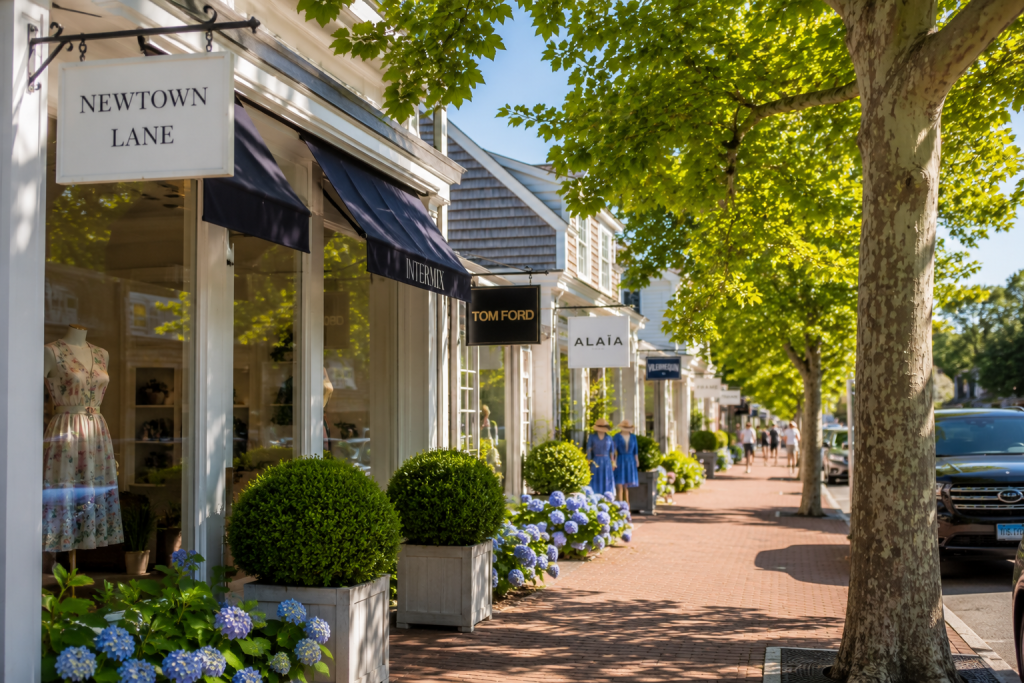
Newtown Lane East Hampton: The Luxury Shopping Street of the East End
The Street Where the Purchase Is the Visit
Newtown Lane East Hampton runs perpendicular to Main Street, forming the commercial spine of the most internationally recognized shopping district on the East End. From Memorial Day through Labor Day, the two-block stretch and its tributaries transform into something between a luxury shopping corridor and a social performance space. Gucci, Prada, Loewe, Chanel, Celine, Zimmermann, Brunello Cucinelli, Tiffany, and Ralph Lauren all operate within this compressed geography. Indeed, the density of global fashion houses per square foot rivals Worth Avenue in Palm Beach and Madison Avenue in Manhattan. However, what distinguishes Newtown Lane is context. Buying at the East Hampton Gucci is not functionally different from buying at the SoHo Gucci. The difference is that you are here. Being here is the luxury.
A medspa founder from Williamsburg (the kind who built a $12 million injectable empire and just opened her third location in Flatiron) walks Newtown Lane on a Saturday morning in July. She does not need the Tiffany. She needs the photograph of herself outside the Tiffany, posted to Instagram with a location tag that reads “East Hampton, NY.” Certainly, that tag converts at a higher rate than any paid advertisement she has ever run. Her followers know what it means. The tag is not about the jewelry. The tag is about the zip code.
The Anchor Brands: Global Fashion on a Village Street
The European Houses
Specifically, Gucci occupies a prominent Newtown Lane position, drawing the fashion crowd that migrates between New York, Palm Beach, and the East End on a seasonal loop. Also, Prada sits nearby. Loewe, the LVMH-owned Spanish leather goods house that has become the fashion industry’s consensus “brand of the moment” in recent years, maintains a presence that signals East Hampton’s relevance to the global luxury conversation. Chanel reopened on Newtown Lane for 2026 in a new location across the street from its previous space. Celine operates with the minimalist restraint that the brand’s Hedi Slimane era established. Notably, each European house runs a seasonal operation, staffing up for the Memorial Day to Labor Day window and scaling down (or closing entirely) for the off-season.
The Italian Corridor
Brunello Cucinelli at 39 Newtown Lane functions as the quiet center of East Hampton’s menswear scene. The cashmere, the linen, the $900 pants that look like they cost $200 (which is the entire point of Cucinelli’s status proposition). Zegna at 50 Newtown Lane provides an alternative for men who want Italian luxury without the understatement. Zimmermann, while Australian, operates in the same register: resort-ready, photographable, designed for the specific moment when you walk from the boutique to Sant Ambroeus for lunch. Also, Jimmy Choo at 33 Newtown Lane serves the shoe-and-accessory segment with the same seasonal intensity. Consequently, the Italian corridor alone could occupy an entire afternoon for a shopper who understands that the browsing is the purchase and the purchase is the performance.
BookHampton: The Literary Anchor That Changes the Equation
BookHampton is the independent bookstore that prevents Newtown Lane from becoming a pure luxury monoculture. Located on the lane since the 1970s, the store carries a curated selection of fiction, nonfiction, children’s books, and the specific mix of titles that East Hampton’s literary community expects. Notably, author readings during the summer season draw crowds that overlap with the Guild Hall audience. For a venture partner from Greenwich Village (the kind who runs a $180 million fund and summers on Middle Lane), BookHampton is the Saturday morning stop: browse the new releases, buy something reviewed in the Times Literary Supplement, display it on the coffee table, and reference it at exactly one dinner party.
The store’s value to Newtown Lane extends beyond retail. BookHampton provides intellectual credibility to a street that might otherwise read as purely transactional. Indeed, a shopping corridor with only Gucci and Prada tells one story. A shopping corridor with Gucci, Prada, and an independent bookstore tells a different one: this is a place where people read, where cultural capital matters, where the coffee table book you carry out of BookHampton signals something that the Tiffany bag cannot. After all, economic capital buys the bracelet. Cultural capital buys the book. In East Hampton, both currencies circulate on the same street.
He picks up the new Don DeLillo at BookHampton on a Saturday morning.
Already read it. Already owns it. Buying the object, not the content.
The woman behind him in line is buying the same book.
She has not read it. She will. He will not.
Both transactions are valid.
One is about display. One is about discovery.
Newtown Lane does not distinguish between the two.
The cash register treats all knowledge equally.
The 2026 Arrivals: What the New Tenants Tell You
Every summer brings new tenants to Newtown Lane, and each arrival tells you something about where the market is heading. For 2026, Aerin (the lifestyle brand founded by Aerin Lauder) returns to 7 Newtown Lane after a previous stint on the street. Violet Grey, the curated luxury beauty brand, joins the mix. Coniglio, the Palm Beach restaurant import, opened on Newtown Lane on May 22, blending dining and retail foot traffic in a way that reinforces the street’s position as a destination rather than a corridor. Cult Gaia took over the former Sotheby’s space at 66 Newtown Lane, bringing colorful resort dresses and swimwear. Similarly, Derek Lam 10 Crosby operates between Chanel and Henry Lehr, targeting the well-priced luxury segment that bridges aspiration and accessibility.
Certainly, the pattern is clear. Newtown Lane is not losing tenants. It is gaining them, and the new arrivals skew younger, more digitally native, and more aligned with the Instagram-driven consumption model that now governs luxury retail. Still, the old guard holds: Ralph Lauren maintains three locations on Main Street (the only brand with that kind of East Hampton footprint), and Tiffany at 53 Main Street continues to function as the emotional anchor of the entire district. For a fashion brand desperate for Hamptons relevance (one of the three personas this publication always targets), Newtown Lane is the address. The question is not whether to be here. The question is which storefront you can get.
The Seasonal Retail Economy: How It Actually Works
Newtown Lane operates on a rhythm that no other luxury shopping street in America follows. Stores staff up in May, reach peak operation by July 4, maintain intensity through August, and begin scaling down after Labor Day. For example, some brands (Ralph Lauren, Tiffany) operate year-round. Others close entirely for the off-season. Naturally, rents reflect this compression: a seasonal lease on Newtown Lane costs a fraction of a year-round Madison Avenue lease, but the revenue-per-square-foot during the twelve-week window can exceed what a full-year Manhattan location generates. Essentially, the entire street operates like a pop-up district with permanent infrastructure.
In fact, foot traffic is driven by three overlapping systems. First, the beach crowd flows through after morning hours at Main Beach. Second, the dining scene creates pre-dinner and post-lunch browsing windows. Third, the LIRR station sits at the eastern end of Newtown Lane, making the street the first thing arriving visitors see when they step off the train. In comparison, Southampton’s Main Street offers a similar brand roster but with a more conservative, old-money energy. Sag Harbor’s Main Street is more bohemian and eclectic. Newtown Lane sits between the two: polished enough for the global brands, relaxed enough for the independent bookstore.
What Your Bag Says About You: A Field Guide
Every shopping bag on Newtown Lane is a signal. A Gucci bag says you are current. Brunello Cucinelli says you are understated. Tiffany says you are celebrating (or apologizing). BookHampton says you are intellectual (or performing intellect, which on this street amounts to the same thing). The Zimmermann bag says you are going to the beach later. Meanwhile, no bag at all says you are either too wealthy to carry bags or too local to need anything. Ultimately, Newtown Lane is a street where the absence of shopping is its own form of display. In East Hampton, the people who have been coming the longest are the ones who walk the lane without buying anything. Having arrived is the purchase. Everything else is accessories.
Where the Conversation Continues
Social Life Magazine is distributed in the boutiques, restaurants, and coffee shops along Newtown Lane and Main Street, five summer issues per season, 25,000 copies each. Pick up a copy at BookHampton. Find one at Sant Ambroeus. The magazine is already on the street where these conversations happen.
If your brand belongs on Newtown Lane (luxury goods, fashion, beauty, lifestyle, hospitality, wellness), a paid feature in Social Life Magazine places you in front of the exact consumer who walks this street every Saturday. Submit a paid feature here.
Polo Hamptons 2026 returns to 900 Lumber Lane in Bridgehampton on July 18 and 25. BMW North America is the title sponsor. Christie Brinkley hosts. Sponsorship at polohamptons.com.
Subscribe to Social Life Magazine for year-round coverage of the shopping, dining, and social life of the East End.
Newtown Lane does not sell luxury. It sells the feeling of being in the place where luxury lives. Stores are the props. Streets are the stage. Audiences walk past in both directions. And the best performance is the one where you look like you are not performing at all.
Author

Written by
Recent Posts

Sculpting Chic
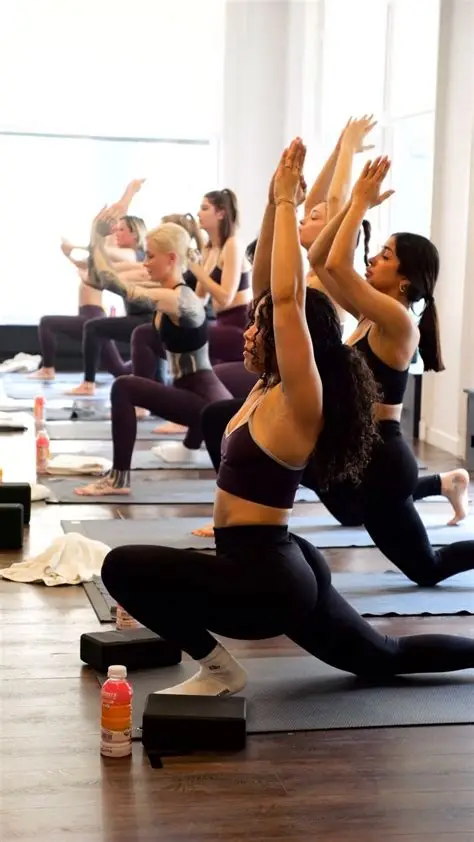
Inside the Year-Round Hot Yoga Spot Quietly Becoming the Hamptons’ Real Club
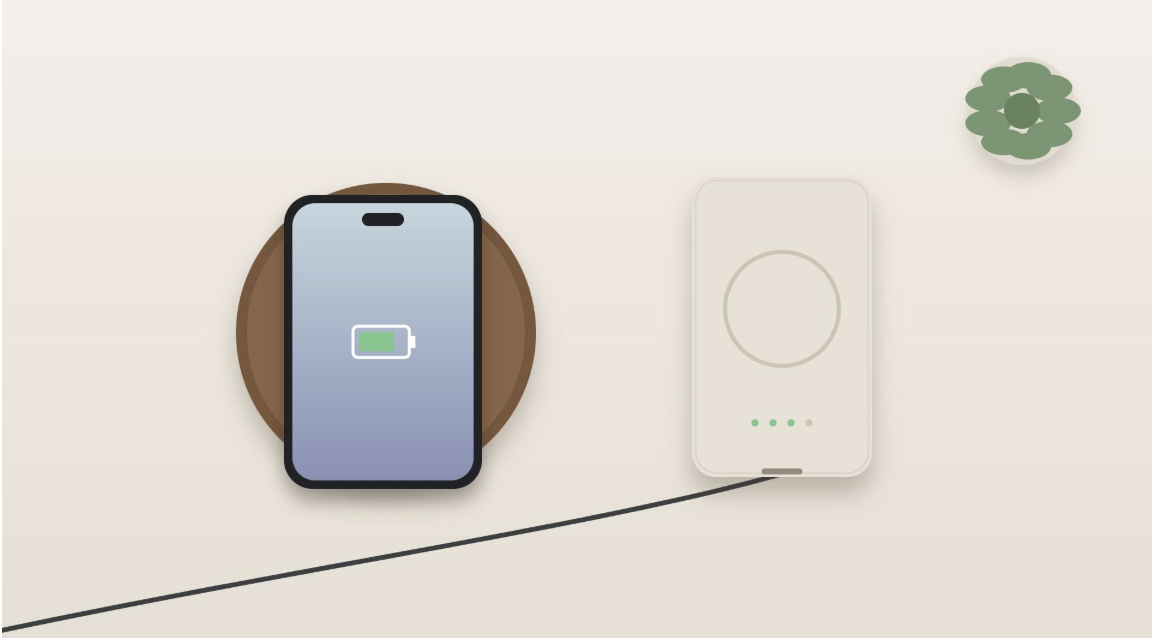
How to Choose Useful Tech Gifts for Employees and Clients in 2026
The Garage Question: Which Car Goes South for the Season?
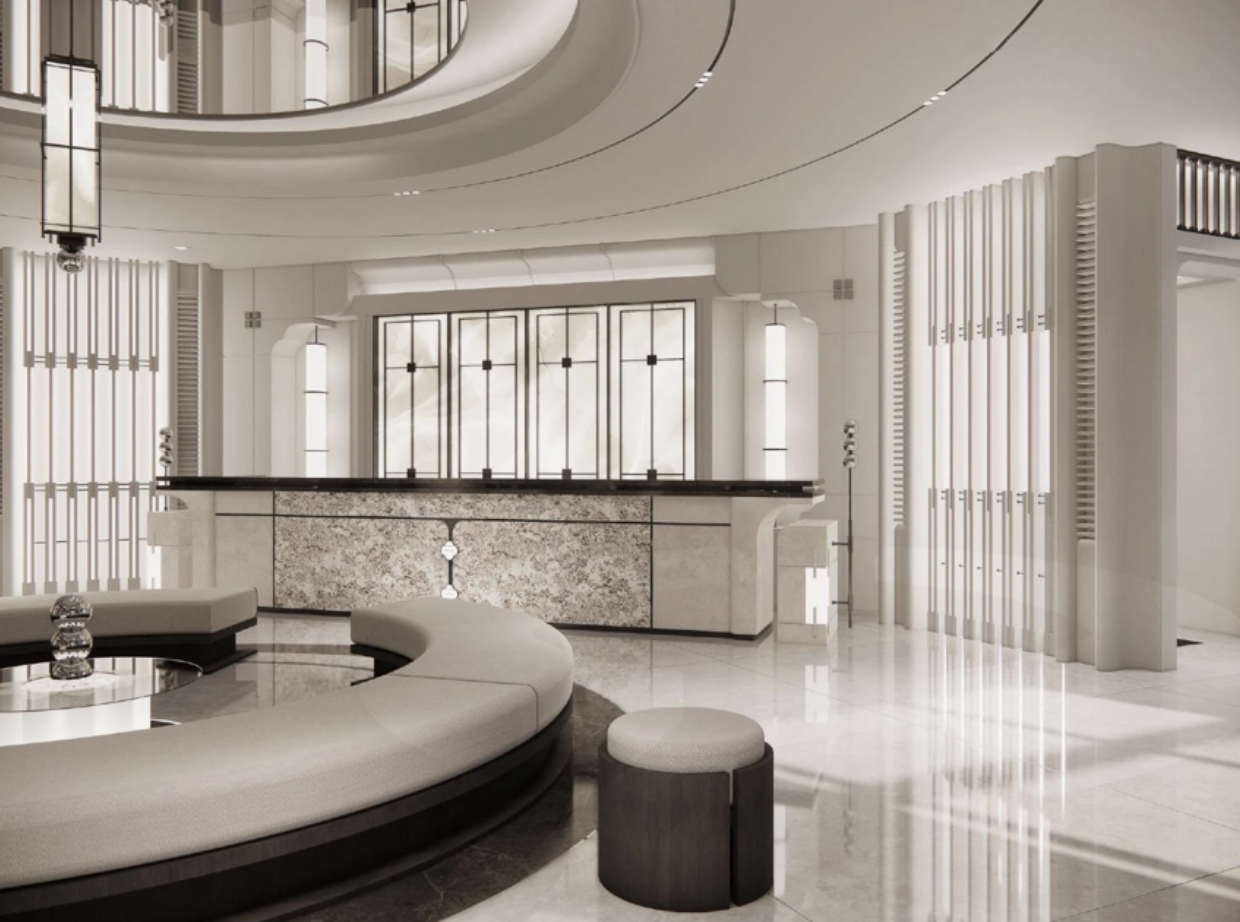
VandS Clinic Review Treatment: How Seoul Injectable and Laser Options Compare for US Patients
Categories
- Art
- Articles
- Business of Luxury
- Celebrities
- Culture
- Entertainment
- Events
- Faces of Summer 2026
- Fashion
- Fashion & Style
- Featured
- Finance
- Food, Spirits, Wine
- Hamptons
- Hamptons Celebrities
- Health
- Health & Beauty
- Lifestyle
- Luxury Lifestyle
- Press
- Profiles
- Real Estate
- Technology
- The Chronicles
- Travel
- Uncategorized
- Weddings