
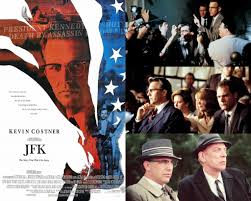
Oliver Stone shot the JFK cast across 78 days using five cameras simultaneously running 35mm, 16mm, Super 8, and black-and-white stock concurrently. The screenplay went through seven drafts. Kevin Costner initially passed on the role of Jim Garrison and only signed on after his agent Michael Ovitz personally lobbied him to reverse the decision. Tommy Lee Jones was first cast in a completely different role that got cut from the script, then recast as Clay Shaw two months before principal photography began. Joe Pesci squirmed through David Ferrie’s red toupee and prosthetic eyebrows for what became one of the most committed character performances of his career. Donald Sutherland delivered a 16-minute monologue as the mysterious “X” in a single Washington Mall walk-and-talk that Stone shot over two days.
The JFK cast assembled by Stone in spring 1991 was the largest prestige-actor ensemble of any 1990s American studio film. Twelve recognizable faces in supporting roles. Kevin Bacon, Sissy Spacek, Gary Oldman, Jack Lemmon, Walter Matthau, John Candy, Sally Kirkland, Ed Asner, Brian Doyle-Murray, Laurie Metcalf, Vincent D’Onofrio, Michael Rooker. Each one took a fraction of their normal fee to participate. Stone had built a script that no studio in 1990 wanted to make, and the actors who agreed to perform in it did so because the work was the asset, not the paycheck.
This is the architecture of how a $40 million Warner Bros. gamble, directed by a filmmaker the Department of Defense had publicly attacked during pre-production, became one of the most-nominated films of 1991 and reshaped American conversation about institutional trust for the next thirty-five years. The JFK cast story is the story of how 13 performers walked into a controversy nobody else would touch and walked out with the kind of cultural authority the Academy could not ignore.
What The JFK Movie Is Actually About
The film argues that the Warren Commission was a fictional myth and that institutional trust requires institutional skepticism. That is the thesis Stone delivered across 188 minutes of screen time, and it is the reason JFK still plays in 2026 with the same emotional charge it had in 1991.
The screenplay treats Jim Garrison not as a hero but as a man whose obsession costs him his marriage, his political career, and most of his New Orleans social standing. The closing courtroom argument runs 28 minutes. Costner delivers it directly to the audience in the final third, breaking the fourth wall in the most consequential cinematic monologue of the early 1990s. The thesis statement comes in the closing line: “Show this world that this is still a government of the people, for the people, and by the people. Nothing as long as you live will ever be more important. It’s up to you.”
What the film argues, against the consensus institutional narrative that had governed American discourse since 1964, is that citizens have an obligation to question what their government tells them. That is a politically uncomfortable thesis. Stone executed it with such procedural rigor across the three-hour runtime that even the JFK cast members who privately disagreed with the conspiracy framework defended the film’s right to make the case. The thesis is what kept the film alive.
JFK grossed $205 million worldwide on a $40 million budget per Box Office Mojo records. Audiences responded to the moral argument as much as the editing pyrotechnics.
Oliver Stone’s Architecture
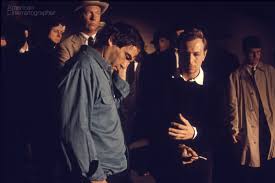
Stone arrived at JFK on the heels of three consecutive Best Director nominations and two wins (Platoon, Born on the Fourth of July). His prior work had established him as the prestige auteur of American institutional critique, with Wall Street and Salvador both arguing similar theses through dramatically different genres. JFK was the project where he attempted to fuse documentary technique with epic narrative.
His working relationship with cinematographer Robert Richardson defined the visual architecture. Richardson shot multiple film stocks within single scenes, intercutting 35mm color with 16mm black-and-white and Super 8 archival material. The five-camera approach allowed Stone to capture the same moment from multiple registers simultaneously, then edit between them at velocities that critics initially found exhausting and audiences eventually found hypnotic.
His script went through seven drafts across two years of pre-production. Variety reported that Stone had to defend the screenplay publicly across multiple national outlets while still in production, including a Washington Post column by George Lardner Jr. that obtained a copy of the script and accused Stone of historical fraud.
His editing collaborators Joe Hutshing and Pietro Scalia would win the Academy Award for Best Film Editing for their work, and Richardson would win Best Cinematography. The two craft Oscars validated the technical approach in a way the narrative-controversy could not. The collaboration was the asset Warner Bros. could not have engineered.
The Production Economics That Almost Lost Stone The Studio
Warner Bros. approved a $40 million budget in late 1990. The number held through production, despite the 78-day shooting schedule across multiple locations and the unusually high cinematography costs from running five cameras simultaneously. Cost overruns concentrated in two areas: the Washington Mall location work for the Sutherland scenes, which required permits across federally controlled property, and the Dealey Plaza recreation work in Dallas, which required closing public spaces that Texas authorities were reluctant to grant.
Cast compensation across the JFK cast followed a deliberately compressed structure. Costner earned approximately $7 million for the Garrison role, his standard 1991 fee following his Dances with Wolves sweep two months before signing. Tommy Lee Jones reportedly earned $1.5 million for Clay Shaw. Joe Pesci took $1 million for what amounted to a one-week shoot. Sutherland accepted $400,000 for his single 16-minute scene. Bacon, Spacek, Oldman, Lemmon, and Matthau each accepted significantly below their standard fees because they wanted to be in the film. The same logic would later define Jonah Hill’s $60,000 decision to play Donnie Azoff in Wolf of Wall Street. Hill worked seven months at scale-tier compensation because access to Scorsese was worth more than any paycheck the role would have commanded. The JFK cast in 1991 made the same calculation a generation earlier with Stone.
The Costner Backend Lesson Applied
Costner’s compensation structure on JFK reflected exactly the lesson he had extracted from The Untouchables four years earlier. He took $7 million upfront with substantial backend participation, the inverse of the $1 million flat fee he had accepted in 1986. That decision generated him an estimated $15 to $20 million across the film’s full lifecycle when factoring in domestic gross, international markets, and three decades of streaming licensing. His architecture of contract negotiations across the JFK cast period is documented in the Kevin Costner net worth pillar.
JFK opened on December 20, 1991 in 1,164 theaters. Opening weekend grossed $5.1 million, which The New York Times called disappointing. The film built audience steadily through January and February 1992 on word-of-mouth and accumulated $68 million in domestic gross by early April. International markets pushed the cumulative total past $205 million by the end of 1992. JFK earned its $40 million budget back five times over and generated a 30-year licensing tail that Warner Bros. continues to monetize.
Kevin Costner As Jim Garrison
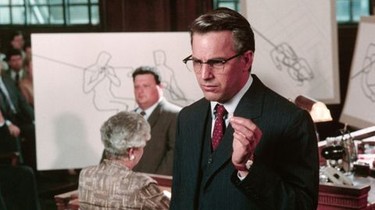
Costner was 36 when he reported to New Orleans to shoot JFK. He had won Best Director and Best Picture at the Academy Awards in March 1991 for Dances with Wolves, just two months before principal photography began. Stone’s set received the most bankable leading man in Hollywood, fresh off a sweep that had made Costner the only working actor with both an acting career and an Academy Award for first-feature direction.
Costner had said no to the role initially. Stone sent the script to Costner, Mel Gibson, and Harrison Ford simultaneously. All three passed. His agent Michael Ovitz, who had read the script and considered it the most important political film of the decade, personally lobbied Costner to reconsider. The conversation took several weeks. Costner met Garrison in person, met Garrison’s enemies, and read every available document on the case before agreeing to the role.
What Costner brought to Jim Garrison was the same restraint he had brought to Eliot Ness four years earlier. Garrison in Stone’s script is a moral fulcrum rather than a charismatic protagonist. He has to lose his marriage, his social standing, and his political future across three hours of running time. Costner played that arc by underplaying every confrontation, then released the full force of the performance into the 28-minute closing courtroom monologue. His direct-to-camera fourth-wall break in the final scene became the most-discussed acting moment of his career.
The Golden Globe nomination for Best Actor followed. An Academy Award nomination did not. That JFK cast role launched the second half of his 1987-1992 run and produced the catalog leverage that would define his fortune. Read the complete Kevin Costner net worth pillar for the full architecture.
Tommy Lee Jones As Clay Shaw
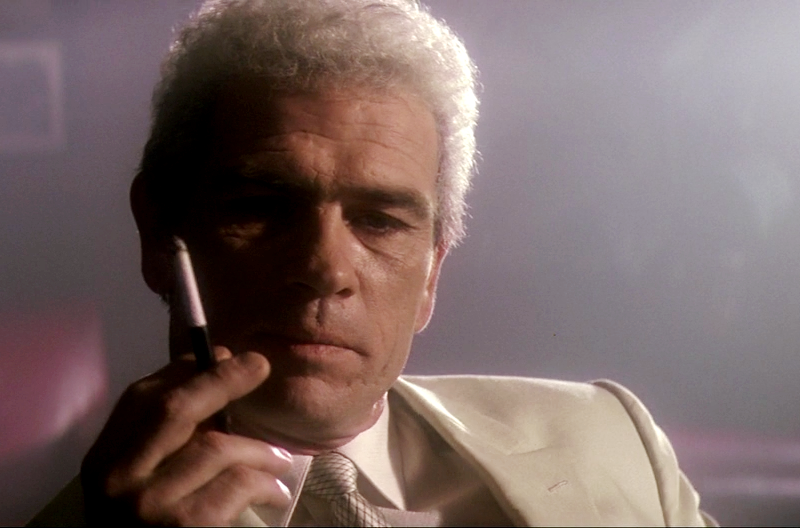
Jones was 45 and best known for prestige supporting roles in films like The Executioner’s Song and Coal Miner’s Daughter when Stone offered him the part of Clay Shaw, the New Orleans businessman whom Garrison prosecuted as a CIA operative involved in the assassination conspiracy. The casting story has a wrinkle most JFK retrospectives skip. Jones was originally cast in a different role in an earlier draft of the script. That role was cut. Stone went back to Jones two months before production with the Shaw part, and Jones accepted within 48 hours.
His preparation was the kind that defines a certain register of American character acting. Jones interviewed Garrison on three separate occasions, talked to Shaw’s surviving New Orleans associates, and studied trial transcripts and prison-letters that had not been published outside legal scholarship. He arrived on set with a complete portrait of a man who had been simultaneously reviled by the prosecution and defended by his city’s social establishment.
The Academy nominated him for Best Supporting Actor at the 64th ceremony in March 1992. He did not win, losing to Jack Palance for City Slickers, but the nomination converted his profile from prestige character actor to leading-man candidate within 18 months. The Fugitive followed in 1993 and earned him the Best Supporting Actor Oscar he had narrowly missed for JFK. The trajectory from Clay Shaw to Sam Gerard took him approximately two years, and the JFK cast role was the connecting tissue.
His career across the subsequent three decades has built into a steady working-actor net worth estimated at approximately $25 million in 2026.
Joe Pesci As David Ferrie
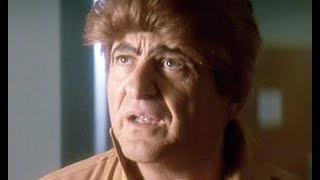
Pesci was 48 and fresh off his Best Supporting Actor Oscar win for Goodfellas when Stone cast him as David Ferrie, the alleged getaway pilot whose erratic testimony forms one of the central nodes of Garrison’s investigation. The role required something Pesci had never previously demonstrated: the ability to play paranoid hyperkinesis without leaning on the Tommy DeVito menace that had defined his most famous work.
His preparation involved three weeks of physical rehearsal with the prosthetic eyebrows and red wig that Ferrie’s alopecia universalis required. That wig was so unconvincing on camera that Stone considered scaling it back, but Pesci insisted on full historical accuracy. His squirming, sweating, theatrical-Catholicism performance is widely considered one of the finest character turns of his career, including by Roger Ebert who described Pesci’s work as “squirming and hyperkinetic” in his original 1991 review.
The Walk-Away Parallel
Pesci’s compensation for one week of principal photography was approximately $1 million, reflecting his post-Goodfellas market value. The role placed him alongside Robert De Niro’s career architecture in a way few of his other 1990s roles did. Both actors had used supporting parts to extend their dramatic range beyond the gangster typecasting that had defined their breakthroughs. The same character-actor opportunity had been available to Mickey Rourke a decade earlier across his Body Heat through Angel Heart run, though Rourke’s 1991 transition to professional boxing meant he missed the JFK ensemble entirely. Pesci took the opportunity. Rourke walked away from his own.
His subsequent work in Casino, A Bronx Tale, and the Lethal Weapon franchise built his cumulative net worth into approximately $50 million by 2026. The Pesci semi-retirement that followed Casino in 1995 means his catalog continues to compound through residuals while he selectively chooses projects, most notably his Oscar-nominated return in Martin Scorsese’s The Irishman in 2019.
Donald Sutherland As “X”
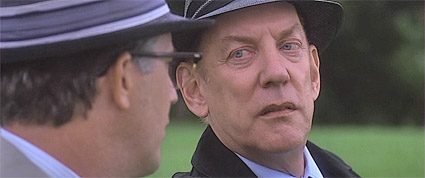
Sutherland was 56 when Stone called him to play the unnamed military intelligence officer who delivers the film’s central exposition in a single 16-minute walk-and-talk across the Washington Mall. The character was based on Fletcher Prouty, the retired Air Force colonel and CIA liaison whose 1973 book The Secret Team had argued that elements within the American intelligence apparatus had operated independently of presidential authority during the Kennedy era.
His preparation was the kind that defined his half-century working method. Sutherland interviewed Prouty in person, read every available document Prouty had written, and arrived on set with a complete fictional biography for the character even though the script gave him only the letter “X.” The 16-minute monologue was shot across two days using multiple cameras, with Sutherland delivering the entire speech in continuous takes that Stone would later cut between for visual variety.
The Material-Over-Money Philosophy
His compensation was approximately $400,000 for two days of principal photography, an unusually low figure for an actor of his stature. Sutherland told The Hollywood Reporter in subsequent interviews that he had taken the role specifically because the material mattered, not because the compensation justified the schedule. The willingness to do supporting work for filmmakers he respected was the architecture of his career. The same philosophy would later define Brian Cox’s late-career trajectory through Succession, where Cox spent four decades at the Royal Shakespeare Company and on prestige television before Logan Roy made him a household name. Both actors prove the same thesis: classical stage training compounds into late-career marquee status when the material justifies the discount.
Sutherland’s death in June 2024 generated significant retrospective attention to JFK as one of the most concentrated showcases of his late-career character work. His estate at the time of death was reported at approximately $60 million across his Quebec property holdings, his back-catalog rights, and his ongoing residual income from the Hunger Games franchise. The lifetime catalog continues to compound for his heirs.
Kevin Bacon As Willie O’Keefe
Bacon was 33 and at the midpoint of his transition from teen-romance leading man to character actor when Stone cast him as Willie O’Keefe, the male prostitute whose prison testimony provides one of Garrison’s central conspiracy witnesses. The role was small in screen time but central to the film’s argument about how Garrison built his case from the testimony of socially marginalized witnesses whom institutional New Orleans had reasons to ignore.
His preparation involved interviewing actual prisoners at Louisiana State Penitentiary and developing a specific Southern accent that distinguished O’Keefe from the broader cast of New Orleans characters in the film. Bacon’s approach to character work in this era prefigured the methodology he would later refine in JFK director Stone’s other films and in his collaborations with directors like Atom Egoyan and Sean Penn.
His compensation was reportedly approximately $200,000 for the JFK cast role, reflecting his standard 1991 supporting-role fee. The work generated cultural authority that would compound across his subsequent career, particularly his lead role in The River Wild in 1994 and the Mystic River ensemble in 2003. The Bacon career architecture is the textbook example of how a single committed supporting performance can recalibrate an actor’s market value across the next decade.
His cumulative net worth in 2026 is estimated at approximately $45 million across his film, television, and music work. The “Six Degrees of Kevin Bacon” cultural phenomenon that emerged in the mid-1990s converted his ensemble-actor reputation into a permanent piece of American pop-culture vernacular.
Sissy Spacek As Liz Garrison
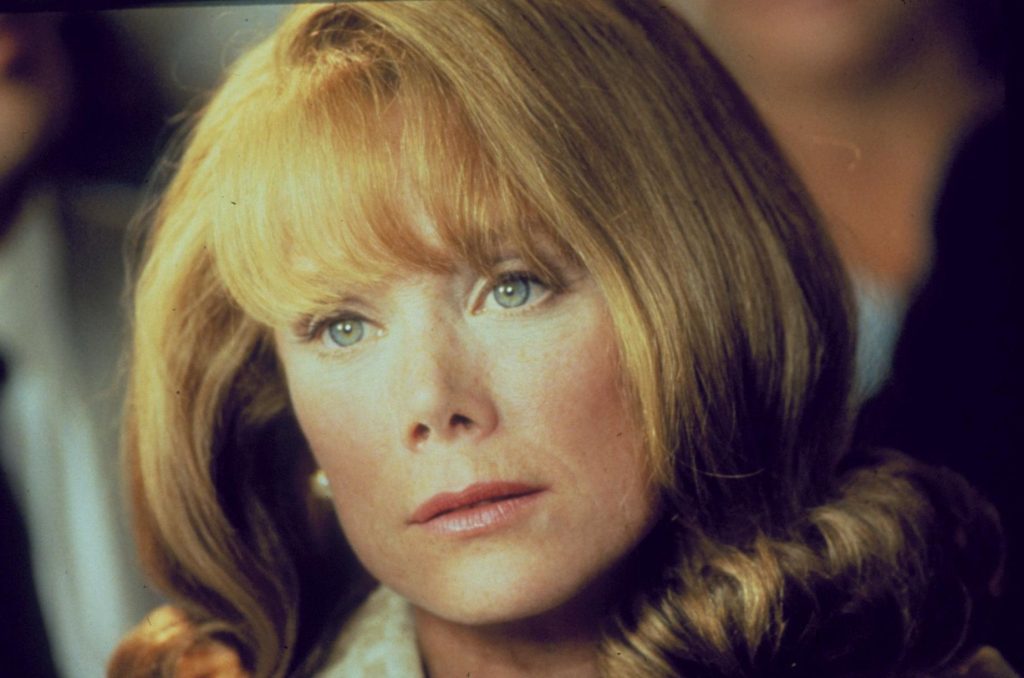
Spacek was 41 and an Academy Award winner from her Coal Miner’s Daughter performance a decade earlier when Stone cast her as Liz Garrison, the wife whose marriage collapses under the weight of her husband’s obsession. The role was structurally the moral counterweight to Costner’s increasingly fanatical investigation, and Spacek played it with the specificity of an actress who had spent her career portraying women whose interior lives exceed the screen time their roles allow.
Her preparation involved working with Garrison’s actual widow Liz Garrison on the emotional contours of the marriage. The collaboration produced a performance that critics initially called underwritten and audiences eventually recognized as the film’s most quietly devastating arc. Spacek’s domestic confrontation scenes with Costner anchor the family drama that prevents JFK from becoming pure procedural conspiracy theory.
Her compensation for the JFK cast role was approximately $500,000, reflecting her established A-list rate for supporting performances in major studio films. The work added another prestige credit to a filmography that already included Carrie, Badlands, and In the Bedroom, and her subsequent Oscar nomination for In the Bedroom in 2001 confirmed the late-career architecture that JFK had helped sustain.
Her cumulative net worth in 2026 is estimated at approximately $20 million across her film, television, and stage work.
Gary Oldman As Lee Harvey Oswald
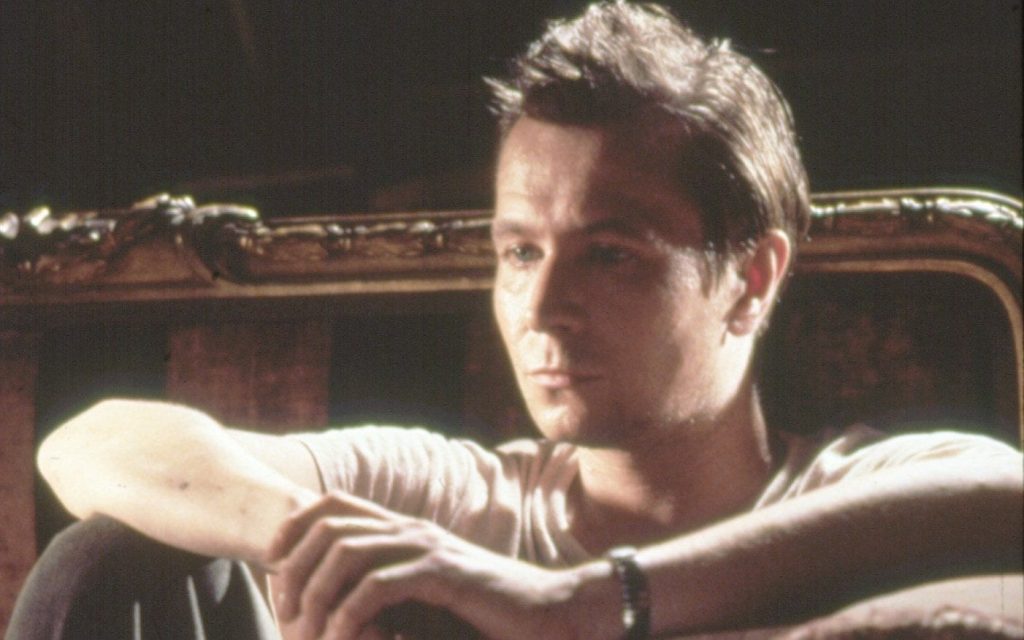
Oldman was 33 and had spent the previous decade building a reputation as the most committed character actor of his British generation when Stone cast him as Lee Harvey Oswald. The role required something nearly impossible: portraying the most studied figure in 20th-century American crime without lapsing into impersonation or commentary. Oldman delivered exactly that performance.
His preparation was the kind that defined his working methodology. He gained the precise weight Oswald had carried at the time of the assassination, mastered the New Orleans-Dallas accent variations across Oswald’s documented interviews, and rehearsed every scene against archival footage that Stone had assembled in pre-production. The result was a performance so visually accurate that audiences leaving early screenings reported confusion about which footage was archival and which was Oldman’s reenactment.
His compensation for the JFK cast role was approximately $400,000, reflecting his pre-Bram Stoker’s Dracula market value. The role bridged him directly into his next decade of marquee character work, including True Romance in 1993, Léon: The Professional in 1994, and the Harry Potter franchise that would later dominate his commercial career.
Oldman’s eventual Best Actor Oscar for Darkest Hour in 2017 capped a career trajectory that JFK had helped accelerate. His cumulative net worth in 2026 is estimated at approximately $50 million across his film, television, and franchise work.
What The JFK Cast Changed About American Cinema
The film made institutional skepticism a viable commercial subject for major studio production. Before JFK, the conspiracy-theory genre had been confined to independent filmmakers and television producers operating outside the prestige circuit. After JFK, every major studio greenlit at least one institutional-critique film across the subsequent decade. Three Days of the Condor sequels were considered. The Pelican Brief reached production. Stone’s own subsequent work in Nixon, W., and Snowden traced direct architectural debts to what he had executed in JFK. George Clooney’s entire political-thriller production company architecture through Smokehouse Pictures, including Good Night and Good Luck, Michael Clayton, and The Ides of March, draws direct lineage from what Stone proved a major studio would fund in 1991. Clooney internalized the JFK production model and rebuilt it for the 2000s.
JFK also reshaped how American audiences engaged with documentary aesthetics. The five-camera multi-stock approach Richardson developed for the production became standard practice across prestige documentary television within a decade. HBO’s political-drama pipeline that produced Recount, Game Change, and Path to War in the 2000s and 2010s all trace stylistic debts to what Stone and Richardson executed in 1991.
For Costner specifically, the JFK cast role consolidated the leading-man status The Untouchables had launched four years earlier. The architecture of how seven films from 1987 through 1992 generated permanent cultural reference points runs through the Kevin Costner net worth pillar. Read the related cluster piece The Untouchables Cast: Inside De Palma’s $25 Million Gamble for the prequel chapter to the JFK story.
The JFK Legacy In 2026
The film earned eight Academy Award nominations including Best Picture, Best Director, Best Adapted Screenplay, and Best Supporting Actor for Tommy Lee Jones. It won Best Cinematography and Best Film Editing. Stone won the Golden Globe for Best Director. The American Film Institute included JFK on multiple retrospective ballots across the 2000s and 2010s.
The film lives now in three primary venues. Streaming on HBO Max and Warner Bros. Discovery platforms, where it continues to compound platform-licensing revenue. Repertory programming at Lincoln Center, the BFI Southbank, and academic film studies departments, where it is taught as the canonical example of late-20th-century American conspiracy cinema. And cultural memory, where the courtroom monologue, the X exposition scene, and the multi-stock editing language remain among the most-quoted elements of 1990s American cinema.
Costner has not publicly revisited the role of Jim Garrison since 1991, despite repeated industry rumors about a sequel or streaming reboot. The reluctance is consistent with how he approaches his catalog. He does not return to characters whose original execution he believes succeeded. The film exists in his filmography as the political-thriller bookend to The Untouchables, and he has spent the subsequent three decades building outward from those two performances rather than circling back to them.
Compare the JFK production economics to other late-career-defining ensemble films like the Wall Street Cinema Empire that Social Life Magazine has documented across multiple cast clusters. The architecture is the same: a director who refuses studio comfort, a cast that takes pay cuts because the material matters, and a 30-year licensing tail that compounds long after opening weekend. JFK was the test case. The Wall Street films were the heirs.
The CassWorld Take
For Brands Reading Between The Lines
A fish does not notice the water. A reader does not notice the architecture. That is the entire point. Furthermore, it is the entire opportunity for the brand founder, fund manager, or fashion house creative director who has just read this far and is, without having fully realized it yet, about to scroll down and click one of the following links.
If you are a brand, a founder, a creative director, or an in-house marketing lead who has read this far and would like to be considered for an editorial feature in Social Life Magazine’s print or digital ecosystem, the editorial team reviews brand submissions year-round. Reach out via the Social Life editorial contact page.
Submit A Paid Feature
For political documentary platforms, prestige whiskey portfolios, and the kind of legacy newsroom partnerships that recognize an institutional-skepticism aesthetic when they see one, the Submit A Paid Feature page is the fastest entry point. Our editors build the placement to fit your audience, not ours.
The 82,000-Reader Email List
Join the 82,000+ readers who receive the Social Life Magazine email digest weekly. The list reaches the affluent New York and Out East audience that drives luxury brand purchase decisions across beauty, spirits, hospitality, finance, and fashion. Sign up via the Social Life Magazine email signup form.
Polo Hamptons 2026
For brands ready to be present in front of the demographic that quotes Costner’s “back and to the left” courtroom monologue in their group chats and considers JFK a foundational text of American institutional skepticism, Polo Hamptons 2026 is the marquee summer activation. Title sponsor BMW returns for its eighth consecutive year. Tickets, cabanas, and remaining sponsorship packages are available now.
Print Subscription
Subscribe to the print edition of Social Life Magazine and hold 23 years of Out East cultural authority in your hands. Five summer issues delivered Memorial Day through Labor Day, plus the Fall and Winter editions reaching Upper East Side doorman buildings. Print subscriptions are available at the Social Life subscription page.
Support Independent Journalism
If this article sharpened your thinking, consider supporting independent luxury journalism. Donate $5 and keep the signal clean. Buy us a coffee here.
The JFK cast story is the rare 1990s production document where 13 prestige actors took pay cuts to participate in a film the Department of Defense had publicly attacked, the courtroom monologue ran 28 minutes, and the institutional skepticism Stone argued in 1991 has only grown more relevant across three decades. Print the architecture. Bookmark this page.
Written by CassWorld. Cass Almendral is Head of Business Development at Social Life Magazine and Co-Founder of Polo Hamptons. Reach editorial at cass.almendral@sociallifemagazine.com.
Author

Written by
Recent Posts
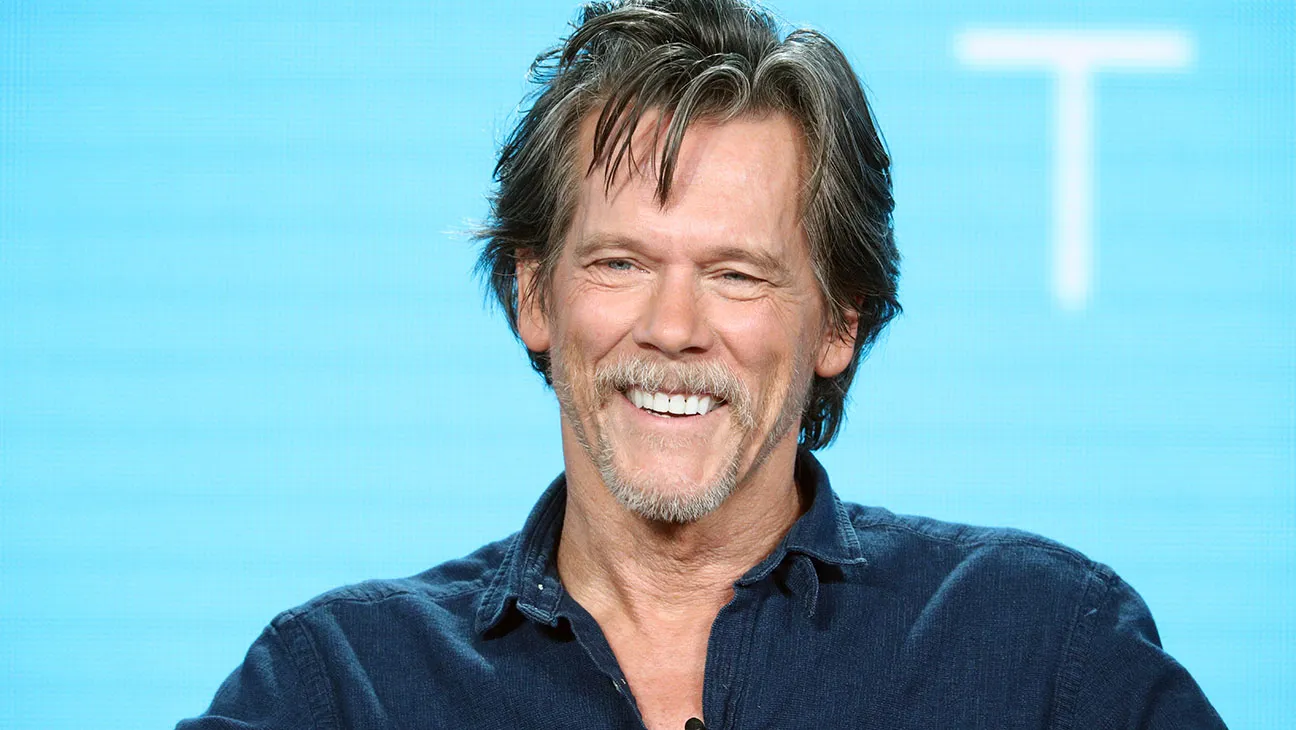
Kevin Bacon Net Worth: $45M Recovery From The Madoff Loss
How the Right Shoes Can Fix a Boring Outfit
Why Clean Brushes Are the Secret to a More Polished Makeup Look
Why the Appeal of Electric Dirt Bikes Goes Beyond Power
A Curated Guide to Scotland’s Most Exclusive Hikes
Categories
- Art
- Articles
- Beauty & Skincare
- Celebrities
- Celebrities|Movies
- Celebrities|The Chronicles
- Celebrities|TV Shows
- Chronicles
- Entertainment|Culture
- Event Photos
- Events
- Fashion
- Fashion & Style
- Featured
- Food & Beverage
- Food, Spirits, Wine
- Hamptons
- Hamptons Celebrities
- Hamptons Celebrities
- Health
- Health & Beauty
- Lifestyle
- Luxury Lifestyle
- Movies
- Movies|Culture
- Movies|Hamptons Lifestyle
- Press
- Profiles
- Real Estate
- Technology
- The Chronicles
- Travel
- TV
- TV & Film
- Uncategorized
- Weddings