
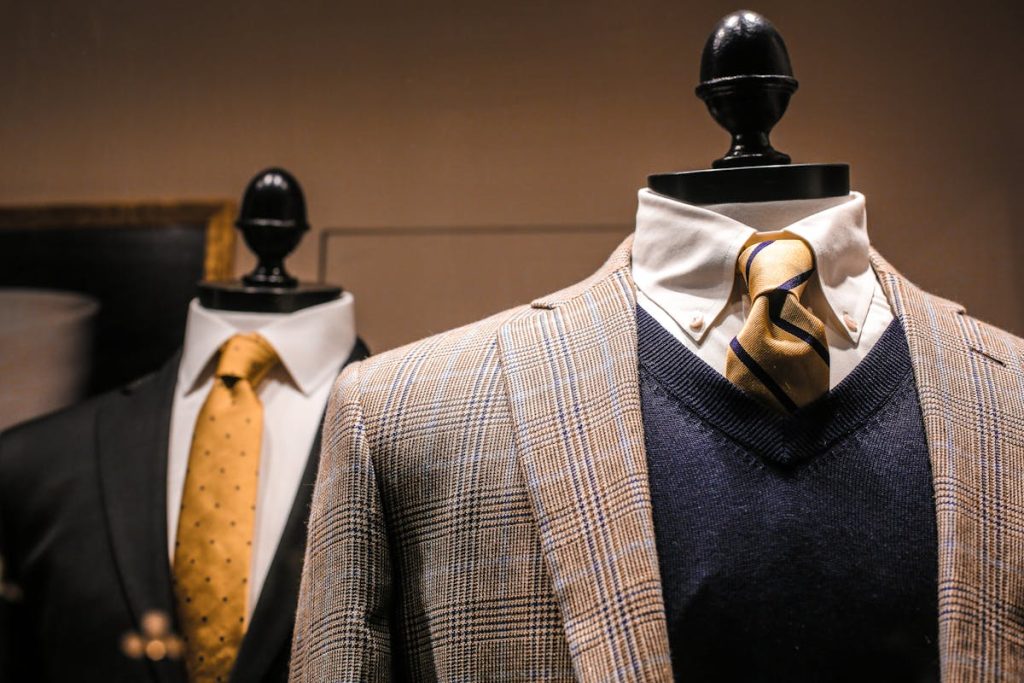
The American fashion designers who matter did not come from fashion. Ralph Lauren sold ties. Calvin Klein grew up in the Bronx watching his mother sew. Donna Karan dropped out of Parsons. Tom Ford studied architecture. The pattern is not accidental. American fashion was built by outsiders who looked at the French system, decided it was too slow, too expensive, and too exclusive, and then constructed an alternative that generated more revenue than most of the houses it was imitating. The American Look, as it came to be called, was not a style. It was a business model: make luxury accessible, make accessibility aspirational, and make sure the margin works at scale.
The numbers tell the story more efficiently than any runway review. Ralph Lauren Corporation generates $6.4 billion in annual revenue. PVH, which owns Calvin Klein and Tommy Hilfiger, generates $8.6 billion. Tapestry, which owns Coach and Kate Spade, generates $6.7 billion. These are not ateliers. They are global corporations traded on the New York Stock Exchange, and their combined market capitalization exceeds the GDP of several dozen countries. The history of fashion includes a chapter that begins in Paris. The chapter that generates the most revenue begins on Seventh Avenue.
Ralph Lauren: The Bronx Kid Who Invented Old Money
Ralph Lauren did not design clothes. He designed a world, then sold you permission to live in it. Born Ralph Lifshitz in 1939, the son of Belarusian immigrants, Lauren began selling neckties from a drawer in the Empire State Building in 1967. By 1971, he had a complete menswear line, a women’s line, and a store on Rodeo Drive. By 1986, he had the Madison Avenue flagship, a 22,000-square-foot mansion that remains the most ambitious retail environment in American fashion. The Bedford estate. His ranch in Colorado. The vintage car collection worth $350 million. Lauren built the most convincing aristocratic fantasy in American commercial history. He did it without a single ancestor who had ever owned a country house. The polo shirt with the small horse on it is the most democratic luxury product ever created. It costs $98 and it tells everyone in the room exactly where you want to be.
Calvin Klein: Minimalism, Scandal, and the Art of the Provocative Billboard
Calvin Klein understood something the French houses had never considered: that controversy is a form of advertising that you do not have to pay for. The 1980 Brooke Shields campaign (“You want to know what comes between me and my Calvins? Nothing.”) generated more news coverage than any fashion campaign in history. The brand repeated the formula with Mark Wahlberg, Kate Moss, and a series of advertisements so deliberately provocative that the American Family Association organized boycotts. The boycotts only increased sales. Klein’s design philosophy was the inverse of Lauren’s maximalism: clean lines, neutral colors, nothing extraneous. The clothes were the negative space. The brand was the controversy. PVH acquired Calvin Klein in 2003 for $430 million. The brand now generates over $3.5 billion annually. Klein himself has not designed for the company in over two decades. The name outlived the designer. That was always the plan.
Tom Ford: The American Who Saved Gucci and Then Saved Himself
Tom Ford arrived at Gucci in 1990 when the company was nearly bankrupt, selling $500 million at retail and losing money on every transaction. By 1999, Gucci generated $3.2 billion in revenue and Ford was the most commercially successful designer alive. His method was simple: sex. Explicit, unapologetic, photographed by Mario Testino and Steven Meisel, distributed through advertising campaigns that made Calvin Klein’s provocations look like Sunday school. Ford left Gucci in 2004 after losing a power struggle with Kering’s François-Henri Pinault. He launched his own brand, built it into a $1 billion business, then sold it to Estée Lauder in 2023 for an estimated $2.8 billion. The career arc is the most efficient wealth-creation sequence in American fashion designers’ history. Architecture degree to multi-billionaire in three acts.
Marc Jacobs: Grunge, Louis Vuitton, and the Cost of Being Right Too Early
Marc Jacobs showed his grunge collection for Perry Ellis in 1992 and was fired the next day. The collection, which featured flannel shirts, combat boots, and silk slip dresses styled to look like they had been slept in, was universally panned by fashion critics and universally copied by every retailer in America within six months. Jacobs was right. He was just early. LVMH hired him as creative director of Louis Vuitton in 1997, and he spent sixteen years transforming the world’s most traditional leather goods company into a contemporary fashion house. The Stephen Sprouse collaboration. His Takashi Murakami monogram. The celebrity front row that turned Louis Vuitton shows into cultural events. When Jacobs left in 2013, Louis Vuitton’s fashion division generated $10 billion in revenue. His own label, Marc Jacobs International, now operates under LVMH with a cult following that values creative credibility over commercial scale.
Donna Karan and Carolina Herrera: Dressing the Women Who Run Things
Donna Karan‘s “Seven Easy Pieces” concept, launched in 1985, solved a problem that no French designer had bothered to address: what does a woman who works fourteen hours a day actually wear? A bodysuit, a skirt, a jacket, a pair of trousers, a cashmere sweater, a white shirt, and an evening piece. Seven items that could be combined into thirty outfits. The concept was structural, not aesthetic. It was also the template for every “capsule wardrobe” marketed by every brand from Everlane to The Row in the forty years since. Karan sold DKNY to LVMH in 2001 for $643 million and pivoted to Urban Zen, a wellness and lifestyle brand based in East Hampton where she has been a fixture of the Hamptons social landscape for three decades.
Carolina Herrera came to American fashion from Venezuelan aristocracy, which gave her something no Seventh Avenue designer could manufacture: the bearing of a woman who had been wearing couture since childhood. She dressed Jackie Kennedy, every First Lady after her, and a generation of Park Avenue women who wanted to look expensive without looking like they were trying. The brand, now owned by Puig, generates over $500 million annually. Herrera’s personal relationship with the Hamptons social circuit, including her long association with the charity gala scene that Social Life Magazine covers in every issue, makes her one of the most naturally aligned brands in the American fashion designers landscape for East End visibility.
Tory Burch and The Row: Two Models of American Luxury, One Price Point Apart
Tory Burch launched her brand in 2004 with a single store on Elizabeth Street in Nolita. Oprah wore the Reva ballet flat on her show. The store sold out its entire inventory in the following week. By 2024, the company generated $1.5 billion in annual revenue with stores in both Southampton and East Hampton, capturing the two largest spending corridors on Long Island’s South Fork. Burch’s positioning is surgical: accessible luxury that does not feel like a compromise. The Reva flat at $250. Her Miller sandal at $228. The Eleanor bag at $598. Each product sits in the precise psychographic space between “I can afford real luxury” and “I am too smart to overpay for a logo.” The Tory Burch Foundation, which provides capital and mentorship to women entrepreneurs, adds a philanthropic dimension that makes the brand culturally defensible in ways that pure luxury plays are not.
The Row occupies the opposite end of the American spectrum. Founded by Mary-Kate and Ashley Olsen in 2006, the brand prices cashmere sweaters at $2,500, leather bags at $5,000, and a backpack at $39,000. There is no advertising. Zero influencer campaigns. There is no Instagram grid optimized for engagement. The clothes sell through quality, word of mouth, and the specific social circles where a $2,500 sweater without a visible logo is understood as a higher-status signal than a $500 sweater covered in monograms. The Row is the purest expression of quiet luxury in American fashion designers’ history. It is also proof that the children of celebrity can build something more prestigious than the fame that funded it.
Michael Kors, Tommy Hilfiger, and Vera Wang: Scale, Crossover, and Reinvention
Michael Kors built a $5 billion company by answering a question nobody in luxury wanted to ask: what if designer fashion was available at a price that a middle manager could afford? The Kors formula (recognizable logo, aspirational advertising, price points between $100 and $500 for accessories) created the “accessible luxury” category that Tory Burch, Kate Spade, and Coach would later compete in. Capri Holdings’ merger with Tapestry, blocked by regulators in 2024, would have created the largest American luxury conglomerate. The attempt itself proved the thesis: American fashion is now a consolidation game, not a creative one.
Tommy Hilfiger performed the most unlikely crossover in American fashion history. A preppy brand from the 1980s adopted by hip-hop culture in the 1990s, Hilfiger’s oversized logos and red-white-blue color scheme appeared simultaneously on the pages of GQ and on the stages of Wu-Tang Clan concerts. The crossover was not planned. It was observed, then embraced, then monetized. Hilfiger sold to PVH in 2010 for $3 billion and maintains a visible Hamptons social presence from his Greenwich estate. Vera Wang abandoned a career in figure skating at 21, became a Vogue editor, then launched a bridal empire at 40 that redefined what American women expect from a wedding dress. The company generates an estimated $600 million annually. Wang’s reinvention narrative, from athlete to editor to designer, is the most compelling second-act story among American fashion designers.
The American System: What Seventh Avenue Built That Paris Cannot Replicate
The American fashion designers’ collective contribution is not aesthetic. It is infrastructural. They built the department store wholesale model. American designers invented the licensing agreement (Ralph Lauren licenses everything from bedsheets to paint colors). Seventh Avenue created the diffusion line (DKNY, Marc by Marc Jacobs, CK One) as a revenue strategy that no French house had attempted before the 2000s. They proved that a designer’s name could be separated from the designer’s hands without destroying the brand’s value. This is the insight that made American fashion a $400 billion industry. The French make the product. Italy makes the material. The Americans make the system.
And every summer, the system comes to the East End. Ralph Lauren’s East Hampton flagship anchors the village’s retail corridor. Tory Burch’s Southampton and East Hampton stores bracket the South Fork’s luxury spending geography. Donna Karan lives in East Hampton year-round. Carolina Herrera dresses the women who attend every charity gala from Memorial Day to Labor Day. The history of fashion has a permanent address. It changes with the seasons. And between Memorial Day and Labor Day, that address is on the South Fork of Long Island.
Where the Conversation Continues
Social Life Magazine covers the intersection of luxury, culture, and the people who shape both. If your brand, product, or story belongs in front of the Hamptons’ most influential readers, submit a paid feature starting at $975 and position yourself inside the publication that has defined East End style for over two decades. Submit a Paid Feature.
Polo Hamptons 2026 takes place July 18 and 25 at 900 Lumber Lane, Bridgehampton. The match is the premier luxury sporting event of the Hamptons summer calendar, drawing an audience that reads like a Fortune 500 guest list. Sponsorship tiers range from Corporate Cabana to Platinum, with brand activations designed to put your product courtside. Polo Hamptons Sponsorship and Tickets.
Subscribe to Social Life Magazine and receive five summer issues delivered directly to your home or office. Each issue reaches 25,000 readers from Westhampton to Montauk, covering the events, properties, and personalities that define the South Fork. Subscribe to Social Life Magazine.
Social Life’s Sag Harbor guest house, a fully renovated 4,500 square-foot property adjacent to Noyack Golf Club, is available for brand activations and content partnerships throughout the summer season. Product-for-media trade opportunities are available for select luxury brands in kitchen, lighting, bedding, furniture, and outdoor categories.
For editorial partnerships, advertising inquiries, event sponsorship, or brand activation opportunities, contact Cass Almendral at [email protected].
The American fashion designers who built this industry did not wait for permission. They saw an opening, they moved, and they made the rest of the world adjust to them. The brands that want to be part of the Hamptons conversation this summer should consider taking the same approach.
Author

Written by
Recent Posts

Planning an Arizona Road Trip? Practical Details to Handle Before You Leave
Short Homecoming Dresses That Feel Polished, Not Overdone
Men’s Health After 40: Important Changes to Pay Attention To
What You Need to Know About Spray Tanning

Simple Ways to Upgrade Your Summer Drink Routine
Categories
- Art
- Articles
- Business of Luxury
- Celebrities
- Culture
- Entertainment
- Events
- Faces of Summer 2026
- Fashion
- Fashion & Style
- Featured
- Finance
- Food, Spirits, Wine
- Hamptons
- Hamptons Celebrities
- Health
- Health & Beauty
- Lifestyle
- Luxury Lifestyle
- Press
- Profiles
- Real Estate
- Technology
- The Chronicles
- Travel
- Uncategorized
- Weddings