
Modern networks span multi-vendor, multi-region environments where manual CLI workflows cannot keep pace. Organizations receive thousands of daily alerts, requiring large teams for manual clearance. AI agents handle about eighty percent of common troubleshooting tasks quickly, reducing human escalation.
The Pain Today: Manual BGP and OSPF Troubleshooting in Large Networks
Network teams currently jump between CLI sessions, NMS dashboards, syslog viewers, and spreadsheets. This process is slow, error prone, and dependent on tribal knowledge.
Consider the scale: dozens of BGP peers per edge router, thousands of OSPF routes across meshed data center fabrics, and hybrid cloud environments. Correlating events by hand across devices is time consuming.
High stress scenarios include:
- Customer packet loss traced to unstable BGP announcements
- Critical OSPF area flapping, destabilizing route calculations
- Adjacent switches dropping interfaces silently, causing asymmetric routing
These realities make structured, repeatable AI agent workflows essential. AI agents for network troubleshooting reduce mean time to repair, turning hours into minutes. Proactive anomaly detection can prevent major outages before impacting customers.
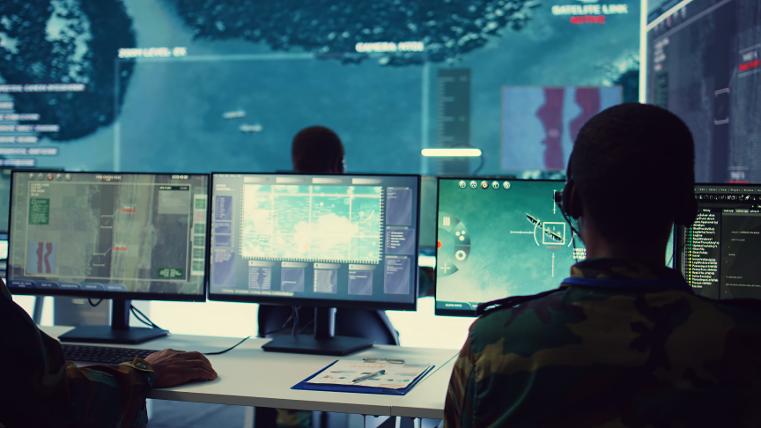
Common BGP Failure Modes and How Engineers Diagnose Them
This section highlights key BGP and OSPF issues an AI agent must understand. Both protocols involve complex state machines and timer mismatches.
Neighbor down scenarios:
- Wrong remote AS configured
- Password or authentication mismatch
- Route reflector cluster misconfigurations
Route flapping and instability:
- Conflicting routing policies causing oscillations
- Unstable upstream links causing frequent resets
Path and policy problems:
- Incorrect prefix lists allowing unintended routes
- Unintended AS path prepending
An AI agent must execute or retrieve equivalents of these checks across Cisco, Juniper, Nokia, Arista, and cloud routers, normalize the output, and correlate findings. Failures in BGP troubleshooting often cascade into application layer outages, which increases business urgency for faster, more consistent diagnostics.
When organizations need agents tailored to their specific multi-vendor policies and escalation rules, AI agent development becomes the path forward. “Tailored agents adapt runbooks to your existing multi-vendor policies and accelerate root cause resolution with full audit trails,” notes SoftDoes, whose engineering teams build these solutions for enterprises managing complex network fabrics.
Common OSPF Issues: From Neighbor States to OSPF Route Blackholes
OSPF diagnostics require nuance beyond simple up/down checks. The OSPF process follows a defined state machine, with failures at each stage pointing to different root causes. AI for NetOps enhances this process by automating the detection and analysis of these nuanced failures, enabling faster and more accurate troubleshooting.
OSPF neighbor problems:
- Stuck in INIT or 2 WAY: caused by mismatched network type or area ID
- Adjacency fails if interfaces are not in the same subnet or mismatched IP addresses
- Different authentication modes prevent neighbor formation
- High CPU usage can cause neighbor flapping
- Dead timer and hello timer mismatches silently prevent adjacency
OSPF route and LSDB problems:
- Missing LSAs from ABR or ASBR due to misconfigured stub or NSSA areas
- Unstable links cause inconsistent LSDB data, leading to route blackholes
Engineers use commands like show ip ospf neighbor, show ip ospf database, show ip route ospf, and show ospf interface brief plus equivalents. An AI agent must parse these outputs, track OSPF state and interface histories, and correlate routes with reachability tests. Subtle issues like wrong config parameters or misaligned reference bandwidth often escape quick human checks but are detectable by systematic automated workflows.
From CLI to AI: What Agentic AI Actually Does in Network Troubleshooting
Agentic AI refers to AI agents that plan, act, observe, and iterate, moving beyond static chatbots. These agents transform network troubleshooting from reactive to proactive by continuously monitoring, detecting anomalies, and initiating diagnosis automatically.
Typical agent workflow:
- Parse incident descriptions or alerts in natural language
- Generate a troubleshooting plan with structured hypotheses
- Collect data by running commands via SSH, querying telemetry APIs, pulling syslog events, and streaming metrics
Natural language queries let engineers communicate with AI agents, which translate plain English prompts into device-specific commands across vendors. Large language models orchestrate steps and interpret data, while domain-specific tools perform checks and retrieve real network state. AI integration enables more effective management of routing protocols across diverse networks.
This approach supports human in the loop operations at every step. The network engineer sees each action the agent takes, can stop or redirect the investigation, and always retains control. AI driven platforms can automate decision making in troubleshooting BGP and OSPF issues while keeping a human operator in the chair. As highlighted in a recent Wired article, the integration of AI in network operations is revolutionizing how engineers interact with complex systems, enabling faster and more accurate diagnostics across diverse environments.
Architecting an OSPF Focused Troubleshooting Agent
OSPF diagnostics suit deterministic AI workflows as neighbor states and LSAs follow defined state machines. Deep Network Troubleshooting uses multiple AI agents, each specializing in aspects of the problem.
The agent’s initial steps:
- Identify interfaces in the OSPF process for the reported area
- Detect missing or stuck OSPF neighbors and infer causes like area ID mismatch, MTU issues, or dead timer inconsistencies
The agent compares LSDB views between routers to find missing LSAs or inconsistent routes causing blackholes. It verifies alignment with design intent, such as backbone Area 0, ABRs, ASBRs, and stub area rules. Multi-agent systems specialize in neighbor formation or LSDB consistency.
Safe and Controlled Automation: Read Only First, then Human Approved Changes
In critical networks, AI agents must prioritize safety and auditability before pushing changes. Human oversight is essential for AI driven remediation.
Best practices:
- Start read only: Collect data, correlate, propose fixes without config changes
- Human approval: Engineer reviews and approves proposed changes
- Role based access: Whitelist safe commands
All actions must be logged for audit. SoftDoes focuses on governance and compliance in custom agent design.
Where Off The Shelf Tools Fall Short and Custom AI Agents Shine
Many AIOps and vendor platforms lack deep multi-vendor and protocol-specific reasoning. Common gaps:
- Single vendor OS support only
- No detailed OSPF neighbor state machine understanding
- Lack temporal context like state transitions or timer drift
Standardizing runbooks and AI assistance improve troubleshooting, but off-the-shelf tools rarely embed organization-specific rules. Custom agentic AI aligns with internal engineer workflows.
Examples needing custom agents: service providers mixing Cisco IOS XR, Juniper MX, Nokia SR, or global enterprises with hybrid cloud and on-premises routers requiring consistent BGP policy automation across all boundaries. As recently discussed in an analysis by The Verge, AI powered network management is rapidly moving from experimental to essential in complex enterprise environments.

Key Capabilities of a Production Grade Network Troubleshooting Agent
Serious AI agents for network management must offer these capabilities:
Telemetry and data ingestion:
- Streaming logs, SNMP or gNMI metrics, config snapshots, routing tables, and event timelines
- AI agents automate telemetry ingestion and state correlation
- AI analyzes large data streams for operational insights
Reasoning and correlation:
- Correlate issues across control and data planes
- Detect recurring patterns in BGP and OSPF incidents
- Provide AI insights aligned with business impact like applications or VPNs
Explainability and traceability:
- Conclusions on OSPF or BGP issues include cited commands, timestamps, and outputs for verification
Extensibility:
- Support custom playbooks, new vendors, and integrate with automation stacks and inventory
SoftDoes implements these using LLM orchestration, tool frameworks, and backend services tuned for network telemetry.
Practical Deployment Patterns: Lab to Production
Adopt AI agents starting small and expanding:
Lab phase:
- Mirror production slices and inject BGP/OSPF failures
- NetPilot builds multi-vendor labs in about two minutes
- Compare AI findings to expert diagnosis
Staging and pilot:
- Connect agent to non-critical network segments
- Integrate with ticketing and refine playbooks
- AI validates changes in multi-vendor environments
Production rollout:
- Start observation only, then propose changes for known issues
- Track success metrics: faster detection and repair, fewer escalations, consistent root cause documentation
AI agents will become standard tools for network operators, improving troubleshooting efficiency.
How SoftDoes Helps Enterprises Build AI Powered Network Troubleshooting
SoftDoes combines custom software development, AI/ML, and cloud engineering to build tailored agents. Typical steps:
- Discovery workshop with network engineers
- Assess existing tools, runbooks, and protocol configs
- Design minimal viable agent for key workflows
SoftDoes serves regulated sectors prioritizing governance, security, and compliance. Start with a pilot to automate painful workflows and demonstrate value before scaling. Reach out to transform network operations from reactive to proactive.
Author

Written by
Recent Posts
Party Season Foundation: How to Wear a Base That Looks Like Skin All Winter
Automating BGP and OSPF Troubleshooting with AI Agents
How the Finish on Elevator Cab Components Shapes a Lobby’s First Impression
The Digital Nomad’s Money Map: Taxes, Banking and Budgets Across Borders
STEM Gifts That Keep Kids Busy Long After Christmas Morning
Categories
- Art
- Articles
- Business of Luxury
- Celebrities
- Culture
- Entertainment
- Events
- Faces of Summer 2026
- Fashion
- Fashion & Style
- Featured
- Finance
- Food, Spirits, Wine
- Hamptons
- Hamptons Celebrities
- Health
- Health & Beauty
- Lifestyle
- Luxury Lifestyle
- Press
- Profiles
- Real Estate
- Technology
- The Chronicles
- Travel
- Uncategorized
- Weddings