
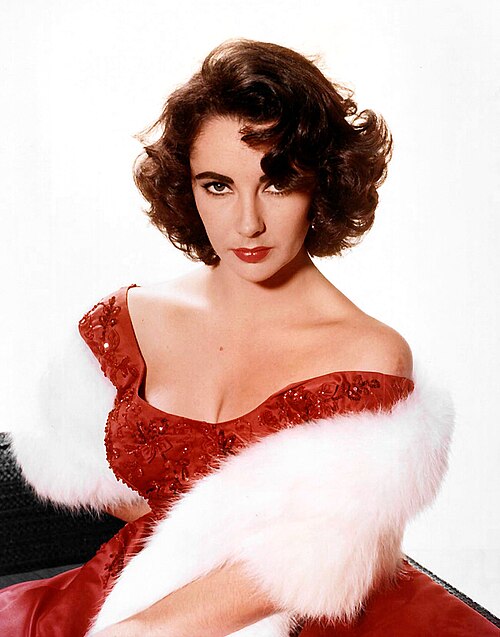
Elizabeth Taylor died March 23, 2011 at Cedars-Sinai Medical Center in Los Angeles with an estate valued at approximately $600 million. Marilyn Monroe died forty-nine years earlier with $1.6 million. Same studio system. Same era. Identical level of fame at peak. Elizabeth Taylor net worth at death was 375 times Monroe’s, adjusted for inflation. The difference was not talent. It was an understanding of how money actually works in Hollywood. Taylor watched what the system did to Monroe. She refused to let it happen to her. She demanded $1 million plus 10 percent of gross for Cleopatra in 1962, structurally breaking the studio contract model. The actress also built a jewelry collection insured at $150 million as a portable hedge against any single divorce. White Diamonds launched in 1991 and generated more than $1.5 billion in cumulative retail sales. As an entry in the Movie Star Legends cluster, Taylor is the case study in a star who extracted the system that extracted Monroe.
Elizabeth Taylor Net Worth at a Glance
| Birth Name | Dame Elizabeth Rosemond Taylor DBE (born February 27, 1932) |
|---|---|
| Net Worth | Approximately $600 million at death (March 23, 2011); jewelry collection insured at $150 million |
| Primary Income Source | Backend points on Cleopatra and Who’s Afraid of Virginia Woolf?; White Diamonds fragrance line; jewelry portfolio appreciation; real estate (Bel Air, Gstaad); estate licensing |
| Career Span | 1942 (There’s One Born Every Minute) to 2007 (Lassie); active producer to 2011 |
| Key Credits | National Velvet, Cleopatra, Who’s Afraid of Virginia Woolf?, Butterfield 8, Cat on a Hot Tin Roof |
| Notable Achievements | Two Best Actress Oscars (1961, 1967); first $1M actress contract (Cleopatra 1962); amfAR co-founder 1985; Elizabeth Taylor AIDS Foundation 1991; Dame Commander of the British Empire 1999 |
| Residence at Death | 700 Nimes Road, Bel Air, Los Angeles (purchased 1982, sold posthumously for $8.6 million in 2012) |
Before the Money: The MGM Contract At Nine
Elizabeth Rosemond Taylor arrived February 27, 1932 in the Hampstead district of London. Her parents, Francis and Sara Taylor, were American art dealers who had relocated to Britain in the 1920s. Francis ran a gallery on Bond Street. Sara had retired from a brief stage career to raise children. The family returned to Los Angeles in April 1939, fleeing the looming European war. Francis opened a new gallery in the Beverly Hills Hotel. The Taylors landed inside the social circle of Howard Young, Sara’s uncle and a successful Manhattan art dealer.
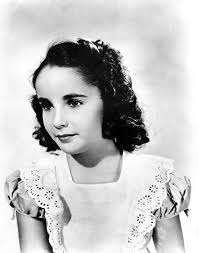
Young’s connections introduced the family to Hedda Hopper and the MGM talent scouts. Elizabeth signed her first studio contract with Universal at age nine for $100 a week. One film, There’s One Born Every Minute, was the only product. Universal dropped her contract in 1942. MGM signed her in 1943 for $100 a week, escalating to $250 by the time National Velvet released in December 1944. The film grossed $4.1 million on a $1 million budget. Taylor became MGM’s most valuable child asset overnight. Her contract escalated to $750 a week by 1946 and $2,000 by 1949. She turned 17 still working under the studio system that had defined Monroe’s first decade.
The MGM Contract Years: $7,500 A Week And A Studio That Owned Her
Why Taylor Watched Monroe Fail Before Making Her Own Move
Taylor’s MGM contract escalated steadily through the 1950s. She earned $7,500 a week by 1956 on multi-picture deals. Compare to Monroe’s $500 a week at Fox during the same period. The gap reflected Taylor’s child-star leverage and her father’s negotiating presence, not any structural difference in the studio approach. MGM still owned her image, her loan-out fees, and her schedule. The studio decided which films she appeared in. She decided how much she liked it.

National Velvet (1944), Father of the Bride (1950), and A Place in the Sun (1951) built her into a top-billed star by age 19. She married Conrad “Nicky” Hilton on May 6, 1950 at age 18. The marriage lasted nine months. Hilton was the eldest son of hotel founder Conrad Hilton Sr. and a violent alcoholic. Taylor walked out and filed for divorce in December 1950. The Hilton family settled with a small payout. Taylor learned the first lesson: marriage to old money does not insulate you from the man inside the money.
Cat on a Hot Tin Roof (1958) and Butterfield 8 (1960) earned Taylor her first Academy Award nomination and then her first Oscar win. By 1961 she was the most bankable actress in Hollywood. Monroe had attempted to break the studio model in 1955 with Marilyn Monroe Productions and won a partial victory worth $100,000 per picture. Taylor watched the Monroe struggle, the public breakdown, the 1962 death. She intended a different outcome. The next negotiation she conducted would change the entire model.
Cleopatra: The First Million-Dollar Actress Contract
$1M Plus 10 Percent Of Gross, $7M Total Compensation
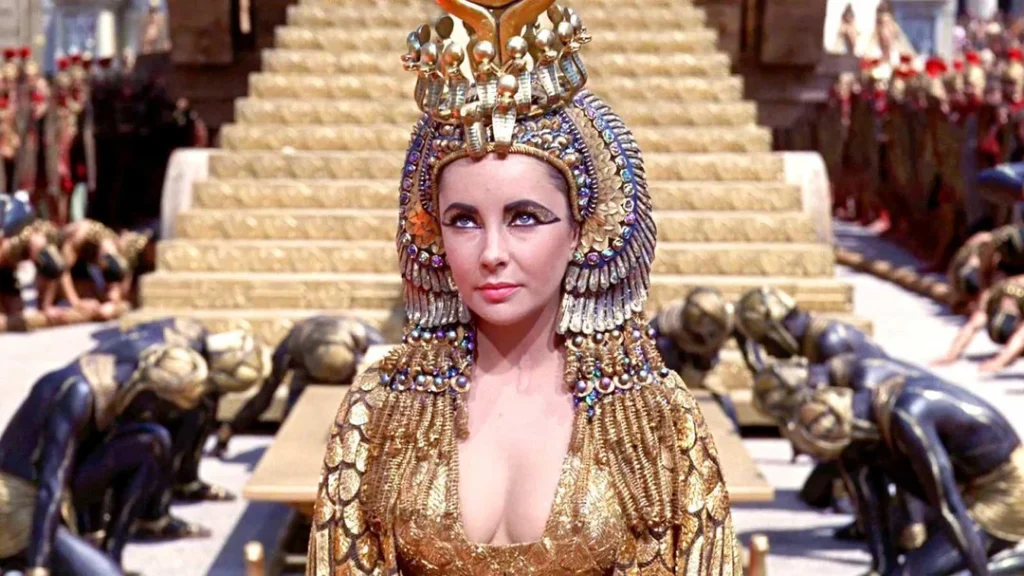
Twentieth Century Fox approached Taylor for Cleopatra in 1959. The original budget was $2 million. Taylor responded with a now-legendary demand: $1 million plus 10 percent of gross. The figure was unprecedented. No actress had ever asked for $1 million in cash. Fox blinked. Production stalled. Taylor took a meeting with Walter Wanger, the producer, and held the line. Fox eventually capitulated in October 1959 and signed the deal.
Production began in 1960 and immediately collapsed under a series of catastrophes: Taylor’s near-fatal pneumonia, weather delays in London, the firing of Rouben Mamoulian as director, the hiring of Joseph L. Mankiewicz, the affair between Taylor and Richard Burton, and the eventual budget ballooning from $2 million to $44 million. Cleopatra became the most expensive film ever made up to that point. Fox nearly went bankrupt over the production. Taylor remained insulated by her contract. Her $1 million guarantee paid out regardless of the budget overruns.
The film grossed $57 million worldwide on the eventual $44 million budget, the highest-grossing film of 1963. Taylor’s 10 percent of gross paid out across years. Total compensation reached approximately $7 million, equivalent to about $70 million in 2026 dollars. The Cleopatra deal was the single most important contract in 20th century Hollywood. It proved a star could name a price reflecting actual market value and force a studio to pay it. Monroe had tried the same structural move seven years earlier and won partial victory. Taylor closed the deal Monroe had only started.
The Jewelry Collection: $150M In Portable Wealth
Why Diamonds Outlasted Eight Marriages And Two Bankruptcies
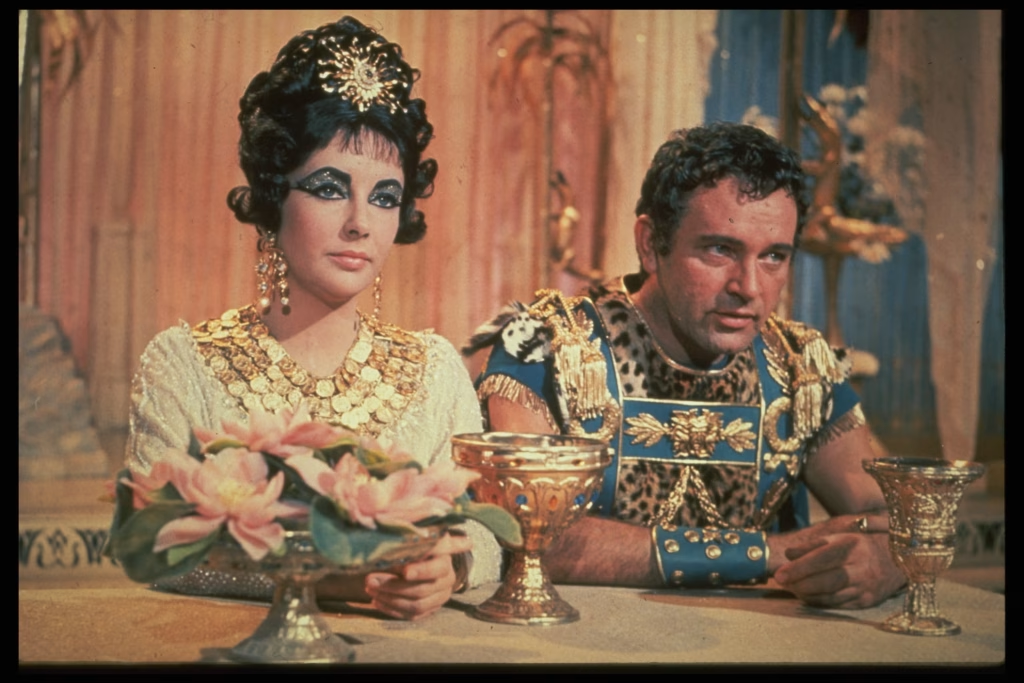
Richard Burton married Taylor on March 15, 1964 in Montreal after their Cleopatra affair forced both of them to divorce previous spouses. He gave her the Krupp Diamond (33.19 carats, $305,000) in 1968. The Taylor-Burton Diamond (69.42 carats, $1.1 million) followed in 1969. He gave her the La Peregrina Pearl (formerly owned by Mary I of England, $37,000) the same year. The Taj Mahal Diamond (heart-shaped, $11,000) arrived in 1972.
Taylor did not collect jewelry because she loved sparkle. She collected because diamonds are a store of value that appreciates, travels across borders, survives divorces, and cannot be seized by a studio in a contract dispute. Her collection eventually included 269 pieces appraised at $150 million for insurance purposes. The collection sold at Christie’s in December 2011 across two evening sessions and one online auction. Total proceeds reached $156.8 million, a record for any single jewelry auction. The Taylor-Burton Diamond alone sold for $11.8 million in 2011. La Peregrina sold for $11.8 million. Buyers paid four to ten times the original purchase price for most pieces.
Eight marriages structured the collection like serial capital events. Nicky Hilton (hotel dynasty money). Michael Wilding (British prestige). Mike Todd (producer money, died in a 1958 plane crash, left her a substantial inheritance plus the Todd diamond ring). Eddie Fisher (rebound, scandal as brand fuel). Burton twice (the great love, the highest-paid actor in the world). John Warner (U.S. Senator from Virginia, political capital). Larry Fortensky (construction worker, met at Betty Ford, the marriage that proved Taylor answered to no one). Each marriage restructured her capital portfolio. None diminished it.
White Diamonds: The $1.5B Fragrance Empire
How Taylor Built The Most Successful Celebrity Fragrance In History
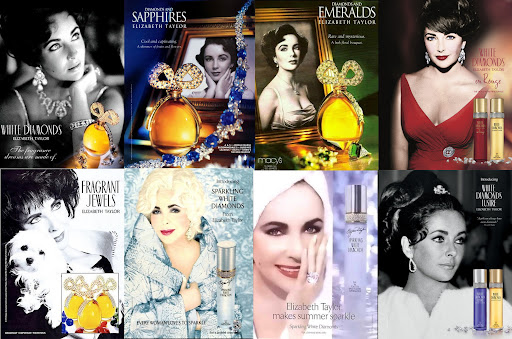
Taylor launched White Diamonds with Elizabeth Arden in 1991. The fragrance was packaged as a Taylor signature, marketed against her real diamond collection, and priced at premium-mass tier ($50 to $90 retail). White Diamonds hit $50 million in retail sales in its first year. By 1995 the fragrance was generating $100 million annually. Cumulative retail sales have crossed $1.5 billion across more than three decades of continuous production. The line remains in distribution as of 2026.
Taylor’s personal revenue from White Diamonds reached an estimated $75 to 100 million across her lifetime through royalty and license payments, with significant additional proceeds flowing to the estate after 2011. The fragrance line was the most successful celebrity-branded scent in history at the time of launch and held that position for roughly twenty years until Beyonce, Rihanna, and Ariana Grande built competing franchises. Taylor proved a movie star could convert symbolic capital into a consumer-products brand at industrial scale. Her template informs every modern celebrity fragrance, including the Kim Kardashian KKW Fragrance line and the Selena Gomez Rare Beauty fragrance launch.
AIDS activism ran parallel to the fragrance empire. Taylor co-founded amfAR in 1985 after Rock Hudson’s death and the Elizabeth Taylor AIDS Foundation in 1991. She raised an estimated $270 million for AIDS research and education across her lifetime. The activism was not philanthropy in the discretionary sense. It was deliberate conversion of economic capital into moral capital at a moment when Hollywood was terrified to touch the issue. She spent money to earn something money cannot buy. Each AIDS gala increased her cultural standing and indirectly increased White Diamonds sales.
How Elizabeth Taylor’s $600M Estate Built A Posthumous Empire
Stack the estate at death. Real estate: Nimes Road, Bel Air ($8.6 million in 2012); Gstaad, Switzerland chalet ($30 million); other holdings approximately $20 million. Jewelry collection: $156.8 million at Christie’s 2011 auction. White Diamonds and related fragrance royalty stream: estimated $200 to 250 million in value to the estate. Art collection (sold at Christie’s in February 2012 for $20.4 million): included works by Pissarro, Degas, and Hockney. The Taylor archive of clothing and memorabilia: sold separately in lots ranging from $5,000 to $1 million per item. Royalty streams from continuing film productions, image-rights licensing, and the AIDS Foundation endowment add ongoing value.
Estate revenue continues at an estimated $25 to 35 million annually in licensing, dwarfing Monroe’s $13 million and matching the largest Hollywood estates ever assembled. The Elizabeth Taylor Trust, administered by her four children and longtime business manager Tim Mendelson, retains majority control. The Elizabeth Taylor AIDS Foundation operates a $50 million endowment funded primarily through estate disbursements. House of Taylor Jewelry, the brand Taylor co-founded in 2005, continues operating with estate licensing income. Taylor extracted the system that extracted Monroe. The estate proves the extraction was permanent.
Where Elizabeth Taylor’s Money Stands Now
The Elizabeth Taylor Trust holds the major IP and licensing assets. White Diamonds production continues through Elizabeth Arden’s parent company Revlon, with annual sales estimated at $50 to 70 million as of 2026. The estate’s image-rights licensing operates across cosmetics, fragrance, apparel, and digital media. AmfAR and the Elizabeth Taylor AIDS Foundation continue raising approximately $5 to 8 million per year through events and partnerships. The Bel Air property sold in 2012 to Mark Wahlberg and was subsequently demolished and rebuilt. Family hands retain the Gstaad chalet.
Taylor’s posthumous brand power exceeds her peer set by orders of magnitude. She sits inside the Movie Star Legends cluster as the case study in a star who refused to be extracted. Monroe represents the alternative outcome under identical structural conditions. Audrey Hepburn chose strategic withdrawal. Jane Russell chose stoic survival. Taylor chose aggressive extraction. The cross-cluster bridge to the Quiet Luxury and Old Money universe runs through the jewelry collection. Diamonds and pearls function as the original portable wealth, and Taylor’s collection is one of the largest assembled in the twentieth century outside European royal families. The AIDS activism bridges into a charitable-capital cluster. Her template defines how a modern movie star converts fame into a multi-generational empire.
Elizabeth Taylor Net Worth FAQ
What was Elizabeth Taylor’s net worth at death?
Elizabeth Taylor net worth at her death on March 23, 2011 totaled approximately $600 million. The estate included a jewelry collection insured at $150 million (sold at Christie’s auctions for $156.8 million in late 2011), Bel Air and Gstaad real estate, an art collection, the White Diamonds fragrance royalty stream, and ongoing image-rights licensing. The estate continues to generate $25 to 35 million annually in licensing revenue.
How much did Elizabeth Taylor earn for Cleopatra?
Taylor earned $1 million plus 10 percent of gross for Cleopatra (1963), the first $1 million actress contract in Hollywood history. The film grossed $57 million worldwide on a $44 million budget. Total compensation across years reached approximately $7 million, equivalent to about $70 million in 2026 dollars. The deal structurally broke the studio contract model and proved a star could name a price that reflected actual market value.
How much did White Diamonds generate for Elizabeth Taylor?
Taylor’s White Diamonds fragrance line launched in 1991 with Elizabeth Arden and has generated more than $1.5 billion in cumulative retail sales. Taylor’s personal lifetime earnings from White Diamonds reached an estimated $75 to 100 million through royalty payments. The line remains in continuous production as of 2026 and generates an estimated $50 to 70 million annually in retail sales. White Diamonds was the most successful celebrity fragrance in history at launch.
How many times was Elizabeth Taylor married?
Taylor married eight times to seven men. Husbands were Nicky Hilton (1950-1951), Michael Wilding (1952-1957), Mike Todd (1957-1958, died), Eddie Fisher (1959-1964), Richard Burton (1964-1974), Richard Burton again (1975-1976), John Warner (1976-1982), and Larry Fortensky (1991-1996). Each marriage structured her capital portfolio without diminishing the underlying jewelry, real estate, and fragrance assets.
Where The Conversation Continues
Social Life Magazine covers the intersection of wealth, culture, and influence from the Hamptons to Manhattan. Our celebrity net worth coverage traces the economics, the leverage, and the decisions that built the fortune.
Our readers are family office principals, exit founders, fashion executives, and the advisors who serve them. For premium editorial placement and integrated advertising across print and digital, submit a paid feature or contact our business development team.
Want insider access to the events, launches, and gatherings that define the Hamptons social calendar? Sign up for Event Invites & Specials and never miss a moment.
Social Life Magazine. Twenty-three years of covering the people and places that define luxury in America.
Author

Written by
Recent Posts
Legal Options for Investment Fraud Claims

How Custom DTF Printing Adds Ease and Color to Your Boutique
How Often Should You Actually Replace Your Towels?
Apartment Pet Policies: What to Know as a Pet-Owning Tenant
Why Reliable Airport Transportation Matters for Modern Travelers
Categories
- Art
- Articles
- Business of Luxury
- Celebrities
- Culture
- Entertainment
- Events
- Faces of Summer 2026
- Fashion
- Fashion & Style
- Featured
- Finance
- Food, Spirits, Wine
- Hamptons
- Hamptons Celebrities
- Health
- Health & Beauty
- Lifestyle
- Luxury Lifestyle
- Press
- Profiles
- Real Estate
- Technology
- The Chronicles
- Travel
- Uncategorized
- Weddings