
The Complete Twelve-Part Synthesis
Twelve structural insights separate celebrities who convert fame into generational wealth from celebrities who fade into financial anxiety. These are not opinions or lifestyle observations. They are patterns extracted from net worth data across hundreds of celebrity profiles, verified against the trajectories of billionaires, centimillionaires, and cautionary tales alike.
This is the complete Fame-to-Fortune Framework—the synthesis of The Chronicles series that reveals how celebrity wealth actually works. Each insight builds on the previous. Together, they form a unified model for converting attention into assets that compound across generations.
The Twelve Structural Insights
1. The Ownership Inflection Point
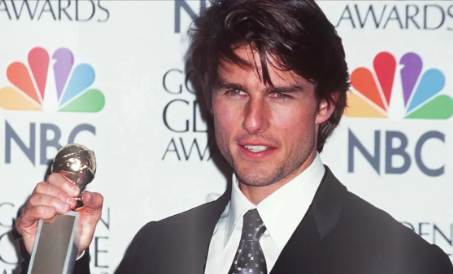
Why salary never builds dynasties. Tom Cruise earned $600M over four decades of A-list stardom. Tyler Perry built $1.4B by owning his studio, his content, and his distribution. The inflection point is the moment a celebrity stops trading time for money and starts accumulating assets that generate returns without their active participation. Every subsequent insight depends on crossing this threshold first.

2. The Brand Extension Ladder
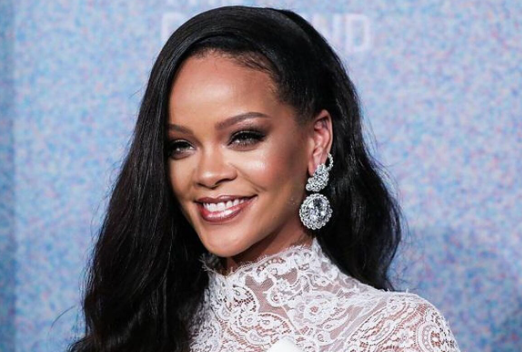
From personal fame to portfolio company. Rihanna’s music career accounts for only 10% of her $1.4B fortune. The rest came from climbing the four-rung ladder: talent revenue to brand licensing to equity ownership to portfolio conglomerate. Each rung multiplies the value created by the previous one. Most celebrities stay on the first rung. The billionaires climb all four.
3. The PE Premium
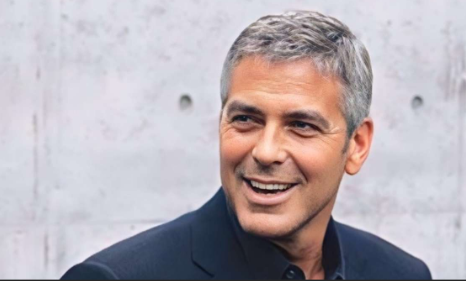
Why private equity changed celebrity wealth math forever. George Clooney earned more from selling Casamigos ($500M+) than from his entire film career ($200M). Private equity pays 2–3x multiples for celebrity-attached brands because the famous face represents embedded marketing infrastructure worth $50M+ annually in avoided customer acquisition costs. Build for acquirers from day one.
4. The Attention Arbitrage
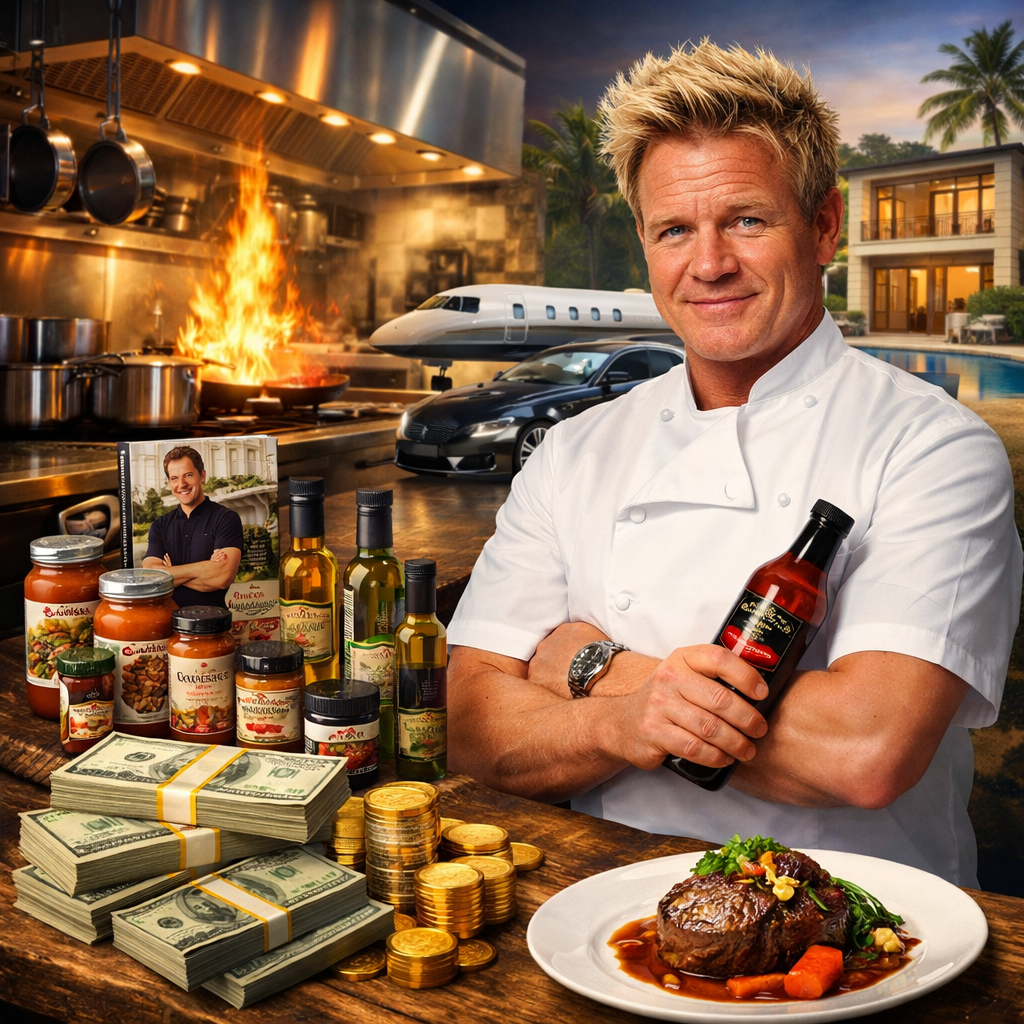
Converting screen time into permanent revenue streams. Gordon Ramsay’s TV persona generates more annual revenue than his 80+ restaurant portfolio combined. Every episode is a 44-minute advertisement for businesses he owns. The celebrities who stay rich treat exposure as marketing spend for owned assets. The ones who fade treat the camera like the cash register.
5. The Catalog Multiplier
Why owning your IP is the only retirement plan. Taylor Swift became the first musician to reach billionaire status primarily through music because she understood catalog ownership at a level her peers never grasped. When she could not buy her masters, she rebuilt them. Jerry Seinfeld still collects 15% of every syndication dollar 27 years after the show ended. Catalog owners retire rich. Performers retire anxious.
6. The Geography of Wealth
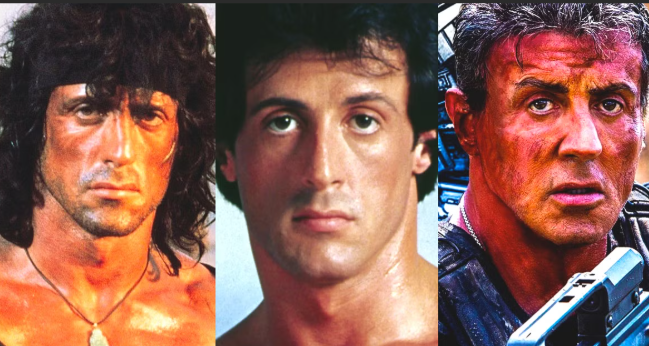
How physical positioning creates deal flow. Sylvester Stallone paid full asking price for East Hampton after two FaceTime tours. The urgency was strategic, not impulsive. Further Lane concentrates more entertainment deal flow per linear foot than any address globally. Address selection is a capital allocation decision, not a lifestyle choice. The wealthiest celebrities position themselves in corridors where proximity to capital converts casual encounters into business opportunities.
7. The Nepo Baby Paradox

Inherited access as venture capital. Kaia Gerber signed with IMG at sixteen. Critics called it nepotism. The market called it efficient. Inherited fame functions exactly like VC funding: it reduces market entry costs, compresses timelines to product-market fit, and provides a safety net enabling higher-risk career bets. The variable that determines outcomes is execution, not access.
8. The Platform Migration Play
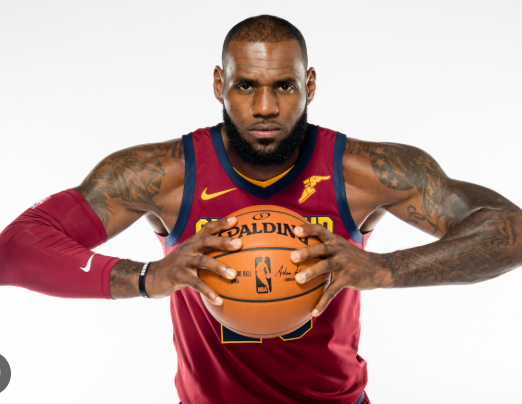
Why the medium of fame determines the math of fortune. Music royalties cap around $200M. Reality TV caps around $25M. Film acting caps around $400–600M. These are structural limits, not soft ceilings. The celebrities who break through migrate their attention from low-ceiling to high-ceiling platforms before the first one expires. LeBron migrated from NBA salary to Nike equity to Fenway Sports Group ownership. The platform is the launchpad, not the destination.
9. The Scarcity Inversion
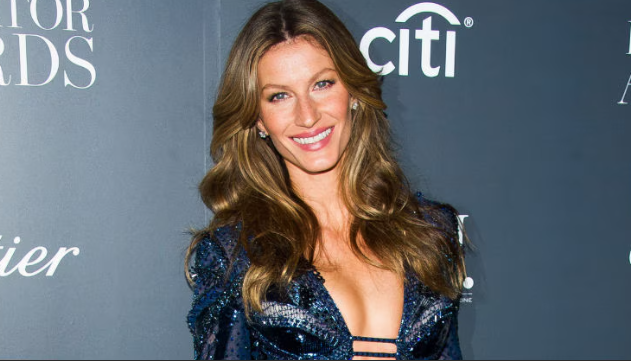
Why disappearing increases your price. Gisèle Bündchen retired from runway modeling at 34. Her net worth subsequently tripled. While contemporaries collected diminishing fees by maximizing visibility, Gisèle’s reduced presence increased her per-appearance value. The market pays a premium for what it cannot easily access. Real wealth whispers.
10. The Diversification Trap
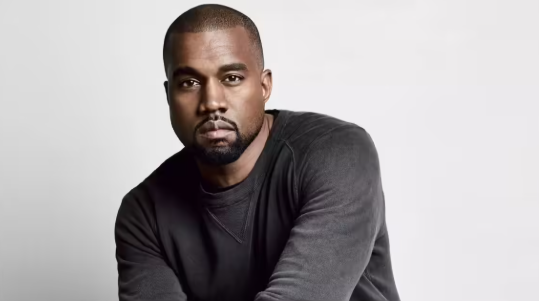
When adding revenue streams destroys value. Kanye West’s $2B Yeezy empire collapsed when reputational damage severed every corporate relationship simultaneously. Contrast with LeBron James, whose diversification across Nike equity, Fenway Sports, and SpringHill creates antifragility because each investment reinforces the others. Coherent diversification multiplies value. Scattered diversification destroys it.
11. The Character Capital Model
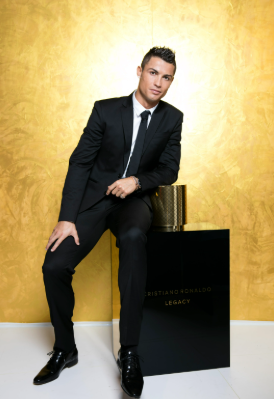
How persona becomes a depreciable business asset. Cristiano Ronaldo trademarked CR7 in 2007—not a nickname, a business asset. Michael Jordan’s character generates $100M+ annually two decades after retirement. The most valuable celebrity asset is not talent or beauty. It is a sharply defined character that functions as a trademark: instantly recognizable, legally protectable, and licensable across infinite categories.
12. The Convening Power Premium
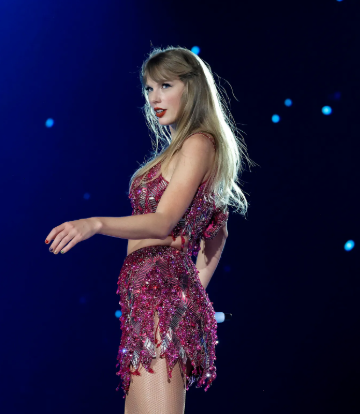
Why the person who hosts the room controls the economics. Taylor Swift’s Fourth of July parties function as social capital exchanges where attendance signals status and proximity generates deal flow. Spielberg and Geffen’s East Hampton dinners have funded more films than most studio development slates. The celebrity who convenes the room captures a disproportionate share of all value created within it. Guests trade time. Hosts accumulate optionality.
How the Insights Connect
These twelve insights are not independent observations. They form a system where each component enables the others.
The ownership inflection point (Hub 1) creates the foundation. Without ownership, the subsequent insights cannot compound. The brand extension ladder (Hub 2) provides the path from first ownership to portfolio scale. The PE premium (Hub 3) explains why owned assets are worth building—because exit multiples reward celebrity attachment.
The attention arbitrage (Hub 4) reveals how to fund the climb: treat visibility as marketing spend for owned assets, not as revenue itself. The catalog multiplier (Hub 5) identifies the asset class that compounds longest: intellectual property that generates returns regardless of continued participation.
The geography of wealth (Hub 6) shows where the deals happen. The nepo baby paradox (Hub 7) explains the advantages that accelerate timelines for those who have them—and how to build them for those who do not. The platform migration play (Hub 8) identifies the ceilings that require category jumps to escape.
The scarcity inversion (Hub 9) reveals the counterintuitive truth that less visibility can create more value. The diversification trap (Hub 10) distinguishes coherent portfolio building from scattered value destruction. The character capital model (Hub 11) identifies the asset that makes everything else licensable: a distinctive, protectable persona.
Finally, the convening power premium (Hub 12) connects the system to the infrastructure that enables it. The person who hosts the room—whether that room is a Further Lane dinner, a Polo Hamptons afternoon, or the pages of Social Life Magazine—captures disproportionate value from everyone else’s participation.
The Four Wealth Tiers
Each insight applies differently depending on current position. The framework uses four tiers to calibrate tactical application:
Tier 1: Emerging ($1M–$10M) — Focus on crossing the ownership inflection point. Protect IP from day one. Attend the right convenings. Say no to 30% of opportunities to preserve brand positioning.
Tier 2: Established ($10M–$100M) — Climb the brand extension ladder. Diversify along a coherent narrative axis. Reduce visibility volume while increasing per-engagement value. Co-host or sponsor convenings to shift from guest to convener.
Tier 3: Mogul ($100M–$500M) — Build infrastructure that operates without your presence. Create your own convenings. Structure holdings to protect against reputational contagion. Let the brands carry visibility while you step back.
Tier 4: Dynasty ($500M–$5B+) — Own platforms, not just content. Structure wealth for intergenerational transfer. Build convening infrastructure that outlives any single season. The portfolio should generate returns uncorrelated with personal reputation.
Why This Framework Exists Here
Social Life Magazine and Polo Hamptons are not observers of this system. They are participants in it. The magazine is editorial convening infrastructure—determining who appears alongside whom and whose positioning gets amplified. The event is accessible convening infrastructure—providing entry to the room where deal flow happens.
The Chronicles exists to make the system visible. The celebrity net worth articles that drive traffic are entry points. The hub insights that explain the patterns are the value layer. This synthesis connects them into a unified framework that readers can actually apply.
The question is not whether these dynamics affect you. They do. The question is which position in the system you currently occupy—and what move advances you toward the position where you capture value rather than merely access it.
Read the Complete Framework
1. The Ownership Inflection Point
8. The Platform Migration Play
Social Life Magazine is the editorial layer of Hamptons convening infrastructure. For features, advertising, and strategic positioning: sociallifemagazine.com/contact
Polo Hamptons is the accessible entry point. The ticket positions you in the room. The sponsorship positions you as the room. Tickets and sponsorships: polohamptons.com
The best deals in the Hamptons happen before they are announced. Our list hears first. Subscribe to the Social Life insider briefing.
25,000 copies per summer issue. 15,000 fall/winter editions to Upper East Side doorman buildings. Print subscription →
Independent media tracking the structural economics of celebrity wealth. Support The Chronicles — $5 keeps it free for everyone.
Author

Written by
Recent Posts
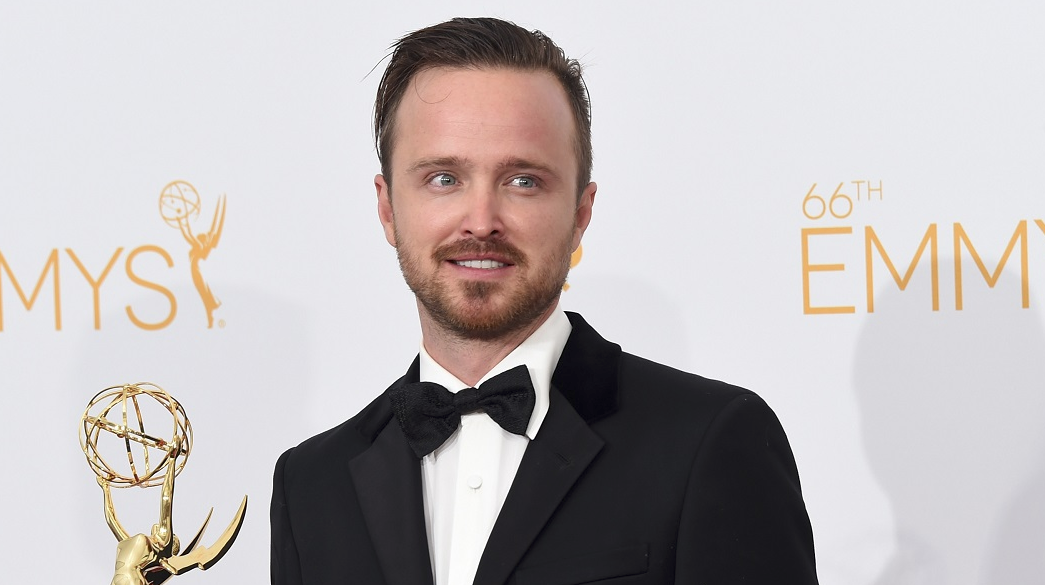
Aaron Paul Net Worth — His Character Was Supposed to Die in Season One. Instead He Made $30 Million.
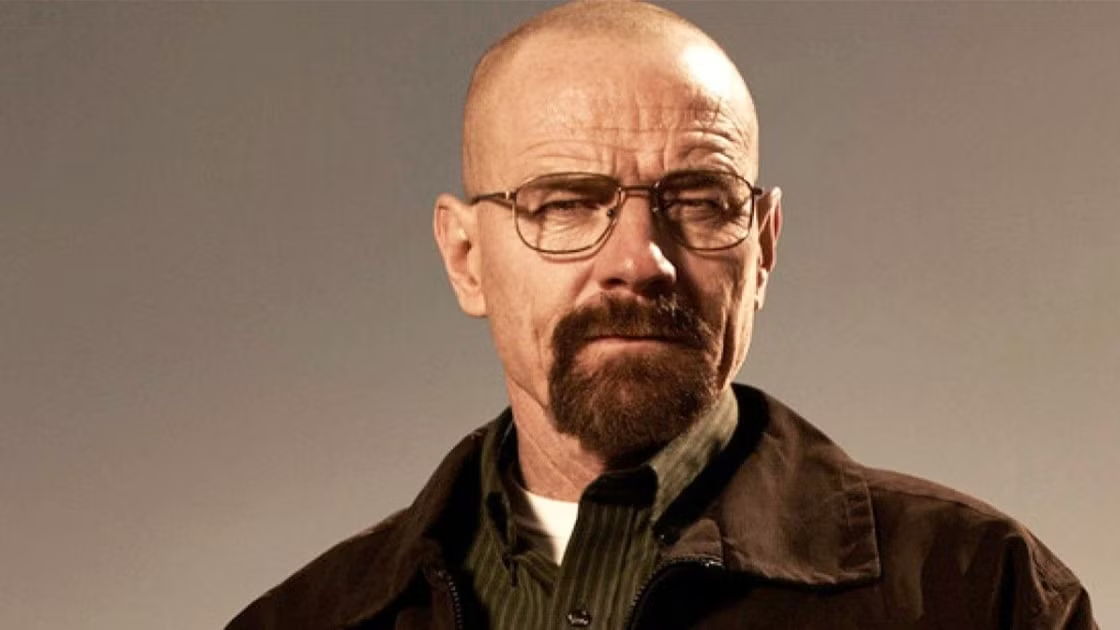
Bryan Cranston Net Worth. He Played a Sitcom Dad for Seven Years. Then He Became the Most Dangerous Man on Television.
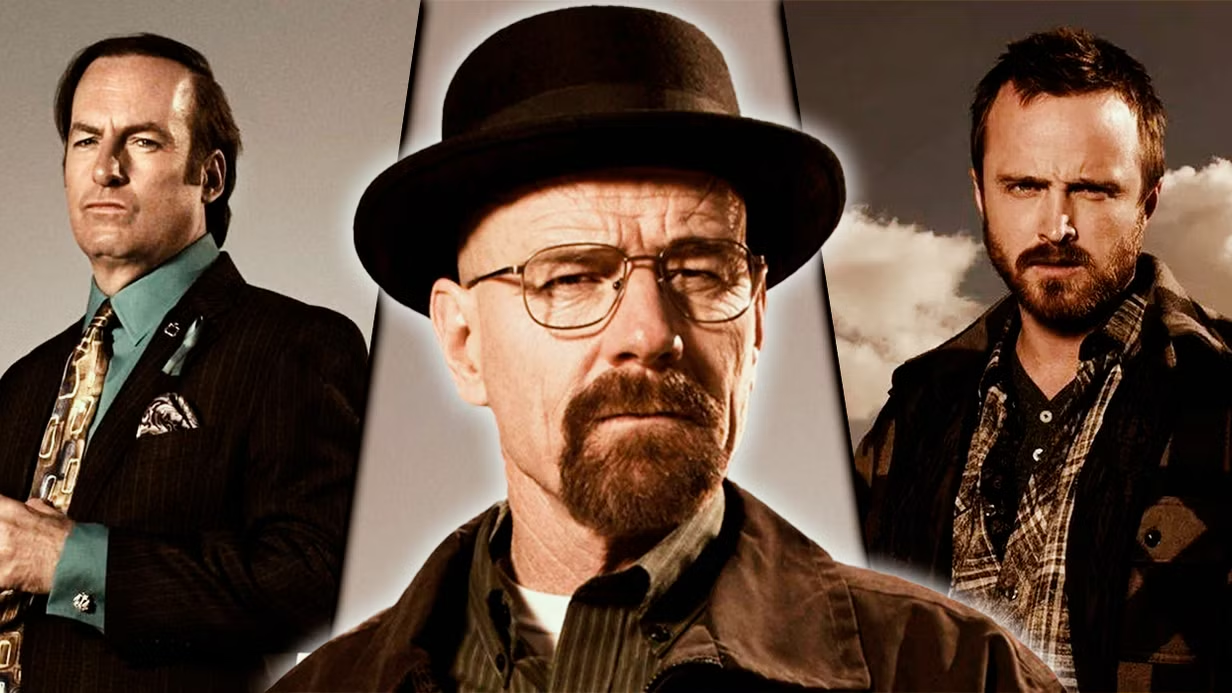
Breaking Bad Cast Net Worth. $130 Million Cooked in Five Seasons of Perfect Television

Cailee Spaeny Net Worth — From Springfield, Missouri to A24 and Alien in Three Years Flat

Wagner Moura Net Worth — He Learned Spanish to Play Escobar. Then He Learned English to Take Hollywood.
Categories
- Art
- Articles
- Beauty & Skincare
- Celebrities
- Celebrities|Movies
- Celebrities|The Chronicles
- Chronicles
- Entertainment|Culture
- Event Photos
- Events
- Fashion
- Fashion & Style
- Featured
- Food & Beverage
- Food, Spirits, Wine
- Hamptons
- Hamptons Celebrities
- Hamptons Celebrities|Celebrities|The Chronicles
- Health
- Health & Beauty
- Lifestyle
- Luxury Lifestyle
- Movies|Culture
- Movies|Hamptons Lifestyle
- Press
- Profiles
- Real Estate
- Technology
- The Chronicles
- Travel
- TV
- Uncategorized
- Weddings