
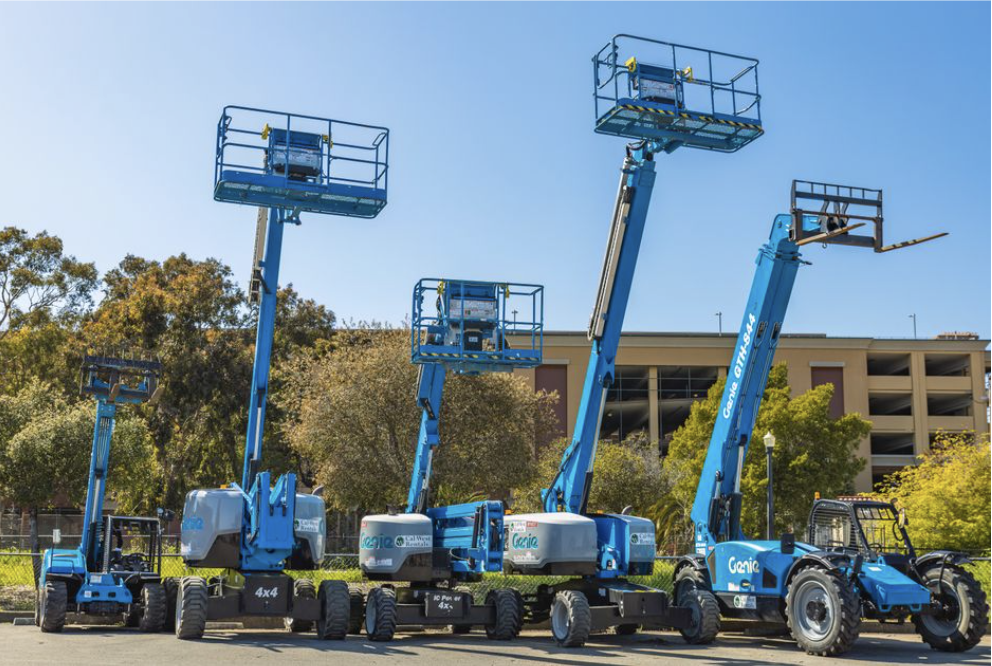
Nobody budgets for the day a machine stops. Payroll gets planned, materials get ordered, delivery windows get promised, and somewhere in the middle of all that sits an assumption that the equipment will simply keep working because it worked yesterday.
Then a hydraulic line fails, or a wheel assembly gives out, and the schedule that took weeks to build collapses in an afternoon. The direct repair bill is almost never the expensive part. What costs money is everything that stops moving while the machine sits still.
Where the Real Delay Usually Comes From
Most operations discover the weak link in their process only when something breaks, and the clock starts running. The wait is rarely about the repair itself, since a competent mechanic can swap a wheel, seal, or filter in short order once the component is in hand.
Sourcing that component from a supplier such as Intella Parts Company LLC is what determines whether the machine is back up the same week or the next month. Keeping a shortlist of reliable suppliers ready before anything fails is cheaper than assembling one under pressure.
Counting the Cost Nobody Puts on the Invoice
The repair line item is easy to see and easy to underestimate in importance. Losses spread outward from an idle machine in ways that never appear on a single document. Crews stand around getting paid to wait. Orders that were promised for Thursday move to the following week. A customer who has been patient twice decides not to be patient a third time.
Overtime follows almost immediately, because the work that did not happen has to happen eventually, and it happens at a premium rate. Rush shipping gets approved for anything that will shave a day off the wait. Sometimes a rental gets brought in at a daily rate that would have covered several months of preventive maintenance. Add those together across a single week, and the total often exceeds the repair by a wide margin.
The Reputation Damage That Lasts Longest
Money spent can be recovered over time. A damaged reputation moves more slowly and repairs more slowly still. Clients tend to remember the missed deadline far longer than they remember the twenty deliveries that arrived exactly on schedule before it.
In industries where contracts renew annually and word travels between buyers, one visible failure can cost more than the equipment itself is worth. Procurement teams keep informal records of who delivered and who explained. Explanations, however honest, do not move freight.
Why Preventive Maintenance Keeps Getting Skipped
Every operations manager knows scheduled maintenance saves money. Most of them still let it slip, and the reasons are practical rather than careless.
Taking a machine offline for service means losing a shift of productivity on a day when everything is working fine. That trade feels bad in the moment, because the loss is certain and the benefit is theoretical. Under pressure to hit numbers this quarter, the maintenance window becomes the easiest thing to postpone.
The other reason is that preventive work has no visible payoff. Nobody congratulates a team for the breakdown that did not happen. Reactive repair, by contrast, produces a hero moment where someone stays late and saves the day. Organizations quietly reward the second behavior and wonder why the first never becomes a habit.
Building a Schedule That Actually Gets Followed
A maintenance plan that lives in a binder is not a plan. The ones that hold up share a few traits worth copying.
They tie service intervals to hours of use rather than to calendar dates, because a machine that ran hard for six weeks needs attention sooner than one that sat mostly idle for six months. They assign a specific person to each machine rather than leaving responsibility to the group, since shared responsibility reliably becomes nobody’s responsibility. And they build the downtime into the production schedule in advance, so the shift is planned around rather than sacrificed.
Operator input matters more than most managers use it. The person running a machine daily notices the new vibration, the slower response, the sound that was not there last month. Creating an easy way to report those observations, and then visibly acting on them, catches problems while they are still small and cheap.
Keeping the Right Things on the Shelf
Holding inventory ties up capital, so the instinct to keep stock lean is sound. Applied without judgment, though, it creates situations where a machine worth six figures sits idle waiting on a low-cost consumable.
The sensible middle ground is to stock the items that fail often, cost little, and are needed immediately. Filters, seals, belts, hoses, and common fasteners fit that description. Expensive assemblies with long lifespans generally do not, and those are better handled through a supplier relationship established well before the failure.
Knowing your own failure history is what makes this work. Records of what broke, when, and on which machine turn stocking decisions from guesswork into arithmetic. Most operations already have that data scattered across work orders and never assemble it.
Deciding When to Repair and When to Replace
Older machines reach a point where repair becomes a subscription rather than a fix. Recognizing that point requires looking past the immediate quote.
The useful calculation includes annual repair spending, the hours lost to unplanned stoppages, and the cost of the disruption those stoppages cause elsewhere. When maintenance approaches a meaningful share of what a replacement would cost, and the frequency of failure is rising rather than steady, the arithmetic has usually already turned.
There is a case for keeping older equipment as backup rather than disposing of it. A machine that is unreliable for daily production can still be valuable on the day the primary unit fails.
Treating Uptime as a Business Metric
Companies measure revenue, margin, and labor cost closely, then treat equipment availability as a maintenance concern rather than a business one. That division is where the money leaks out.
Tracking uptime as a headline figure changes the conversation. It makes the cost of deferred maintenance visible to the people approving budgets, and it turns a reactive expense into a planned one. The businesses that run most smoothly are rarely the ones with the newest equipment. They are the ones that decided availability was worth managing deliberately rather than hoping for.
Author

Written by
Recent Posts
How to Prepare a Home for Sale When Major Repairs Are Not Affordable
From Everyday Comfort to Personal Style: My SHEIN Slipper Habit
5 Best Mitsubishi Heat Pump Companies in Seattle
Tech Gadgets as Modern Corporate Gifts: Useful Ideas for Employees and Clients
Simple Ways to Maintain Your Energy During a Busy Week
Categories
- Art
- Articles
- Business of Luxury
- Celebrities
- Culture
- Entertainment
- Events
- Faces of Summer 2026
- Fashion
- Fashion & Style
- Featured
- Finance
- Food, Spirits, Wine
- Hamptons
- Hamptons Celebrities
- Health
- Health & Beauty
- Lifestyle
- Luxury Lifestyle
- Press
- Profiles
- Real Estate
- Technology
- The Chronicles
- Travel
- Uncategorized
- Weddings