
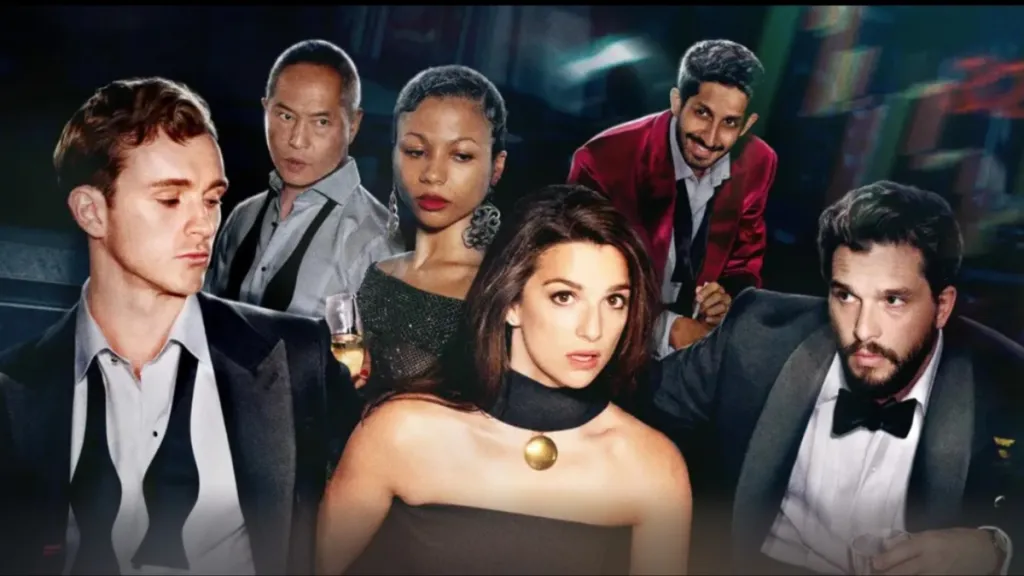
Ranking Industry seasons ranked from worst to best produces a rare result in television: the list goes in chronological order. Each season improved on the one before it. The writing sharpened. The scope expanded. The acting deepened. The audience grew. By Season 4, the show that started on Monday nights with negligible ratings had become a Sunday night phenomenon averaging 1.7 million viewers with a 96% Rotten Tomatoes score. No major prestige drama in recent memory has shown this kind of consistent upward trajectory across four consecutive seasons.
Here is every season of Industry ranked, with what each one got right, what each one got wrong, and why the show’s evolution matters.
4. Season 1 (2020): The Foundation Nobody Watched

Rotten Tomatoes: 76%. Metacritic: 69. Time Slot: Monday nights. Viewers: negligible.
Season 1 premiered on November 9, 2020 — the worst possible timing for a new show. The pandemic was raging. The election had just happened. HBO buried it on Monday nights behind bigger titles. Lena Dunham directed the pilot. Nobody noticed.
What It Got Right
The pilot killed a character in the first episode. Hari, a graduate trainee, dies on the trading floor from a combination of energy drinks and stimulants. The death established the show’s willingness to go further than any previous finance drama. This wasn’t going to be aspirational television. This was going to hurt.
The casting was inspired. Myha’la, Marisa Abela, Harry Lawtey, David Jonsson, and Ken Leung were all relatively unknown. The ensemble felt authentic because nobody brought baggage from previous roles. The trading floor set — built at Bad Wolf Studios in Cardiff with functional Bloomberg terminals — immediately distinguished the show from every previous Wall Street drama.
Harper’s fake transcript provided the season’s central tension. Eric’s discovery and decision to protect her created the mentor-protégé relationship that would power the entire series. The foundation was solid.
What It Got Wrong
The season was vibes over structure. Down and Kay later admitted they used a three-week UK-style writers’ room that produced atmosphere without rigorous plotting. “Turns out you need a story for eight hours of TV,” Kay said. “You need more than vibe and good music, basically.” The financial jargon was impenetrable for casual viewers. Several characters felt underdeveloped. The pacing was uneven. The sex and drug scenes sometimes felt gratuitous rather than purposeful. Season 1 is the season that tests your commitment. If you survive it, you’re rewarded with everything that follows.
3. Season 2 (2022): Structure Arrives, Wildness Retreats
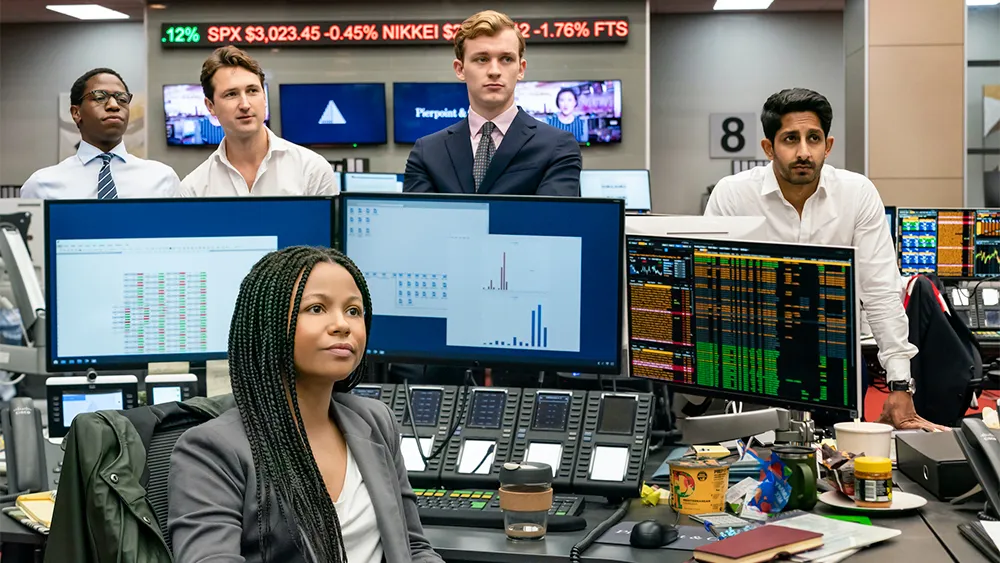
Rotten Tomatoes: 96%. Metacritic: 76. Viewers: averaging 1.2 million across platforms.
Season 2 was the correction. Down and Kay assembled a full twelve-week American-style writers’ room. They hired more writers. They broke stories with rigor. The result was eight hours of serialized television that actually had a plot architecture connecting premiere to finale.
What It Got Right
The Jesse Bloom storyline gave Harper a worthy adversary. Jay Duplass played the hedge fund manager with unsettling calm, creating a character who was simultaneously Harper’s biggest client and her most dangerous threat. The insider trading arc built genuine suspense across multiple episodes.
The Season 2 finale delivered the show’s most devastating moment. Eric’s betrayal of Harper — revealing her fake transcript to HR instead of reporting her insider trading — was a shock that felt inevitable in retrospect. The line “I’m doing this for you” became the Industry seasons ranked conversation’s most debated moment.
Yasmin’s evolution accelerated. Her relationship with Celeste introduced the private wealth management world. Her father’s financial and sexual misconduct scandals provided personal stakes that elevated her beyond the supporting player role of Season 1.
What It Got Wrong
Down and Kay later acknowledged overcorrecting toward structure. “Some of what felt fresh in Season 1 got smoothed out in service of getting the structure right,” they said. The wildness that made the first season feel dangerous was partially domesticated. Robert’s storyline with the predatory client Nicole Craig occasionally felt like it belonged in a different show. The season earned its 96% on Rotten Tomatoes but lost some of the raw energy that made the premiere season feel like nothing else on television.
2. Season 3 (2024): The Breakthrough

Rotten Tomatoes: 98%. Metacritic: 86. Time Slot: moved to Sunday nights. Viewership: surged 40% over Season 2.
Season 3 was the season that changed everything. HBO moved Industry from Monday nights to the prestige Sunday slot. Kit Harington and Sarah Goldberg joined the cast. The scope expanded from Pierpoint’s trading floor to the intersection of finance, media, and politics. The audience finally arrived.
What It Got Right
Everything combined. The writing sharpened. The character arcs deepened. The scope widened without losing focus. Harper’s post-Pierpoint reinvention — from fired trader to hedge fund co-founder — gave Myha’la the best material of her career. She joined ethical fund FutureDawn, outmaneuvered her new boss Petra Koenig during the chaotic Lumi IPO, and co-founded Leviathan Alpha with backing from the mysterious Otto Mostyn. The character who got fired for a fake transcript now ran her own fund. The irony was exquisite.
Marisa Abela’s Yasmin emerged as the season’s emotional center. Her father’s drowning, the revelation of his sexual misconduct, the collapse of her family fortune — each plot point added weight to a character who had previously coasted on charm and connections. Abela’s performance earned her the BAFTA for Best Actress. The award confirmed what the audience already knew: Yasmin’s arc was the season’s most powerful storyline.
Kit Harington’s Henry Muck introduced a new energy. The spoiled aristocrat turned green-energy CEO gave the show a character who represented inherited wealth at its most pathetic. Henry believes in Lumi. He also can’t manage his own drinking. He exists in the specific gap between good intentions and total dysfunction. Harington played the role with a vulnerability that Jon Snow never required.
The Lumi IPO storyline grounded the season in a real-world parallel. ESG investing — environmental, social, and governance criteria applied to investment decisions — had become a political flashpoint in the real world. Industry used the Lumi IPO to examine how finance co-opts ethical language for commercial purposes. The satire was pointed because it was accurate.
The Visual Leap
Down and Kay directed episodes for the first time. They brought a visual confidence that previous directors hadn’t achieved. The season finale left Pierpoint on the brink of collapse, Harper ascendant, and Yasmin’s world shattered. Every thread connected. Every payoff felt earned.
What It Got Wrong
Almost nothing. The 98% on Rotten Tomatoes reflects critical consensus that Season 3 was a near-perfect season of television. Minor quibbles exist: some viewers found Harper’s screen time reduced compared to earlier seasons. The Otto Mostyn character introduced late in the season needed more development. But in any Industry seasons ranked conversation, Season 3 represents the moment the show proved it belonged in the HBO pantheon alongside The Sopranos, The Wire, and Succession.
1. Season 4 (2026): The Summit

Rotten Tomatoes: 96%. Metacritic: 88. Viewers: 1.7 million per episode. The highest Metacritic score of any season.
Season 4 is the best season of Industry. The show’s scope expanded to include fintech fraud, political lobbying, media manipulation, and the intersection of British aristocracy with American tech culture. The cast expanded dramatically. The stakes escalated beyond anything the show had attempted. And the creators held it all together with the confidence of showrunners who knew exactly what they were doing.
What It Got Right
The Tender storyline was the show’s most ambitious plot. A fintech company built on fabricated users, investigated by Harper’s shorts-only fund, defended by Yasmin’s political connections, and led by Max Minghella’s Whitney Halberstram — the arc drew direct parallels to Wirecard and FTX while maintaining the character-driven intensity that defines the show.
The new cast members elevated rather than diluted the ensemble. Toheeb Jimoh brought charisma and moral complexity as Kwabena. Kiernan Shipka’s Hayley operated as Whitney’s mirror. Charlie Heaton’s Jim Dyker added a journalism angle that expanded the show’s commentary on how media enables financial deception. Kal Penn’s Jonah provided comic relief without undermining the dramatic stakes.
Marisa Abela’s Yasmin completed her transformation from Season 1’s validation-hungry graduate to Season 4’s Ghislaine Maxwell parallel. The character arc — fetching coffee to procuring sex workers for political fundraisers — is one of the most audacious in recent television. Kit Harington found new depths in Henry Muck’s decline. Ken Leung’s limited screen time made every Eric Tao scene feel essential.
What It Got Wrong
The pace was relentless. Some critics felt the show tried to pack too many storylines into eight episodes. The Moritz subplot — commentary on technofascism and European populism — needed more room to breathe. Charlie Heaton’s Jim Dyker died before the audience could fully invest in him. The finance mechanics were less realistic than in earlier seasons, with the Mergers & Inquisitions blog noting that the order of operations for Harper’s short position was backwards.
None of these issues prevented Season 4 from earning the highest Metacritic score in the show’s history. In any Industry seasons ranked discussion, Season 4 represents the summit — the moment when every element the show had been building for four years came together.
The Pattern: Why Industry Kept Getting Better
Most television shows peak early and decline. The Sopranos arguably peaked in Season 3. Breaking Bad peaked in Season 4. Game of Thrones peaked in Season 4 and collapsed in Season 8. Industry’s ascending trajectory is unusual because the creators treated each season as a learning experience rather than a formula to repeat.
Season 1 taught them that vibes aren’t enough, Season 2 taught them that structure alone isn’t enough either, Season 3 combined both lessons, and Season 4 expanded the scope while maintaining the character focus. The Industry seasons ranked list reflects a creative team that got better at their jobs every year — a rarity in an industry that usually rewards repetition over evolution.
Whether Season 5 can maintain this trajectory remains the biggest question in the Industry seasons ranked conversation. Down and Kay chose to end the show on their own terms. If they stick the landing, Industry will be remembered as one of the few prestige dramas that never had a bad season. That alone puts it in a category with very few peers.
Related Articles
Industry HBO: The Complete Guide to TV’s Most Dangerous Finance Drama
Industry Season 5: Everything We Know About the Final Season
Industry vs Succession: Which HBO Finance Drama Wins?
Mickey Down and Konrad Kay: How Two Failed Bankers Built HBO’s Best Drama
Tender Explained: The Real Fintech Scandals Behind Industry
Stay Connected
The Industry seasons ranked debate will continue through Season 5 and beyond. Social Life Magazine covers every season of every show that matters — and every deal that closes in the Hamptons.
Feature your brand in Social Life Magazine — contact us at sociallifemagazine.com/contact.
Guaranteed digital placement starts at $975 via our Submit A Paid Feature page.
Join 82,000+ readers at sociallifemagazine.com.
Polo Hamptons returns July 18 and 25, 2026. BMW title sponsor.
Print subscriptions at sociallifemagazine.com/subscription.
Support independent publishing: donate here.
Author

Written by
Recent Posts

He Sold His Company, Got Everything He Wanted, but Lost His Purpose

OUT OF LINE

A Couple Hundred Million Felt Like Real Money, Until He Met the Multi-Billionaires

He’s Got Millions. He Still Flinches at the Bill.

Streamlining Ground Station Data Pipelines for Deep Space Missions
Categories
- Art
- Articles
- Business of Luxury
- Celebrities
- Culture
- Entertainment
- Events
- Faces of Summer 2026
- Fashion
- Fashion & Style
- Featured
- Finance
- Food, Spirits, Wine
- Hamptons
- Hamptons Celebrities
- Health
- Health & Beauty
- Lifestyle
- Luxury Lifestyle
- Press
- Profiles
- Real Estate
- Technology
- The Chronicles
- Travel
- Uncategorized
- Weddings