
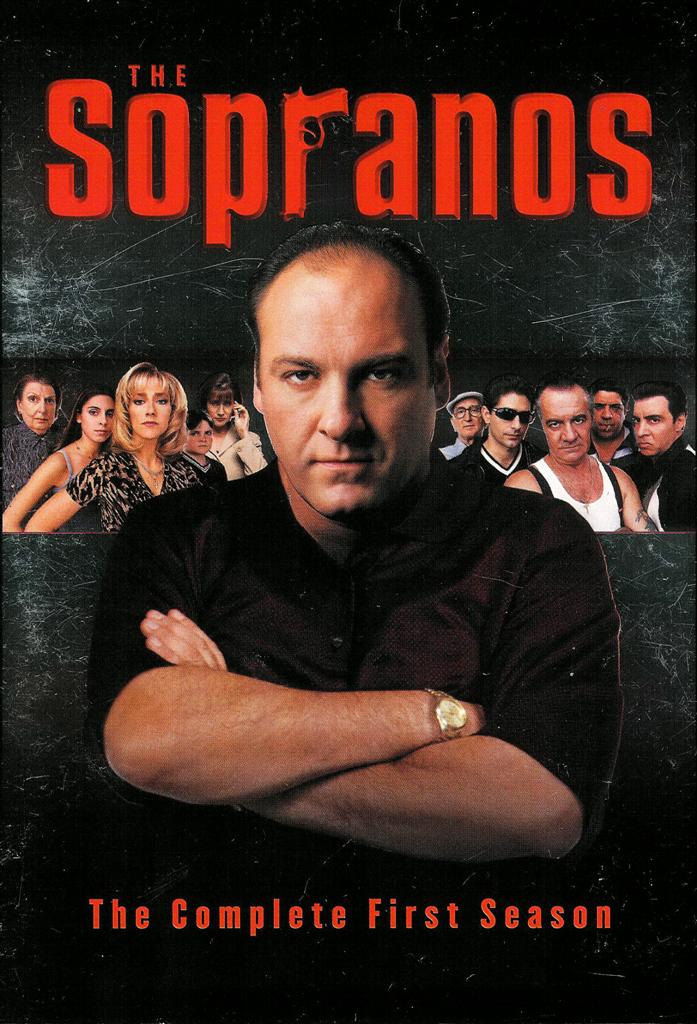
The Sopranos cast net worth story begins with a question that HBO answered so profitably it restructured the entire television industry: what happens when you spend $3 million per episode on a show about a New Jersey mob boss who sees a therapist? The answer, it turns out, is that you create the most influential television series in history. You generate an estimated $2.5 billion in total revenue. And you produce a cast whose combined net worth exceeds $200 million.
However, the financial story is also a cultural one. The Sopranos did not just make its cast wealthy. It made wealth itself look different. Before Tony Soprano, television wealth meant Dallas oil barons and Dynasty shoulder pads. After Tony Soprano, television wealth meant North Caldwell McMansions, Cadillac Escalades. The specific middle-class abundance of people who have more money than taste and more power than conscience.
The HBO Economics
HBO invested approximately $2.5 million to $3 million per episode across eighty-six episodes. Total production costs landed between $215 million and $260 million. In return, the show generated subscription revenue, syndication deals, DVD sales, and streaming rights that have produced billions in aggregate returns. More importantly, The Sopranos established HBO as the prestige television brand, a positioning that attracted The Wire, Six Feet Under, Deadwood, and eventually Game of Thrones.
The Salary Escalation
James Gandolfini’s salary trajectory tells the economic story of the show’s rising value. He earned approximately $2.5 million per season for the first two seasons. By season three, his per-episode rate doubled to $400,000. Season four brought another jump to $800,000 per episode. For the final season’s twenty-one episodes, he earned $1 million per episode, making him one of only a handful of actors to ever reach that threshold.
Meanwhile, Edie Falco and Michael Imperioli reached $500,000 per episode by the final season. Even supporting players like Lorraine Bracco and Tony Sirico earned well into six figures per episode. Consequently, the show’s cast payroll for the final season alone exceeded $30 million, a figure that reflects the leverage premium actors command on a series that has become too valuable for the network to risk losing them.
James Gandolfini. The $70 Million Estate That Tony Built
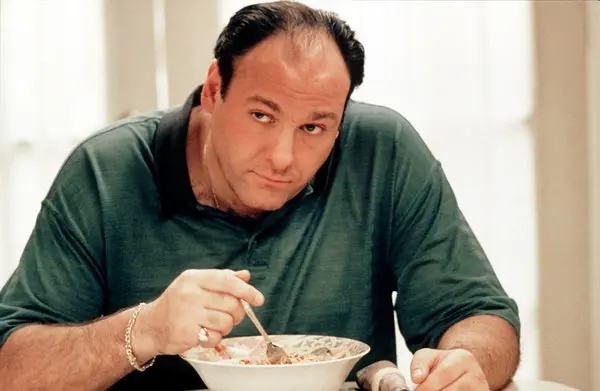
James Gandolfini’s net worth stood at an estimated $70 million when he died in Rome in June 2013 at age fifty-one. He earned over $50 million from The Sopranos alone. Film roles in True Romance, Get Shorty, The Mexican, and Zero Dark Thirty added millions more. Real estate holdings in Manhattan and New Jersey appreciated substantially over his lifetime.
His estate became a cautionary tale in its own right. Approximately $30 million went to taxes because his will left 80% of assets unprotected by the marital deduction. Estate lawyers called it a catastrophe. In other words, the man who played a mob boss whose financial acumen was legendary left behind a will that would have made Tony Soprano wince.
For the full origin story of television’s greatest performance and the fortune it created, read our James Gandolfini net worth deep dive.
Edie Falco. The Brooklyn Actress Worth $40 Million Who Never Chased Fame
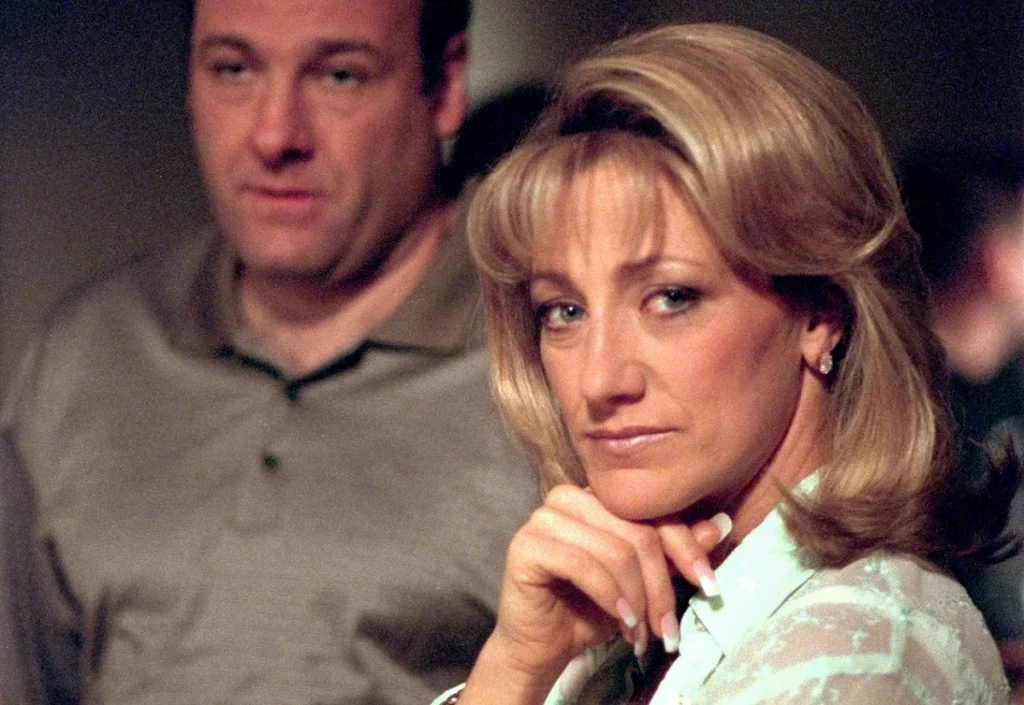
Edie Falco’s net worth is estimated between $16 million and $50 million depending on the source, with most credible estimates landing around $40 million. She earned $500,000 per episode for the final Sopranos season. Then Nurse Jackie on Showtime generated seven seasons of additional premium-cable income. Three Emmys for The Sopranos. One more for Nurse Jackie. Two Golden Globes. The awards are the public validation. The real estate portfolio is the private wealth engine that most analyses overlook.
For the full story of how a Brooklyn girl became television’s most decorated dramatic actress, read our Edie Falco net worth deep dive.
Steve Buscemi. The $35 Million Character Actor Who Directed Tony Soprano
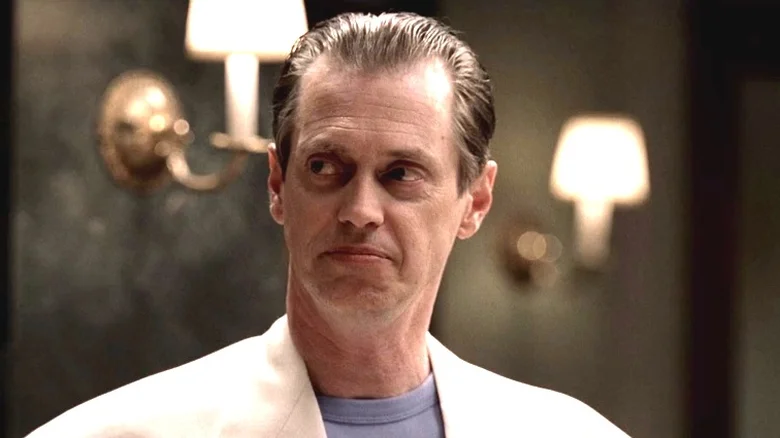
Steve Buscemi’s net worth sits at an estimated $35 million. His Sopranos role as Tony Blundetto was relatively brief, spanning season five. But his contribution to the show extended behind the camera: he directed four episodes, including the critically acclaimed “Pine Barrens.” His career spans Reservoir Dogs, Fargo, The Big Lebowski, Boardwalk Empire, and dozens of films that established him as the most recognizable character actor of his generation.
For the full story of the former firefighter who became indie cinema’s most indispensable face, read our Steve Buscemi net worth deep dive.
Michael Imperioli. The Writer-Actor Whose $20 Million Career Began With Goodfellas

Michael Imperioli’s net worth sits at an estimated $20 million. He played Christopher Moltisanti, Tony’s protégé. Christopher’s ambition exceeded his judgment in ways that made him both sympathetic and destructive. Imperioli earned $500,000 per episode by the final season. He also wrote five episodes of The Sopranos, adding writer income to his actor compensation. After the show, White Lotus on HBO gave him a career second act that most actors his age never receive.
For the full origin story of the Goodfellas kid who became Tony Soprano’s doomed apprentice, read our Michael Imperioli net worth deep dive.
Lorraine Bracco. The $14 Million Actress Who Played Both Sides of the Mob
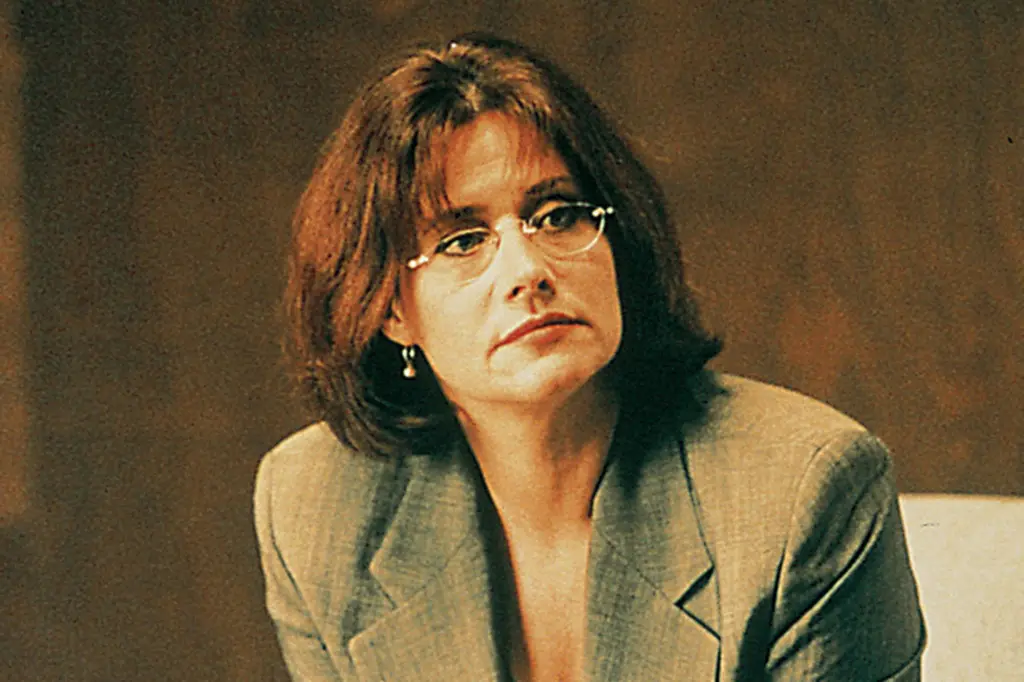
Lorraine Bracco’s net worth sits at an estimated $14 million. She played Dr. Jennifer Melfi, Tony’s therapist. Melfi was the only character who understood Tony’s psychology completely. In the series finale, she chose to stop treating him. Before The Sopranos, Bracco earned an Oscar nomination for Goodfellas, playing a mob wife. After it, Rizzoli and Isles on TNT generated six seasons of steady income. The duality of her career is remarkable. Mob wife in Goodfellas. Mob therapist in The Sopranos. That casting symmetry only happens when an actress proves she can inhabit both sides of organized crime’s emotional economy.
For the full origin story of the actress who diagnosed Tony Soprano for six seasons, read our Lorraine Bracco net worth deep dive.
Michael Gandolfini. The $15 Million Son Carrying His Father’s Legacy

Michael Gandolfini’s net worth sits at an estimated $15 million, built primarily through inheritance from his father’s $70 million estate and his own acting career. He played a young Tony Soprano in The Many Saints of Newark, the 2021 prequel film. Notably, it required him to inhabit a character his father had made immortal. The emotional weight of that performance, playing a younger version of a role that killed your father, is the kind of biographical detail that transcends net worth analysis. His career since includes The Deuce on HBO and a growing filmography that benefits from both the Gandolfini name and his own genuine talent.
For the full origin story of the son who found his father by playing him, read our Michael Gandolfini net worth deep dive.
What The Sopranos Cast Built Together
Combined cast net worth of $200 million understates the show’s economic impact. The Sopranos created the prestige TV economy that now generates billions annually. Every show that followed, from Breaking Bad to Mad Men to Succession, exists in the commercial space that The Sopranos opened. Specifically, the show proved that cable audiences would pay for moral complexity, that antiheroes could drive subscriptions. That television acting could reach a level of quality previously reserved for film.
The New Jersey Connection
For the Hamptons and Manhattan audience, The Sopranos holds a particular resonance. Tony Soprano lived in North Caldwell. His crew operated out of the Bada Bing in Lodi. The show’s geography is the geography of the commuter corridor that connects Wall Street money to suburban comfort. Notably, it is the same corridor that connects Manhattan offices to Hamptons weekends. The financial professionals who summer in Bridgehampton understood Tony’s world. They operated in a parallel version of it. Different rules. Same ambition. Same willingness to do what needed to be done.
Explore our full Prestige TV Antihero Cast Net Worth pillar, or read our Breaking Bad Cast Net Worth and Mad Men Cast Net Worth hubs for the shows that inherited Tony Soprano’s crown.
The Therapy Premium
The Sopranos also created a cultural phenomenon that directly influenced the Hamptons economy: therapy as status marker. Before Tony Soprano sat in Dr. Melfi’s office, successful men in the tri-state area treated therapy as weakness. After six seasons of watching the most powerful man in New Jersey discuss his mother issues with a psychiatrist, the stigma evaporated. The Hamptons therapy market, already substantial, experienced measurable growth. Both the number of practitioners and the rates they charged increased. The $800-per-session therapist in Water Mill owes a portion of her client base to a fictional mob boss who normalized vulnerability as a luxury good.
That normalization had financial implications beyond the therapy industry. It changed how successful men communicated about emotional difficulty. Those therapeutic habits changed how they managed relationships. Restructured how they organized their personal lives. Shifted how they planned their estates. The chain of influence runs from Tony Soprano’s therapy sessions to the estate planning decisions of real hedge fund managers. It is longer and more direct than anyone would have predicted in 1999.
The Cast Chemistry Premium
What makes the Sopranos cast net worth story particularly instructive is the ensemble economics. Gandolfini was the star, earning ten times what the supporting players earned. But the show’s value depended on the entire cast operating at an extraordinarily high level simultaneously. Falco’s Carmela needed to be as compelling as Tony for the domestic scenes to work. Imperioli’s Christopher needed to be as watchable as Tony for the mentorship arc to hold. Bracco’s Melfi needed to be as intelligent as Tony for the therapy scenes to resonate.
The Deeper Layer
Specifically, the cast’s collective quality is what made the show a phenomenon rather than a vehicle. A vehicle elevates one star. A phenomenon elevates everyone. The Sopranos elevated everyone. Notably, it is why the combined cast net worth exceeds $200 million rather than being concentrated in a single performer’s fortune. That distribution of value across an ensemble is the financial signature of a show where every part was as strong as the whole.
Furthermore, the show’s influence on the real estate market of northern New Jersey deserves mention because it illustrates how cultural products create economic value in unexpected locations. Property values in North Caldwell, Montclair. The surrounding communities benefited from the show’s association with affluent suburban living. The McMansion aesthetic that the show simultaneously satirized and celebrated became aspirational for a generation of buyers who saw Tony Soprano’s house and thought, not incorrectly, that it looked like success.
The Positioning
This syndication and streaming economics deserve attention because they represent ongoing revenue that continues growing decades after the final episode aired. HBO licensed The Sopranos to A&E for syndication. The show then moved to streaming platforms where it generates viewership that rivals many current series. Each distribution window generates license fees that flow back to the production. Those fees in turn generate residual payments to the cast. In other words, the Sopranos cast is still earning money from work they completed in 2007, and those earnings will continue for as long as the show remains culturally relevant. Notably, it is to say indefinitely.
The Many Saints of Newark prequel film in 2021 attempted to extend the franchise commercially, with mixed results. The film grossed $13 million against a $50 million budget, making it a commercial disappointment. However, it generated streaming viewership on HBO Max that the studio considered satisfactory. More importantly for this analysis, it provided employment and compensation to Michael Gandolfini and demonstrated that the Sopranos intellectual property retains cultural value even when the commercial execution falls short.
You are reading this because you already understand something most people scroll right past. The intersection of culture, money, and taste is not a Venn diagram. It is a mirror. Social Life Magazine has spent 23 years holding that mirror up to the people who shape the Hamptons, Manhattan, and the corridors between them. If you see yourself in these pages, we should talk. Reach out at sociallifemagazine.com/contact.
Your Brand, Your Launch
Your personal story belongs in front of 82,000 affluent readers and a digital audience that keeps growing, our editorial features are built for exactly that moment. Learn more at Submit a Paid Feature.
Our email list reaches 82,000 subscribers who actually open, read, and act. If your audience is high-net-worth, culturally engaged, and based between Park Avenue and Montauk, you are already in the right place. Join the list.
Polo Hamptons returns to Bridgehampton this July with 1,200 guests, Getty Images coverage, and seven years of BMW title sponsorship behind it. If your brand belongs in that conversation, visit polohamptons.com.
A print subscription to Social Life Magazine puts 25,000 copies per issue into the boutiques, lobbies, and living rooms where decisions get made, from Westhampton to Montauk every summer and Upper East Side doorman buildings for Fall and Winter. Subscribe at sociallifemagazine.com/subscription.
If this publication has added value to your world and you want to support independent luxury journalism, you can contribute directly at our donation page.
Author

Written by
Recent Posts

Powerful Strategies to Stay Ahead in a Fast-Moving Real Estate Market
How Latino Players Have Helped Shape Modern Basketball Culture
10 Best Designer iPhone 18 Pro Cases to Choose From

AI for personal finance: where PennyGuard fits

How to Pick a Homecoming Dress for Your Body Type (and Feel Amazing in It)
Categories
- Art
- Articles
- Business of Luxury
- Celebrities
- Culture
- Entertainment
- Events
- Faces of Summer 2026
- Fashion
- Fashion & Style
- Featured
- Finance
- Food, Spirits, Wine
- Hamptons
- Hamptons Celebrities
- Health
- Health & Beauty
- Lifestyle
- Luxury Lifestyle
- Press
- Profiles
- Real Estate
- Technology
- The Chronicles
- Travel
- Uncategorized
- Weddings