
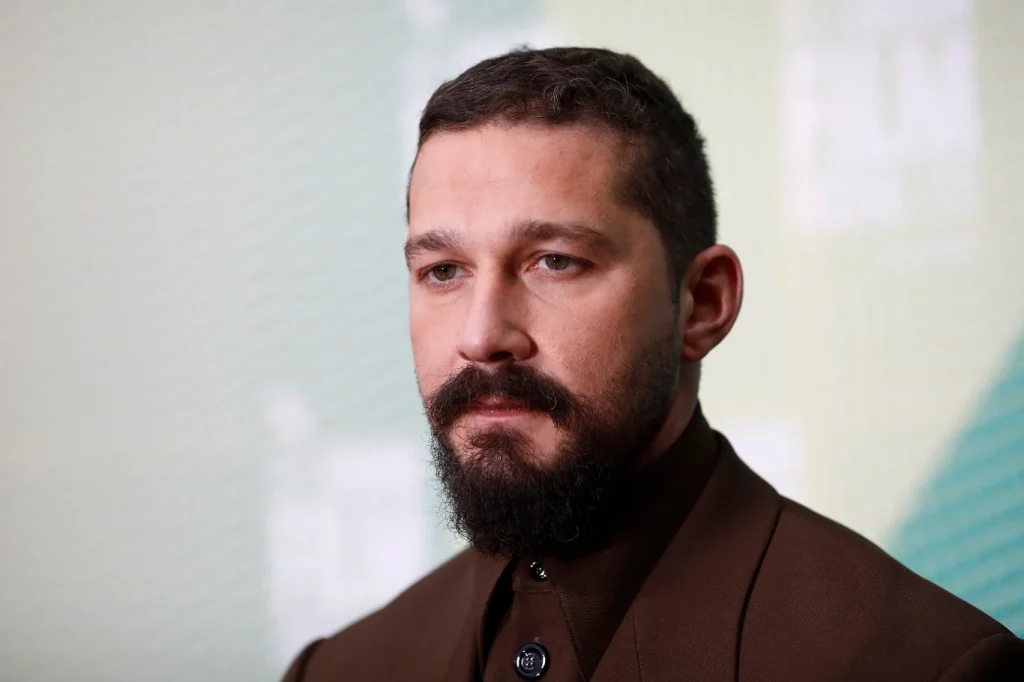
Shia LaBeouf is the American actor whose career began at ten years old performing stand-up comedy in adult Los Angeles clubs to help support his family, escalated through Disney Channel stardom and a Daytime Emmy at sixteen, and exploded into global fame through the Transformers franchise (2007 to 2011) before a documented pattern of arrests, public art performances, and personal-relationship damage made him one of Hollywood’s most simultaneously talented and unstable working actors. Born June 11, 1986, in Echo Park, Los Angeles, LaBeouf has earned an estimated $25 million across roles in Transformers, Indiana Jones, Wall Street: Money Never Sleeps, Fury, American Honey, The Peanut Butter Falcon, Honey Boy, and Padre Pio. The fortune has survived a 2025 settlement with FKA Twigs, a 2026 Mardi Gras battery arrest, and the public reckoning that comes with being the rare Hollywood star whose self-destruction is more documented than his films.
Shia LaBeouf Quick Facts
| Full Name | Shia Saide LaBeouf |
| Born | June 11, 1986, Echo Park, Los Angeles, California |
| Net Worth (2026) | $20 to $25 million |
| Career Span | 1996 to present (30 years) |
| Transformers Earnings | ~$20.75 million across 3 films (2007 to 2011) |
| Daytime Emmy | Won at age 16 for Even Stevens (2003) |
| Notable Films | Transformers, Indiana Jones, Wall Street 2, Fury, American Honey, Honey Boy, Padre Pio |
| Religious Conversion | Catholic (Latin Mass community, 2022) |
| Children | Daughter Isabel with Mia Goth (born 2022) |
| Most Recent Arrest | Mardi Gras 2026, New Orleans (battery, court-ordered treatment) |
Echo Park, A Vietnam Vet’s Addiction, And Stand-Up Comedy At Ten
Shia Saide LaBeouf was born on June 11, 1986, in Los Angeles, California, and raised in Echo Park by two people he has described as hippies. The word sounds romantic until you learn what it meant in practice. His mother, Shayna, was a former ballerina who made jewelry and worked whatever jobs kept the lights on. His father, Jeffrey, was a Vietnam War veteran whose addiction to drugs and alcohol made him intermittently present and consistently dangerous. Jeffrey held a rotating series of jobs (clown, street vendor, dealer) and was in and out of his son’s life with the unpredictable rhythm of a man whose damage preceded his parenthood and would outlast it. The household was broke. The neighborhood was hard. The boy’s talent was the only currency anyone was willing to accept.
At ten years old, Shia LaBeouf was performing stand-up comedy at clubs across Los Angeles. Not children’s shows. Adult clubs. A fourth-grader working rooms full of drunk strangers because his family needed the money and because performing was the only skill he had that anyone would pay for.
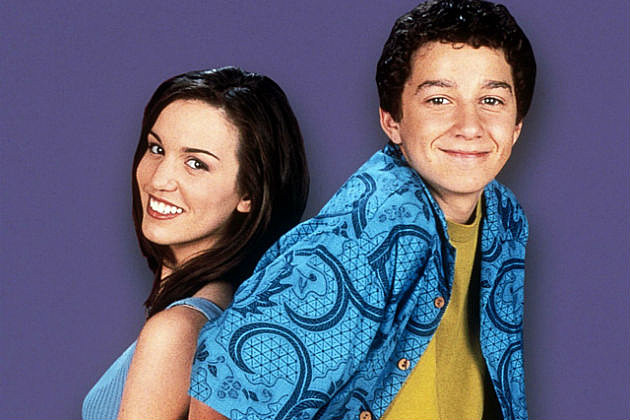
He has described the experience without sentimentality: it was work, it was terrifying, and it taught him that an audience’s attention is the most valuable and most temporary resource in the world. A talent manager signed him. Auditions followed. By 2000, at fourteen, he had been cast as Louis Stevens in the Disney Channel series Even Stevens, a role that would earn him a Daytime Emmy Award at sixteen and establish the pattern that would define the next two decades of his career: extraordinary achievement followed by equally extraordinary destruction, with the interval between the two shrinking every time.
Transformers, $20.75 Million, And The Franchise He Walked Away From
Even Stevens ended in 2003. Holes the same year proved LaBeouf could carry a feature film. Disturbia in 2007 proved he could open one, generating $117 million in box office on a $20 million budget. Steven Spielberg noticed and cast him in Indiana Jones and the Kingdom of the Crystal Skull (2008) opposite Harrison Ford. The pairing aimed to signal a generational transfer: Ford’s franchise, LaBeouf’s future. The film grossed $790 million. The transfer did not occur. By then, Michael Bay had already handed LaBeouf a different franchise, and this one would generate $2.6 billion across three films and turn a twenty-year-old Disney Channel alumnus into one of the most commercially valuable actors on earth.
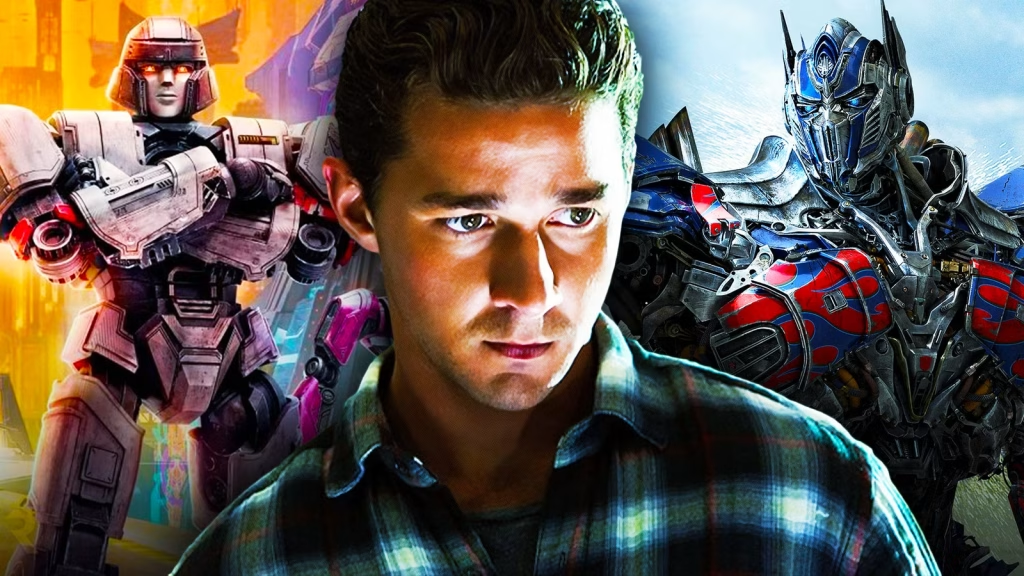
The Transformers salary escalation tells the story in three numbers. First film (2007): $750,000. Second film, Revenge of the Fallen (2009): $5 million. Third film, Dark of the Moon (2011): $15 million. Total franchise earnings before taxes: approximately $20.75 million. Dark of the Moon grossed over $1.1 billion worldwide, LaBeouf’s highest-grossing film and one of the highest-grossing films of the decade.
He received an offer of $15 million to return for the fourth installment. He reportedly demanded $18 million. The demand fell through. He did not return. The decision to walk away from $15 million, or to price himself $3 million above what the studio would pay, is either principled or self-sabotaging depending on which version of Shia LaBeouf you believe is driving at any given moment. Both versions are usually present simultaneously.
Oliver Stone, Jake Moore, And The Brief Window When Everything Worked
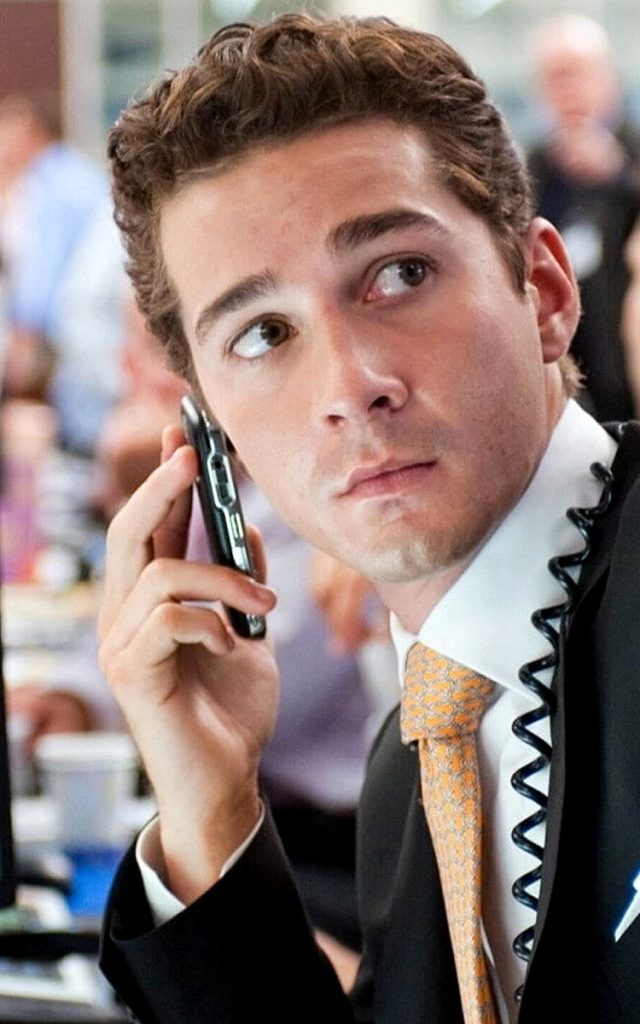
In 2010, Oliver Stone cast LaBeouf as Jake Moore in Wall Street: Money Never Sleeps, paying him a reported $8 million to play the young idealist who stands between Michael Douglas’s Gordon Gekko and Josh Brolin’s Bretton James during the 2008 financial collapse. The role placed LaBeouf in the same structural position that Charlie Sheen had occupied in the original (the son torn between two corrupt fathers) and the casting was deliberate. Stone took LaBeouf to a party organized by the economist Nouriel Roubini, introduced him to hedge fund managers, and immersed him in the financial world’s social mechanics the same way he had immersed Charlie Sheen in Wall Street’s trading floors twenty-three years earlier.
The film grossed $134 million on a $70 million budget. Critics delivered mixed reviews. LaBeouf’s performance came across as competent but overshadowed by Douglas’s return and Brolin’s menace. The larger problem was structural: the sequel’s moral architecture had no clean lines. In the original, Gekko was evil and Carl Fox was good. In the sequel, every father figure is compromised, and Jake Moore’s idealism (his devotion to clean energy, his belief that finance can serve something larger than itself) reads as naive rather than heroic. LaBeouf played the role with earnest intensity, but the film could not support the weight of what it was trying to say about a crisis that had already been explained better by journalists, economists, and documentarians.
The period between 2007 and 2014 represents LaBeouf’s peak earning window: Transformers, Indiana Jones, Eagle Eye, Wall Street: Money Never Sleeps, and then Fury (2014), David Ayer’s World War II tank drama, in which LaBeouf played a fundamentalist gunner alongside Brad Pitt. For Fury, he reportedly pulled his own tooth, refused to bathe for the duration of the shoot, and cut his own face to produce authentic scarring. The dedication was extreme. The performance was extraordinary. The behavior was the first public indication that the line between artistic commitment and personal instability had become difficult to locate.
The Sine Wave: Why Every Peak Produces An Implosion
Shia LaBeouf’s career does not follow a conventional arc. It follows a sine wave: each peak of artistic achievement followed by a trough of public self-destruction so precisely timed that the pattern itself has become the career’s defining feature.
Even Stevens earned him an Emmy. The years afterward produced his first encounters with the chaos that would later consume him. Transformers made him a global star. The franchise burnout drove him toward performance art that baffled the public and alienated the industry. Fury demonstrated genuine dramatic range. Within months, he wore a paper bag over his head at the Berlin Film Festival that read “I AM NOT FAMOUS ANYMORE.” The installation art piece #IAMSORRY, the political protest “HE WILL NOT DIVIDE US,” and the plagiarism scandal of 2013 (in which a short film he directed was found to have been copied almost entirely from a Daniel Clowes graphic novella) each served the same function: they destroyed the credibility he had just rebuilt.
The cycle is not random. It passes down. Jeffrey LaBeouf’s addiction followed the same pattern: periods of functionality punctuated by episodes of destruction, with the intervals between destruction shortening as the disease progressed. Shia has acknowledged this explicitly.
Arrests, FKA Twigs, And The Mardi Gras Reckoning
His arrests, 2014 (disorderly conduct at a Broadway performance of Cabaret), 2017 (public intoxication in Savannah), 2026 (battery during Mardi Gras in New Orleans, where he allegedly struck at least two men outside a bar on Royal Street), describe an escalation that mirrors his father’s trajectory. His admission following the FKA Twigs lawsuit, in which the singer alleged sexual battery, assault, and relentless emotional abuse during their relationship, was the most direct confession he has offered: “I have no excuses for my alcoholism or aggression, only rationalizations. I have been abusive to myself and everyone around me for years. I have a history of hurting the people closest to me.” The lawsuit reached a settlement in July 2025 on undisclosed terms.
The pattern’s most devastating feature is that the artistic work produced during the troughs is often LaBeouf’s best. American Honey (2016), Andrea Arnold’s Cannes-premiering road film, gave him a role as a charismatic magazine crew leader that drew on his gift for performing magnetism and menace simultaneously. The Peanut Butter Falcon (2019) paired him with Zack Gottsagen in an indie that earned near-universal praise and demonstrated a warmth and restraint that his blockbuster work had never accessed. And Honey Boy, the 2019 film he wrote and starred in, playing a fictionalized version of his own father, is the most honest reckoning with inherited self-destruction that American cinema has produced in the twenty-first century.
He wrote the screenplay in court-ordered rehab. He played his father’s rage, addiction, humiliation, and intermittent tenderness with a precision that could only come from having lived inside the damage being depicted. The film earned praise as a masterpiece of autobiographical filmmaking. Within two years, the FKA Twigs allegations surfaced, and the artist who had just produced the most vulnerable work of his career came to light to have been inflicting the same kind of damage he had spent the film examining.
Padre Pio, Conversion, And The Question Of Whether Art Can Outrun The Artist
In 2022, LaBeouf appeared in Padre Pio, Abel Ferrara’s biographical film about the Italian saint who bore the stigmata. Reports emerged that LaBeouf had converted to Catholicism during the production, specifically to the Latin Mass community at a parish in Pasadena, California. He described the conversion as genuine, transformative, and directly connected to the process of filming the life of a man whose suffering was inseparable from his vocation. Audiences greeted the announcement with the skepticism that LaBeouf’s history demands: this is a man who has publicly committed to sobriety multiple times, who has announced transformations at regular intervals, and whose cycle of confession and relapse has been so thoroughly documented that each new announcement of change is weighed against the accumulated evidence of its predecessors.
That skepticism holds weight. It is also potentially unfair. The conversion, the move to Pasadena, the purchase of a $5.475 million home, the daughter born with Mia Goth in 2022, the separation by 2025, these are the facts of a life in which stability is attempted and intermittently achieved before the pattern reasserts itself. The Mardi Gras arrest in February 2026 (two counts of simple battery, court-ordered drug and alcohol treatment) is the most recent reassertion. His attorney argued at the hearing: “Frankly, being drunk on Mardi Gras is not a crime.” The defense is technically correct. It is also the kind of rationalization that LaBeouf himself identified, in his own public confession, as the language of the disease he inherited from his father.
His experimental theater collective’s documentary, Slauson Rec, premiered at the 78th Cannes Film Festival in 2025. The work continues. The talent has never been in question. Every director who has worked with LaBeouf (Stone, Spielberg, Bay, Ayer, Arnold, Ferrara) has acknowledged that what he brings to a set is a commitment so total that it eliminates the boundary between performance and life. The elimination of that boundary is what makes his work extraordinary. It is also what makes his life dangerous. The two facts are not in tension. They are the same fact, viewed from opposite sides of the screen.
The $25 Million And The Inheritance He Cannot Outrun
Shia LaBeouf’s net worth stands at approximately $20 to $25 million. The fortune took shape almost entirely between 2007 and 2011 during the Transformers window, when franchise salaries and studio tentpole paychecks deposited over $30 million into accounts that subsequent years of independent film work, legal fees, settlement costs, and reduced earnings have gradually diminished. The number is roughly one-seventh of what Ben Affleck, who also crashed and rebuilt but with the advantage of a business partner, a production company, and a temperament suited to institutional power, has accumulated. The comparison is instructive. Affleck’s destruction was professional and reputational: bad films, bad press, a tabloid relationship. LaBeouf’s destruction is personal and physical: arrests, abuse allegations, public episodes that suggest a man at war with his own nervous system.
He walked away from $15 million in additional Transformers earnings. He earned $8 million for Wall Street: Money Never Sleeps and played the young man torn between fathers who both were corrupt, a structure that mirrors his own biography with an accuracy that Stone may have recognized when he cast him. Jeffrey LaBeouf was an addict and a veteran whose damage preceded his son. Shia LaBeouf is an addict and an artist whose damage has become inseparable from his art. Honey Boy is the confession. The arrests are the evidence that the confession was incomplete. The $25 million is what remains after the talent, the destruction, the legal fees, the settlement, and the cycle have done their work. It is enough to live on. It is not enough to prove that the cycle has ended.
Every spoke in the Wall Street cinema canon tells a story about the relationship between talent and the system that monetizes it. Douglas mastered the system. Charlie Sheen was consumed by it. Diesel built his own. LaBeouf’s spoke tells a different story: a man whose talent is so large and whose damage is so deep that neither one can eliminate the other. The talent keeps producing extraordinary work. The damage keeps producing extraordinary wreckage. The $25 million sits between them, evidence that the war is still being fought and that neither side has won. Jake Moore, in Money Never Sleeps, believed that finance could serve something larger than itself. LaBeouf, in life, believes that art can serve something larger than the person making it. The same question tests both beliefs: what happens when the person making the thing is the thing that needs to be fixed? No answer exists yet. The spoke remains open.
Frequently Asked Questions
What is Shia LaBeouf’s net worth in 2026?
Shia LaBeouf’s net worth in 2026 is estimated at $20 to $25 million. The fortune took shape primarily between 2007 and 2011 during the Transformers franchise window, when his combined salaries across three films totaled approximately $20.75 million. Subsequent years of independent film work, legal fees, the FKA Twigs settlement, and reduced studio earnings have gradually diminished the original fortune.
How much did Shia LaBeouf earn from Transformers?
Shia LaBeouf earned approximately $20.75 million across three Transformers films: $750,000 for the first film (2007), $5 million for Revenge of the Fallen (2009), and $15 million for Dark of the Moon (2011). He was offered $15 million to return for the fourth installment but reportedly demanded $18 million, the negotiation fell through, and he did not return.
What happened with Shia LaBeouf and FKA Twigs?
Singer FKA Twigs filed a lawsuit in December 2020 alleging that Shia LaBeouf engaged in sexual battery, assault, and relentless emotional abuse during their relationship. LaBeouf later acknowledged the harm in a public statement: “I have no excuses for my alcoholism or aggression, only rationalizations.” The lawsuit reached a settlement in July 2025 on undisclosed terms.
Was Shia LaBeouf arrested in 2026?
Yes. In February 2026, Shia LaBeouf was arrested during Mardi Gras in New Orleans on two counts of simple battery for allegedly striking at least two men outside a bar on Royal Street. He was sentenced to court-ordered drug and alcohol treatment. His attorney argued at the hearing: “Frankly, being drunk on Mardi Gras is not a crime.”
What is Honey Boy about?
Honey Boy (2019) is a film Shia LaBeouf wrote and starred in, playing a fictionalized version of his own father. He wrote the screenplay during court-ordered rehabilitation. The film is widely considered one of the most honest autobiographical reckonings with inherited addiction and self-destruction in 21st-century American cinema. LaBeouf plays the father role; the son character is played by Noah Jupe (younger) and Lucas Hedges (older).
Did Shia LaBeouf become Catholic?
Yes. Shia LaBeouf converted to Catholicism in 2022 during the production of Padre Pio, Abel Ferrara’s biographical film about the Italian saint. He joined the Latin Mass community at a parish in Pasadena, California. LaBeouf described the conversion as genuine and directly connected to filming the life of a man whose suffering was inseparable from his vocation.
Related Reading
Wall Street: Money Never Sleeps True Story: How the 2008 Crash Made Gordon Gekko Irrelevant
Michael Douglas Net Worth: The $350 Million Gekko Fortune
Charlie Sheen Net Worth: How $150 Million Burned to $1 Million
The Wall Street Movies That Rewired How America Thinks About Money
The CassWorld Take
If you have ever understood that the most honest art comes from the least stable places, and that covering the people who make it requires the same unflinching attention they bring to the work, then you know why Social Life Magazine exists. Reach out to our editorial team to be featured.
Want to position your brand where culture meets complexity? Submit a Paid Feature and let our editors build something worth reading.
Join 82,000+ subscribers who get our take on luxury, culture, and the Hamptons scene before anyone else. Subscribe to our email list.
Experience the intersection of sport, style, and status at Polo Hamptons, Bridgehampton’s premier luxury polo event, now in its seventh year with BMW as title sponsor.
Never miss a print issue. Subscribe to Social Life Magazine and get five summer issues delivered from Memorial Day to Labor Day.
Author

Written by
Recent Posts

He’s Got Millions. He Still Flinches at the Bill.
Streamlining Ground Station Data Pipelines for Deep Space Missions

The Coordination Problem That Kills Growing Marketing Teams
Why Personalized Skincare Is Replacing One-Size-Fits-All Beauty Products
The Return of the Transatlantic Crossing
Categories
- Art
- Articles
- Business of Luxury
- Celebrities
- Culture
- Entertainment
- Events
- Faces of Summer 2026
- Fashion
- Fashion & Style
- Featured
- Finance
- Food, Spirits, Wine
- Hamptons
- Hamptons Celebrities
- Health
- Health & Beauty
- Lifestyle
- Luxury Lifestyle
- Press
- Profiles
- Real Estate
- Technology
- The Chronicles
- Travel
- Uncategorized
- Weddings