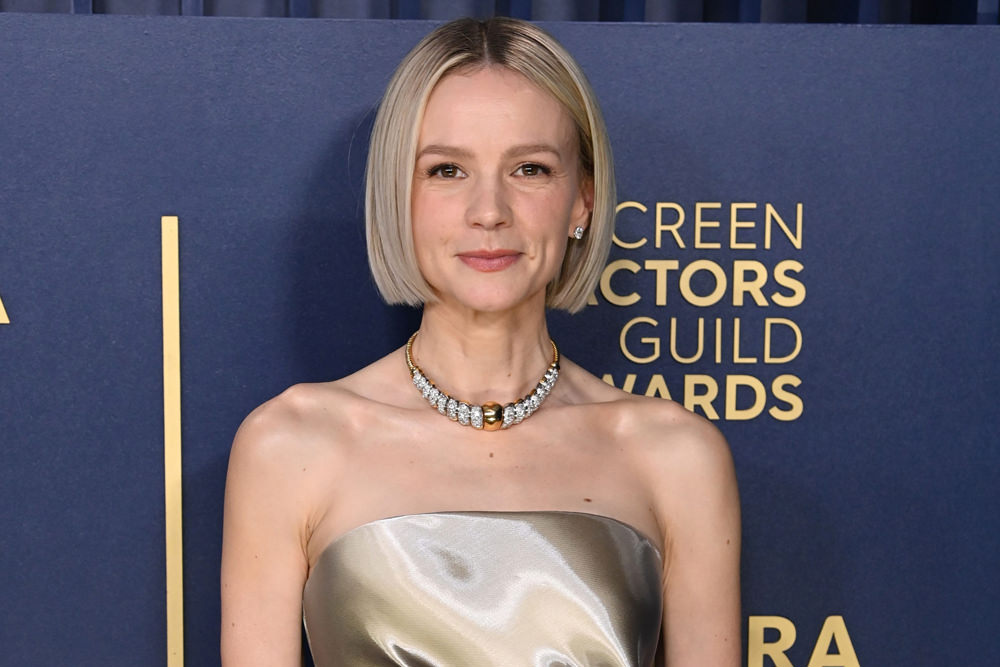
The Before: A Hotel Manager’s Daughter, a Letter to Kenneth Branagh, and Three Auditions for a Single Role
However, Carey Hannah Mulligan was born on May 28, 1985, in London, to Stephen Mulligan, a hotel manager of Irish descent from Liverpool, and Nano Booth, a university lecturer from Llandeilo, Wales. Nevertheless, when Carey was three, her father’s hotel career moved the family to West Germany, where she attended the International School of Düsseldorf with her brother. They returned to England when she was eight. Notably, she was enrolled at Woldingham School, an independent school in Surrey, where she became the student head of the drama department — organizing workshops, conducting rehearsals, and performing in plays and musicals with the intensity of a teenager who had already decided what her life would be about.
Despite this, her parents had not decided. They disapproved of acting as a career. In fact, they wanted her to attend university, like her brother. The disapproval was not hostile. Subsequently, it was practical: hotel managers and university lecturers understand income stability, and acting does not offer it.
The Turning Point
Meanwhile, at sixteen, Mulligan attended a production starring Kenneth Branagh. Indeed, the performance changed something fundamental in her understanding of what was possible. She wrote him a letter.
“I explained that my parents didn’t want me to act, but that I felt it was my vocation in life,” she later said. Ultimately, branagh’s sister replied on his behalf: “Kenneth says that if you feel such a strong need to be an actress, you must be an actress.” The sentence is the best career advice anyone in this empire has ever received. By contrast, it is also, structurally, a permission slip — the kind of document that a sixteen-year-old girl from a hotel family in Surrey requires before she can override her parents’ reasonable objections and pursue a profession in which the median income is zero and the odds of sustained employment are roughly equivalent to the odds of being struck by interesting lightning.
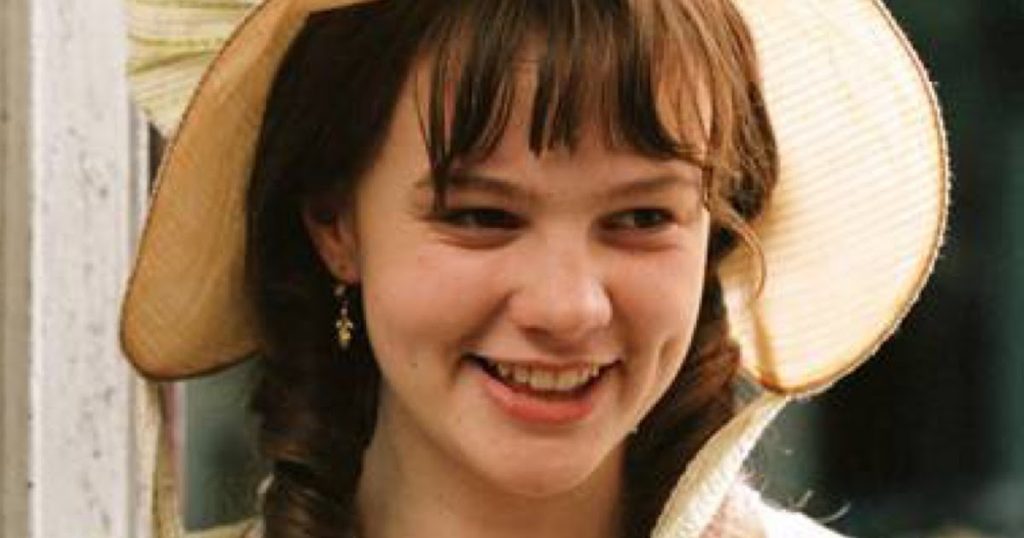
In particular, julian Fellowes — the screenwriter who would later create Downton Abbey — gave a lecture at Woldingham while Mulligan was a student. Specifically, through Fellowes, she secured an introduction to a casting assistant. As a result, she auditioned for the role of Kitty Bennet in Joe Wright’s 2005 adaptation of Pride and Prejudice. She was rejected. Even so, she auditioned again. Rejected again. She auditioned a third time. She was cast. Similarly, the role was minor — the fourth Bennet sister, largely decorative — but the discipline of returning twice after being told no is the founding act of a career built entirely on the principle that persistence applied to the right material will eventually produce results that urgency applied to the wrong material cannot.
The Pivot Moment: An Education, an Oscar Nomination, and the Best Western Hotel
Despite this, between Pride and Prejudice and her breakthrough, Mulligan worked as a bartender. In turn, she appeared in BBC television productions — Bleak House, an adaptation of Northanger Abbey — and in the Doctor Who episode “Blink” (2007), which became one of the most beloved episodes in the show’s sixty-year history. Regardless, she played Sally Sparrow, a young woman who communicates with a time-displaced Doctor through messages hidden in DVD Easter eggs. Still, the episode required Mulligan to carry the narrative alone, without the show’s lead actor, and demonstrated the quality that would define her career: the ability to make intelligence visible on screen without performing it. Sally Sparrow is not written as brilliant. She is written as observant. Mulligan made the observation feel like brilliance. The distinction is everything.

Even so, in 2009, Lone Scherfig cast her as Jenny Mellor in An Education — a coming-of-age drama set in 1960s London about a sixteen-year-old schoolgirl seduced by an older man played by Peter Sarsgaard. The performance earned Mulligan the BAFTA Award for Best Actress and an Academy Award nomination for Best Actress. She was twenty-four years old. The role required her to play a teenager whose intelligence makes her vulnerable rather than protected — a girl smart enough to be flattered by an older man’s attention and not yet experienced enough to recognize that the flattery is the trap. The performance is the foundation of everything that followed: every subsequent role Mulligan has taken involves a woman whose perception of her own situation is simultaneously accurate and insufficient.
Behind the Numbers
During the production of Wall Street: Money Never Sleeps, Mulligan dated Shia LaBeouf, her co-star. The relationship ended in 2010. After the breakup, she lived in a Best Western hotel. The detail is not gossip. It is evidence of the financial reality that accompanies a career built on prestige rather than commerce. A Best Western. Not the Chateau Marmont. Not the Mercer. A Best Western — the hotel chain that charges $89 a night and provides a continental breakfast. The woman who had just been nominated for an Academy Award was living in a hotel that her father might have managed. The gap between critical acclaim and financial security is the gap that defines Mulligan’s entire career and makes her the rarest kind of spoke in this empire: one whose net worth is modest because modesty is the price of integrity.
The Climb: Winnie Gekko, Drive, and the Filmography That Reads Like a Syllabus

In Wall Street: Money Never Sleeps, Mulligan plays Winnie Gekko — Gordon Gekko’s estranged daughter, a political journalist who runs a nonprofit news website and wants nothing to do with the world that produced her father. The role is the sequel’s conscience: Winnie is the only character who has rejected the system entirely, who sees her father’s charisma as camouflage for his pathology, and whose forgiveness — when it comes — is conditional and earned rather than sentimental. The performance is quiet in a film that is loud, grounded in a story that is overwrought, and emotionally precise in a narrative that is emotionally confused.
In turn, mulligan played Gekko’s daughter while dating LaBeouf, who played her fiancé. The personal and professional entanglement is the kind of detail that tabloids consume. Mulligan has never discussed it publicly. The silence is consistent with everything else she does: perform the work, protect the private, let the audience draw its own conclusions.
What the Record Shows
The filmography that followed An Education and Money Never Sleeps is not a career. It is a syllabus. Never Let Me Go (2010) with Kazuo Ishiguro’s dystopian romance. Drive (2011) with Nicolas Winding Refn and Ryan Gosling — a Los Angeles crime film in which Mulligan’s Irene exists as the only source of warmth in a world made entirely of chrome and violence. Shame (2011) with Steve McQueen and Michael Fassbender. Inside Llewyn Davis (2013) with the Coen Brothers.
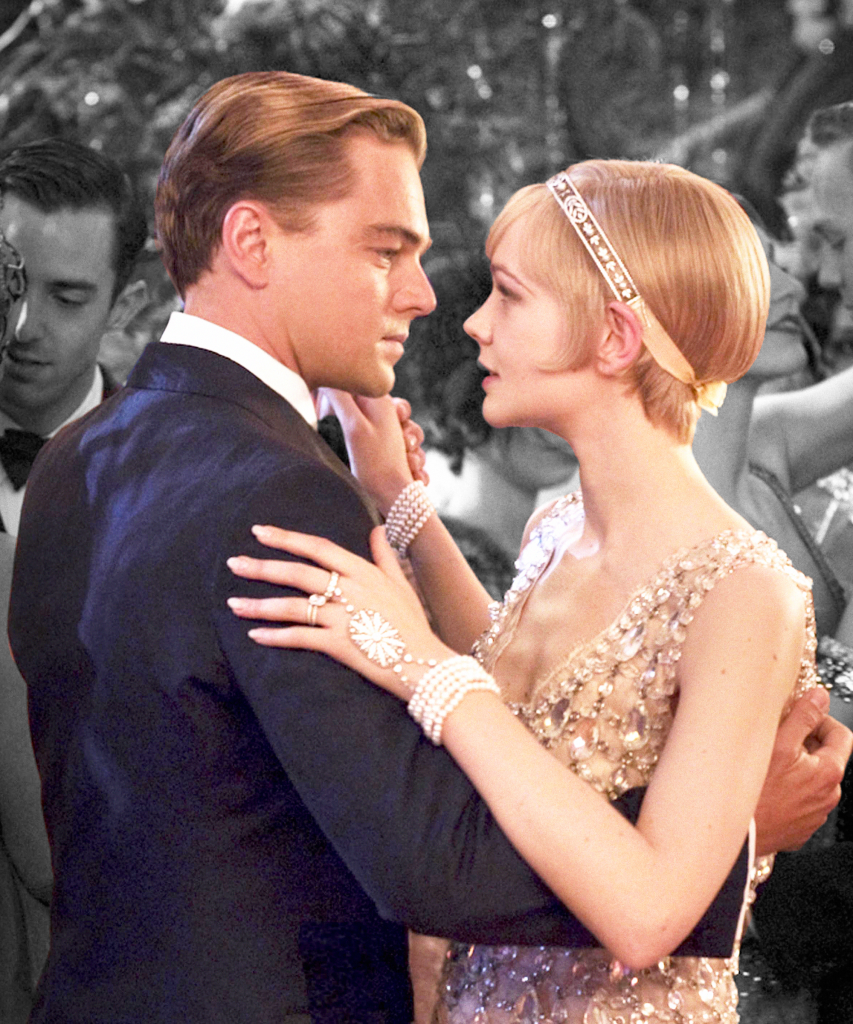
Regardless, the Great Gatsby (2013) with Baz Luhrmann — her highest-grossing film at $353 million, playing Daisy Buchanan, the woman whose voice is “full of money.” Far from the Madding Crowd (2015) with Thomas Vinterberg. Suffragette (2015) with Sarah Gavron. Mudbound (2017) with Dee Rees. Wildlife (2018) with Paul Dano. Every film is directed by someone whose name is the reason to watch. Every role is chosen for the director and the material, not the paycheck.
The Success Formula: Why Selectivity Produces Smaller Fortunes and Larger Legacies
Carey Mulligan has never appeared in a franchise. She has never made a sequel. She has never starred in a superhero film, a young adult adaptation, a horror series, or any of the commercial vehicles that her contemporaries have used to build nine-figure fortunes. The absence is deliberate and expensive. Her peers — Emma Stone, Jennifer Lawrence, Scarlett Johansson — occupy a financial tier that Mulligan’s choices have permanently excluded her from. Stone’s $35 million net worth was boosted by Amazing Spider-Man. Lawrence’s $160 million took shape on Hunger Games and X-Men. Johansson’s $165 million was constructed inside the Marvel Cinematic Universe. Mulligan’s $16 million took shape on An Education, Drive, and Promising Young Woman — films whose combined worldwide gross is roughly equal to one weekend of an Avengers release.
The strategy is not anti-commercial. It is anti-disposable. Mulligan selects roles the way a curator selects acquisitions: each piece must justify its place in the collection, and the collection’s coherence is more valuable than any individual piece’s market price. The method produces a filmography that will be studied in fifty years — Drive will outlast every Marvel film released in the same decade — but it does not produce the kind of wealth that allows you to skip the Best Western. The tradeoff is conscious. Mulligan has spoken about choosing roles based on the director first, the character second, and the compensation third. In an industry that reverses this hierarchy as a matter of professional survival, the inversion is either principled or impractical. In Mulligan’s case, it is both. The principle is the impracticality. The impracticality is the point.
That said, the Deeper Story
Her executive producer credit on Promising Young Woman (2020) — Emerald Fennell’s revenge thriller about a woman who targets men willing to exploit intoxicated women — marks the only significant move toward ownership in her career. The film won the Academy Award for Best Original Screenplay and earned Mulligan her second Oscar nomination for Best Actress. The producer credit offers backend participation in a way that acting fees alone do not. It is also, notably, the only film in her career where the material’s commercial appeal is inseparable from its artistic ambition. The film grossed $19 million — modest by studio standards, extraordinary for an independent revenge comedy with a female director and a female lead. The project demonstrates what Mulligan’s selectivity purchases: the ability to choose material so specific that it creates its own audience rather than serving an existing one.
What She Built: Marcus Mumford, Three Oscar Nominations, and the CBE at Windsor Castle
In 2012, Carey Mulligan married Marcus Mumford, the lead singer of Mumford and Sons. The origin story is the kind that screenwriters would reject for being implausible: they were childhood pen pals who had lost touch and then reconnected as adults during the production of Inside Llewyn Davis, in which both were involved. They married three weeks after production ended. They have two children. The marriage has been conducted with the same privacy that characterizes Mulligan’s career — no social media presence, no public statements about personal matters, no lifestyle content. The couple lives between England and the United States. Mumford and Sons have sold over ten million albums worldwide. The household’s combined wealth is not publicly estimated but is substantially larger than Mulligan’s individual net worth suggests.
Her third Academy Award nomination arrived in 2023 for Maestro, Bradley Cooper’s biopic of Leonard Bernstein, in which Mulligan played Felicia Montealegre — the actress and activist who was Bernstein’s wife and whose relationship with him involved managing the contradiction between his public heterosexual marriage and his private homosexual life. The performance required Mulligan to age across decades and to play a woman whose dignity was inseparable from her capacity for self-deception. The nomination confirmed what the industry already knew: Mulligan is, by any technical measure, one of the finest actresses of her generation. Additionally, the word “generation” is doing significant work in that sentence, because the generation includes Stone, Lawrence, Johansson, and Margot Robbie — women whose net worths exceed Mulligan’s by factors of three to ten.
Why It Matters
Still, the disparity is the market’s answer to an artistic question. The market says commerce. The Academy says craft. Mulligan chose the Academy’s answer. The $16 million is what that answer costs.
In 2025, Mulligan received appointment Commander of the Order of the British Empire for services to drama. She received the honor at Windsor Castle on March 30, 2026. The CBE is the kind of recognition that does not appear on a balance sheet but communicates value in a currency that balance sheets cannot measure. She has served as an ambassador for the Alzheimer’s Society since 2012 and for War Child since 2014. Her upcoming projects include Greta Gerwig’s Narnia adaptation and the second season of Netflix’s Beef. The work continues. The selectivity continues. Furthermore, the fortune remains modest. The filmography remains immaculate.
The Soft Landing: $16 Million and the Price of Choosing the Right Thing
Carey Mulligan’s net worth stands at approximately at $16 million. The number is the smallest individual fortune in the Wall Street cinema canon. It is also the most deliberately constructed. Every other spoke in this empire tells a story about accumulation — Douglas’s $350 million, Affleck’s $300 million, Diesel’s $225 million. Mulligan’s spoke tells a story about selection. The fortune is small because the choices are precise. The choices are precise because the career rests on on a principle that the Wall Street films she appeared in spent their running times interrogating: is there a version of success that does not require you to become the thing you were trying to escape?
Winnie Gekko, in Money Never Sleeps, answers yes. She rejects her father’s world, runs a nonprofit, and forgives him only when the forgiveness is earned. Mulligan’s career enacts the same answer. She has rejected the franchise system, maintained a body of work that is coherent rather than profitable, and built a life that is private rather than performative. The hotel manager’s daughter who wrote a letter to Kenneth Branagh at sixteen and was told to follow her vocation has followed it with a discipline that the vocation rewards in recognition and punishes in compensation. Three Oscar nominations. A BAFTA. A CBE. Moreover, a filmography that includes An Education, Drive, Shame, Inside Llewyn Davis, and Promising Young Woman. A marriage to her childhood pen pal. Two children. No social media. No franchise. Consequently, no scandal. $16 million.
Where It Led
The number is the smallest in the empire. It is also the only one that nobody in the empire would trade their fortune to change. Every other actor in the canon has a role they regret, a film they made for money, a period where the work was beneath their talent. Mulligan does not. The $16 million purchased something that $350 million could not: a filmography without a single embarrassment. That is the spoke’s argument. That is its price. And that is why the woman who lived in a Best Western after an Oscar nomination is, by any measure that matters longer than a quarterly earnings report, the richest person in the room.
Related: Wall Street: Money Never Sleeps True Story · Michael Douglas Net Worth: The $350 Million Gekko Fortune · Shia LaBeouf Net Worth · Josh Brolin Net Worth · The Wall Street Movies That Rewired How America Thinks About Money
If you’ve ever chosen the right thing over the profitable thing — and understood that the right thing appreciates while the profitable thing depreciates — then you already know why Social Life Magazine exists. We cover the people whose value compounds. Reach out to our editorial team to be featured.
Want to position your brand where selectivity is the luxury? Submit a Paid Feature and let our editors build something worth reading.
The Real Impact
Join 82,000+ subscribers who get our take on luxury, culture, and the Hamptons scene before anyone else. Subscribe to our email list.
Experience the intersection of sport, style, and status at Polo Hamptons — Bridgehampton’s premier luxury polo event, now in its seventh year with BMW as title sponsor.
Never miss a print issue. Subscribe to Social Life Magazine and get five summer issues delivered from Memorial Day to Labor Day.
Love what we do? Support Social Life Magazine and help us keep covering the culture that matters.