
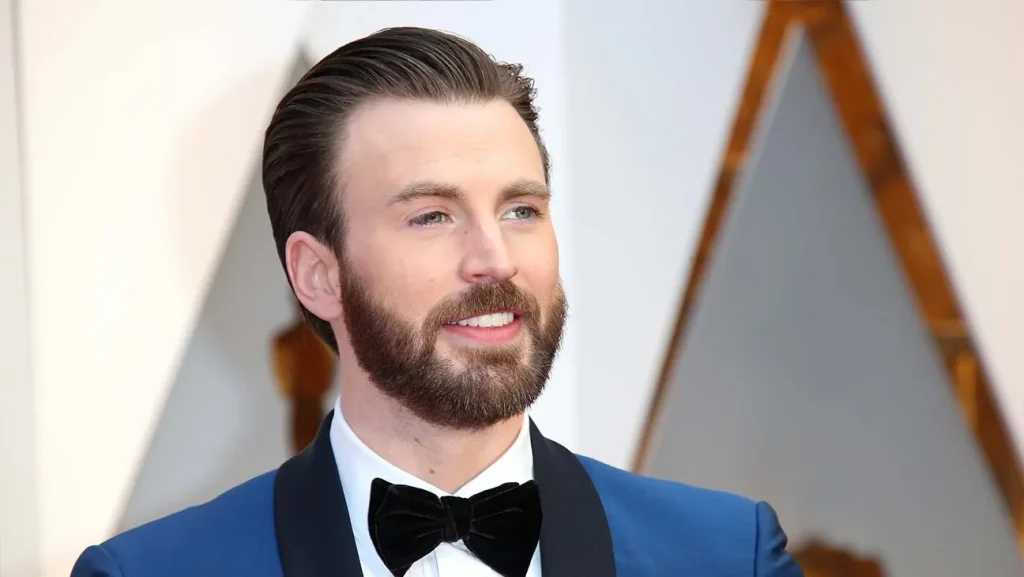
Chris Evans Net Worth: How $110 Million Got Built By Walking Away From Captain America At The Exact Moment Most Actors Would Have Renegotiated
The Before: A Boston Theater Family
The Mother Who Ran The Youth Theater
Christopher Robert Evans was born in Boston, Massachusetts, in June 1981. His father, Robert, was a dentist. His mother, Lisa Capuano, was the artistic director of Concord Youth Theatre. Specifically, the household ran on theater rather than on entertainment industry calculation. Chris grew up watching his mother direct community productions of Sondheim and Shakespeare while his three siblings, Carly, Scott, and Shanna, rotated through cast roles. Furthermore, the family environment was not aspirational about Hollywood. The theater was the work itself, not the launch pad to bigger things.
The Audition Trip That Almost Did Not Happen
Evans interned at Lookout Management in Manhattan during a high school summer, helping with administrative work for the music industry firm. The experience confirmed his interest in the entertainment business without convincing him to pursue acting professionally. Subsequently, he attended Lee Strasberg Theatre Institute briefly before enrolling in Boston University. Notably, he left BU after six weeks. The decision was less strategic than impulsive. He moved to Los Angeles in 2000 and started auditioning seriously.
The Pivot Moment: Two Marvel Franchises, Six Years Apart
Fantastic Four In 2005, And The Alba Connection

Evans was twenty-three when 20th Century Fox cast him as Johnny Storm in Fantastic Four (2005). The role placed him opposite Jessica Alba’s Sue Storm, with both actors anchoring a franchise that grossed $333 million worldwide on a $100 million budget. Specifically, the casting paid Evans approximately $1 million for the first film. The figure escalated modestly for Fantastic Four: Rise of the Silver Surfer in 2007. Furthermore, the experience taught him something most actors learn through more painful means. The franchise-leading-man bracket is structurally constraining. Specifically, the actor must exercise careful judgment about which roles compound the bracket and which roles trap inside it.
The Auteur Detour Between Franchises
Between the two Fantastic Four films and his eventual Captain America casting, Evans rotated deliberately. Smaller projects with auteur-track directors filled the gap. Sunshine (2007) with Danny Boyle was the most consequential of these. The science fiction drama paid scale-tier rates. The budget ran $40 million. Notably, the role positioned Evans as a serious dramatic actor rather than as a one-note action lead. Subsequently, he took roles in Push (2009), Scott Pilgrim vs. the World (2010, Edgar Wright), and The Losers (2010). The pattern was deliberate. Evans was building credibility for the kind of post-franchise career he wanted to have access to later.
The Captain America Decision
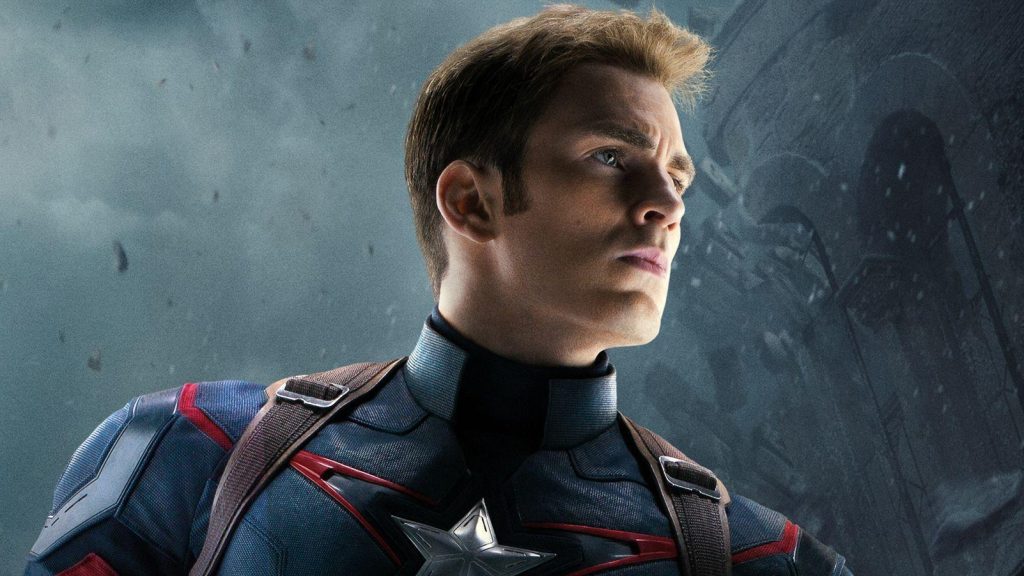
In 2010, Marvel Studios offered Evans the role of Steve Rogers in Captain America: The First Avenger. The contract proposed a six-film commitment at modest base fees, with significant escalation across the run. Evans reportedly turned down the role twice before accepting. Specifically, he was concerned about the fame implications. Anchoring a multi-film franchise at a moment when the Marvel Cinematic Universe was structurally unproven gave him pause. Furthermore, his anxiety about loss of personal privacy was, by his own account, the primary obstacle. Robert Downey Jr. reportedly counseled him to take the role. Evans accepted.
The Climb: Nine Films And A $22 Billion Universe
The 2011 Through 2019 MCU Run
Evans played Steve Rogers across nine Marvel Cinematic Universe films. The run included Captain America: The First Avenger (2011) and Marvel’s The Avengers (2012). Subsequently, the schedule added Captain America: The Winter Soldier (2014), Avengers: Age of Ultron (2015), Captain America: Civil War (2016), Avengers: Infinity War (2018), and Avengers: Endgame (2019). Furthermore, Evans appeared in cameo capacity in two additional MCU films. Thor: The Dark World (2013) and Spider-Man: Homecoming (2017) extended the run. The cumulative MCU box office across films featuring the Captain America character grossed approximately $11 billion worldwide.
The Salary Arc That Compounded
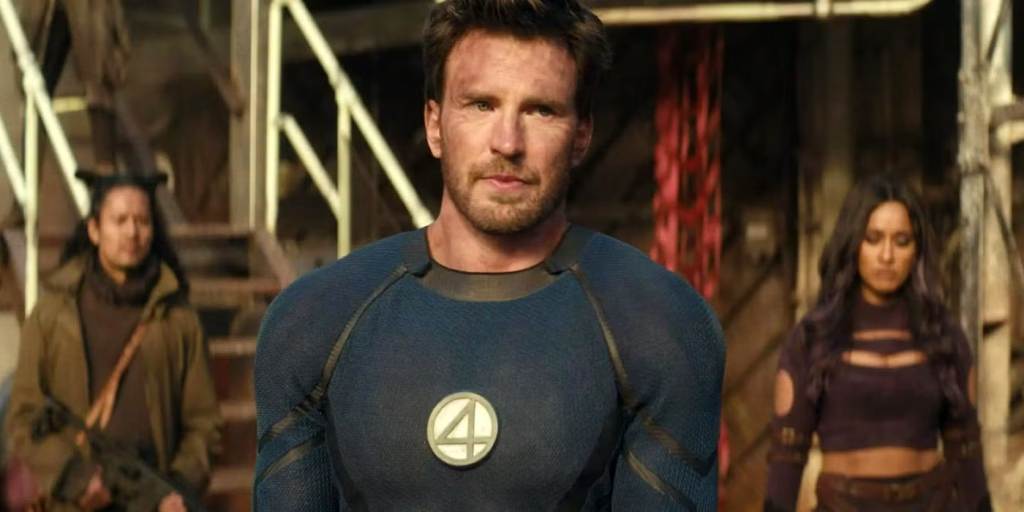
Evans’s compensation across the MCU run followed the standard Marvel escalation pattern. Specifically, his base salary on The First Avenger reportedly ran in the low seven figures. By The Avengers in 2012, the figure had compounded modestly with backend participation. Subsequently, Captain America: Civil War reportedly paid Evans approximately $15 million plus participation. Avengers: Endgame in 2019 was the highest-grossing film in the run at $2.79 billion. Reportedly, the film paid Evans north of $15 million in upfront salary plus significant backend participation, per Celebrity Net Worth’s coverage of MCU compensation structures. The cumulative MCU compensation across the nine-film run ran approximately $80 to 100 million by industry estimate. The figure includes all backend participation.
The Walk That Defined The Career
After Endgame, Evans declined to renew his Marvel contract. The decision was widely reported as voluntary rather than contractual. Specifically, Marvel Studios was reportedly prepared to offer significant compensation for additional Captain America appearances. The proposals included potential lead roles in subsequent Avengers films and standalone projects. Evans declined. Furthermore, the final Steve Rogers scene in Endgame was structured as a deliberate goodbye to the character. The script accommodated Evans’s stated intention to end his association with the role. Notably, the choice was the inverse of the standard MCU exit pattern. Most actors who anchor a Marvel character return repeatedly. Evans walked.
The Placement Economy: Why Evans Played The Brand-Asset Game On A Lower Setting
The Gucci Guilty Deal That Set The Tier
In 2021, Gucci named Evans the global ambassador for Gucci Guilty. The role placed him at the center of the maison’s flagship men’s fragrance. The deal was reportedly structured as a multi-year contract. Specifically, it paid high seven figures annually, per WWD’s coverage of luxury beauty ambassador deals. Specifically, the campaign positioned Evans as the face of premium men’s fragrance during the post-Marvel transition window. Furthermore, the deal demonstrated something specific about Evans’s brand-asset strategy. He was prepared to sign one premium ambassador contract at a time. The contract had to align with his personal aesthetic. Furthermore, he declined to multiply that contract into the kind of platform Pierce Brosnan’s Bond credibility produced through the Omega watches deal.
The Brosnan Comparison
The Brosnan playbook would have called for Evans to convert Captain America credibility into a brand stack. Luxury watches, automotive, financial services, and prestige spirits would have populated the categories. Specifically, the cumulative compensation from such a stack would have run approximately $40 to 60 million across a five-year period. The calculation runs against Evans’s recognition level at the 2019 to 2021 window. Evans declined that compensation. Notably, the Gucci deal alone produced a fraction of the brand-asset stack he could have assembled. Furthermore, no major automotive, watch, financial services, or lifestyle brand has held a long-term ambassador relationship with Evans. The pattern holds across the entire post-MCU window.
What Evans Built Instead
The strategic question becomes clear. What did Evans do with the leverage that the standard Brosnan-style brand-asset stack would have monetized? The answer is a portfolio of selective auteur work, civic engagement, and personal life architecture. Specifically, the brand-asset stack would have constrained all three. Specifically, Evans took the lead role in Rian Johnson’s Knives Out (2019) at scale-tier rates. Subsequently, he anchored Apple TV+’s Defending Jacob (2020) as both star and executive producer. Furthermore, he rotated through selective Netflix and Apple projects (The Gray Man, Ghosted, Pain Hustlers) without committing to franchise extensions. Furthermore, in 2020 he co-founded A Starting Point with Mark Kassen and Joe Kiani. The nonpartisan civic education website publishes interview content with elected officials across the political spectrum. The civic project paid nothing and represented a multi-year time commitment. Evans funded it personally.
The Lesson For Brand Founders
Evans’s case is instructive because it demonstrates that the franchise-exit decision is structurally underrated in celebrity economics. Specifically, most actors who anchor a major franchise stay too long. The compounding leverage of franchise visibility creates a ratchet effect. Subsequently, exit gets harder each year the actor remains. Furthermore, the brand-asset deals that follow franchise anchoring further compound the lock-in. Specifically, each ambassador contract adds reputational and contractual weight that subsequent contracts amplify. Evans walked at the precise moment the ratchet would have engaged. Notably, the timing was the asset. The walk converted into post-franchise optionality that subsequent stays would have compressed.
The Boston-To-Cape-Cod Chapter: Where The Strategy Lives
The Massachusetts Compound
Evans has maintained a primary residence in Massachusetts since the early 2010s. Specifically, the compound sits in the Boston suburbs and serves as his off-season base. Furthermore, secondary holdings in Los Angeles provide industry access during production cycles. Furthermore, the geographic choice has been deliberate. Evans has consistently spoken in interviews about preferring family proximity, dog-walkable neighborhoods, and a homebody routine. Specifically, the standard Hollywood geography does not accommodate that pattern. The Massachusetts base allows him to disengage from the celebrity ecosystem during long stretches of the year. Notably, the disengagement has been structurally important to the post-Marvel career architecture.
The Cape Cod Wedding
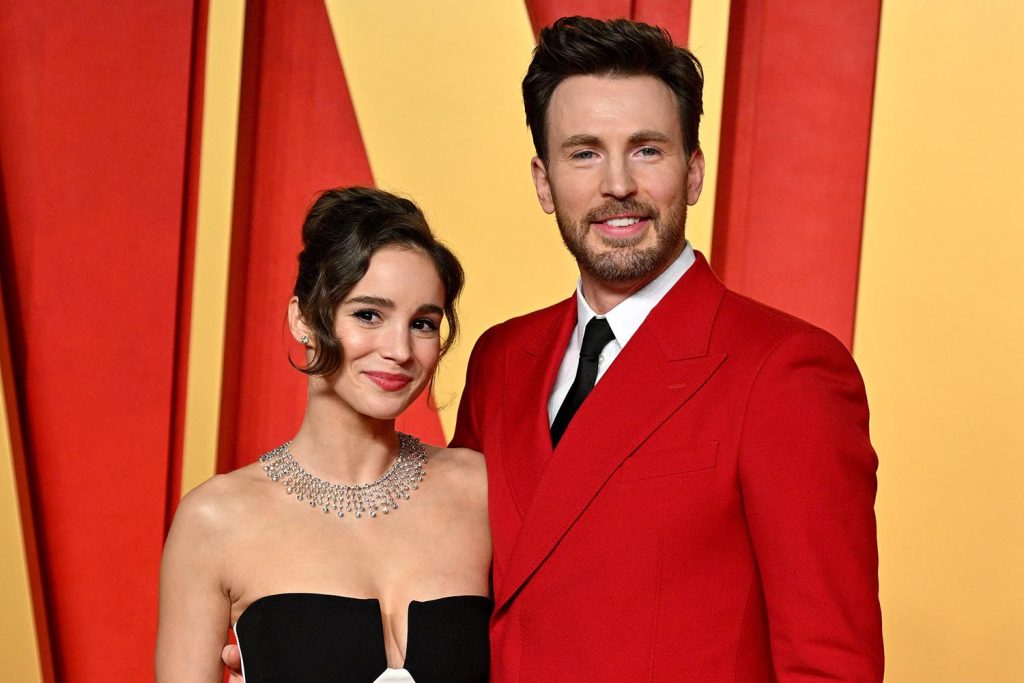
Evans married Portuguese actress Alba Baptista in September 2023. The wedding ceremony took place at his Cape Cod property in a deliberately small private gathering. Specifically, the guest list was restricted to family and close friends. Furthermore, no media coverage was authorized and no formal announcements ran until weeks after the ceremony. Notably, the choice mirrors the broader privacy posture that has defined Evans’s approach to celebrity. Furthermore, Baptista herself has maintained a similarly restrained public profile despite being a working actress. The couple has not staged red-carpet appearances. They have declined couples-feature press cycles. Furthermore, they have consistently prioritized geographic and editorial distance from the standard celebrity-couple visibility model.
The Real Estate Footprint
Beyond the Massachusetts compound, Evans has held various Los Angeles properties across the past fifteen years. Specifically, he sold a Hollywood Hills home for approximately $7 million in 2020. The transaction represented partial divestiture of his Los Angeles footprint during the post-Marvel transition window. Furthermore, the California holdings have been rebalanced periodically rather than maintained as legacy assets. Notably, the pattern reflects active portfolio management rather than collector accumulation. Evans has actively redeployed capital between Massachusetts and California across the years.
What He Built: The Net Worth Composition Lesson
The $110 Million Estimate
Current credible estimates place Evans’s personal net worth at approximately $110 million. Reporting comes via Forbes, Celebrity Net Worth, and industry sources. The composition breaks down approximately as follows.
MCU compensation across nine films: approximately $50 to 60 million in retained capital. The figure draws from cumulative MCU compensation of $80 to 100 million gross. Specifically, this column represents the dominant single income stream of his career and was concentrated across the 2011 to 2019 window.
Pre-Marvel and post-Marvel film income: approximately $20 to 25 million. The line covers the Fantastic Four films, the auteur work between franchises, and the post-MCU slate including Knives Out, The Gray Man, Lightyear, Ghosted, Pain Hustlers, and Defending Jacob.
Brand and endorsement income: approximately $10 to 15 million across the Gucci Guilty multi-year contract and limited additional commercial work. The figure runs significantly smaller than what Evans’s recognition level could have commanded through a fuller brand-asset stack.
Real estate: approximately $20 million in aggregate. The line covers the Massachusetts compound, residual Los Angeles holdings, and various smaller properties. Notably, this column reflects active portfolio management rather than passive accumulation.
Civic and editorial ventures: negligible direct revenue. Specifically, A Starting Point operates as a nonprofit civic education platform. The funding comes primarily through Evans’s personal capital contributions.
The Asset Composition Lesson
The portfolio matters because it sits at an unusual intersection. Most actors at Evans’s tier hold roughly 20% of net worth in brand and endorsement income across their careers. Evans holds approximately 11% in that line. Most carry significant exposure to celebrity-adjacent business ventures. Evans holds none. Specifically, the architecture is the lesson. Evans converted franchise income into selective brand asset, real estate, and civic engagement. Specifically, he ran deliberate underweight to the brand-deal compounding play. His Captain America credibility would have justified that play at premium pricing. Furthermore, the same structural pattern appears across the cluster. Specifically, Ralph Fiennes’s auteur-funding architecture and Joaquin Phoenix’s Joker-funded slate run the same logic. The talent who treats franchise income as the means rather than the end consistently builds something distinct.
The Soft Landing: What The Evans Case Teaches
Three Lessons From The Walk
First, the franchise-exit timing is itself a strategic asset. Specifically, most actors who anchor a multi-film franchise stay too long. They wait until the audience tires of them or the studio renegotiates them down. Evans walked at peak leverage immediately after Endgame. Specifically, the character’s commercial value was at the historical maximum. The walk converted franchise visibility into post-franchise optionality. Furthermore, the optionality has compounded across the subsequent six years. Specifically, staying inside the MCU would have prevented that compounding. Every brand founder reading this should ask one question. Specifically, has your own franchise commitment reached the moment when continuing costs more than leaving?
Second, brand-asset compounding is structurally optional. Notably, Evans had every condition that produces a Brosnan-Omega-equivalent platform. The Captain America credibility was there. Nine films of accumulated screen presence sat in his rearview. Furthermore, immediate post-franchise availability and a maintained public profile gave him perfect timing. Luxury-brand offers came in continuously across watches, automotive, finance, and lifestyle categories at premium pricing. He took one Gucci deal and otherwise declined the rest. Specifically, the choice cost him approximately $40 to 60 million in foregone brand-asset income. Furthermore, the choice bought him the post-MCU career he actually wanted to have.
The Counterexample The Cluster Demonstrates Repeatedly
Third, the placement economy works in both directions. The articles in this cluster have argued how to structure brand deals well. Pierce Brosnan through Omega platform deals. Natalie Portman through Dior. Alba through founding her own brand. Emma Watson through Burberry and Lancôme. Mila Kunis through the Jim Beam category-expansion thesis. Evans’s case demonstrates the alternative once again. Specifically, the talent who chooses to under-monetize the brand-asset opportunity runs a different optimization function. The choice preserves different optionality. Notably, the function is valid. It produces career outcomes commensurate with the brand-asset-maximizing path. However, it carries significantly different volatility characteristics. Furthermore, it produces significantly more personal life optionality across decades.
The Thesis That Outlasts The Franchise
Evans’s case is instructive because it demonstrates one of the cleanest franchise-exit case studies in modern Hollywood. Specifically, the actor who walks from a $22 billion shared universe at peak leverage runs a strategic posture. Most analysts underestimate the move. Furthermore, the posture produces career durability the standard franchise-extension play cannot match. Captain America belongs to Marvel forever. The post-Captain America life belongs to Evans. The trade was not framed publicly as one. It was simply how Evans wanted to live, and he had enough leverage by 2019 to insist on it. The lesson, for any talent reading this, is straightforward. Specifically, the franchise exit done correctly is one of the most valuable career moves available to a working actor. Most miss the timing. Evans did not.
The Sin City And Fantastic Four Bridge
The Evans architecture sits inside a denser cross-link network than most cluster pieces. Specifically, his Fantastic Four 2005 casting placed him alongside Alba on the same set where the Marvel-adjacent franchise leading-man bracket first opened for both actors. Furthermore, Bruce Willis’s Sin City run and Mickey Rourke’s Marv role both anchored the same Robert Rodriguez and Frank Miller adaptation cohort that defined the mid-2000s comic-book aesthetic. The four actors (Alba, Evans, Willis, Rourke) collectively define the cluster’s most concentrated franchise-cohort case study, with four structurally distinct career outcomes emerging from adjacent franchise entry points.
Related Reading
- Hollywood’s $26 Billion Hidden Economy: How Product Placement Built Modern Stardom
- Jessica Alba Net Worth: From Sin City To $1.44B Honest Company IPO
- Bruce Willis Net Worth: $250M Built Across Die Hard, Pulp Fiction, And The Late-Career Pivot
- Mickey Rourke Net Worth: How $40M Comeback Became $10M Cautionary Tale
- Joaquin Phoenix Net Worth Strategy: $80M Auteur Economics Of Joker
- Pierce Brosnan Net Worth: How Bond Built A $200M Brand-Asset Platform
How To Work With Social Life Magazine
A fish does not notice the water. A reader does not notice the placement. That is the entire point. Furthermore, it is the entire opportunity for the brand founder who has just finished reading an article and is, without having fully realized it yet, about to scroll down and click one of the following five links.
Six Ways To Connect
If you are a brand, a founder, a creative director, or an in-house marketing lead who has read this far and would like to be considered for an editorial feature in Social Life Magazine’s print or digital ecosystem, the editorial team reviews brand submissions year-round. Pitch us at sociallifemagazine.com/contact.
If you are a brand with a ready-to-run campaign and would like to move faster than the traditional editorial cycle, the Paid Feature program offers three tiers of guaranteed placement across Social Life Magazine’s digital properties, with pricing starting at $975. Full details at sociallifemagazine.com/submit-a-paid-feature/.
Every piece Social Life Magazine publishes reaches an email list of 82,000 pre-qualified affluent readers. The majority summer in the Hamptons and spend the off-season in Manhattan’s core luxury zip codes. The email blast is the single most efficient distribution mechanism in the Hamptons editorial ecosystem. Inquire about placement at sociallifemagazine.com/enflyer.
Events, Print, And Independent Editorial
Polo Hamptons 2026, Social Life Magazine’s flagship event property, returns for its 17th year in July and August 2026. Platinum, Gold, and Corporate Cabana sponsorship packages are available for select categories (automotive is locked by BMW North America, real estate is at capacity, all other categories open). Demographic data, sponsor decks, and custom activation proposals available at polohamptons.com.
Social Life Magazine’s print edition, now in its 23rd year, distributes 25,000 copies per summer issue across Westhampton, Southampton, Bridgehampton, East Hampton, Sag Harbor, Amagansett, and Montauk boutiques, restaurants, and private clubs. Annual subscriptions, including fall/winter Upper East Side doorman distribution, available at sociallifemagazine.com/subscription.
If you’d like to support independent luxury editorial in the age of AI-generated content farms and private-equity-owned media conglomerates, donations to Social Life Magazine’s editorial operations are received via PayPal. Every dollar funds original reporting, photography, and the kind of writing that brands send their marketing teams to study.
Author

Written by
Recent Posts

Studio Mayfair Marks New York Fashion Week With Intimate Cocktail Event at Sushi By Bou FiDi
What Goes Into Planning a Professional Furnace Installation?
Why Sports Card Collecting Is More Than Just a Hobby
From Signature Scents to Scent Wardrobes: The Evolution of Personal Fragrance

Beyond the Booth: How Exhibition Design Is Creating New Brand Experiences
Categories
- Art
- Articles
- Business of Luxury
- Celebrities
- Culture
- Entertainment
- Events
- Faces of Summer 2026
- Fashion
- Fashion & Style
- Featured
- Finance
- Food, Spirits, Wine
- Hamptons
- Hamptons Celebrities
- Health
- Health & Beauty
- Lifestyle
- Luxury Lifestyle
- Press
- Profiles
- Real Estate
- Technology
- The Chronicles
- Travel
- Uncategorized
- Weddings