
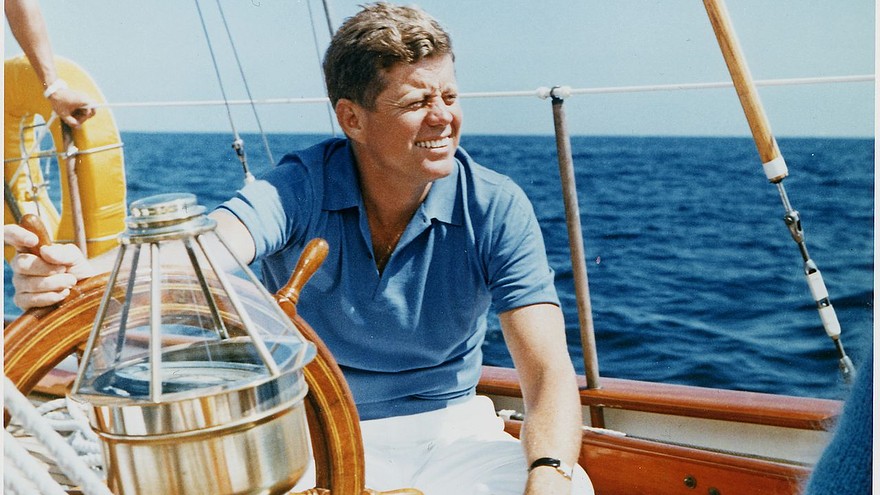
John F. Kennedy was elected the 35th President of the United States in November 1960 and donated his $100,000 annual salary to charity every year he served. He could afford the gesture. JFK net worth at the time of his presidency totaled an estimated $10 million in personal assets, equivalent to roughly $100 million today. The figure undersells the actual position. Kennedy trusts administered by his father controlled $1 billion in family assets. JFK drew an estimated $500,000 a year in trust distributions without working a day. The Kennedy fortune was built on three things polite society pretends do not exist: bootlegging, Wall Street speculation, and Hollywood. Joseph Kennedy Sr. did all three before the SEC made two of them illegal. Then he put his son in the White House. As an entry in the Movie Star Legends cluster, JFK is the case study in capital laundering across three generations.
JFK Net Worth at a Glance
| Birth Name | John Fitzgerald Kennedy (born May 29, 1917) |
|---|---|
| Net Worth | Approximately $10 million at time of presidency (1961); roughly $100 million inflation-adjusted |
| Primary Income Source | Kennedy family trust distributions (~$500K/year); Senate and presidential salary (donated); royalties from Profiles in Courage (1956); Merchandise Mart Chicago dividends |
| Career Span | 1946 (U.S. House) to November 22, 1963 (Dallas) |
| Key Credits | 35th President of the United States 1961-1963; U.S. Senator from Massachusetts 1953-1960; Pulitzer Prize for Profiles in Courage 1957 |
| Notable Achievements | Bay of Pigs, Cuban Missile Crisis, Apollo program; first Catholic president; donated presidential salary to charity every year |
| Residence | Kennedy Compound, 50 Marchant Avenue, Hyannis Port, MA (six acres on Nantucket Sound); plus Palm Beach, Georgetown |
Before the Money: Joseph Sr. And The Three Origin Sins
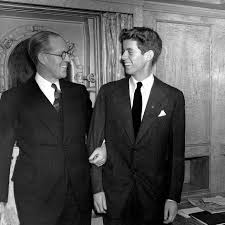
Joseph Patrick Kennedy Sr. arrived in 1888 as the grandson of a famine-era Boston Irish immigrant who arrived with nothing. The grandfather worked the docks. The father ran a tavern and entered ward politics. Joseph Sr. graduated Harvard in 1912 and turned banker by age 25, becoming the youngest bank president in America at Columbia Trust. The Kennedy fortune did not exist before him. Joseph Sr. built the entire structure in roughly twenty years through three controversial channels.
Channel one ran through Wall Street. Joseph Sr. traded aggressively through the 1920s using pool operations and short-selling techniques the SEC would later outlaw. He left the market by spring 1929. The crash made him richer by orders of magnitude. Channel two ran through Hollywood. He bought into the Film Booking Office of America in 1926, eventually folding it into RKO. He took Gloria Swanson as both lover and business partner in 1927. Channel three ran through liquor. After Prohibition ended in 1933, Kennedy held the U.S. distribution rights for Haig & Haig Scotch, Dewar’s, and Gordon’s gin through Somerset Importers. Bootlegging allegations during Prohibition itself remain disputed in scholarship but persist in family lore. The pattern was consistent. Joseph Sr. arrived early at every legal-gray opportunity and exited before the rules changed.
The Trust Fund Years: Born Into A $300M Position
How Joseph Sr. Structured The Family Office Before The Family Office Existed
Joseph Sr. created the first Kennedy family trusts in 1926, structured to distribute income to each of his children at 21, 25, 30, 40, and 45. By 1936 he had also established irrevocable generation-skipping trusts that protected the fortune from estate taxes for two generations forward. The Joseph P. Kennedy Family Office, operating out of 230 Park Avenue in New York and a private estate in Hyannis Port, managed an estimated $300 to 400 million in adjusted dollars by the early 1940s. The Kennedy fortune ran through this office. The children did not own the assets. They received the income.
JFK was born May 29, 1917 in Brookline, Massachusetts, the second of nine children. He never lacked money. He attended Choate Rosemary Hall, Princeton, then Harvard (class of 1940). His senior thesis, Why England Slept, became a bestseller after his father pulled connections at Henry Luce’s Time Inc. Joseph Sr. bought 30,000 copies to boost sales. The income from book royalties accrued to JFK personally. Wartime PT-109 service in 1943 produced the heroism narrative the family would later use politically. None of this required JFK to generate income.
By 1946 he stood for U.S. Congress in Massachusetts’ 11th District at age 29. The family poured an estimated $300,000 into the campaign, an unprecedented sum for a House race. He won. The Kennedy political dynasty had its first office. Joseph Sr. continued managing the money. JFK collected the trust distributions and the salary and donated the salary every year of his political career.
The Senate Years: $25K Salary, $500K Trust Income
Profiles In Courage, The Pulitzer Question, And The Senate Position
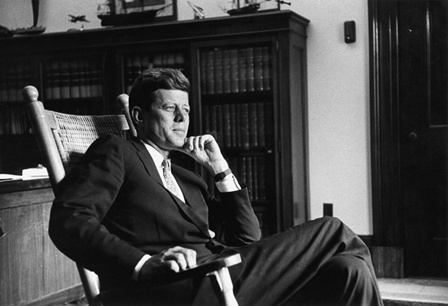
JFK won a Senate seat in 1952, defeating incumbent Henry Cabot Lodge Jr. by 70,000 votes. The Senate salary ran $22,500 a year in 1953, rising to $25,000. Trust distributions to JFK ran an estimated $500,000 annually across the same period. The math was straightforward: the Senate paid pocket money. The trusts paid for everything else, including the Georgetown townhouse at 3307 N Street NW, the Hyannis Port compound use, and the medical bills for Addison’s disease and chronic back pain.
Profiles in Courage was published in 1956 and won the Pulitzer Prize for Biography in 1957. The book has since been the subject of authorship disputes (speechwriter Ted Sorensen did substantial drafting work). Royalty income to JFK reached an estimated $75,000 by 1960. He donated all proceeds to charity, consistent with his pattern of using charity as a brand signal that reinforced the trust-fund insulation from public scrutiny. The Pulitzer win gave him intellectual credentials he could otherwise not have purchased outright. Joseph Sr. lobbied the Pulitzer board through Arthur Krock of The New York Times. The win became permanent regardless of how it was achieved.
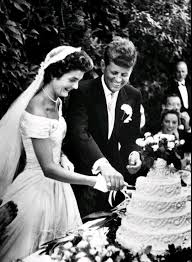
JFK married Jacqueline Bouvier on September 12, 1953 in Newport, Rhode Island. Jackie brought social and cultural capital the Kennedys could not buy. Old-money WASP credentialing through Newport, the Auchincloss family, and Vassar. Her trust fund was small (the Bouvier family had spent most of theirs). JFK’s family wealth absorbed her into the structure. The marriage was the cultural-capital play. Joseph Sr. had taught the children to marry up in symbolic terms even when they were already winning on economic terms.
The Presidency: Camelot, Marilyn, And The $625M Real Estate Holding
How A $100K Salary Donation Hid A Trust That Paid $500K Annually
JFK was inaugurated January 20, 1961. He immediately announced he would donate his $100,000 annual salary to charity, primarily to the United Negro College Fund and similar organizations. The gesture played as monastic devotion. The mechanics played as accounting. Joseph Sr.’s trusts continued distributing approximately $500,000 a year to JFK personally throughout the presidency. The salary donation cost him nothing operationally. Brand value from that donation proved permanent.
Kennedy family assets in this period totaled an estimated $1 billion. Holdings spanned real estate (Hyannis Port, Palm Beach, Georgetown, Manhattan), the Merchandise Mart in Chicago (the world’s largest commercial building at the time), publicly traded portfolios managed through Joseph Sr.’s family office, and direct business interests in liquor distribution and oil. Merchandise Mart dividends alone generated an estimated $25 million annually. The building was later sold by the family in 1998 for $625 million to Vornado Realty Trust.
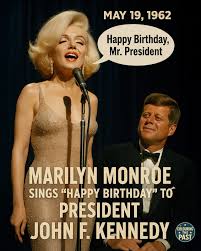
The affair with Marilyn Monroe ran from late 1961 through summer 1962 by most credible accounts. Monroe sang Happy Birthday at Madison Square Garden on May 19, 1962 in the $12,000 Jean Louis dress. The performance generated zero revenue and infinite brand equity for both parties. JFK borrowed Monroe’s glamour. Monroe borrowed JFK’s power. Neither needed the other’s money. Each needed the other’s form of capital. Joe DiMaggio had borrowed her glamour ten years earlier through marriage. JFK borrowed it through proximity and a presidency. Monroe died ten weeks after the Madison Square Garden performance.
The Posthumous Empire: $1.8B Across The Extended Family
How Joseph Sr.’s Structure Outlasted The Original Wealth
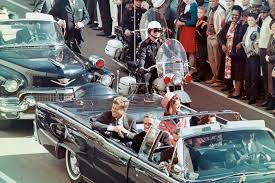
JFK was assassinated on November 22, 1963 in Dallas. His estate at death totaled approximately $10 million in personal assets, with significant additional value flowing to Jackie and the children through trust mechanisms structured years earlier. Jackie subsequently married Aristotle Onassis in 1968 (a $3 million prenup that became a $26 million payout when Onassis died in 1975). The Kennedy estate continued operating through Joseph Sr.’s family-office structure after JFK’s death. The trusts did not collapse with the principal.
Extended Kennedy family wealth today is estimated at $1.2 to 1.8 billion across multiple generations and dozens of descendants. Key holdings include the Hyannis Port compound (estimated $20 to 30 million), various Palm Beach properties, RFK Jr.’s media holdings, the Kennedy Library and Museum endowment, and ongoing distributions from trust portfolios that have continued compounding since the 1930s. The 1998 Merchandise Mart sale to Vornado for $625 million was the single largest realization event in family history.
The family office model Joseph Sr. built in the 1930s essentially prefigured the structure modern tech billionaires use today. Generation-skipping trusts. Multiple geographic bases. Concentrated political influence converted into compounding social capital. Joseph Sr. died in 1969 having seen his son elected president and assassinated. The structure he built has outlasted three generations of grandchildren so far.
How JFK’s $10M Personal Estate Hid A $1B Position
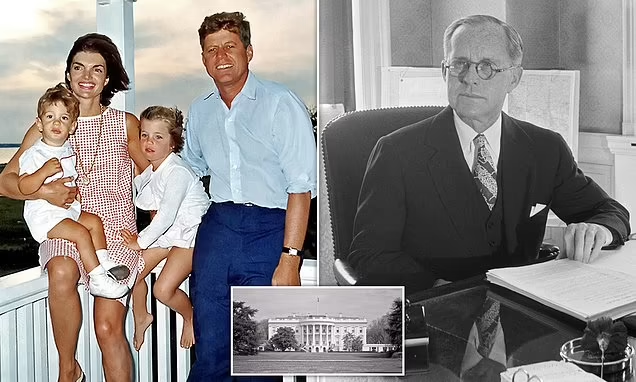
The $10 million personal-asset figure at JFK’s death is a misdirection. Stack the actual position. Trust distributions to JFK during life: estimated $500,000 a year for roughly 20 years, totaling $10 million in nominal dollars (roughly $100 million adjusted). Trust corpus accessible to JFK and his immediate family: estimated $100 to 200 million in 1963 dollars (approximately $1 to $2 billion adjusted). Real estate the family used: Hyannis Port compound, Palm Beach La Querida estate, Georgetown townhouse, Manhattan apartments. The Merchandise Mart in Chicago: family-controlled, generating $25 million annually in 1960s dollars.
Personal assets at death looked modest because Joseph Sr.’s trust structure made personal ownership unnecessary. The Kennedys had figured out before most Americans that legal ownership and economic benefit are not the same thing. Family-office structures shielded the principal from estate taxes, divorce settlements, lawsuits, and political opposition. JFK lived as one of the richest men in America while reporting personal assets that would not have raised eyebrows at a country club. Compare the structure to modern dynastic wealth through the Walton, Mars, and Koch trusts. The Kennedys arrived at the playbook fifty years before Forbes thought to count it.
Where JFK’s Money Stands Now
The Kennedy family trust system operates today through multiple Boston, New York, and Palm Beach administrators. Annual distributions to surviving family members are not publicly disclosed but are estimated by family-office observers at $1 to 3 million per direct descendant. The Hyannis Port compound remains in family hands and is occupied by descendants seasonally. The JFK Presidential Library and Museum in Boston operates on a $50 million endowment that the family helped seed. Robert F. Kennedy Jr. ran for U.S. President in 2024 and pulled trust resources for the campaign without depleting the principal.
JFK sits inside the Movie Star Legends cluster because his fame operated on the same symbolic-capital grid as Hollywood. The Camelot mythology was a Hollywood production by another name. The cross-cluster bridge to the Quiet Luxury and Old Money universe runs through the Kennedy compound and the family-office structure. Joseph Sr. built the original architecture. Marilyn Monroe borrowed it for one Madison Square Garden performance. Arthur Miller sat at the intellectual end of the same mid-century American consensus. JFK’s estate is the case study in how American wealth gets generationally permanent. Bootlegging laundered into Wall Street laundered into Hollywood laundered into the White House laundered into Camelot. Each generation removed the original transaction one step further from view.
JFK Net Worth FAQ
What was JFK’s net worth at the time of his death?
JFK net worth at his death on November 22, 1963 totaled approximately $10 million in personal assets, equivalent to roughly $100 million in 2026 dollars. The figure dramatically understates the family position. Kennedy family trusts administered by Joseph Sr. controlled an estimated $1 billion in combined assets across real estate, the Merchandise Mart, Wall Street holdings, and Somerset Importers liquor distribution. JFK drew approximately $500,000 a year in trust distributions throughout his political career.
How did Joseph Kennedy Sr. make his fortune?
Joseph Sr. built the Kennedy fortune through three channels in the 1920s and 1930s: aggressive Wall Street trading using pool operations the SEC later outlawed, Hollywood ownership through the Film Booking Office of America (later folded into RKO), and liquor distribution after Prohibition through Somerset Importers. Bootlegging during Prohibition itself remains disputed in scholarship but persists in family lore. He left the stock market by spring 1929, escaping the crash.
Did JFK really donate his presidential salary?
JFK donated his $100,000 annual presidential salary to charity every year he served, primarily to the United Negro College Fund and similar organizations. He continued an earlier pattern from his Senate years. The donation cost him nothing operationally. Family trusts continued distributing an estimated $500,000 annually to JFK personally throughout his presidency. The salary donation was a brand signal that reinforced trust-fund insulation from public scrutiny.
What is the Kennedy family worth today?
Extended Kennedy family wealth in 2026 is estimated at $1.2 to 1.8 billion across multiple generations. Key holdings include the Hyannis Port compound ($20 to 30 million), Palm Beach properties, the Kennedy Library endowment, and ongoing distributions from trust portfolios that have compounded since the 1930s. The 1998 Merchandise Mart sale to Vornado Realty Trust for $625 million was the single largest realization event in family history.
Where The Conversation Continues
Social Life Magazine covers the intersection of wealth, culture, and influence from the Hamptons to Manhattan. Our celebrity net worth coverage traces the economics, the leverage, and the decisions that built the fortune.
Our readers are family office principals, exit founders, fashion executives, and the advisors who serve them. For premium editorial placement and integrated advertising across print and digital, submit a paid feature or contact our business development team.
Want insider access to the events, launches, and gatherings that define the Hamptons social calendar? Sign up for Event Invites & Specials and never miss a moment.
Social Life Magazine. Twenty-three years of covering the people and places that define luxury in America.
Author

Written by
Recent Posts
Jetsetter Style: Castello del Sole
The First Decision After a Collision Can Be the Most Important One
Two Weeks in Rome and Beyond: Turkish Airlines Itineraries from Boston, Chicago and Onward to India
Top 10 Hair Transplant Clinics in Turkey 2026
Artist Alley to Online Store: How Convention Artists Can Keep Selling After the Event
Categories
- Art
- Articles
- Business of Luxury
- Celebrities
- Culture
- Entertainment
- Events
- Faces of Summer 2026
- Fashion
- Fashion & Style
- Featured
- Finance
- Food, Spirits, Wine
- Hamptons
- Hamptons Celebrities
- Health
- Health & Beauty
- Lifestyle
- Luxury Lifestyle
- Press
- Profiles
- Real Estate
- Technology
- The Chronicles
- Travel
- Uncategorized
- Weddings