
In 2001, Social Life Magazine distributed its first issue on the East End of Long Island. Instagram would not exist for another nine years. TikTok would not exist for another fourteen. The phrase “content marketing” was not yet in general use.
In that same summer, some of the brands that are now category leaders in the Hamptons luxury market were already advertising in its pages. They did not know, at the time, that they were building something that would compound for two decades. They knew it was distributed in the right places, read by the right people. The editorial quality matched the market it served.
Twenty-three summers later, those brands are not just advertisers. They are fixtures. Their presence in Social Life Magazine is so continuous that the Hamptons luxury audience does not process them as advertising. They process them as part of the summer. The brand has become as much a feature of the East End in July as the polo fields in Bridgehampton.
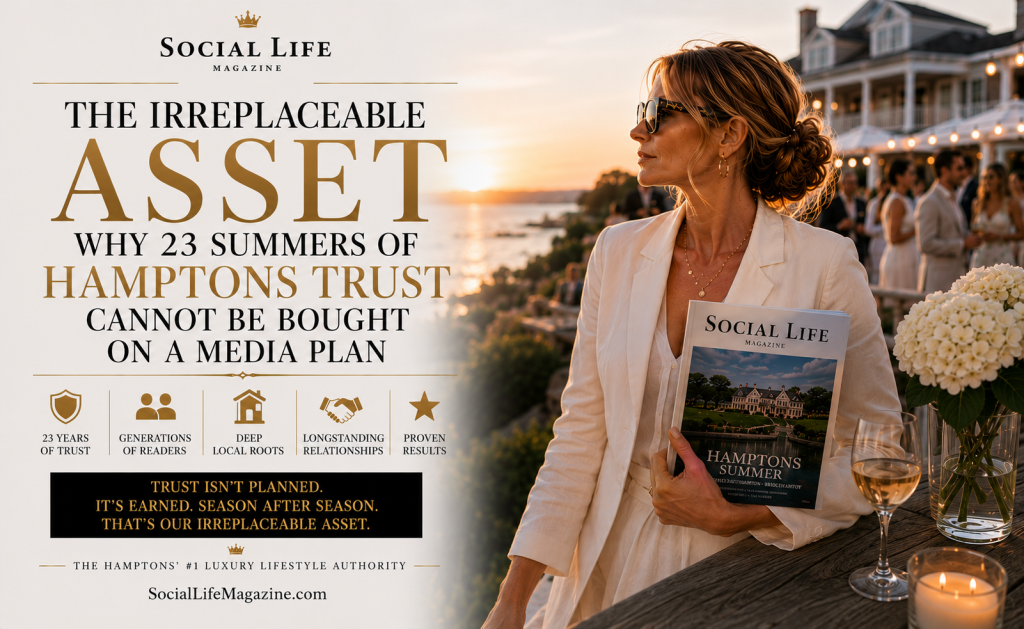
Social Life Magazine Hamptons brand authority is not a media metric. No CPM, impressions, or engagement rate captures it. It is a cultural fact produced by twenty-three years of showing up consistently, in the right place, with the same standards of editorial judgment.
And it is the one thing that no new entrant to the Hamptons luxury media market can replicate in a single season, regardless of budget.
What Compound Interest Looks Like in Brand Trust
Sutherland’s clearest argument against pure logic is about discovery: rational solutions, if they existed, would already have been found. The valuable things — the ones that create durable competitive advantage — do not make obvious sense at first. They require a bet on something intangible and time to prove out.
Social Life Magazine’s twenty-three-year position in the Hamptons market is exactly this kind of compounded intangible. Each summer’s distribution reinforces the trust established in the previous summer. Each cover decision, each editorial choice, each event association either adds to or subtracts from the accumulated credibility that the audience extends to the publication. Twenty-three summers of net additions have produced institutional authority. Because the publication has been trustworthy, it is trusted. Because it is trusted, it attracts the editorial access and event relationships that continue to justify that trust.
For a brand in its pages, this compound trust has a specific effect. The reader extends to the brand the same benefit of the doubt she extends to the publication. She does not evaluate the brand from zero. She starts from a positive prior — the prior that Social Life Magazine’s judgment is reliable — and works outward from there. A brand appearing in the publication for three consecutive summers is not evaluated from scratch. She already has a positive prior — shaped by the publication’s twenty-three-year track record — before she reads a single word about the brand.
This is the compound interest of brand trust. The first year earns a modest return. The second year earns on the first year’s principal and the first year’s interest. By the third year, the brand is not just known. It is expected. And expected, in the Hamptons luxury context, is the highest category a brand can inhabit.
The Legacy Premium
There is a specific premium that accrues to brands with long Hamptons tenure that has no equivalent in digital channels. It is the legacy premium. The additional trust and cultural authority that accrues from being present long enough to become part of the place’s identity.
This premium operates in both directions. Indeed, a brand that has been in the Hamptons summer long enough to carry legacy status benefits from that status in every subsequent season. A brand that is new to the market starts without it, regardless of how much it spends in its first season. Investment alone cannot close the gap. Only time closes it.
This asymmetry is what makes the decision to enter the Hamptons luxury market a compounding investment rather than a campaign expenditure. The brand that commits to a three-year presence in Social Life Magazine is not paying for three years of reach. It is paying for the first year of reach plus the compounding legacy premium that accrues in years two and three.
The brand treating each summer as a discrete campaign — evaluating metrics, deciding annually whether to continue — never accumulates the legacy premium. It starts each summer from zero, spends its way to awareness, and then retreats before the compounding can begin.
What Irreplaceability Actually Means
The word “irreplaceable” in a media context usually refers to audience quality. A publication is irreplaceable when its readers exist nowhere else. That is true of Social Life Magazine. Its print distribution to boutiques and hotels across the South Fork reaches an audience not reliably addressable through digital targeting.
But the more important irreplaceability is institutional. Social Life Magazine’s twenty-three-year relationship with the Hamptons summer is not a distribution footprint. It is a social fact about what the publication represents in this geography. A brand cannot buy its way into that social fact in one season. Only time earns it. Appearing consistently in a context that has been building its own authority for longer than most luxury brands have had Hamptons ambitions.
This institutional irreplaceability is also why the publication’s editorial standards function as a credibility filter rather than a barrier. The brands that appear in Social Life Magazine have passed through an editorial selection process that carries cultural authority. That passage is itself a signal — to the reader, to the boutique that stocks the magazine, to every brand appearing in the same issue. The selection confers status. The status is real because the institution behind it is real, with a track record long enough to be verifiable.
No media plan can replicate twenty-three summers. But brands starting to build their place now, consistently and with commitment to quality, will be three summers into their compound return. Competitors who wait will not have finished their first media buy.
Submit a paid feature at sociallifemagazine.com/submit-a-paid-feature. For full print and event packages, Social Life Magazine’s business development team is available now.
Where The Conversation Continues
This argument completes the six-principle framework for Hamptons luxury brand performance. Full framework in the pillar: Why Luxury Brands That Ignore Psychology Lose the Hamptons Every Summer.
Five preceding hubs cover perception (Hub A), costly signaling (Hub B), the outlier buyer (Hub C), counterintuitive marketing (Hub D), and friction (Hub E).
Three spokes extend this argument. The Legacy Luxury Paradox examines why legacy produces digital growth. Why Hamptons Print Still Wins covers the neuroscience of tactile brand memory. The Compound Interest of Hamptons Brand Presence models the three-year return.
Author

Written by
Recent Posts
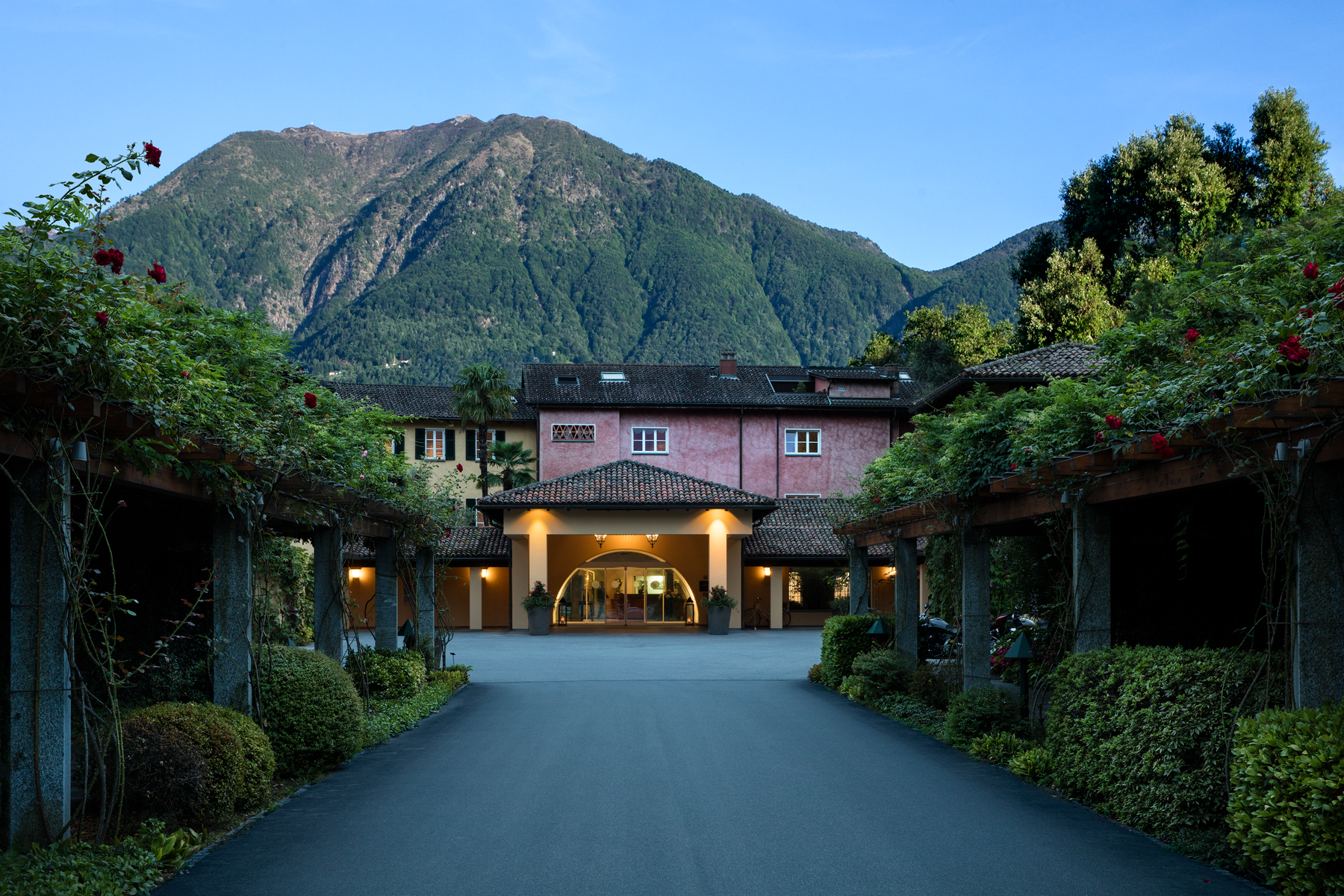
Jetsetter Style: Castello del Sole

The First Decision After a Collision Can Be the Most Important One
Two Weeks in Rome and Beyond: Turkish Airlines Itineraries from Boston, Chicago and Onward to India

Top 10 Hair Transplant Clinics in Turkey 2026
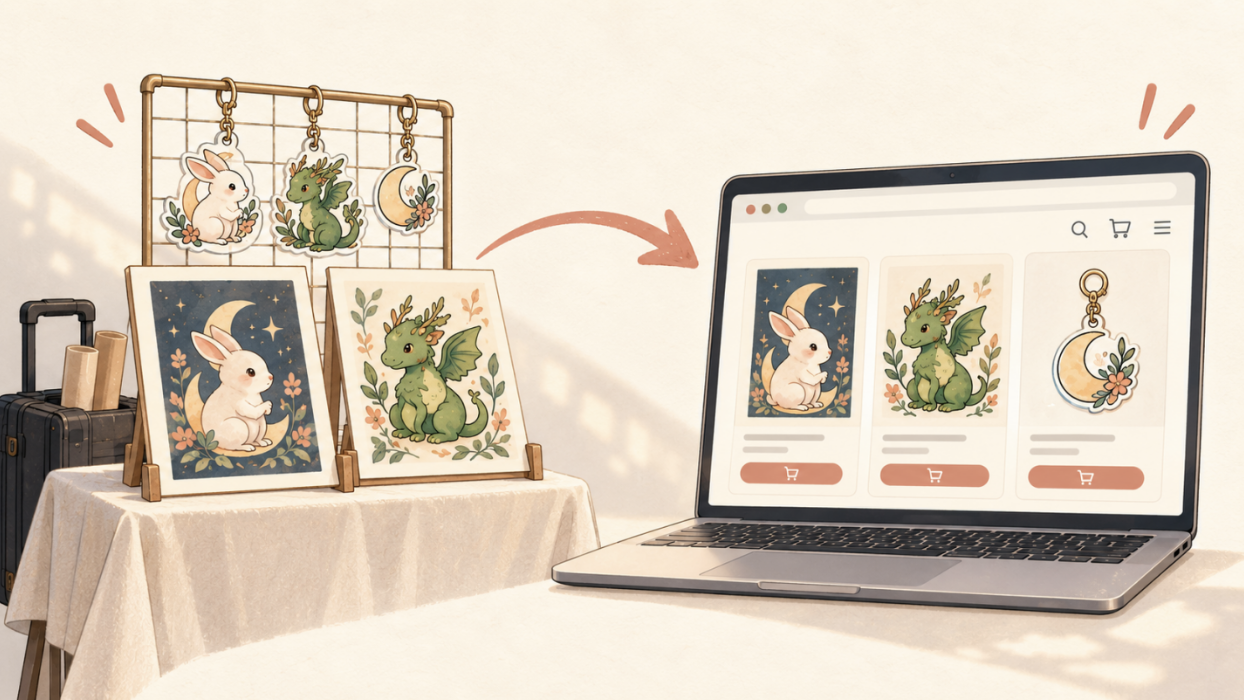
Artist Alley to Online Store: How Convention Artists Can Keep Selling After the Event
Categories
- Art
- Articles
- Business of Luxury
- Celebrities
- Culture
- Entertainment
- Events
- Faces of Summer 2026
- Fashion
- Fashion & Style
- Featured
- Finance
- Food, Spirits, Wine
- Hamptons
- Hamptons Celebrities
- Health
- Health & Beauty
- Lifestyle
- Luxury Lifestyle
- Press
- Profiles
- Real Estate
- Technology
- The Chronicles
- Travel
- Uncategorized
- Weddings