
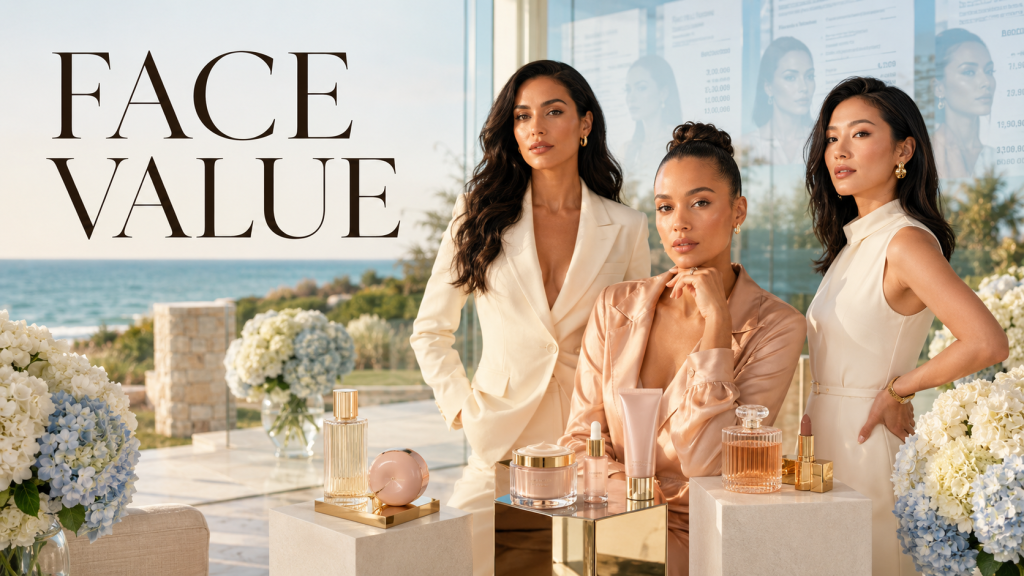
In May 2025, the mass-beauty giant e.l.f. agreed to pay up to $1 billion for Rhode, a skincare line with three products and one famous face. The face belonged to Hailey Bieber. Since then, Rhode has sold so hard that its new owner booked a $57.6 million earnout charge just to keep pace. Celebrity beauty brand net worth stopped being tabloid trivia. It is now the fastest legal conversion of fame into money.
This hub ranks every major empire, every exit, and every markdown. The figures come from deal filings rather than press releases. For the machinery underneath, start with our full guide to how celebrity fortunes actually get built.
The scoreboard runs from a $1.4 billion Fenty machine to a $670 million cautionary tale, with one billion-dollar exit in between. Each fortune below links to its full breakdown. Consider this the map room.
The Billionaire Tier: Rihanna and Selena
Two women own the top of the celebrity beauty brand net worth table. Rihanna has not released an album since 2016, yet her $1.4 billion Fenty empire keeps compounding anyway. LVMH holds half of Fenty Beauty, which explains the distribution muscle behind every Sephora endcap.
Fenty’s math still stuns the industry. Forbes called Rihanna a billionaire back in 2021, before the beauty line hit its current run rate. Savage X Fenty added a lingerie business worth $3 billion at its last raise. Music became the side hustle.
Selena Gomez took a different route. Rare Beauty launched in 2020 with a mental health mission and a $23 blush that sells itself on TikTok. Eventually the brand pushed her fortune past $1.3 billion. She has refused every acquisition call so far.
Rare Beauty also routes 1 percent of sales into its Rare Impact Fund, which reads as philanthropy and functions as positioning. The blush sells confidence to Gen Z, while the fund sells the founder’s sincerity to their parents. Both audiences pay retail. Neither empire needed a perfume counter, because the phone replaced it.
The tier above a billion has exactly these two members. Nobody else is close, although the next name came within one signature of joining them. Both women also prove the same rule. Ownership matters more than fame, because a face without equity is just an endorsement.
The Exit Artist: Hailey Bieber’s Rhode Playbook
Rhode launched in June 2022 with a peptide glazing fluid and a waiting list. Three years later, e.l.f. paid $800 million upfront, with another $200 million tied to growth targets. Our earlier Hailey Bieber net worth breakdown caught the brand at its scrappy stage, so a refresh is already in motion.
Scarcity did the marketing. Rhode held its line to a dozen products while rivals shipped fifty, so every launch became an event. The lip gloss phone case sold out again and again. By the time the buyer called, the brand had roughly $212 million in trailing sales and a cult it never paid to build.
The earnout is the tell. In 2026, e.l.f. booked a $57.6 million charge because Rhode kept beating its targets. That is a cost the buyer was thrilled to eat.
Here is the playbook worth copying. Sell at peak heat rather than at peak size. Heat is a depreciating asset, while size takes a decade to build. Keep the creative title, because the face still needs to front the campaigns. Bank the cash before the category cools, before the dupes arrive, before the algorithm moves on.
Estimates put Hailey’s personal take in the mid nine figures once the earnout fully vests. She was 28 when the deal closed, with decades of brand runway left. Not bad for a company younger than most Hamptons hedgerows.
The First Wave Correction: Kylie’s Lip Kit Math
Kylie Jenner got there first and paid for it. Forbes crowned her the youngest self-made billionaire in 2019, then revoked the title a year later after auditing the revenue math. The full autopsy lives in our Kylie Jenner cosmetics empire breakdown.
Coty bought 51 percent of Kylie Cosmetics for $600 million in early 2020, a $1.2 billion valuation. That price now looks like the exact top of the market. Today her fortune sits near $670 million, which is still dynastic money for lip kits.
The psychology of the correction matters more than the arithmetic. Kylie sold when the lip kit was still a phenomenon, so she banked real money before the recount. Her buyers absorbed the writedown instead. That sequencing, not the headline number, is the actual lesson of the first wave.
The family portfolio diversified since then. Kendall built a $90 million empire on tequila and runway scarcity. Meanwhile, Kim Kardashian’s untold money story now runs through SKIMS and private equity rather than television. One Calabasas lesson holds: sell equity early, and the recount hurts less.
The Founders Nobody Calls Founders
Jessica Alba built the prototype before the genre had a name. Honest Company went public in 2021 at a $1.4 billion valuation. Even after the stock slid, her net worth survived better than most founder fortunes do. She sold trust, not glamour. Diapers and vitamins built the base before the makeup arrived, so the revenue never hung on one launch cycle.
Jeffree Star proved the creator route years before TikTok Shop existed. His beauty empire now funds a Wyoming yak ranch, which might be the most honest exit in this entire story. Meanwhile, the musicians turned moguls get their own ledger in our roundup of artists who built brands beyond music.
The hair aisle now hosts the category’s biggest ownership story. Beyoncé’s Cécred hair empire reportedly cleared $200 million in its first year, self-funded and 100 percent hers. On a per-dollar-owned basis, nobody in this story is positioned better.
Neither of them had a Vogue cover when they started. Both had distribution instincts and a tolerance for margins talk. In this market, that beats a famous last name more often than the famous names would like. Ask the dozen celebrity lines that quietly folded since 2023. Survival, not launch, is the real flex in this category.
The Wellness Flank: Goop and the Distinction Trade
Gwyneth Paltrow monetizes something subtler than product. Goop sells the sensation of knowing better, a taste economy dressed as a newsletter. Skeptics called it pseudoscience, yet the margins were always real. Her longevity wellness pivot arrived years before the biohackers reached the East End.
The Hamptons chapter matters here. Goop’s Sag Harbor outpost turned wellness into a status address, and her own nine-figure balance sheet proves the model works. Locals rolled their eyes, then quietly joined the waitlist.
Goop’s valuation touched $250 million at its 2018 raise, and the number matters less than the imitators it spawned. Half the wellness shelf owes her a royalty check.
Of course, the distinction trade has rules. The product must cost enough to filter the audience. The founder must appear to need none of the revenue. Above all, the brand must whisper rather than sell, which is precisely why it sells. Every medspa east of the Shinnecock Canal now runs a version of this play.
Why the Face Was Always the Asset
Strip the celebrity out and the economics still explain everything. A beauty brand lives or dies on customer acquisition cost, and a famous founder sets that cost near zero. Forty million followers amount to owned media, a channel no ad budget can rent.
Fame is capital that spends like cash but compounds like equity. We mapped that conversion in From Face to Fortune and traced the wider machinery in How Fame Becomes Fortune. The beauty aisle is simply where the exchange rate peaks.
Why beauty rather than sneakers or spirits? Because the product is identity in a jar, and identity is the one thing a celebrity manufactures at scale. Margins near 80 percent do the rest. That is the entire celebrity beauty brand net worth formula in one paragraph.
The public markets learned the same lesson. Coty’s stock told the story after the Kylie deal, while e.l.f. shares jumped on Rhode. Wall Street now grades the face like an asset class, because it is one.
There is also a dark corollary. When the face slips, the multiple slips with it, and no formulation saves a founder mid-scandal. Investors price that risk now. So the exits keep getting earlier.
The Shakeout: When the Face Wasn’t Enough
The land grab produced casualties, and the count keeps rising. Addison Rae’s Item Beauty shut down in 2023 after two years on shelves. Dozens of quieter lines followed, although their endings never made Page Six.
Industry analysts now ask openly whether the celebrity beauty era is over. The honest answer is that only the lazy version is over. A famous face with no formula, no founder hours, and no equity story gets returned to sender. By contrast, the brands built like real companies keep clearing a billion.
The market did not stop paying for fame. It stopped paying for fame alone. That distinction is worth roughly the gap between an Item Beauty ending and a Rhode ending.
The Prehistory: It Girls and Supermodels Did It First
None of this is new, and the archive proves it. Paris Hilton’s $300 million fortune was built on fragrance launches that moved past $3 billion at retail. Her whole cohort gets the treatment in our It Girls of the early 2000s hub.
The models institutionalized the trade before the influencers arrived. Our supermodel wealth rankings show who converted the face years into holding companies. Nobody did it better than Kathy Ireland, the model turned mogul, whose licensing machine made runway money look like tips. Those numbers still embarrass most tech exits, because she kept the equity the whole way. That era wrote the playbook the influencers now photocopy.
The pattern repeats each generation. First comes the face, then the fragrance, then the equity conversation. Only the deal sizes changed, and they changed by two orders of magnitude. In fact, the perfume counter was the original direct-to-consumer channel.
Where the Money Lands: The East End Beauty Economy
Follow the exits east and they land in the same zip codes. Beauty money summers here, and it spends on the body that built it. Not the abstraction of luxury spending, but the literal calendar of it. The Hamptons longevity clinic boom runs on precisely these fortunes.
The spending is specific. Peptide protocols at the level our 2026 provider guide maps. Facials from 111Skin’s Hamptons outposts at four figures a season. Equally, the medspa chairs from Southampton to Amagansett fill with exited founders every August.
The geography is not incidental. A beauty fortune needs a stage where the results can be seen, and the East End is the only market where the audience doubles as the investor pool. That fact alone explains half the July party calendar.
For the brands reading this, the point is simple. The women who built these empires and the women who buy from them sit in the same tents in July. One magazine reaches both, and this page is what that looks like.
Where The Conversation Continues
The full board sits in our Celebrity Net Worth Rankings for 2026, updated as the fortunes move. The celebrity beauty brand net worth chapter is the one moving fastest.
For the July issue, the beauty and medspa brands that matter will be inside this cluster or absent from it. There is no third option. The tents in Bridgehampton seat a finite number of names, and so do these pages. The conversation starts with one email, although the calendar closes earlier than most brands expect.
Author

Written by
Recent Posts

The First Decision After a Collision Can Be the Most Important One
Two Weeks in Rome and Beyond: Turkish Airlines Itineraries from Boston, Chicago and Onward to India
Top 10 Hair Transplant Clinics in Turkey 2026

Artist Alley to Online Store: How Convention Artists Can Keep Selling After the Event
When an 18-Wheeler Crash Leaves Lasting Consequences
Categories
- Art
- Articles
- Business of Luxury
- Celebrities
- Culture
- Entertainment
- Events
- Faces of Summer 2026
- Fashion
- Fashion & Style
- Featured
- Finance
- Food, Spirits, Wine
- Hamptons
- Hamptons Celebrities
- Health
- Health & Beauty
- Lifestyle
- Luxury Lifestyle
- Press
- Profiles
- Real Estate
- Technology
- The Chronicles
- Travel
- Uncategorized
- Weddings