
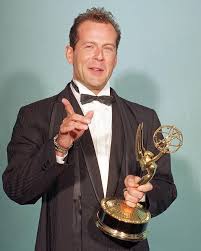
Bruce Willis Net Worth: How $250 Million Got Built Across 40 Years of Action Cinema, One Idaho Ranch, and a Family That Has Closed Around Him
The Before: A Military Brat Born in West Germany
The Family That Started in Idar-Oberstein
Walter Bruce Willis was born on a US military base in Idar-Oberstein, West Germany. The year was March 1955. Specifically, his father David was an American soldier stationed there. Likewise, his mother Marlene was a German bank teller from the local town. The family relocated to Carneys Point, New Jersey, when Bruce was two. David had just discharged from the Army. Specifically, David Willis went to work as a welder at the local DuPont plant. Marlene took factory jobs in the same industrial corridor. The Willises were working-class in a particular New Jersey way. That register produced a generation of American actors who never quite shed the regional grit of their early years.
The Stutter and the Stage That Cured It
Importantly, Bruce developed a serious stutter as a child. Subsequently, the condition followed him into high school. He reportedly struggled to speak in class without significant difficulty. Notably, he discovered that the stutter disappeared on stage. Specifically, the discovery during a high school play set the trajectory of his subsequent life. He went on to study drama at Montclair State University in New Jersey. Subsequently, he dropped out and moved to Manhattan in 1977 to pursue acting full-time. Furthermore, he tended bar at a Hell’s Kitchen establishment called Kamikaze for several years while auditioning. The bartending years are well-documented across subsequent profiles. Specifically, they gave him the working-class rhythm and improvisational dialogue that would define his on-screen persona for the next four decades.
The Pivot Moment: Moonlighting and the Casting That Almost Did Not Happen
The 1985 Television Role That Built the Profile
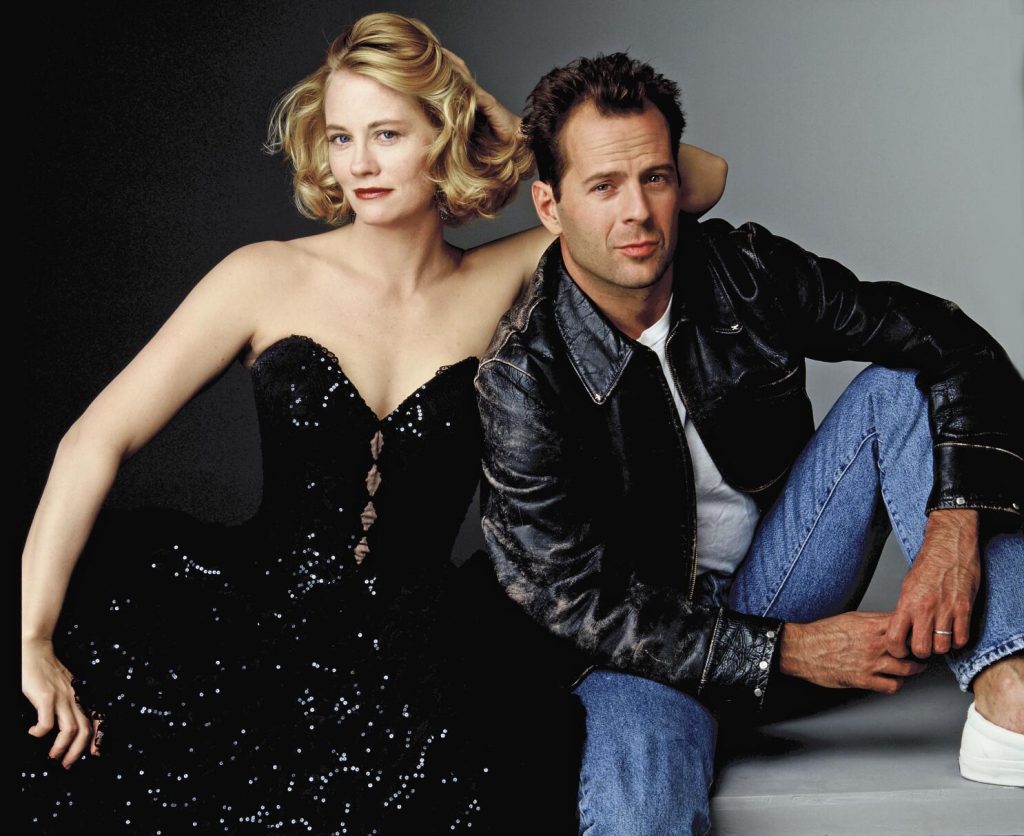
In 1985, ABC cast Willis as David Addison in the comedy-mystery series Moonlighting. He starred opposite Cybill Shepherd. The show became one of the most-discussed network productions of the late 1980s. Subsequently, Willis won a Primetime Emmy and a Golden Globe across his five-season run. Specifically, the show paid him approximately $50,000 per episode by its peak, which was significant network-television money for the era. Importantly, the show also gave him exactly the brand profile that Jessica Alba’s Dark Angel would later give her. The profile was recognizable, charismatic, and locked into a register that the industry assumed would define his ceiling.
Die Hard and the Casting Hollywood Initially Resisted
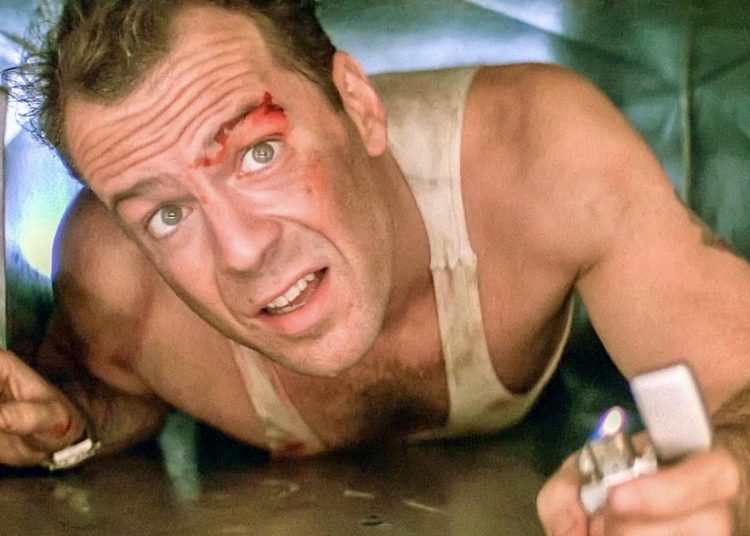
In 1987, 20th Century Fox optioned Die Hard. The film adapted Roderick Thorp’s novel Nothing Lasts Forever. The studio’s initial casting list included several stars. Frank Sinatra held the rights from a prior adaptation. Arnold Schwarzenegger, Sylvester Stallone, Burt Reynolds, and Richard Gere were also considered. Willis was reportedly fifth or sixth on the list. Notably, he was a television actor. Furthermore, he was not the kind of physical specimen action films had relied on through the 1980s. Subsequently, production hired him after the others passed. The studio then kept his image off the initial promotional materials. Original posters featured Nakatomi Plaza alone. Subsequently, the film grossed $140 million worldwide on a $28 million budget. It also established the template for the modern action film and made Willis a movie star at thirty-three.
The Climb: Pulp Fiction, the Sixth Sense, and the Salary Era
Pulp Fiction, 1994

In 1994, Quentin Tarantino cast Willis as Butch Coolidge in Pulp Fiction. Willis reportedly took a significant pay cut to do the film. He accepted around $800,000 against his then-standard $5 million action quote. The strategic decision worked. Pulp Fiction grossed $213 million on an $8.5 million budget. The film also won the Palme d’Or and reset Willis’s critical standing. He was no longer a one-note action lead. He was an actor who could anchor prestige material when the script demanded it.
The Sixth Sense and the $100M Participation Year

Subsequently, in 1999 M. Night Shyamalan cast Willis as Dr. Malcolm Crowe in The Sixth Sense. Importantly, Willis reportedly took a $14 million salary plus 17% of gross participation. The backend was unusually large for the era. The film grossed $672 million worldwide on a $40 million budget. Specifically, Willis’s participation alone reportedly netted him approximately $100 million from this single film, per Variety’s coverage of the deal structure. The Sixth Sense paycheck alone established a financial floor. The floor would protect Willis through his entire subsequent career, including the years when his project selection became significantly less discriminating.
The Direct-to-Streaming Era of the 2010s
Between 2012 and 2022, Willis appeared in approximately 25 lower-budget action films. Most released directly to streaming or limited theatrical windows. The films, often produced by Emmett/Furla and Lionsgate, paid Willis seven-figure fees. Each role required one to three days of shooting. Notably, the production model used Willis’s name and face to drive overseas DVD and streaming sales. His action-star recognition still translated to direct revenue in those markets. Furthermore, the model represented an evolution of placement economics. Willis was no longer the talent being placed alongside brands. He was the brand, and the small films were the placement vehicle that delivered him to international audiences.
The 2022 Retirement
In March 2022, Willis’s family announced his retirement from acting. The announcement followed an aphasia diagnosis. In February 2023, the family confirmed the diagnosis had progressed to frontotemporal dementia. The condition is degenerative and affects language, behavior, and executive function. The announcement was delivered jointly by Emma Heming Willis, his wife since 2009. Demi Moore, his ex-wife and the mother of his three eldest daughters, joined the announcement alongside his five children. Specifically, the announcement was both a private medical disclosure and a deliberate piece of public advocacy. Frontotemporal dementia is significantly less recognized than Alzheimer’s. The Willis family used the moment to direct public attention to the Association for Frontotemporal Degeneration. They also highlighted related research organizations.
The Placement Economy: Why Willis Was the Original Action-Brand-as-Placement-Vehicle
Die Hard’s Architecture
Importantly, the Die Hard franchise demonstrated something Hollywood had not previously codified at scale. Specifically, the architecture of an action film could function as a brand environment in itself. Nakatomi Plaza was, in real life, Fox Plaza in Century City. Specifically, the building was 20th Century Fox’s then-corporate headquarters. The film’s choice to set its narrative inside its own studio’s office building was a placement decision masquerading as a production-design choice. Furthermore, every visible product was a placement opportunity. Hans Gruber’s team carries a Coca-Cola bottle. Gruber wears a Rolex Submariner. Throughout the office park sit Pepsi machines and Marlboro cigarettes. All were unpaid or barter-paid placements that nonetheless generated category lift. The film’s world was a corporate brand environment, and Willis was the talent moving through it.
The Inverse Placement Era
Notably, Willis’s late-career model represents one of the more instructive inverse-placement case studies in modern entertainment. Throughout the 2010s, Lionsgate and Emmett/Furla productions used Willis’s image and name as the placement asset. The surrounding film acted as a delivery vehicle. The films paid Willis seven figures for two-to-three days of shooting. They then sold to overseas markets. The Willis brand still drove DVD and streaming revenue independent of critical reception. Specifically, the model demonstrated that a sufficiently durable celebrity brand can monetize itself through volume rather than through quality. The economics of that monetization can sustain a leading actor for a full decade past the point when major studios have stopped casting him.
The Hailey-To-Brentwood Chapter: The Idaho Ranch and the Family That Closed Around Him
Hailey, Idaho, 1995 Through 2017
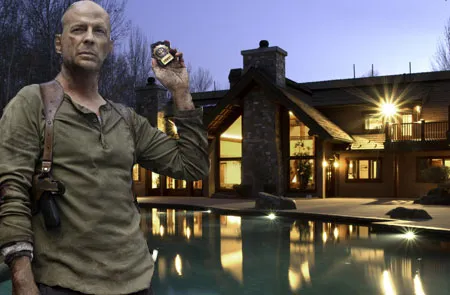
In 1995, Willis purchased a substantial ranch property near Hailey, Idaho. The small town sits in Blaine County, roughly two hours from Sun Valley. The acquisition was an early move into Idaho real estate by a major Hollywood actor. Willis subsequently expanded his Hailey holdings to include multiple properties around the town center. Holdings included the Mint nightclub, several restaurants, and the historic Liberty Theater. Importantly, Willis became one of Hailey’s most active local investors. He financed community renovations and supported local businesses through holdings he managed personally. Furthermore, he split his time between Hailey and Los Angeles for over two decades. In 2017, Willis sold his primary Hailey ranch for approximately $5.5 million. He divested from much of the Idaho footprint while retaining other interests in the area.
Brentwood and the Family Architecture
Willis’s primary residence has been a Brentwood, Los Angeles, family home. He has shared the home with Emma Heming Willis since their 2009 marriage. The Brentwood property houses Bruce, Emma, and their two daughters, Mabel (born 2012) and Evelyn (born 2014). Specifically, the home has become the operational center of his ongoing care since the 2022 retirement and 2023 diagnosis. Emma Heming Willis has emerged as his primary public advocate and caregiver. Demi Moore and the three daughters from her earlier marriage to Willis (Rumer, Scout, and Tallulah) maintain regular involvement in his daily life. Notably, the public family architecture is unusually integrated. Most celebrity blended families do not function this way. Demi Moore has spoken openly about co-managing care with Emma. The five daughters have publicly described their stepmother as a partner. None has framed her as a successor figure.
The Family Public Voice
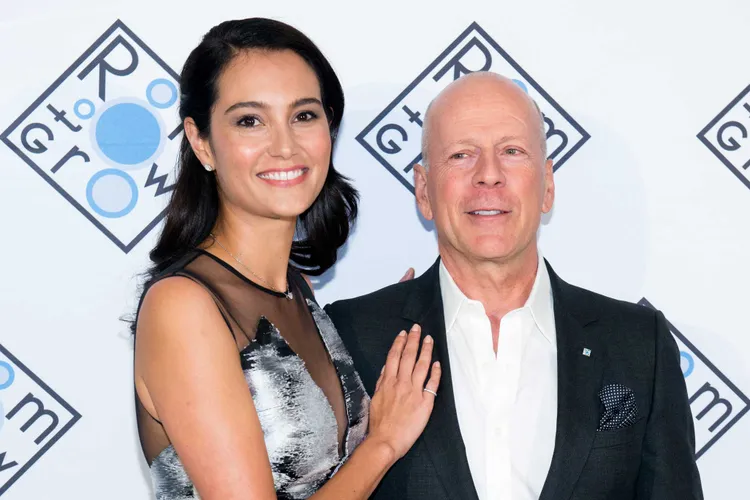
Since the 2023 announcement, Emma Heming Willis has been the primary public voice on Willis’s condition. In 2024, she published a book titled The Unexpected Journey: Finding Strength, Hope, and Yourself on the Caregiving Path. The book centers caregiving as a public-health and family-architecture concern rather than as a celebrity-disclosure narrative. Furthermore, Heming Willis has used her platform to advocate for FTD research funding. She has partnered with the Association for Frontotemporal Degeneration and adjacent research organizations. The strategic choice to convert private family circumstances into public health advocacy is itself instructive. The Willis family declined to manage the diagnosis privately the way many celebrity families would have. Instead, they have used the visibility of Willis’s prior career. The goal was awareness for an under-recognized neurodegenerative disease.
What He Built: The Net Worth Breakdown
The $250 Million Estimate
Current credible estimates place Willis’s personal net worth at approximately $250 million, per cross-referenced reporting from Forbes and other industry tracking. The figure has held remarkably stable since approximately 2010. Stability reflects both his durable backend participation income and the conservative real estate posture his family has maintained throughout his career. Specifically, the composition breaks down as follows.
The Sixth Sense participation: approximately $100 million in lifetime participation income from the 1999 deal. The figure includes ongoing residuals and home video performance. This single line item represents the largest single source of his net worth.
Die Hard franchise compensation: approximately $50 million across the five-film franchise. Compensation included escalating salaries and back-end participation on the later sequels.
Other film salary and participation: approximately $80 million across his 70-plus film career. The line includes the Tarantino-era prestige work, the Shyamalan collaborations beyond The Sixth Sense, and the Moonlighting television run.
Direct-to-streaming era earnings: approximately $20 million across 25 or so films Willis appeared in between 2012 and 2022. The fees were modest per project but added up to a meaningful supplemental income stream across the decade.
Real estate and other holdings: approximately $30 to 50 million across the Brentwood family home, the residual Idaho holdings, and various other property investments. Notably, much of the Hailey portfolio has been divested over the past decade. The Brentwood residence and remaining Idaho assets together still represent a significant component of total net worth.
The Asset Composition Lesson
The portfolio matters because it inverts the standard action-star financial model in a specific direction. Most of Willis’s 1980s-era contemporaries generated the majority of their net worth through brand endorsements and licensing deals. Schwarzenegger, Stallone, and Van Damme each followed that model. Willis ran the opposite. He concentrated his earnings in backend participation on hit films. Real estate served primarily for personal use rather than as endorsement leverage. Specifically, the architecture is durability over peak. His net worth has been more stable across forty years than most of his action-star contemporaries’ have been across half that period.
The Soft Landing: What The Willis Case Teaches Every Star Asset
Three Lessons From a Forty-Year Career
First, the participation deal is the asset. Willis’s Sixth Sense backend was the most consequential single decision in his career. The deal secured his financial position for the subsequent twenty-five years. Salaries on a film reset every project. Furthermore, participation income compounds for decades. Specifically, every emerging actor with leverage at his career stage should ask one question. Is the offered salary or the offered backend the better long-term position? The salary feels safer. The backend, when the film hits, is the asset that compounds.
Second, durability beats spike, again. Willis worked steadily for forty years. His range covered action, prestige, comedy, and direct-to-streaming categories. The career did not produce the highest single-decade earnings in his cohort. Yet the cumulative output and the cumulative net worth held more steadily across his career. Nearly none of his contemporaries achieved that stability. Furthermore, the durability gave him optionality his peers did not have. He could take the Tarantino pay cut because he could afford it. He could move into the streaming-era model because the participation income had already established his floor. The same lesson appears in every hub of this cluster. Pierce Brosnan’s Bond participation and Russell Crowe’s Australian real estate both demonstrate it. Durability is the rarest commodity in the celebrity economy.
The Family As The Final Asset
Third, the family architecture is part of the portfolio. Willis’s blended family is integrated across two marriages and five daughters. Since 2022, the family has functioned as the operational structure protecting both his dignity and his ongoing care. Most celebrity families do not survive a medical event of this magnitude with intact relationships. The Willis-Moore-Heming family is an exception. Their handling has been public throughout. Furthermore, the public framing has been deliberate. Specifically, the family architecture is itself a reflection of strategic choices made decades earlier. Those choices included how to maintain relationships through divorce, how to integrate a second marriage with respect for the first, and how to teach children to treat each other as siblings regardless of which parent they share.
The Thesis That Outlasts the Career
Willis’s case is instructive because it refocuses what celebrity wealth actually means. The salary numbers, backend participation, and real estate portfolio all matter. Yet the most valuable asset Willis built across his forty years is the family that has closed around him since the diagnosis. That asset does not appear on any net worth estimate. It does not generate ongoing cash income. Specifically, it is the asset that determines what the rest of the portfolio is for. The fortune compounds. The family is what the fortune protects. That ratio is the lesson worth carrying out of his career. No specific deal structure matters more.
Related Reading
- Hollywood’s $26 Billion Hidden Economy: How Product Placement Built Modern Stardom
- Jessica Alba Net Worth: From Sin City To $1.44B Honest Company IPO
- Mickey Rourke Net Worth: How $40M Comeback Became $10M Cautionary Tale
- Chris Evans Net Worth: How Captain America’s $110M Exit Strategy Worked
- Pierce Brosnan Net Worth: How Bond Built A $200M Brand-Asset Platform
- Russell Crowe Net Worth: How Gladiator Built A $200M Australian Cattle Empire
How To Work With Social Life Magazine
A fish does not notice the water. A reader does not notice the placement. That is the entire point. Furthermore, it is the entire opportunity for the brand founder who has just finished reading an article and is, without having fully realized it yet, about to scroll down and click one of the following five links.
Six Ways To Connect
If you are a brand, a founder, a creative director, or an in-house marketing lead who has read this far and would like to be considered for an editorial feature in Social Life Magazine’s print or digital ecosystem, the editorial team reviews brand submissions year-round. Pitch us at sociallifemagazine.com/contact.
If you are a brand with a ready-to-run campaign and would like to move faster than the traditional editorial cycle, the Paid Feature program offers three tiers of guaranteed placement across Social Life Magazine’s digital properties, with pricing starting at $975. Full details at sociallifemagazine.com/submit-a-paid-feature/.
Every piece Social Life Magazine publishes reaches an email list of 82,000 pre-qualified affluent readers. The majority summer in the Hamptons and spend the off-season in Manhattan’s core luxury zip codes. The email blast is the single most efficient distribution mechanism in the Hamptons editorial ecosystem. Inquire about placement at sociallifemagazine.com/enflyer.
Events, Print, And Independent Editorial
Polo Hamptons 2026, Social Life Magazine’s flagship event property, returns for its 17th year in July and August 2026. Platinum, Gold, and Corporate Cabana sponsorship packages are available for select categories (automotive is locked by BMW North America, real estate is at capacity, all other categories open). Demographic data, sponsor decks, and custom activation proposals available at polohamptons.com.
Social Life Magazine’s print edition, now in its 23rd year, distributes 25,000 copies per summer issue across Westhampton, Southampton, Bridgehampton, East Hampton, Sag Harbor, Amagansett, and Montauk boutiques, restaurants, and private clubs. Annual subscriptions, including fall/winter Upper East Side doorman distribution, available at sociallifemagazine.com/subscription.
If you’d like to support independent luxury editorial in the age of AI-generated content farms and private-equity-owned media conglomerates, donations to Social Life Magazine’s editorial operations are received via PayPal. Every dollar funds original reporting, photography, and the kind of writing that brands send their marketing teams to study.
Author

Written by
Recent Posts
What to Sort Early for a Wellington to Auckland Move
Why Local Skin Expertise Matters for Busy Schedules
Broadway And Tentpole: How Six Stars Built Eight-Figure Wealth Running Both Lanes
Jude Law Net Worth: $70M From Refusing To Choose Between Prestige And Tentpole
Mickey Rourke Net Worth: How A $40M Comeback Became A $10M Cautionary Tale
Categories
- Art
- Articles
- Beauty & Skincare
- Celebrities
- Celebrities|Movies
- Celebrities|The Chronicles
- Chronicles
- Entertainment|Culture
- Event Photos
- Events
- Fashion
- Fashion & Style
- Featured
- Food & Beverage
- Food, Spirits, Wine
- Hamptons
- Hamptons Celebrities
- Hamptons Celebrities
- Health
- Health & Beauty
- Lifestyle
- Luxury Lifestyle
- Movies
- Movies|Culture
- Movies|Hamptons Lifestyle
- Press
- Profiles
- Real Estate
- Technology
- The Chronicles
- Travel
- TV
- TV & Film
- Uncategorized
- Weddings