
The misconception persists that successful celebrity chefs own extensive restaurant portfolios. The reality inverts this assumption. The wealthiest chefs have shifted almost entirely from ownership to licensing, from capital deployment to brand deployment, from operational involvement to strategic oversight. They earn more by owning less.
Licensing vs. Ownership: The Fundamental Distinction
Licensing and ownership create completely different risk-reward profiles. Understanding this distinction explains strategic choices that seem counterintuitive until the economics become clear.
| Dimension | Ownership Model | Licensing Model |
|---|---|---|
| Capital required | $1-3 million per location | Zero |
| Operational involvement | Daily management responsibility | Occasional oversight and appearances |
| Downside risk | Full loss exposure if location fails | Limited to reputational association |
| Upside capture | 100% of profits (after expenses) | Fixed fees plus royalties |
| Scalability | Limited by available capital | Unlimited (brand value is the only constraint) |
| Time requirement | Consuming daily attention | Minimal ongoing involvement |
| Exit complexity | Must sell operating business | Licensing agreements can be sold or terminated |
The Asymmetry That Changes Everything
Under licensing, successful locations generate fees for the chef. Struggling locations are the partner’s problem. The chef earns regardless of individual location performance. Ownership flips this entirely: the chef absorbs all downside with no protection mechanism.
This asymmetry explains why the wealthiest celebrity chefs systematically shifted toward licensing models. They capture upside through fees and royalties while partners absorb the capital risk and operational complexity that make restaurant ownership so challenging.
Case Study: Guy Fieri’s 80+ Location Empire
Guy Fieri has his name on more than 80 restaurant locations across multiple brands: Guy’s American Kitchen and Bar, Flavortown Kitchen, Guy Fieri’s Vegas Kitchen and Bar, Chicken Guy, and others. The empire spans casino resorts, airports, cruise ships, and standalone locations.
The Partnership Structure
Fieri’s restaurants operate through licensing partnerships rather than direct ownership. Partners like Robert Earl’s Virtual Dining Concepts and various casino operators provide financing and operational management. Fieri provides brand value, menu development, and promotional support.
This structure generates income regardless of individual restaurant performance. When a location exceeds targets, Fieri collects enhanced fees. When a location struggles, the operating partner absorbs losses. The asymmetric structure protects Fieri’s wealth while maintaining his brand presence.
Ghost Kitchen Acceleration
The COVID-19 pandemic accelerated Fieri’s licensing expansion through ghost kitchens and virtual brands. Traditional restaurant opening might require $1-3 million in buildout costs. Ghost kitchen implementation might require $50,000 in equipment and menu integration.
Partners could launch Flavortown Kitchen or Chicken Guy locations within existing restaurant infrastructure, minimizing capital requirements while maximizing brand distribution. Fieri’s licensing revenue expanded dramatically without corresponding expansion of operational complexity.
Case Study: Gordon Ramsay’s Post-Bankruptcy Transformation
Gordon Ramsay’s 2010 near-bankruptcy forced fundamental reconsideration of his business model. Gordon Ramsay Holdings owed approximately £10 million to creditors. Restaurant locations were closing. The empire appeared to be collapsing under the weight of ownership-model economics.
The Strategic Shift
Rather than simply refinancing debt, Ramsay transformed how Gordon Ramsay Holdings operated. Before 2010, he typically owned significant equity in his restaurants, bearing operational risk alongside potential upside. After restructuring, most new Gordon Ramsay restaurants operate under licensing agreements.
Local operators provide capital and bear operational risk. Ramsay provides the brand, training protocols, menu consultation, and occasional appearances. He earns management fees and royalties without the downside exposure that nearly bankrupted him.
The Same Brand, Different Economics
Consumers visiting Gordon Ramsay restaurants today experience the same brand, the same quality standards, the same culinary identity. The economic structure behind the scenes differs completely. Partners invest millions in buildout and operations. Ramsay invests his brand equity and collects fees.
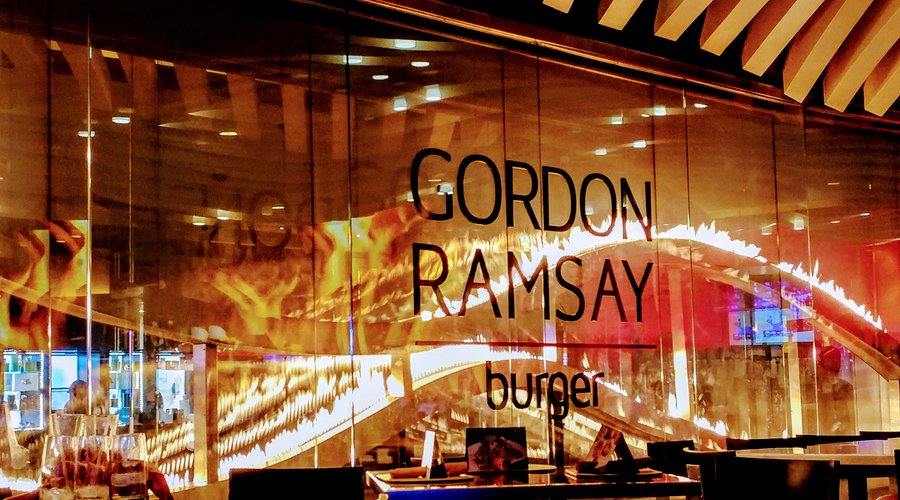
Las Vegas demonstrates this model clearly. Ramsay operates Hell’s Kitchen restaurants, Gordon Ramsay Steak, Gordon Ramsay Burger, and Gordon Ramsay Fish & Chips across multiple Strip properties. Casino operators like Caesars and MGM provide capital and handle operations. Ramsay provides brand value that attracts their target customers.
Case Study: Wolfgang Puck’s High-Low Strategy
Wolfgang Puck pioneered the licensing model before most celebrity chefs understood its advantages. His portfolio combines a small number of owned fine dining restaurants with 100+ Express locations operating through licensing.
The Express Model
Wolfgang Puck Express locations operate in airports, stadiums, and casual dining environments through licensing arrangements. Partners provide capital, handle concession negotiations, and manage daily operations. Puck provides brand authentication and initial menu development.
The Express revenue likely exceeds fine dining profits by substantial margins. Each licensed location generates fees without requiring Puck’s capital or daily attention. The model scales geographically without scaling operational complexity.
Fine Dining as Credential
Puck maintains owned fine dining restaurants like Spago and CUT as brand credentialing rather than primary wealth engines. The Michelin-starred properties authenticate the expertise that makes Express licensing valuable. They’re marketing investments that enable the licensing business to command premium terms.
Case Study: Rachael Ray’s Complete Avoidance
Rachael Ray built a $100 million fortune without opening restaurants at all. She understood that licensing generates wealth without operational complexity, and she applied this understanding comprehensively.
The Licensing Portfolio
Ray’s licensing arrangements span cookware (Meyer Corporation partnership), pet food (Nutrish), and various consumer products. Each arrangement follows the same structure: partners develop, produce, and distribute products bearing Ray’s name. She provides brand value and promotional support. Revenue flows as royalties.
The Nutrish deal particularly demonstrates sophisticated licensing architecture. Ray licensed her name to a pet food company, collected royalties during operations ($15 million annually), and received additional payment when Smucker’s acquired the parent company for $1.9 billion. The same asset generated income twice: during operations and at exit.
The Strategic Absence of Restaurants
Ray’s decision to avoid restaurant ownership wasn’t limitation. It was strategy. She recognized that her brand value could generate licensing income without the capital requirements, operational complexity, and risk exposure that restaurant ownership entails.
Her net worth ($100 million) exceeds many celebrity chefs who operate extensive restaurant portfolios. The absence of restaurants protected her from the failures that damaged competitors while licensing generated comparable wealth through superior economics.
Why Licensing Requires Brand Equity First
Licensing arrangements depend on established brand value that partners will pay to access. Unknown chefs cannot license their names because their names lack commercial value. The licensing option only becomes available after brand equity accumulates through other means.
The Credentialing Prerequisite
Celebrity chefs typically build licensing-worthy brand equity through some combination of:
- Restaurant acclaim: Michelin stars, James Beard awards, critical recognition
- Television exposure: Successful shows that create audience recognition
- Media presence: Cookbooks, appearances, social media following
- Distinctive identity: Recognizable personality, catchphrases, visual brand
Gordon Ramsay couldn’t have licensed his name before Hell’s Kitchen made him a household name. Guy Fieri couldn’t have commanded licensing fees before Diners, Drive-Ins and Dives established his brand. The licensing opportunity emerges from prior brand building.
The Transition Timing
Successful chefs recognize when brand equity justifies shifting from ownership to licensing. This transition typically happens after:
- Television success establishes broad audience recognition
- Initial restaurant ownership demonstrates operational credibility
- Brand identity becomes distinctive and protectable
- Financial or operational challenges clarify the limitations of ownership
Ramsay’s transition came after 2010’s near-bankruptcy. Fieri’s licensing expansion accelerated after his $80 million contract demonstrated his brand’s market value. The triggering events vary, but the pattern holds.
Casino-Resort Partnerships: The Ideal Licensing Structure
Casino resorts represent ideal licensing partners for celebrity chefs. The economics favor both parties in ways that standard restaurant licensing cannot match.
Why Casinos Work
Guaranteed foot traffic: Casino hotels generate millions of annual visitors regardless of restaurant quality. The audience exists before the restaurant opens.
Corporate parents with deep pockets: Casino operators like MGM, Caesars, and Wynn have capital to invest in premium restaurant buildouts and absorb losses during establishment periods.
Premium pricing tolerance: Casino guests expect premium pricing and accept it as part of the entertainment experience. Margins can exceed standard restaurant environments.
Operational expertise: Casino operators run hundreds of food and beverage outlets. They understand hospitality operations at scale in ways individual restaurateurs cannot.
The Las Vegas Example
Las Vegas demonstrates casino-chef partnerships at scale. Gordon Ramsay operates multiple concepts across Strip properties. Wolfgang Puck has flagship locations at Bellagio and other resorts. Guy Fieri operates at casino locations. Bobby Flay has Vegas presence.
In each case, the casino provides capital, handles operations, and integrates the restaurant into broader property strategy. The chef provides brand value that attracts visitors and justifies premium positioning. The licensing structure protects chefs from operational risk while capturing upside through fees.
The Warren Buffett Rule Applied
Warren Buffett famously advised: earn while you sleep. Ownership requires presence. Licensing generates income regardless of where the chef is or what they’re doing.
Time Arbitrage
Celebrity chefs face severe time constraints. Television production demands weeks of filming. Media appearances require travel. Cookbook development consumes months. Licensing generates income without competing for this limited time.
A chef who owns 20 restaurants must somehow oversee 20 operational environments. A chef who licenses to 80 locations collects fees from an administrator who handles the relationships. The time economics differ fundamentally.
Capital Arbitrage
Restaurant opening requires $1-3 million per location. A chef expanding through ownership must raise or risk that capital repeatedly. A chef expanding through licensing deploys zero capital while partners bear the investment burden.
This capital arbitrage enables faster growth and eliminates the possibility of total loss from operational failures. Licensed locations that fail lose partner capital, not chef capital.
The Patterns: What Licensing Economics Teach
Analyzing licensing strategies across celebrity chef careers reveals consistent patterns.
The wealthiest chefs systematically shifted from ownership to licensing. This isn’t coincidence. The economic structure generates superior risk-adjusted returns once brand equity justifies licensing fees.
Licensing requires established brand equity first. You must be famous before you can license. The credentialing phase cannot be skipped.
The transition often happens after financial crisis clarifies priorities. Ramsay’s 2010 restructuring, Oliver’s 2019 bankruptcy, and various other inflection points forced reconsideration of ownership models.
Casino-resort partnerships represent ideal licensing structures. The economics favor celebrity chefs more than any other hospitality environment.
Time and capital arbitrage compound over careers. Chefs who transition to licensing early have more years to accumulate licensing income and more capital preserved from operational risks.
The Playbook: Applying Licensing Principles
For Social Life Magazine readers building personal brands in hospitality or related industries, licensing principles offer applicable guidance.
Build brand equity before pursuing licensing. The licensing opportunity requires brand value worth licensing. Invest in credentialing and visibility before expecting licensing income.
Structure deals to capture asymmetric upside. Licensing arrangements should protect against downside while preserving upside participation. Fee structures, royalty rates, and performance bonuses all matter.
Consider casino-resort and institutional partners. Partners with capital and operational expertise reduce risk and enable scale that individual partnerships cannot achieve.
Recognize when transition makes sense. The optimal timing for shifting from ownership to licensing depends on brand equity levels, available opportunities, and personal risk tolerance.
Celebrity Chef Licensing: Final Assessment
The richest celebrity chefs stopped opening restaurants in the traditional ownership sense because licensing economics generate superior returns with inferior risk. Guy Fieri’s 80+ licensed locations generate more income than equivalent owned locations could while requiring zero capital and minimal operational involvement.
Gordon Ramsay’s post-2010 transformation demonstrated how crisis can clarify strategy. Wolfgang Puck’s Express empire showed how licensing scales while fine dining credentials. Rachael Ray’s complete avoidance of restaurants proved that licensing alone can build nine-figure wealth.
The pattern applies beyond celebrity chefs. Anyone with licensable brand equity should evaluate whether ownership or licensing better serves their wealth-building objectives. The mathematics favor licensing once brand value justifies the arrangement. The richest chefs figured this out. Their net worth reflects the insight.
Related Articles
- Why Restaurant Ownership Rarely Creates Chef Wealth
- The Role of Brand Sales in Celebrity Chef Fortunes
- Gordon Ramsay Net Worth 2025: How He Built $220 Million
- Celebrity Chef Net Worth Rankings 2025
For coverage inquiries, brand partnerships, and advertising opportunities, contact Social Life Magazine. Experience culinary excellence at Hamptons’ premier lifestyle events: Polo Hamptons.
Author
Written by
Recent Posts

Midsommar A24 Cast Net Worth — The Daylight Horror That Turned Grief Into a Career Launchpad
ZOI NOMAD & TEN11 LOUNGE MARK ONE YEAR
Room A24 Cast Net Worth — The $6 Million Captivity Drama That Set Brie Larson Free

The Witch A24 Cast Net Worth — A $3.5 Million Puritan Nightmare That Created a Queen and a King
A24 Genre Stars Net Worth — The Terrifying Fortunes Behind Horror, Sci-Fi, and Oscar Gold
Categories
- Art
- Articles
- Beauty & Skincare
- Celebrities
- Celebrities|Movies
- Celebrities|The Chronicles
- Chronicles
- Entertainment|Culture
- Event Photos
- Events
- Fashion
- Fashion & Style
- Featured
- Food & Beverage
- Food, Spirits, Wine
- Hamptons
- Hamptons Celebrities
- Hamptons Celebrities|Celebrities|The Chronicles
- Health
- Health & Beauty
- Lifestyle
- Luxury Lifestyle
- Movies
- Movies|Culture
- Movies|Hamptons Lifestyle
- Press
- Profiles
- Real Estate
- Technology
- The Chronicles
- Travel
- Uncategorized
- Weddings