
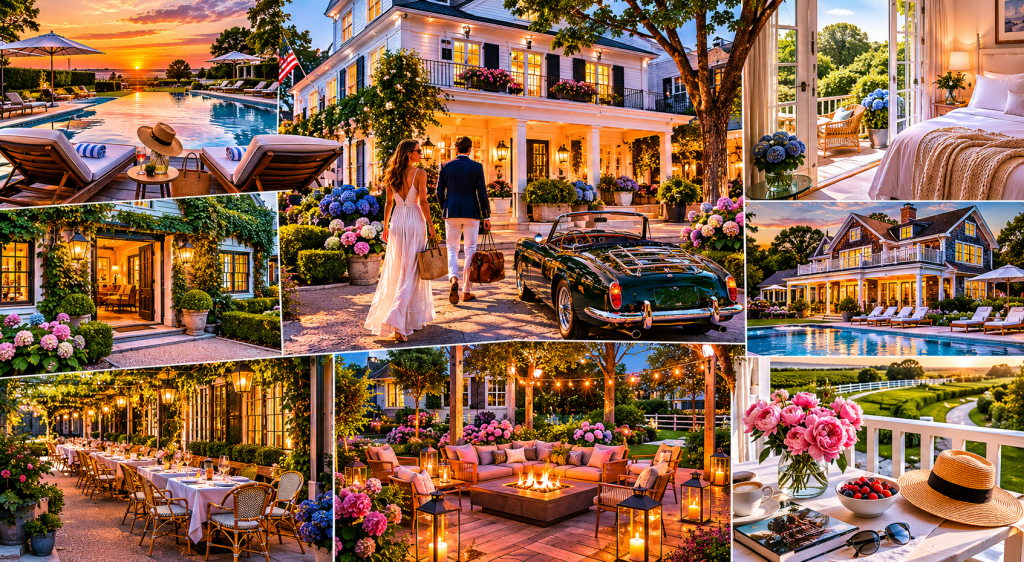
The Village With Fewer Hotel Rooms Than a Holiday Inn Express
Here is the fact that tells you everything you need to know about Bridgehampton hotels before you know anything else: a village that hosts 50,000 spectators at the Hampton Classic, 900 guests per date at Polo Hamptons, and over $1 billion in annual real estate transactions contains exactly one luxury hotel and one bed and breakfast. Two properties. Fewer rooms than a mid-range airport Marriott. The median home price exceeds $3 million. Adjacent zip code is the most expensive in New York State. Overnight accommodation infrastructure: approximately 30 bookable rooms.
This scarcity is not an oversight. It is, if you pay attention to how Bridgehampton operates (and at this point in the dossier you should be paying close attention), a form of architecture. Hotel absence preserves the residential character that makes the village valuable. Visitors who cannot book a room must rent a house. Renting requires committing for weeks rather than nights. Committing for weeks transforms a tourist into something closer to a temporary resident. Bridgehampton tolerates this category, even welcomes it. Weekend hotel guests (arrive Friday, consume Saturday, vanish Sunday, leaving nothing behind except a Yelp review) do not earn the same welcome.
The Absence as Immigration Policy
Put differently: the hotel deficit functions as Bridgehampton’s immigration policy. Bourdieu would have appreciated this observation, though he would have said it with more jargon and less rosé. Southampton gates access through private clubs. Sag Harbor gates access through cultural fluency (you must know which bookstore to visit, which theater to attend, which conversation to have at the marina). Bridgehampton gates access through duration. You cannot visit Bridgehampton for a night. You can only stay for a season. The two properties that do exist operate by the same principle: they reward people who return, not people who sample.
Topping Rose House: The Only Hotel That Matters
1 Bridgehampton-Sag Harbor Turnpike. 22 rooms. Open year-round. Jean-Georges restaurant. Rates from approximately $500 per night in summer.
Judge Abraham Topping Rose built a Greek Revival mansion on this site in 1842. Foundation: an 18th-century tavern inherited from his father, a Revolutionary War surgeon. Every significant building in the Hamptons traces its lineage to someone who fought the British or fed someone who did. For most of the 20th century, the building operated as the Bull’s Head Inn. Then came the conversion that defines Bridgehampton’s relationship with its own past: Bill Campbell and Simon Critchell acquired the property in 2011. Tom Colicchio opened the restaurant in 2012. Hotel opened 2013. Colicchio departed 2015. Jean-Georges Vongerichten arrived 2016. The Champagne Studio and Poolside Studio debuted in 2025. The fourteenth summer season begins in 2026.
What the Room Rate Actually Buys
Twenty-two rooms, suites, and cottages. Frette linens. This is the brand that luxury hotels deploy when they want guests to notice without being told to notice. Complimentary Lexus house vehicles. Sounds absurd until you realize that the nearest beach requires a car. Nearest restaurant worth walking to: Bobby Van’s, approximately 400 yards away. iPads in every room. Flat screens. Mini bars. A spa, a heated outdoor pool, a fitness center. Complimentary shuttle to the beach with private beach passes included.
Jean-Georges and the One-Acre Farm
The restaurant is Jean-Georges at Topping Rose House, run by Executive Chef Ryan Murphy with Michelin-recognized precision. A one-acre farm behind the building supplies ingredients. The kitchen calls them “locally sourced.” More honestly: “walking outside to pick what goes on the plate.” Breakfast, lunch, and dinner served daily. Its historic barn hosts private events (weddings, corporate retreats, the kind of dinner where someone gives a speech that changes the trajectory of an acquisition).
The Boerum Hill couple books for a weekend in May, when rates soften and the village belongs to year-round residents rather than the summer population. Breakfast happens on the terrace. Lexus to Mecox Beach by noon. Dinner at Jean-Georges on Saturday and Almond on Sunday. By checkout, a specific calculus has begun: the room cost $1,200 for two nights. A month’s rental in July would be $35,000. A house on Hayground Road would be $3.8 million. The question is not whether they can afford these numbers. The question is which number represents the correct level of commitment to a village they just fell in love with over a farm-to-table omelet. Topping Rose House does not sell rooms. It sells the experience that precedes a real estate decision.
Who Books and Why
Topping Rose House attracts three distinct populations, each using the hotel for a purpose the hotel understands but does not advertise.
Population one: the reconnaissance couple. They are considering the Hamptons and have not yet committed to a village. A weekend at Topping Rose positions them in the geographic center of the South Fork, equidistant from Southampton and East Hampton, with Sagaponack five minutes south and Sag Harbor five minutes north. If they like what they see, they rent next summer. If they rent, they buy the summer after.
Population two: the event attendee. Polo Hamptons in July and the Hampton Classic in August generate demand that overwhelms the hotel’s 22-room capacity months in advance. Booking Topping Rose for Classic week requires planning that begins in winter. Securing a room during Grand Prix Sunday weekend requires either returning-guest status or organizational foresight that correlates with financial success. Topping Rose’s management understands this correlation. They exploit it without comment.
Population three: the UES philanthropist. She books the barn for her daughter’s rehearsal dinner. Discovers the hotel is charming. Begins returning every October for a long weekend with her husband. October in Bridgehampton is a secret that Topping Rose keeps on behalf of its regulars. The crowds have gone. The light turns golden. Wolffer still pours. Almond still seats. The village exhales.
Bridgehampton Inn: The Other Door
2266 Montauk Highway. Bed and breakfast. French-American restaurant. Year-round. Rates from approximately $300 per night.
If Topping Rose House is the luxury hotel that converts weekends into real estate decisions, the Bridgehampton Inn is the bed and breakfast that converts strangers into regulars. The building is historic. Rooms are quaint. In Hamptons real estate, that word usually means “small.” Here it means deliberately intimate: fireplaces, soundproofed walls, premium bedding chosen by someone who thinks about thread count. Breakfast is included and universally praised. The garden is lush. The terrace is quiet. Victor and Serene are the staff members guests name in reviews. When guests name individual employees, service has crossed from professional into personal. Multiple testimonials confirm they go “above and beyond.”
The Restaurant Within the Inn
Sybille van Kempen’s restaurant serves French-American cuisine that reviewers describe (without irony, without qualification) as “the best in the Hamptons.” The crab cake, apparently, contains no bread crumbs masquerading as crabmeat. The halibut preparation changes with the catch. Dinner by the fireplace in winter is the experience that Bridgehampton year-round residents protect from public attention the way other villages protect beach access.
The Inn sits four minutes by car from Wolffer Estate Vineyard. A short walk from Bridgehampton’s Main Street galleries. Adjacent to the Bridgehampton Museum. Walking distance from Dia Bridgehampton. Positioned, in other words, at the exact intersection of everything this village does well: wine, art, history, and food prepared by someone who considers cooking a form of hospitality rather than a form of commerce.
The Upper West Side psychoanalyst and her husband have been staying at the Bridgehampton Inn for nine Octobers. They arrive on a Thursday. They leave on a Sunday. Somewhere in between, she orders whatever the fish is and he orders the steak and they sit in the garden and discuss nothing at all. The Inn does not require them to be interesting. It does not require them to network, to perform, to Instagram. It requires them to arrive, sleep, eat, and return. This is hospitality in its most basic and most radical form: a door that opens every time you come back, without asking why you left.
Rentals: Where Most People Actually Stay
Given that Bridgehampton hotels offer approximately 30 rooms between them, the vast majority of visitors stay in rental houses. The rental market operates on a scale and at a price point that would qualify as satirical if it were not entirely real.
The Price Architecture of a Rental Summer
A modest three-bedroom north of the highway rents for $25,000 to $40,000 per month in July or August. A four-to-six-bedroom south of the highway with pool and reserve views runs $50,000 to $100,000 per month. Oceanfront estates have listed at $700,000 for two weeks. Full-season rentals (Memorial Day through Labor Day) for estate-level properties start around $200,000 and climb into numbers that brokers share only in person, never in print.
Share houses exist. The Murray Hill PE associate and seven MBA classmates split a house on Scuttle Hole Road. Cost: $5,000 per person for July. He sleeps in a room the size of his Manhattan closet. He does not care. What he is purchasing is not a room. It is access to the calendar: Polo Hamptons, the wine trail, Bobby Van’s on Saturday. Social infrastructure that comes with a Bridgehampton address, however temporary.
Rental as Audition
The rental-to-purchase pipeline is real and brokers depend on it. Families who rent for one or two summers learn the rhythms. Which restaurant on which night. Best beach at which hour. Fastest road to avoid Montauk Highway at 5 p.m. on Friday. Renting teaches you whether you are north-of-highway or south. Almond or Bobby Van’s. Wolffer or Channing Daughters. From Manhattan, these distinctions sound trivial. From inside a rental, they feel like identity.
The Carroll Gardens couple who rented on Parsonage Lane for $45,000 in July 2024 bought on Hayground Road for $3.8 million in 2025. Renting taught them that north of the highway suited their lives better than the oceanfront. Walking to Wolffer mattered more than walking to the beach. Real estate decisions here are not made from listing photos. Rental summers reveal it, slowly and then all at once: which version of the village matches the version of yourself you are building.
The Nearby Alternatives: When Bridgehampton Is Full
Sag Harbor: Five Minutes North
The Sag Harbor Inn, Baron’s Cove, and the American Hotel offer rooms five minutes from Bridgehampton’s Main Street. Sag Harbor’s hotel inventory dwarfs Bridgehampton’s (which requires no particular achievement given that Bridgehampton’s inventory is essentially two properties). Staying in Sag Harbor and driving to Bridgehampton events is a viable strategy, particularly during Polo Hamptons and Hampton Classic week, when Bridgehampton’s two properties sell out months in advance.
Southampton: Ten Minutes West
Southampton offers more hotel rooms across properties like the Southampton Inn, the 1708 House, and various seasonal lodgings. The trade-off is directional: Southampton puts you closer to Cooper’s Beach and the Parrish Art Museum but further from the equestrian corridor and Sagaponack. For visitors whose primary interest is Polo Hamptons or the Hampton Classic, Bridgehampton or Sag Harbor lodging is the better geographic play.
The Decision: Hotel, Inn, or House
Book Topping Rose House if you are visiting Bridgehampton for the first time and need the full-service experience that frames the village correctly. Jean-Georges for breakfast, Lexus to the beach. Attending an event and need a room within walking distance of Main Street. If you are the reconnaissance couple who will rent next summer and buy the summer after that.
Book the Bridgehampton Inn if you have been here before and you know what you want, which is a fireplace, a French-American dinner, a garden, and a staff that remembers your name. For the kind of person who reads the word “quaint” without flinching. October means more to you than July.
Rent a house if you are staying for a week or more. If you want to cook, to host, to learn the village from the inside rather than from a hotel lobby. Be prepared: the rental will change your plans permanently. Nobody rents here twice without calculating what it costs to stop renting.
Where the Conversation Continues
Social Life Magazine has covered Hamptons hospitality for 23 years. Five summer issues, 25,000 copies each, distributed to the hotels, inns, restaurants, and beach clubs where guests become residents and visitors become buyers.
If your brand serves the Bridgehampton hospitality audience (luxury travel, interior design, home goods, concierge services, or property management), editorial positioning in Social Life Magazine reaches the people who book the rooms, rent the houses, and eventually buy the village. Submit a Paid Feature here.
Polo Hamptons 2026 runs July 18 and July 25 at 900 Lumber Lane. Book your room first. Then book your cabana. In Bridgehampton, accommodation scarcity means the people who plan earliest arrive first. Cabanas and sponsorship packages at polohamptons.com.
Subscribe to Social Life Magazine here.
One hotel. One inn. Thirty rooms. A village generating a billion in real estate. Hosting 50,000 equestrian spectators. Still without enough Bridgehampton hotels to fill a single floor of a Midtown tower. This is not a failure of development. It is a philosophy of place. Bridgehampton does not want you to visit. It wants you to stay. And in this village, staying means something longer than a checkout time.
Related Reading
- Bridgehampton: The Village That Turned Farmland Into a Stage
- Best Restaurants in Bridgehampton 2026
- Bridgehampton Real Estate: The Farm-to-Fortune Market
- Sagaponack: The Most Expensive Zip Code in America
- Polo Hamptons 2026
- Hampton Classic 2026
- Bridgehampton Wineries
- 72 Hours in Bridgehampton
- Sag Harbor Village Dossier
- Southampton Village Dossier
Author

Written by
Recent Posts

How to Choose Useful Tech Gifts for Employees and Clients in 2026
The Garage Question: Which Car Goes South for the Season?
VandS Clinic Review Treatment: How Seoul Injectable and Laser Options Compare for US Patients
Before Buying a View Home: What a Sloped Lot Means for the Purchase

Powerful Strategies to Stay Ahead in a Fast-Moving Real Estate Market
Categories
- Art
- Articles
- Business of Luxury
- Celebrities
- Culture
- Entertainment
- Events
- Faces of Summer 2026
- Fashion
- Fashion & Style
- Featured
- Finance
- Food, Spirits, Wine
- Hamptons
- Hamptons Celebrities
- Health
- Health & Beauty
- Lifestyle
- Luxury Lifestyle
- Press
- Profiles
- Real Estate
- Technology
- The Chronicles
- Travel
- Uncategorized
- Weddings