
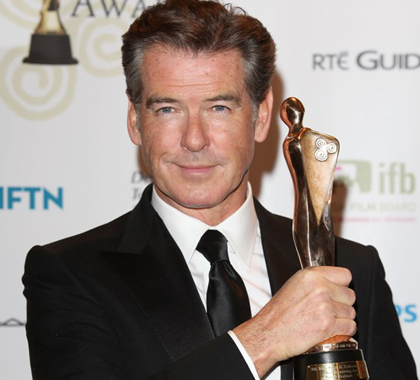
Pierce Brosnan Net Worth: The $200M Fortune Built on the Greatest Product Placement Run in Cinema History
The Before: A Boy From Navan With Nothing to Place
A Childhood Shaped by Absence
Pierce Brendan Brosnan was born in Navan, County Meath, in May 1953. His father, Thomas, left when Pierce was an infant. Likewise, his mother May departed for London a few years later to train as a nurse. Subsequently, young Pierce was raised by his grandparents, then an aunt, then a series of boarding situations that amounted to a childhood with no fixed address.
By age eleven, he had joined his mother in London. Before that, he had already attended four different schools across Ireland. The accent softened. The identity fractured. Furthermore, the loneliness of those years would, decades later, surface in nearly every role he played as a man whose composure is slightly too practiced to be natural.
Circus Training and the Stage Door
At sixteen, Brosnan left school to work as a commercial illustrator at a South London ad agency. That job lasted three years. Then came an unexpected turn: he took a course in fire-eating at a local circus school, which led to stage work, which led to the Drama Centre London.
He trained for three years on a full scholarship. Meanwhile, he scraped together rent by working as a cab driver and a stagehand. The 1970s London theater scene was brutal and cliquish. Yet Brosnan, who would never fit cleanly into any class or camp, found his foothold in it anyway. In 1976, he made his professional stage debut. By 1980, he had landed the role of Rory Manion in the BBC miniseries The Manions of America, which brought him to American television and, consequently, to Los Angeles.
The Irish boy with no stable address was about to walk through a door that would put his face on more cars, watches, and magazine covers than any actor of his generation.
The Pivot Moment: Remington Steele and the Bond That Almost Wasn’t
The Show That Made Him Recognizable
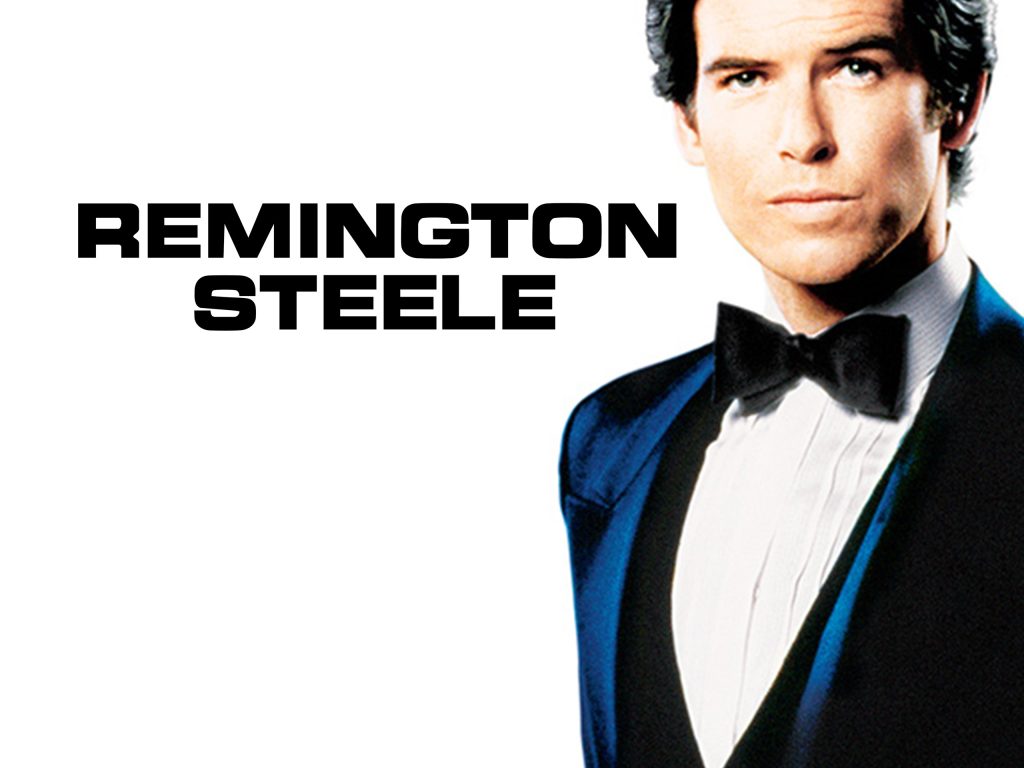
In 1982, NBC cast Brosnan as Remington Steele, the charming con man fronting a Los Angeles detective agency. The show ran for five seasons. More importantly, it trained Brosnan in exactly the performance register that Bond would later require: a man of precise diction and calibrated charisma whose real thoughts are always slightly behind a controlled expression.
Remington Steele ran from 1982 to 1987. By its final season, Brosnan had already been tapped by Cubby Broccoli to succeed Roger Moore as James Bond in The Living Daylights. Specifically, the contracts were drafted. The press was ready. Then NBC, reading the Bond announcement as a threat to their series, exercised a rarely-invoked clause in Brosnan’s contract and refused to release him. Timothy Dalton took the role instead.
The Eight-Year Wait
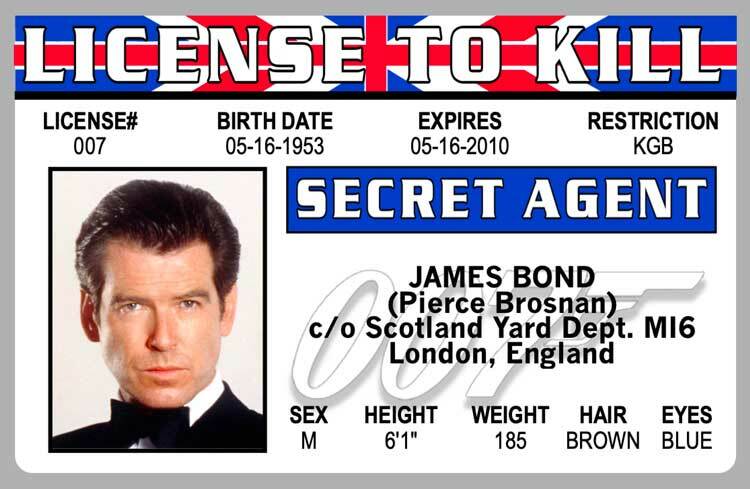
The timing could not have been worse. The Living Daylights and Licence to Kill underperformed. Meanwhile, MGM and Eon Productions entered a legal standoff that froze the Bond franchise for six years. Brosnan, in the interim, worked steadily but not spectacularly through films like Mrs. Doubtfire, The Lawnmower Man, and the moderately successful Mister Johnson.
By the time the franchise resumed in 1994, Brosnan was 41 years old. He had watched his dream role go to another man, fade, and almost die. Yet the eight-year delay, as it turned out, had given the industry time to do something it had never done before: restructure the economics of a Bond film around brand integration at a scale the franchise had never attempted. The placement economy that would define the next thirty years of Hollywood was about to debut, and Brosnan would be its leading man.
The Climb: How Four Bond Films Became a Placement Empire
GoldenEye (1995): The Template
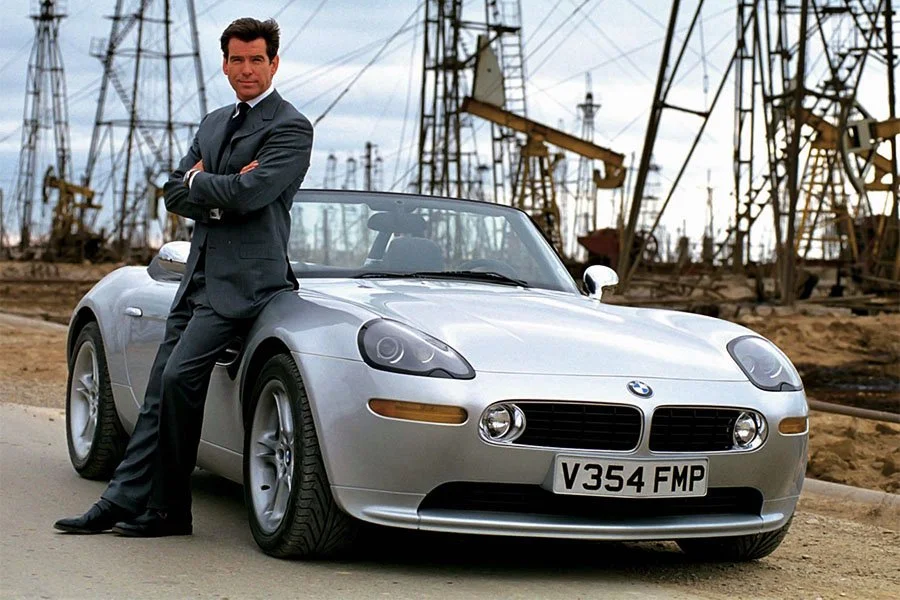 When GoldenEye released in November 1995, it marked Bond’s first appearance in six years. More significantly, it marked Bond’s first appearance in the post-Cold War era, which meant the franchise needed to prove it could still matter commercially. The answer, it turned out, was placement at a scale no studio had previously engineered.
BMW paid a reported $3 million in direct integration fees. On top of that, BMW committed $75 million in co-marketing, according to Variety’s post-release analysis. The Z3 appeared in roughly 90 seconds of screen time. Subsequently, that 90 seconds drove 9,000 pre-sold units before the car had reached American dealers, per Wall Street Journal reporting. At an average price of $28,000 per unit, those pre-sales alone generated $252 million in revenue.
Aston Martin, meanwhile, provided the DB5 on pure barter. Two cars went on loan to production. Zero dollars changed hands. In return, Aston received an estimated $6 million to $8 million in equivalent media value over the following six months, per subsequent Hollywood Branded analysis. Notably, the brand posted a 40% sales lift the following year.
Omega signed a cash placement deal for the Seamaster, reportedly in the six figures. That deal relaunched a dormant luxury sport watch category. Today, the Omega-Bond partnership drives a product line generating more than $500 million annually, per Hodinkee’s retrospective accounting.
Tomorrow Never Dies (1997): Scaling the Model
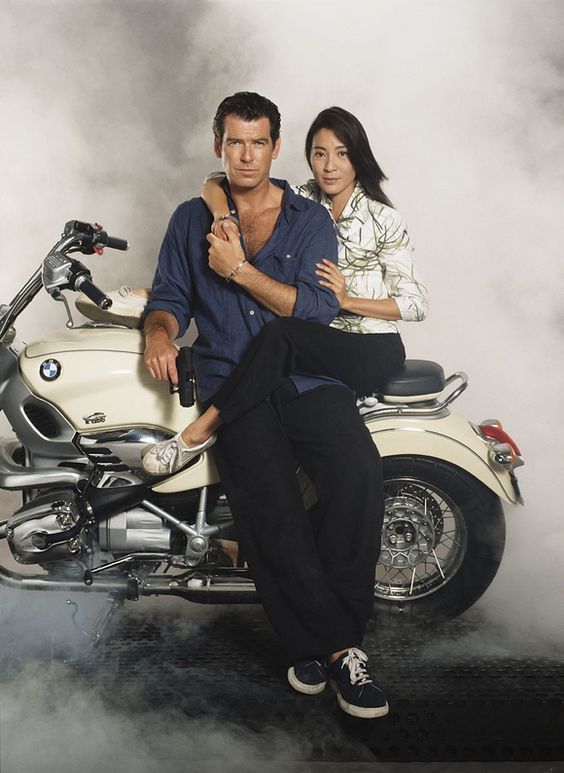
By the second Brosnan Bond, the playbook had been codified. BMW returned with the 750iL. Ericsson paid for the remote-controlled phone that doubled as a plot device. Visa, Heineken, and Smirnoff signed on as cross-promotional partners. Omega renewed.
Total integration value for Tomorrow Never Dies reached an estimated $100 million across all partners, per Hollywood Branded’s retrospective. That figure exceeded the film’s marketing budget. Consequently, MGM and Eon no longer had to finance traditional advertising at scale. The brands were doing it for them.
Brosnan, meanwhile, had become something more specific than a movie star. He was the human surface onto which the luxury economy projected itself. Every suit, every wristwatch, every driver’s seat he occupied on screen converted, within weeks, into measurable sales lift for a specific brand.
The World Is Not Enough (1999): Peak Equilibrium
The third Brosnan Bond found the equilibrium that every subsequent placement deal has tried to replicate. BMW’s partnership had expired by this point. Therefore, Aston Martin’s replacement with the new Vanquish was teed up for the next film. Omega kept the watch slot. Smirnoff retained vodka. Heineken held beer.
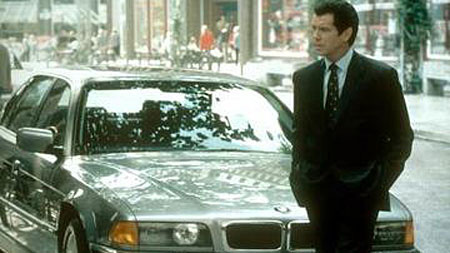
What made The World Is Not Enough instructive, from a placement perspective, is that the integrations were barely noticed by most viewers. The film absorbed its brand partners into the narrative so smoothly that audiences perceived them as costume and set dressing rather than advertising. Critics praised the film’s tone. Brand partners reported sustained category lift. Furthermore, Brosnan personally saw his per-film salary climb from $4 million on GoldenEye to $12.4 million on this one, plus gross participation points.
Die Another Day (2002): The Breaking Point
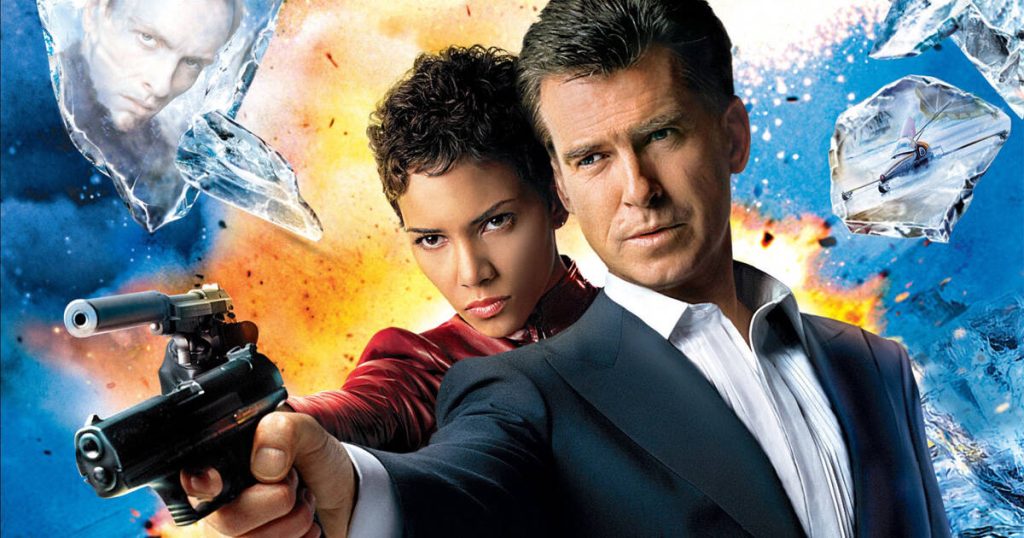
Then came the overreach. Die Another Day featured reportedly $120 million in total brand integrations across 24 separate brands. Critics nicknamed the film “Buy Another Day.” Consequently, audiences began openly mocking the advertising density during screenings.
The film grossed $432 million worldwide, which was financially successful but narratively damaged the franchise. Brosnan’s Bond tenure ended here, whether he wanted it to or not. Casino Royale, the 2006 reboot, would deliberately strip placement back to a fraction of its Brosnan-era peak. Nevertheless, across four films, Brosnan had helped generate an estimated $400 million-plus in total brand integration value. He had also personally earned approximately $42 million in salary plus participation, per industry reporting.
The Placement Economy: Brosnan as the Case Study Every CMO Studies
Why the Brosnan Era Is the Modern Template
Before Brosnan, product placement existed. After Brosnan, product placement became infrastructure. The distinction matters because the Brosnan Bond era was the first franchise run in history where the placement revenue rivaled the theatrical revenue, and where the placement partnerships were structured as multi-film co-marketing commitments rather than one-off fees.
Every luxury CMO working today has studied the Brosnan playbook, whether they know it or not. The core insight is simple: the fee is the admission ticket. The co-marketing is where the real money moves. BMW paid $3 million to appear in GoldenEye. More importantly, BMW committed $75 million in advertising that featured James Bond appearing with the Z3. That co-marketing turned a $3 million placement into a $252 million pre-sale windfall.
The Deal Stack, Film by Film
Here is the reference data every brand founder should internalize before their next placement conversation.
GoldenEye (1995):
- BMW Z3: $3M cash + $75M co-marketing / 9,000 pre-sold units / 25x ROI (Source: WSJ)
- Aston Martin DB5: $0 barter / 40% sales lift / infinite ROI (Source: Variety)
- Omega Seamaster: six-figure cash / category relaunch valued at $500M+ annually / 100x+ ROI (Source: Hodinkee)
Tomorrow Never Dies (1997):
- BMW 750iL: renewed cash + co-marketing / sustained category leadership (Source: Hollywood Branded)
- Ericsson phone: reportedly $25M integration / launched remote-control phone category in consumer marketing (Source: AdAge)
- Visa, Heineken, Smirnoff: cross-promotional partnerships / estimated $50M+ combined value (Source: Hollywood Branded)
The World Is Not Enough (1999):
- BMW Z8: final BMW Bond / 12,000 units sold in first year at $128,000 MSRP (Source: Forbes)
- Omega Seamaster: renewed / partnership now spans nearly three decades (Source: Hodinkee)
Die Another Day (2002):
- Ford/Jaguar, Aston Martin Vanquish, Omega, Finlandia Vodka, Bollinger, Norelco, British Airways, Revlon, Visa, and 15 more: total integrations reportedly $120M across 24 brands (Source: Guardian)
- Lesson: saturation is self-defeating. Casino Royale subsequently halved the placement density and returned the franchise to critical favor.
The Brioni Moment Nobody Counted
Outside the Bond deal stack, one partnership deserves its own paragraph. Brioni, the Roman tailor that dressed Brosnan as Bond, rode Brosnan’s subsequent Thomas Crown Affair (1999) into a global repositioning that the brand has never publicly quantified. Nevertheless, Robb Report’s retrospective coverage credits the Brosnan-Brioni partnership with converting the house from a regional Italian operation into a global luxury menswear anchor. Importantly, the deal structure was almost entirely barter. Brioni provided the suits. Brosnan wore them. The resulting editorial presence and category lift ran to nine figures over the subsequent decade.
The Malibu Chapter: What Brosnan Built Outside the Frame
The House That Bond Built
By the end of his Bond tenure, Brosnan had accumulated enough capital to buy something most actors of his generation only rented: real estate at the top of the American luxury market. His Malibu compound, first acquired in the late 1990s, now spans multiple parcels along Broad Beach. Industry estimates place the current combined value above $100 million, though Brosnan has never listed the property publicly.
Importantly, the compound serves three purposes. It is his home. It is his studio (Brosnan is a serious amateur painter whose oils regularly sell for five figures at charity auctions). Furthermore, it is a kind of private sanctuary from the placement economy he helped build. No brand has ever filmed a commercial at the Brosnan Malibu property. Reportedly, he has turned down offers in the seven figures to permit it.
The Painting Practice
Brosnan has painted seriously since 1987, when his first wife Cassandra Harris was diagnosed with the ovarian cancer that would kill her three years later. The practice began as grief therapy. It became a second career. His oils, mostly landscapes and portraits, have been exhibited in Los Angeles, New York, and London. Individual pieces regularly clear $50,000 to $100,000 at auction, with proceeds generally directed to cancer research foundations.
Notably, the painting practice is worth mentioning here because it is the one aspect of Brosnan’s public identity that has resisted every placement overture made to it. Galleries have offered representation contracts. Art-world sponsors have offered ambassadorships. Brosnan has declined them all. The paintings sell. The proceeds go to charity. Brand names stay out of it.
Hawaii, the Second Home, and the Ocean Activism
Outside Malibu, Brosnan’s other significant residence is on the Hawaiian island of Kauai. He acquired the property in the 2000s and has used it as both a family retreat and a base for environmental activism. Specifically, Brosnan has been a sustained public voice on ocean conservation, anti-whaling efforts, and protections for marine mammals. His advocacy work earned him recognition from the National Resources Defense Council and other environmental organizations. Notably, the recognition came not for celebrity activism in the traditional sense but for documented financial and lobbying contributions to specific Pacific marine policy outcomes.
The Hawaiian property and the activism connect back to his first wife Cassandra Harris, who loved the Pacific and died of ovarian cancer in 1991. Subsequently, Brosnan and Keely Shaye Smith have directed resources to ovarian and other cancer research through their philanthropic giving. Brosnan’s painting auctions feed those efforts. The Hawaiian house, in his own published interviews, is described as the place where his children most felt their mother’s continued presence. The geography of his actual life runs Malibu to Kauai. Hollywood is where he worked. Those are the places where he lives.
What He Built: The Net Worth Breakdown
The $200 Million Estimate
Current reliable estimates place Brosnan’s net worth at approximately $200 million, per Forbes’ most recent celebrity wealth tracking. That figure breaks down approximately as follows.
Acting salary and participation: approximately $80 million lifetime. The four Bond films alone generated $42 million in direct salary and participation, per industry reporting. Subsequently, roles in Mamma Mia! (2008), Mamma Mia! Here We Go Again (2018), The November Man, The Thomas Crown Affair, and The Foreigner added another $30 million-plus. Streaming residuals and syndication continue to generate low seven figures annually.
Production company (Irish DreamTime): approximately $30 million in realized equity. Brosnan co-founded Irish DreamTime in 1996 specifically to give himself participation in the films he was starring in. The company produced The Thomas Crown Affair remake, The November Man, and several other titles that Brosnan starred in and partly owned.
Real estate: approximately $100 million-plus, concentrated in the Malibu compound. The property has appreciated dramatically over the three decades Brosnan has held it.
Art and collectibles: approximately $10 million, including his personal painting output and an accumulated collection of fine art, vintage watches, and Bond-era memorabilia.
The Asset Architecture Lesson
Crucially, the composition matters. Brosnan’s wealth is not concentrated in acting residuals or brand endorsement equity. Rather, it sits in real estate that appreciates independently of his career, in production company participation that generated upside every time he starred in his own films, and in physical assets (watches, art) that hold value regardless of Hollywood cycles. The lesson every celebrity founder should study: the acting salary is the fuel, but the real estate and production equity are the engine.
The Soft Landing: What Brosnan’s Career Teaches the Brand Founder
Three Lessons the Brosnan Case Actually Proves
First, the fee is not the deal. The co-marketing is the deal. BMW’s $3 million integration fee for GoldenEye was the opening move. The $75 million in co-branded advertising was the game. Every placement conversation a brand founder walks into should be structured around co-marketing commitment, not placement fee.
Second, saturation breaks the economy. Die Another Day proved that 24 brands in one film is too many brands in one film. A brand that appears for two seconds in a coherent narrative outperforms a brand that appears for thirty seconds in a film the audience has identified as an advertising vehicle. Consequently, the brand founder’s job is not to maximize visibility. Rather, the job is to maximize the visibility-to-narrative ratio.
Third, durability beats spike. Omega has been Bond’s watch partner since 1995. BMW and Aston Martin have rotated. Heineken comes and goes. Yet Omega remains, because Omega understood from day one that the Bond partnership was not a campaign. It was architecture. Every brand founder reading this should ask themselves the same question Omega asked in 1995: is the placement a campaign or a platform? Furthermore, they should accept that only platforms compound.
Which Door Is Yours
Brosnan is the first of five archetypes covered in Social Life Magazine’s ongoing analysis of the modern placement economy. He represents the franchise placement bible, the actor whose career literally rewrote the rules of how brand partnerships get structured.
The other four archetypes run differently. Natalie Portman evolved into the celebrity-as-placement model, in which the actor becomes the brand rather than carrying it. Jessica Alba flipped the script by founding her own brand and exiting at $1.44 billion. Russell Crowe triggers accidental category lifts without signing deals. Daniel Radcliffe demonstrates the franchise trap, in which the talent generates billions in placement value and sees none of it.
Five doors. The Brosnan door is the one for the brand founder who wants a multi-year, co-marketing-heavy, narrative-integrated partnership with a luxury celebrity vehicle that compounds over time. If that’s the door, the question is no longer which actor to call. Rather, the question is whether the brand is structured to compound. Brosnan compounded because Bond gave him a recurring frame, the deals were structured as platform, and the talent stayed durable across two decades. Most brands fail one of those three tests before the cameras roll. The fee is the entry. The architecture is the asset. Only platforms compound.
The Brosnan Architecture Compared
The Brosnan platform compares structurally to several other strategies the cluster has examined. Jude Law’s Sherlock Holmes franchise produced similar British leading-man brand-asset leverage, though Law declined to multiply the single Dunhill ambassador deal into the Brosnan-Omega-equivalent stack. Furthermore, Hugh Jackman built a different version of franchise-anchored wealth through the Wolverine and Broadway barbell, and his approach is documented alongside Law’s in the cluster’s analysis of the prestige-and-tentpole architecture. Specifically, the three actors demonstrate that the franchise-credibility-into-brand-asset conversion can run through luxury watches, premium menswear, or stage-credibility infrastructure, with each variation producing distinct compounding outcomes.
Related Reading
- Hollywood’s $26 Billion Hidden Economy: How Product Placement Built Modern Stardom
- Jude Law Net Worth: $70M From Refusing To Choose Between Prestige And Tentpole
- Hugh Jackman Net Worth 2025: The Boy Who Waited for His Mother to Come Home
- Broadway And Tentpole: How 6 Stars Built Eight-Figure Wealth Running Both Lanes
- Chris Evans Net Worth: How Captain America’s $110M Exit Strategy Worked
- Jessica Alba Net Worth: From Sin City To $1.44B Honest Company IPO
How To Work With Social Life Magazine
Brosnan’s career proves that placement works when the frame is coherent, the audience is qualified, and the partnership is structured as platform rather than campaign. Every brand founder reading this article is, whether they know it or not, already evaluating their own version of the same question.
Six Ways To Connect
If you are a brand, a founder, a creative director, or an in-house marketing lead who would like to be considered for an editorial feature in Social Life Magazine’s print or digital ecosystem, the editorial team reviews brand submissions year-round. Pitch us at sociallifemagazine.com/contact.
If you are a brand with a ready-to-run campaign and would like to move faster than the traditional editorial cycle, the Paid Feature program offers three tiers of guaranteed placement across Social Life Magazine’s digital properties, with pricing starting at $975. Full details at sociallifemagazine.com/submit-a-paid-feature/.
Every piece Social Life Magazine publishes reaches an email list of 82,000 pre-qualified affluent readers. The majority summer in the Hamptons and spend the off-season in Manhattan’s core luxury zip codes. The email blast is the single most efficient distribution mechanism in the Hamptons editorial ecosystem. Inquire about placement at sociallifemagazine.com/enflyer.
Events, Print, And Independent Editorial
Polo Hamptons 2026, Social Life Magazine’s flagship event property, returns for its 17th year in July and August 2026. Platinum, Gold, and Corporate Cabana sponsorship packages are available for select categories (automotive is locked by BMW North America, real estate is at capacity, all other categories open). Demographic data, sponsor decks, and custom activation proposals available at polohamptons.com.
Social Life Magazine’s print edition, now in its 23rd year, distributes 25,000 copies per summer issue across Westhampton, Southampton, Bridgehampton, East Hampton, Sag Harbor, Amagansett, and Montauk boutiques, restaurants, and private clubs. Annual subscriptions, including fall/winter Upper East Side doorman distribution, available at sociallifemagazine.com/subscription.
If you’d like to support independent luxury editorial in the age of AI-generated content farms and private-equity-owned media conglomerates, donations to Social Life Magazine’s editorial operations are received via PayPal. Every dollar funds original reporting, photography, and the kind of writing that brands send their marketing teams to study.
Author

Written by
Recent Posts
Broadway And Tentpole: How Six Stars Built Eight-Figure Wealth Running Both Lanes
Jude Law Net Worth: $70M From Refusing To Choose Between Prestige And Tentpole
Mickey Rourke Net Worth: How A $40M Comeback Became A $10M Cautionary Tale
Chris Evans Net Worth: How Captain America’s $110M Exit Strategy Worked
Ralph Fiennes Net Worth: How Voldemort And Bond Funded A $50M Director’s Career
Categories
- Art
- Articles
- Beauty & Skincare
- Celebrities
- Celebrities|Movies
- Celebrities|The Chronicles
- Chronicles
- Entertainment|Culture
- Event Photos
- Events
- Fashion
- Fashion & Style
- Featured
- Food & Beverage
- Food, Spirits, Wine
- Hamptons
- Hamptons Celebrities
- Hamptons Celebrities
- Health
- Health & Beauty
- Lifestyle
- Luxury Lifestyle
- Movies
- Movies|Culture
- Movies|Hamptons Lifestyle
- Press
- Profiles
- Real Estate
- Technology
- The Chronicles
- Travel
- TV
- TV & Film
- Uncategorized
- Weddings