
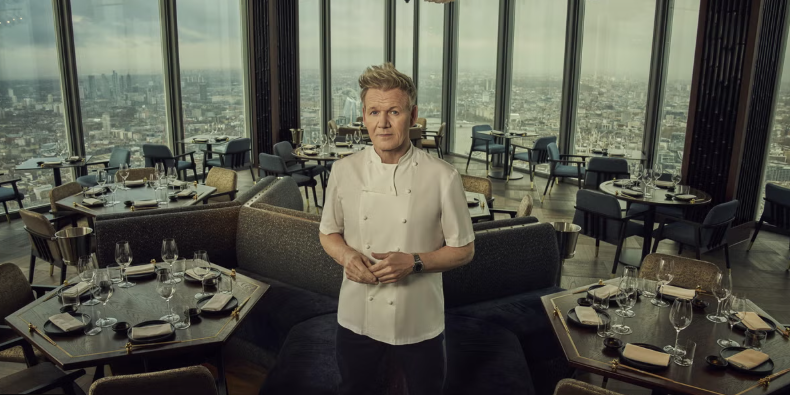
The misconception runs deep. People assume celebrity chefs build fortunes through successful restaurant operations. They imagine packed dining rooms, premium pricing, and profits accumulating into substantial net worth. The reality contradicts this assumption so completely that sophisticated observers must reexamine everything they thought they knew about chef economics.
Why Restaurant Ownership Fails as Wealth Strategy
Restaurant economics prevent wealth accumulation through a simple mathematical reality: margins are too thin and risks are too high. No amount of celebrity attachment overcomes these structural constraints.
| Cost Category | Percentage of Revenue | Reality |
|---|---|---|
| Food costs | 28-35% | Raw ingredients alone consume a third of every dollar |
| Labor costs | 30-35% | Kitchen and front-of-house staff, benefits, training |
| Rent and occupancy | 8-12% | Premium locations demand premium rents |
| Operating expenses | 15-20% | Utilities, insurance, maintenance, supplies, marketing |
| Profit margin | 3-9% | What remains for the owner after everything else |
A successful restaurant generating $5 million annually might produce $250,000-$450,000 in owner profit. This represents respectable income by most standards. It does not represent wealth creation at the scale celebrity chef net worth figures suggest.
The Math Problem
Building a $100 million net worth through 5% restaurant margins would require $2 billion in cumulative revenue extraction. At $5 million per location annually, that represents 400 successful restaurant-years of operation. The timeline makes wealth accumulation through restaurant ownership mathematically implausible.
Compare this to television economics. A single Food Network contract might pay $10-45 million annually. Guy Fieri’s $80 million deal generates more wealth in three years than 40 years of successful restaurant ownership could produce. The comparison isn’t close.
Case Study: Jamie Oliver’s £83 Million Collapse
Jamie Oliver built one of the largest celebrity chef restaurant empires in history. At peak, Jamie Oliver Restaurant Group operated approximately 60 locations worldwide under various brands: Jamie’s Italian, Fifteen, Barbecoa, and others.
The expansion seemed to validate the celebrity-chef-as-restaurateur model. Locations spread across the UK, Australia, and international markets. Growth proceeded rapidly during the early 2010s. Industry observers pointed to Oliver as proof that restaurant empires could scale.
Then everything collapsed. In May 2019, Jamie Oliver Restaurant Group entered administration. The bankruptcy eliminated approximately 1,300 jobs. Estimated losses reached £83 million. Only three restaurants survived restructuring.
Why Media Income Survived
Oliver’s personal net worth remained largely intact despite the restaurant collapse. Understanding why requires examining how different revenue streams actually function.
Television contracts pay Oliver directly for personal services: appearing on camera, developing content, promoting programming. These payments have no relationship to whether separate restaurant businesses succeed or fail. The contracts represent separate legal arrangements with separate counterparties.
Cookbook royalties similarly flow to Oliver personally based on book sales. Publishers don’t reduce royalty payments because an author’s unrelated businesses struggle. His 26+ books continued selling throughout the restaurant crisis and afterward.
Product licensing arrangements operate independently from restaurant operations. Manufacturers pay for brand attachment regardless of what happens in Oliver’s hospitality ventures.
The structural separation protected the majority of Oliver’s net worth from the restaurant collapse. His media businesses generated approximately $30 million annually while his restaurants burned through capital. The diversification wasn’t accidental. It was architecture.
Case Study: Gordon Ramsay’s 2010 Near-Bankruptcy
Gordon Ramsay experienced his own restaurant crisis in 2010, though he navigated it differently than Oliver would nine years later. Gordon Ramsay Holdings owed approximately £10 million to creditors. Restaurant locations were closing. Lawsuits from former business partners created ongoing legal exposure.
The crisis forced fundamental restructuring. Rather than simply refinancing debt and continuing the same approach, Ramsay transformed how Gordon Ramsay Holdings operated. The shift moved from ownership to licensing, from capital-intensive restaurant launches to capital-light brand extensions.
The Post-Crisis Model
Before 2010, Ramsay typically owned significant equity in his restaurants, bearing operational risk alongside potential upside. After restructuring, most new Gordon Ramsay restaurants operate under licensing agreements.
Local operators provide capital and bear operational risk. Ramsay provides the brand, training protocols, menu consultation, and occasional appearances. He earns management fees and royalties without downside exposure that nearly bankrupted him previously.
The same brand, the same restaurants bearing his name, but completely different economics. Ramsay learned from near-catastrophe what Oliver’s later collapse would demonstrate: restaurant ownership is risk without proportional reward for celebrity chefs.
The Fundamental Economic Problem
Restaurant economics create structural barriers to wealth accumulation that celebrity attachment cannot overcome.
Capital Intensity
Opening a restaurant requires substantial upfront investment. A casual dining location might require $500,000-$1.5 million. A fine dining establishment might require $2-5 million. Celebrity chef concepts with distinctive design often cost more.
This capital intensity means every expansion requires new investment. Unlike software businesses where marginal costs approach zero, every new restaurant location demands proportional capital deployment. Growth requires constant capital infusion.
Operational Complexity
Restaurants require daily management attention across multiple domains: staffing, inventory, quality control, customer service, maintenance, regulatory compliance, financial management. This complexity scales linearly with locations.
A chef overseeing 20 restaurants faces 20 times the operational challenges of a single-location operator. Celebrity chefs with television commitments, cookbook deadlines, and appearance obligations cannot provide adequate oversight. Quality suffers. Costs creep. Margins compress.
Single Point of Failure Risk
Restaurant portfolios concentrate risk rather than diversifying it. A health code violation at one location generates negative press affecting all locations. An economic downturn reduces dining across all venues simultaneously. A pandemic shuts everything down at once.
Jamie Oliver’s empire collapsed collectively, not individually. The interconnected brand meant problems at Jamie’s Italian locations affected perception of Fifteen and Barbecoa. Reputation risk cascaded across the entire portfolio.
Thin Margin Fragility
When profit margins run 3-9%, small cost increases eliminate profitability entirely. Labor cost increases, rent increases, food price inflation, or revenue decreases can push operations from marginally profitable to loss-making with minimal change.
The 2019 Oliver collapse followed years of gradual margin compression. Comparable sales declined. Labor costs rose. Brexit uncertainty dampened consumer spending. No single factor caused failure. Accumulated small deteriorations eventually crossed the threshold from sustainable to catastrophic.
Why the Smartest Chefs Stopped Opening Restaurants
The wealthiest celebrity chefs systematically shifted away from restaurant ownership toward licensing models that provide income without capital risk.
Guy Fieri’s Licensing Empire
Guy Fieri has his name on 80+ restaurant locations. He doesn’t own any of them. Partners like Robert Earl’s Virtual Dining Concepts provide capital, handle operations, and absorb losses. Fieri provides brand value and promotional support. He earns fees regardless of individual location performance.
The structure explains how Fieri can have extensive restaurant presence without operational headaches. When a location struggles, that’s the partner’s problem. When a location succeeds, Fieri collects. The asymmetry favors him entirely.
Wolfgang Puck’s Express Model
Wolfgang Puck maintains a small portfolio of owned fine dining restaurants while operating 100+ Express locations through licensing. The Express locations generate steady fee income without requiring his capital or daily attention.
Partners handle airport concession negotiations, stadium contracts, and casual dining operations. Puck provides brand authentication and initial menu development. The licensing revenue likely exceeds his fine dining profits by substantial margins.
Rachael Ray’s Complete Avoidance
Rachael Ray built a $100 million fortune without opening restaurants at all. She understood that licensing (Nutrish pet food, cookware lines) generates wealth without operational complexity. The absence of restaurants wasn’t limitation. It was strategy.
Her Nutrish deal particularly demonstrates sophisticated architecture. She licensed her name to a pet food company, collected royalties during growth, then received additional payment when Smucker’s acquired the brand. Restaurant ownership could never have generated comparable returns.
The Patterns: What Restaurant Economics Teach
Analyzing restaurant ownership across celebrity chef careers reveals consistent patterns that apply beyond the culinary world.
Profit margins cap wealth regardless of fame level. Celebrity attachment doesn’t change fundamental hospitality economics. A famous chef operating at 5% margins accumulates wealth no faster than an unknown chef at the same margin.
Capital intensity limits scalability. Every expansion requires new capital deployment. Growth doesn’t create operating leverage the way software or media businesses do.
Operational complexity scales linearly. More locations mean more management burden, not economies of scale. Celebrity chefs with other commitments cannot provide adequate oversight at scale.
The smartest chefs use restaurants as credentialing, not wealth-building. Restaurants establish expertise that unlocks television, licensing, and equity opportunities. They’re marketing expenses, not profit centers.
Alternatives That Actually Build Wealth
If restaurant ownership rarely creates wealth, what does? The wealthiest celebrity chefs deploy capital and attention toward fundamentally different vehicles.
Television Contracts
A successful television franchise generates $5-45 million annually with minimal capital requirements and operational complexity. Networks handle production. Advertisers fund programming. The chef provides personality and expertise. Margins approach 100% because the chef incurs almost no costs.
Licensing Arrangements
Cookware, food products, and restaurant licensing generate passive income without capital risk. Partners invest in production, distribution, and operations. The chef provides brand value. Revenue flows as royalties regardless of the chef’s daily activities.
Brand Sales
Emeril Lagasse’s $50 million sale to Martha Stewart Living Omnimedia crystallized years of brand equity into immediate capital. The transaction compressed decades of potential licensing income into a single payment. Restaurant ownership could never generate comparable liquidity events.
Production Company Ownership
Bobby Flay’s 2021 contract renegotiation prioritized production company ownership over immediate salary. The structure creates saleable assets beyond personal service agreements. Production companies generate ongoing income and potential exit value that restaurant ownership cannot match.
The Playbook: Applying Restaurant Economics Understanding
For Social Life Magazine readers involved in hospitality investment or restaurant operations, these patterns offer applicable guidance.
Evaluate restaurant investments honestly. Celebrity attachment doesn’t change fundamental margins. Due diligence should focus on operational efficiency, not brand association.
Consider licensing over ownership. If you possess brand equity, licensing arrangements may generate superior risk-adjusted returns compared to direct ownership.
Separate media assets from operating businesses. Corporate structures that isolate media income from operational risk protect accumulated wealth during inevitable hospitality volatility.
Plan exit strategies from inception. Restaurant businesses rarely generate exit multiples that reward founders adequately. Alternative structures may provide better long-term outcomes.
Why Restaurant Ownership Rarely Creates Chef Wealth: Final Assessment
Restaurant profit margins of 3-9% make wealth accumulation mathematically impractical regardless of celebrity status. The capital intensity, operational complexity, and concentrated risk of restaurant ownership contradict the diversified, passive, scalable income streams that actually build significant wealth.
Jamie Oliver’s £83 million collapse demonstrated this reality dramatically. Gordon Ramsay’s 2010 near-bankruptcy taught the same lesson more privately. Both chefs survived with substantial net worth because their media income operated independently from their restaurant failures.
The wealthiest celebrity chefs understood this early or learned it through crisis. They systematically shifted from ownership to licensing, from capital deployment to brand deployment, from operational involvement to strategic oversight. Their restaurants now credential expertise rather than generating wealth.
Understanding why restaurant ownership rarely creates chef wealth transforms how sophisticated observers evaluate celebrity fortunes and hospitality investments. The glamour of packed dining rooms obscures the economic reality: restaurants are marketing expenses for the real wealth engines of television, licensing, and brand equity.
Related Articles
- The Michelin-to-Media Pipeline: How Chefs Convert Stars to Millions
- Licensing vs. Ownership: Why the Richest Chefs Stopped Opening Restaurants
- Jamie Oliver Net Worth 2025: $200 Million After Restaurant Collapse
- Celebrity Chef Net Worth Rankings 2025
For coverage inquiries, brand partnerships, and advertising opportunities, contact Social Life Magazine. Experience culinary excellence at Hamptons’ premier lifestyle events: Polo Hamptons.
Author

Written by
Recent Posts

Midsommar A24 Cast Net Worth — The Daylight Horror That Turned Grief Into a Career Launchpad
ZOI NOMAD & TEN11 LOUNGE MARK ONE YEAR

Room A24 Cast Net Worth — The $6 Million Captivity Drama That Set Brie Larson Free

The Witch A24 Cast Net Worth — A $3.5 Million Puritan Nightmare That Created a Queen and a King
A24 Genre Stars Net Worth — The Terrifying Fortunes Behind Horror, Sci-Fi, and Oscar Gold
Categories
- Art
- Articles
- Beauty & Skincare
- Celebrities
- Celebrities|Movies
- Celebrities|The Chronicles
- Chronicles
- Entertainment|Culture
- Event Photos
- Events
- Fashion
- Fashion & Style
- Featured
- Food & Beverage
- Food, Spirits, Wine
- Hamptons
- Hamptons Celebrities
- Hamptons Celebrities|Celebrities|The Chronicles
- Health
- Health & Beauty
- Lifestyle
- Luxury Lifestyle
- Movies
- Movies|Culture
- Movies|Hamptons Lifestyle
- Press
- Profiles
- Real Estate
- Technology
- The Chronicles
- Travel
- Uncategorized
- Weddings