
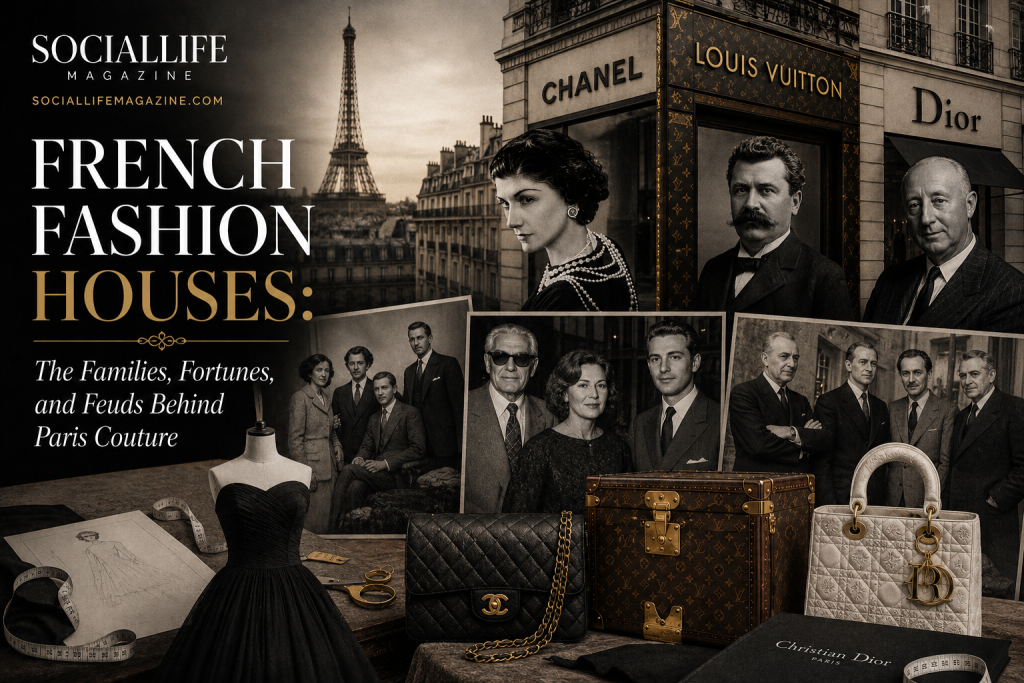
Paris did not become the capital of fashion by accident. It became the capital because a series of French institutions, beginning with Louis XIV’s finance minister Jean-Baptiste Colbert in the 1660s, deliberately built the infrastructure to make it so. Colbert created a state-sponsored textile industry, established guilds that regulated quality, and positioned French silk, lace, and embroidery as instruments of soft power. Three centuries later, French fashion houses still operate on that foundation. The craft is real. The mythology is engineered. And the money, approximately $300 billion in combined annual revenue across the top French luxury groups, proves that engineered mythology scales better than almost anything else in capitalism.
What makes the French corridor unique is not talent alone. Italy has equal tailoring skill. London produces more radical ideas per graduating class. New York moves faster commercially. France’s advantage is systemic. The Chambre Syndicale de la Haute Couture, founded in 1868, still governs who may legally call themselves a couture house. Membership requires handmade garments, a Paris atelier with at least 15 full-time employees, and two collections per year of at least 25 original designs. These rules sound bureaucratic. In practice, they function as a moat that no other country has replicated.
The designation “haute couture” is legally protected in France the way “Champagne” is protected for sparkling wine. A designer in Milan or New York can produce garments of identical quality and cannot use the term. Consequently, Paris maintains a structural monopoly on the language of the highest tier of fashion. Everyone else is making clothes. Paris is making couture. That distinction, invented and enforced by French law, underwrites the entire $300 billion apparatus.
Below is the complete map of the French fashion houses that built this system, broke it open, and rebuilt it with corporate money. Each profile links to a deeper individual history. Together, they tell one story: how a handful of ateliers on the Right Bank created the template for modern luxury worldwide.
Chanel: The Most Calculated Rebellion in Fashion History
Gabrielle “Coco” Chanel opened her first shop in 1910 at 21 Rue Cambon in Paris. She was 27, partially funded through relationships with wealthy men (Arthur “Boy” Capel financed the early operations), and operating with a thesis that would prove correct for the next century. Women’s clothing was too complicated. Simplify it, and they will pay more for less. The little black dress, the tweed suit, the quilted 2.55 handbag with chain strap, the No. 5 perfume (launched 1921, still the best-selling fragrance on Earth). Each product stripped away whatever the competition was adding.
Chanel’s personal biography is a masterwork of strategic omission. She was born in a poorhouse in Saumur in 1883 and raised in an orphanage run by nuns after her mother died of tuberculosis. She fabricated nearly every detail of her early life, including claims of a wealthy aunt and a cavalry officer father. The nuns taught her to sew, and that skill became the foundation of everything. During World War II, she lived at the Hôtel Ritz with a German intelligence officer named Hans Günther von Dincklage. After the war, she moved to Switzerland for eight years while the collaboration accusations cooled. She returned to fashion in 1954 at age 70, funded by Pierre Wertheimer, and rebuilt the house into the dominant force it remains today.
The Numbers Behind the Tweed
Chanel is privately held by the Wertheimer family, who acquired the perfume rights from Coco herself in 1924 and gradually took control of everything else. Alain and Gérard Wertheimer’s combined fortune exceeds $90 billion. The house reported €19.7 billion in revenue for 2023, making it the second-largest luxury brand by revenue behind only Louis Vuitton. Operating margins exceed 30%, a figure most consumer companies would consider extraordinary.
Because Chanel is not publicly traded, it faces no quarterly earnings pressure from analysts or activist shareholders. This structural advantage allows multi-year investments that public companies cannot justify. Chanel spent decades refusing to sell online. It acquired specialist ateliers (Lesage for embroidery, Massaro for shoes, Desrues for buttons) to guarantee supply chain control. Karl Lagerfeld served as creative director for 36 years until his death in 2019, providing a continuity that no competitor could match. Virginie Viard succeeded him and departed in 2024. Nevertheless, the Wertheimer family has maintained the same strategic posture since Coco’s 1954 return. Simplicity. Scarcity. The discipline to say no to revenue opportunities that would dilute the signal.
Dior: The Bow That Built a Licensing Empire
Christian Dior showed 90 garments on February 12, 1947, at his salon at 30 Avenue Montaigne. By February 13, the entire global fashion press had declared a revolution. The “New Look” cinched waists, padded hips, and used 20 yards of fabric per dress at a time when wartime rationing still limited most women to three yards. Women in Paris literally attacked women wearing the new silhouette on the street, tearing skirts in protest against the perceived excess. Dior sold more in his first season than most houses sold in a decade.
His genius was not the dress. His genius was the licensing model that funded the dress. Dior immediately licensed his name for stockings, perfume, ties, handbags, and eventually home goods. Miss Dior perfume launched the same year as the New Look, and its sales funded everything else. By the time he died suddenly in 1957 at age 52 (a heart attack in Montecatini Terme, Italy, reportedly while playing cards), the House of Dior was generating revenue across 28 product categories in 15 countries. No fashion house had ever monetized a single name across so many verticals so quickly.
After the Founder
Dior’s successor, the 21-year-old Yves Saint Laurent, lasted two collections before being fired and drafted into the Algerian War. The house cycled through creative directors for decades: Marc Bohan (1961 to 1989), Gianfranco Ferré (1989 to 1996), John Galliano (1996 to 2011), Raf Simons (2012 to 2015), and Maria Grazia Chiuri (2016 to present). Galliano’s tenure was the most commercially successful and the most dramatic. His theatrical runway shows revived the house’s cultural relevance, and his eventual firing (for an antisemitic tirade captured on video in a Paris bar) removed the most talented and most self-destructive designer of his generation in a single news cycle.
Today Dior operates under LVMH and generates an estimated €10 billion in annual revenue. Maria Grazia Chiuri became the first female creative director in the house’s history when she was appointed in 2016. However, Dior’s most significant contribution to the history of fashion remains the licensing template. The dress is the advertisement. The accessories, fragrances, and cosmetics are the business. Every French fashion house that survived the twentieth century learned this lesson from Dior’s playbook, whether they credited the source or not.
Louis Vuitton: From Trunks to the Most Valuable Luxury Brand on Earth
Louis Vuitton was 16 years old when he walked 292 miles from his home in the Jura mountains to Paris in 1837. The walk took two years because he stopped to work odd jobs along the way. He apprenticed with a trunk maker named Monsieur Maréchal and spent 17 years learning the craft before opening his own shop at 4 Rue Neuve-des-Capucines in 1854. His innovation was the flat-topped trunk. Previous trunks were rounded on top, which prevented stacking on trains and steamships. Vuitton’s flat design solved a logistics problem and created a luxury category simultaneously.
His son Georges introduced the LV monogram canvas in 1896 to combat counterfeiting. It did not work for that purpose. Counterfeiting increased. But the monogram accomplished something more valuable. It turned the trunk into a status broadcast. A woman stepping off a train with LV-monogrammed luggage was not carrying her clothes. She was displaying her purchasing power to every other person on the platform. That insight, that the logo is not a maker’s mark but a social signal, became the foundation of the modern luxury handbag industry.
The Arnault Machine
Bernard Arnault acquired Louis Vuitton through a series of corporate maneuvers between 1988 and 1990 that would make a Wall Street raider blush. He used his holding company Financière Agache to take a minority stake in LVMH, then engineered a shareholder revolt against the existing management team of Alain Chevalier and Henry Racamier. By 1990, Arnault controlled the company outright. Since then, Louis Vuitton has grown from a prestigious but mid-sized leather goods house into the most valuable luxury brand on Earth.
Annual revenue exceeds €20 billion. Operating margins exceed 40%, a number that makes technology companies jealous. The brand’s collaborative collections with artists, architects, and streetwear designers generated billions in earned media while maintaining price integrity. Takashi Murakami’s multicolor monogram (2003) introduced Louis Vuitton to a generation that associated luxury with pop art rather than old money. The Supreme collaboration (2017) did the same for streetwear. Virgil Abloh’s appointment as artistic director of menswear in 2018 placed a Black American designer atop the most powerful creative role in French fashion for the first time. After Abloh’s death in 2021, Pharrell Williams succeeded him, further cementing Louis Vuitton’s position as the house that absorbs culture rather than resists it. No discounts, no outlet stores, no sales. Ever. That commercial discipline is the reason Louis Vuitton funds everything else Arnault builds.
Yves Saint Laurent: The Designer Who Broke the Gender Line
Yves Saint Laurent arrived at Dior in 1955 at age 19, having won first prize at the International Wool Secretariat competition. He became head designer at 21 when Christian Dior died suddenly. After two successful collections, he was fired and conscripted into the French army during the Algerian War. The military experience triggered a severe nervous breakdown, and Saint Laurent was hospitalized and treated with sedatives and electroshock therapy. He and his partner Pierre Bergé sued Dior for wrongful termination, won, and used the settlement to fund their own house in 1961. Additional financing came from Atlanta-based businessman J. Mack Robinson, who recognized the commercial potential before any European investor did.
Saint Laurent spent the next four decades systematically demolishing the boundaries between menswear and womenswear. Le Smoking (1966), a tuxedo jacket cut for women, was the single most consequential garment of the twentieth century’s second half. Restaurants refused entry to women wearing it. The Mondrian dress (1965), the sheer blouse (1968), and the safari jacket (1968) each brought a category previously coded as masculine or artistic into mainstream women’s wardrobes. Most importantly, the Rive Gauche ready-to-wear line (1966) proved that a couturier could produce accessible clothing without destroying the prestige of the main line. Previously, ready-to-wear was the compromise that funded the art. Saint Laurent made it the art.
Bergé sold the house to Kering (then PPR) in 1999 for approximately €1 billion. Under creative directors Tom Ford, Stefano Pilati, Hedi Slimane, and Anthony Vaccarello, the brand generates over €3 billion annually. Slimane controversially dropped “Yves” from the brand name in 2012, renaming it simply “Saint Laurent.” Purists objected loudly on social media and in the fashion press. Sales increased 40% in the following two years, which ended the debate.
Hermès: The Family That Said No to Everyone
Among the major French fashion houses, Hermès occupies a singular position. It is the one that has never been acquired, never been taken public against the family’s wishes, and never diluted its brand through excessive licensing. Thierry Hermès founded the company in 1837 as a harness workshop serving European noblemen and their horses. Six generations later, the Hermès family still controls 66% of the shares through a holding company called H51, designed specifically to prevent hostile takeovers.
When LVMH quietly accumulated a 23% stake between 2010 and 2014, the family responded by creating a cooperative structure that locked their shares together for 20 years. The French financial markets regulator investigated LVMH for potential market manipulation. Arnault eventually sold his entire position, reportedly at a significant profit but without the prize he wanted. The Hermès family celebrated by increasing their advertising budget and opening new stores, essentially daring anyone to try again.
The Birkin Economy
Hermès generates approximately €13.4 billion in annual revenue (2023) with operating margins near 42%, the highest in luxury. The Birkin bag, introduced in 1984 after a chance meeting between CEO Jean-Louis Dumas and actress Jane Birkin on a Paris-to-London flight, now retails between $10,000 and $500,000 depending on leather and hardware. Wait lists can exceed two years. The secondary market prices many Birkins above retail, making the bag one of the few consumer products that functions as a genuine appreciating financial asset. A 2023 study found that Birkin bags outperformed the S&P 500 over the previous 35-year period.
The Hermès strategy is the precise opposite of Louis Vuitton’s expansion model. Produce less than the market demands. Never chase trends. Let the customer come to you and then make her wait. This strategy works because Hermès has six generations of family credibility backing every scarcity claim. When Hermès says a bag takes 18 hours of handwork, it is true. When a competitor makes the same claim, buyers check. Imitating this strategy without that heritage is simply bad inventory management disguised as exclusivity.
The Economics of the French System
Understanding French fashion houses requires understanding the financial architecture that sustains them. The couture division of any major house loses money. A single couture dress requires 200 to 800 hours of handwork, materials that cost thousands per meter, and fitting sessions that can span weeks. Chanel’s couture atelier employs more than 150 specialists. Dior’s employs a similar number. At those labor costs, couture garments priced at $50,000 to $300,000 barely break even, and many sell at a loss once you account for the runway show production, which can cost $2 million to $10 million per season.
So why does every major French house maintain a couture operation? Because couture functions as the research and development department. The techniques developed for a $200,000 couture gown filter down to a $5,000 ready-to-wear dress, then to a $2,000 handbag, then to a $150 lipstick. Each tier increases the customer base exponentially while carrying the prestige established at the top. A woman buying Dior lip gloss at Sephora is buying a fraction of the same mythology that a woman buying a Dior couture wedding dress receives in full. The lip gloss costs Dior approximately $3 to produce and retails for $40. The margin funds everything.
This pyramid structure
With couture at the apex and beauty products at the base, it was invented by the French houses and has never been successfully replicated outside the system. Italian houses tried licensing (Gucci licensed everything from watches to ashtrays in the 1980s and nearly destroyed the brand). American houses tried volume (Calvin Klein and Ralph Lauren prioritized accessibility over exclusivity and capped their pricing power as a result). Only the French figured out how to sell exclusivity at scale without the contradiction collapsing. The secret was institutional patience. Building a couture atelier takes decades. Building a perfume factory takes months. The French invested in decades. Everyone else optimized for months.
Balenciaga and Givenchy: Architecture and Aristocracy
Cristóbal Balenciaga was born in Getaria, Spain, in 1895 and moved to Paris in 1937, fleeing the Spanish Civil War. Unlike his contemporaries, Balenciaga could cut, sew, and drape at the level of his best seamstresses. Dior called him “the master of us all.” Chanel said he was “the only couturier in the truest sense of the word.” His innovations were structural rather than decorative. The semi-fitted suit (1951), the balloon jacket (1953), the sack dress (1957), and the baby doll dress (1958) each removed one assumption about how fabric should relate to the body. Where other designers added, Balenciaga subtracted until the garment achieved a geometric purity that fashion critics compared to architecture.
He closed his house abruptly in 1968, reportedly saying he could not maintain quality standards in the age of ready-to-wear and mass production. The brand lay dormant until Nicolas Ghesquière revived it in 1997, running it for 15 years before departing for Louis Vuitton. Demna Gvasalia (known mononymously as Demna) took over in 2015 and repositioned Balenciaga from architectural couture to ironic streetwear. Trash bag clutches priced at $1,790. Destroyed sneakers at $1,850. A creative pivot so extreme it would have given the founder cardiac arrest. Under Kering ownership, the house generates over €1.5 billion annually, proving that brand mythology can survive total creative reinvention.
Hubert de Givenchy founded his house in 1952
He spent the next four decades as the preferred designer of Audrey Hepburn, Jacqueline Kennedy, and the Duchess of Windsor. His aesthetic was aristocratic restraint: clean lines, muted colors, proportions so precise they appeared effortless. Givenchy never chased trends because his clients did not follow trends. They set them, and they expected their designer to understand the difference. LVMH acquired the house in 1988 and has since cycled through creative directors (McQueen, Galliano, Tisci, Matthew Williams) searching for a formula that honors the heritage while appealing to a consumer born after Hepburn died. The search continues, and the difficulty of that search says something important about how personal the connection between designer and house truly is.
The Second Tier That Refuses to Stay Second
Below the dominant houses sits a cluster of French brands that have experienced dramatic revivals in the past decade, each proving that dormancy is not death in luxury fashion. Celine, founded in 1945 as a children’s shoe company, wandered through decades of mild respectability before Phoebe Philo arrived as creative director in 2008. Philo transformed the brand into the intellectual uniform of women who worked in media, art, consulting, and finance. Her aesthetic of minimal shapes, zero logos, and architectural handbags generated what critics called “Philophiles,” a consumer cult with the collective purchasing power of a mid-sized European city. When she departed in 2018, some customers literally cried on social media.
Hedi Slimane replaced her and pivoted the brand toward rock-and-roll references, slim silhouettes, and loud logos. The aesthetic reversal was total. Both periods were commercially successful, which proved that a strong brand name can support contradictory creative visions if the execution quality remains unimpeachable. The customer may change. The standard cannot.
The Revivals
Balmain, founded by Pierre Balmain in 1945, spent decades in relative obscurity before Olivier Rousteing took creative control in 2011 at age 25. Rousteing used Instagram as his primary runway, building a personal following of 11 million before most French fashion houses had social media strategies at all. He dressed the Kardashians, collaborated with H&M, and tripled revenue during his first five years. Critics called the approach vulgar. The balance sheet called it effective.
Jean Paul Gaultier, who retired from ready-to-wear in 2020 after 50 years in fashion, continues producing couture collections through a guest designer program. Haider Ackermann, Olivier Rousteing, and Simone Rocha have each created one-off couture collections under the Gaultier name, turning the house into a rotating creative residency that keeps the brand culturally relevant without requiring Gaultier’s personal involvement. It is an entirely new business model for fashion, and other retiring designers are watching closely.
Lanvin, the oldest continuously operating French fashion house (founded 1889 by Jeanne Lanvin), has changed ownership four times since 2001, most recently selling to Chinese footwear company Fosun International in 2018. The instability has prevented creative momentum, but the name retains extraordinary recognition value. Schiaparelli, dormant for decades after Elsa’s death in 1973, was revived in 2014 and has since become the premier red carpet brand under creative director Daniel Roseberry. His gold-dipped breastplates, anatomical corsets, and surrealist jewelry have appeared on Beyoncé at the 2024 Grammys, Kylie Jenner at Paris Fashion Week, and Doja Cat at the 2023 Met Gala. The revival proves that fashion mythology does not expire. It compounds interest over decades, provided someone is willing to invest in restoring the original signal to full broadcast strength.
Where The Conversation Continues
Each house profiled above has a dedicated article in this series that goes deeper into the founder, the fortune, and the failures that shaped the brand you recognize today. Follow the links to the individual histories, or explore the full History of Fashion pillar for the complete timeline across French, Italian, American, British, and contemporary houses.
The French Spokes:
- Chanel: The Orphan Who Built a $90 Billion Family Fortune
- Dior: The Bow, the Perfume, and the $10 Billion Machine
- Louis Vuitton: A 292-Mile Walk to the Most Valuable Brand on Earth
- Yves Saint Laurent: The Tuxedo That Changed Everything
- Hermès: Six Generations of Saying No
- Balenciaga: From the Master to the Meme
- Givenchy: Audrey’s Designer and the Search for a Sequel
- Celine: Two Visions, One Brand, Zero Compromise
- Balmain: The Instagram Couturier
- Jean Paul Gaultier: Fashion’s Permanent Enfant Terrible
- Lanvin: The Oldest House and Its Four Owners
- Schiaparelli: Surrealism’s Second Act
Social Life Magazine covers the intersection of fashion, wealth, and culture across the East End. For features, events, and the stories behind the names, explore our Luxury Lifestyle section or follow the full Chronicles archive.
Author

Written by
Recent Posts
Vanderbilt & Seewald
Alberto Luzzi Opening of Fine Jewelry Room
The Victor dE Souza 2027 Spring Summer Collection
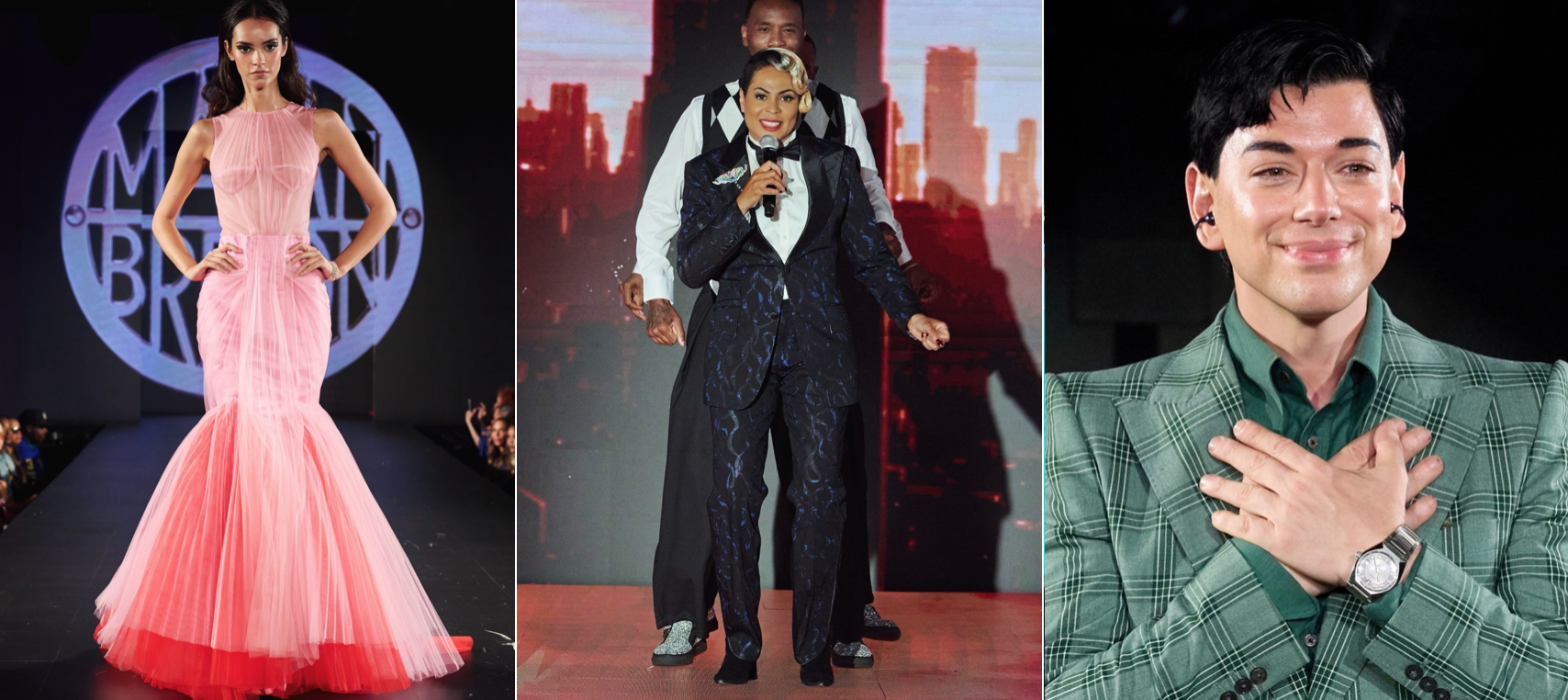
Malan Breton Presents “Garden of a Thousand Tomorrows”
What to Wear to a Summer Wedding as a Guest: A Hamptons Dress Code Guide
Categories
- Art
- Articles
- Business of Luxury
- Celebrities
- Culture
- Entertainment
- Events
- Faces of Summer 2026
- Fashion
- Fashion & Style
- Featured
- Finance
- Food, Spirits, Wine
- Hamptons
- Hamptons Celebrities
- Health
- Health & Beauty
- Lifestyle
- Luxury Lifestyle
- Press
- Profiles
- Real Estate
- Technology
- The Chronicles
- Travel
- Uncategorized
- Weddings