
The Before: A Lewisham Boy Whose Parents Both Taught
The London Childhood That Made Theater Routine
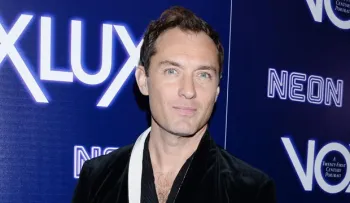
David Jude Heyworth Law was born in Lewisham, southeast London, in December 1972. His mother, Maggie, was a teacher. His father, Peter, was also a teacher with a serious commitment to community theater. Specifically, the household ran on educational rigor combined with weekend rehearsals at local productions. Furthermore, Peter Law founded the Heart School theater company in southeast London in the early 1990s. The school provided Jude with informal stage training before he ever auditioned professionally. Importantly, the family’s relationship to acting was structurally different. Specifically, most working actors come from Hollywood-aspirational families that operate by different logics. Theater was the work itself, not the launch pad.
The National Youth Music Theatre And The Young Vic Years
Law trained at the National Youth Music Theatre during his teenage years. Specifically, he made his stage debut at the Young Vic in productions across the early 1990s. The training was traditional British theatrical, focused on text discipline and ensemble work rather than on screen-acting craft. Subsequently, his television work provided his first professional credits. The BBC adaptation of The Tailor of Gloucester and the ITV series Families defined the early CV. Notably, the trajectory from regional theater to television to film replicated the standard British actor pathway. The American studio system had largely abandoned that pathway by the early 1990s. Law arrived in Hollywood with a different toolkit than his American peers.
The Pivot Moment: Ripley And The Career That Branched Twice
The 1999 Casting That Made Him Internationally Famous
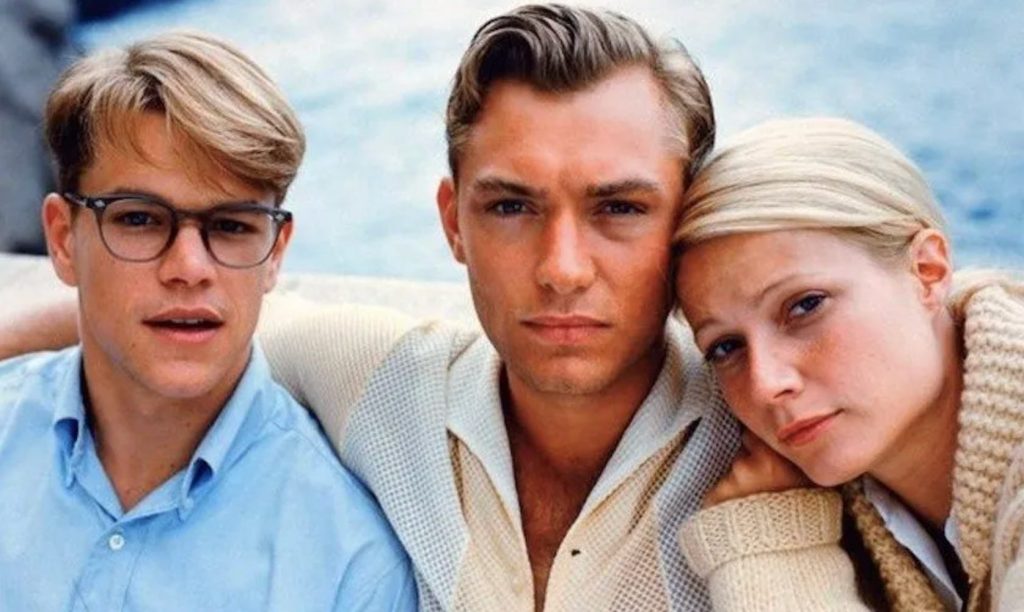
Anthony Minghella cast Law as Dickie Greenleaf in The Talented Mr. Ripley (1999). The role placed him opposite Matt Damon, Gwyneth Paltrow, and Cate Blanchett. The film grossed $128 million worldwide on a $40 million budget. Specifically, Law’s performance earned him an Academy Award nomination for Best Supporting Actor. Furthermore, the role established him as one of the most charismatic young leading men of his generation. Importantly, the casting unlocked simultaneous tracks in his subsequent career. He could pursue prestige film work with auteur directors. He could also pursue commercial leading-man roles in studio productions. Both lanes opened on the same year.
The Cold Mountain Best Actor Nomination
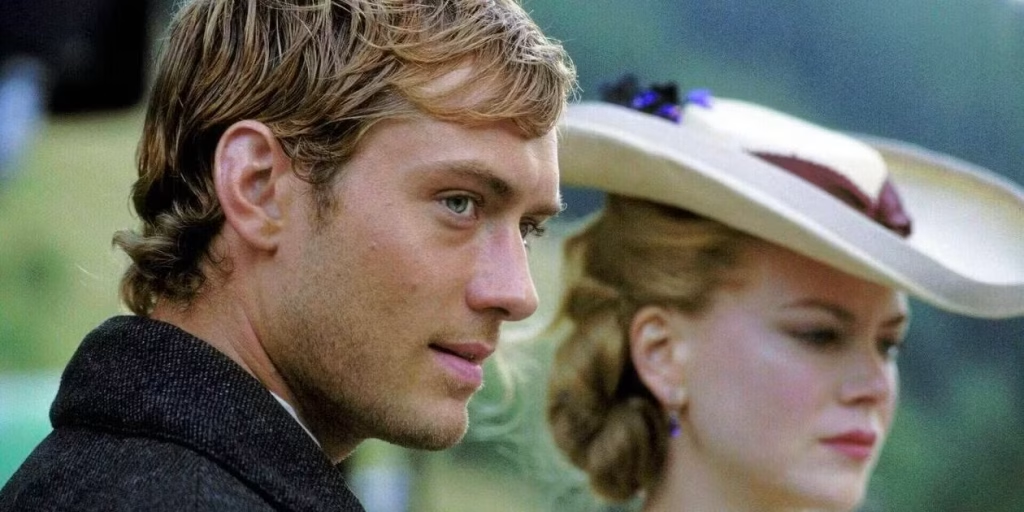
Three years later, Anthony Minghella cast Law as Inman in Cold Mountain (2003). The film grossed $173 million worldwide on a $90 million budget. Subsequently, Law earned his second Academy Award nomination, this time for Best Actor. He lost to Sean Penn for Mystic River. Notably, the back-to-back Minghella collaborations positioned Law as an exceptionally rare commodity in the early 2000s. Specifically, he was a working actor with two Oscar nominations before age thirty-one. Furthermore, both nominations came from prestige literary adaptations rather than from commercial vehicles. Furthermore, the bracket Hollywood was prepared to assign him was familiar. The English Patient had positioned Ralph Fiennes for the same bracket seven years earlier.
The Closer Role That Connects To The Cluster
In 2004, Mike Nichols adapted Patrick Marber’s stage play Closer for the screen. The film cast Law opposite Natalie Portman, Julia Roberts, and Clive Owen. The four-character drama examined romantic infidelity in contemporary London. Specifically, the film grossed $115 million worldwide on a $27 million budget. Furthermore, Portman earned her first Academy Award nomination for Best Supporting Actress for the role of Alice. Notably, the film is one of the most cited prestige-ensemble pieces of the 2000s. The casting placed Law and Portman at simultaneous career peaks. Importantly, the casting reflects something specific about Law’s trajectory. He was making prestige films at a moment when most leading men his age were committing to franchise vehicles.
The Climb: The Barbell That Defined The Subsequent Twenty Years
The 2004 Through 2009 Run That Refused To Choose
Across the five years from 2004 through 2009, Law ran both lanes simultaneously. Most actors at his recognition tier were unable to replicate the pattern. Specifically, he took prestige roles across multiple auteur collaborations. Martin Scorsese’s The Aviator (2004), Kenneth Branagh’s Sleuth (2007), and Wong Kar-wai’s My Blueberry Nights (2007) anchored the prestige lane. Furthermore, he took commercial roles in parallel. Sky Captain and the World of Tomorrow (2004), the Nancy Meyers comedy The Holiday (2006), and various studio projects defined the commercial lane. Notably, the prestige work and commercial work compounded toward each other rather than against each other. Each lane reinforced his bookability in the opposite lane.
The Sherlock Holmes Franchise That Capitalized The Strategy

Guy Ritchie cast Law as Dr. John Watson opposite Robert Downey Jr.’s Sherlock Holmes in the 2009 reboot. Specifically, Sherlock Holmes (2009) grossed $524 million worldwide on a $90 million budget. Subsequently, Sherlock Holmes: A Game of Shadows (2011) grossed $545 million worldwide on a $125 million budget. The data comes via Box Office Mojo’s coverage of franchise economics. Furthermore, the cumulative compensation Law received across the two films ran approximately $20 to 30 million by industry estimate. The figure includes base salary plus participation. Importantly, the franchise commitment did not displace his prestige work. Law continued booking auteur projects continuously throughout the 2009 to 2011 window and beyond.
The Sherlock Holmes 3 Hold That Demonstrated The Barbell’s Logic
Sherlock Holmes 3 has been in active development since 2011. Specifically, the project has been announced, delayed, recast in various creative permutations, and held in pre-production for over thirteen years. Furthermore, the prolonged development holding pattern is itself instructive. Most actors anchored to a franchise of Sherlock Holmes’s commercial scale would have used the development hold as a structural reason. Specifically, they would have suspended prestige work in anticipation of the next installment. Law did not. Notably, he booked extensively across the same thirteen years that Sherlock Holmes 3 has remained on the development calendar. The Young Pope, The New Pope, the Fantastic Beasts trilogy, Captain Marvel, and various other significant projects all arrived during the wait. The franchise hold compressed his peers. It did not compress Law.
The Second Act: The Young Pope And The Streaming-Era Repositioning
The 2016 Sorrentino Casting That Reset Everything
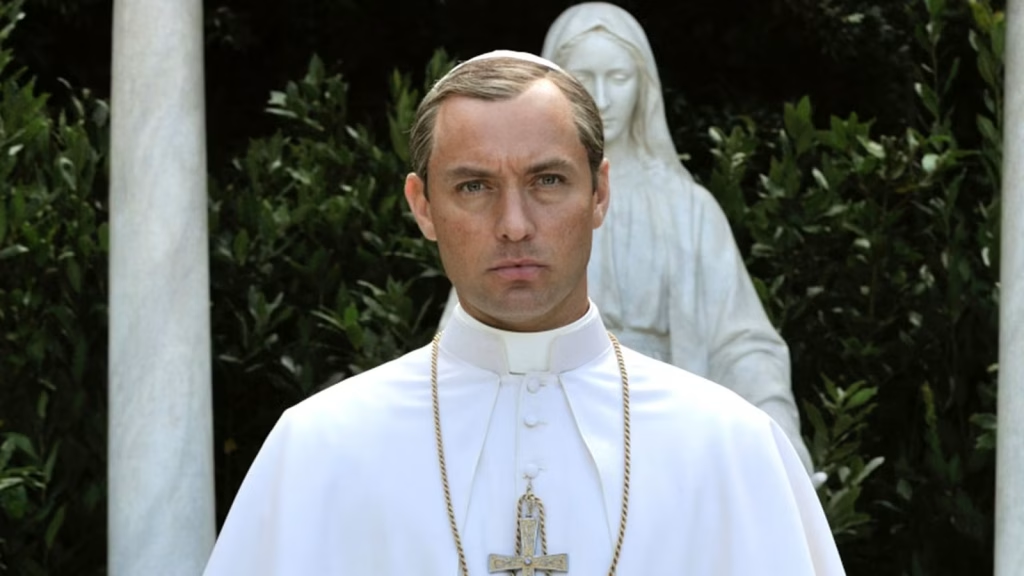
Paolo Sorrentino cast Law as Lenny Belardo, the fictional first American pope, in HBO’s The Young Pope (2016). The role was a career reset of an unusual kind. Specifically, the series demonstrated that Law at forty-three could anchor prestige cable television. The previous decade of British leading-man work had not signaled that bracket. Furthermore, the performance positioned him as a contemporary of Mads Mikkelsen, Bryan Cranston, and Matthew McConaughey. The romantic-lead bracket of his early thirties stayed in the rearview. Notably, Sorrentino’s The New Pope (2020) extended the partnership across a second season. The combined nineteen-episode arc represents one of the most distinctive prestige-television leading-man performances of the 2010s and 2020s.
The Wizarding World Franchise Commitment
In 2018, Warner Bros. cast Law as Albus Dumbledore in Fantastic Beasts: The Crimes of Grindelwald. Specifically, the role required franchise commitment across three films. Law subsequently reprised the part in Fantastic Beasts: The Secrets of Dumbledore (2022). The compensation structure was reportedly substantial across the three-film commitment, though not publicly disclosed. Furthermore, the casting placed Law in continuous structural relationship with the Wizarding World ecosystem. Daniel Radcliffe, Emma Watson, and Rupert Grint had defined that ecosystem a decade earlier. Importantly, the role kept Law inside the largest fantasy franchise in modern Hollywood. Crucially, it did not require him to suspend prestige work elsewhere.
Captain Marvel And The MCU Bracket

In 2019, Marvel Studios cast Law as Yon-Rogg in Captain Marvel. The Kree commander served as both mentor and antagonist to Brie Larson’s Carol Danvers. The film grossed $1.13 billion worldwide. Specifically, Law’s compensation across the single MCU appearance reportedly ran in the high seven figures. Furthermore, the role demonstrated that Law was prepared to enter the MCU. Importantly, he did not commit to a multi-film franchise lock-in. Notably, the structure mirrors the same logic that has defined his entire career. Single-film franchise participation rather than multi-film franchise lock-in. The compensation captured the upside without absorbing the lock-in cost.
The 2024 Star Wars And Streaming Slate
In 2024, Disney+ launched Star Wars: Skeleton Crew. The series cast Law in the lead role of Jod Na Nawood. Specifically, the streaming series ran eight episodes and represented Law’s first Star Wars universe appearance. Furthermore, the same year brought The Order. Law played an FBI agent investigating white-nationalist terrorism in the indie thriller. Notably, the simultaneous release of a Lucasfilm streaming property and a prestige indie thriller demonstrated the barbell continuing to operate. The pattern persisted across his fifth professional decade. The pattern has not compressed across thirty years of working.
The Placement Economy: Why Law’s Brand Strategy Stays Selective
The Dunhill Era And The Single Major Ambassador Window
From approximately 2007 through 2010, Law served as the global face of Alfred Dunhill. The British luxury menswear and accessories house anchored its heritage marketing on the partnership. Specifically, the multi-year contract reportedly paid Law mid-seven figures annually across the partnership window. Furthermore, the campaign positioned him as the contemporary heir to the British leading-man tradition. Dunhill’s heritage marketing required exactly that positioning. Notably, the Dunhill deal was the only major luxury ambassador contract Law has held during his career. After 2010, he declined to multiply the contract. Specifically, he passed on building the kind of ambassador stack that Pierce Brosnan’s Bond credibility produced through Omega and adjacent partnerships.
What Law Did Not Build
The endorsement universe available to Law during the post-Sherlock Holmes window would have justified a substantial brand-asset stack. Specifically, his Sherlock Holmes credibility plus the prestige bracket from the Minghella films and The Young Pope positioned him for major partnerships. Premium luxury watch contracts, automotive partnerships, financial services campaigns, and additional fashion-house ambassador deals were all available. Furthermore, the cumulative compensation from such a stack would have run approximately $30 to 50 million across the 2012 to 2024 window. Law declined the structure. Importantly, the decline reflects the same operational logic as his refusal to commit fully to franchise vehicles. He was protecting optionality rather than maximizing income.
The Strategic Logic Behind The Refusal
The strategic question becomes why Law structured his brand-asset career this way. The answer, examined across his decision history, runs through the same logic as his film career. Specifically, ambassador contracts at the multi-deal scale would have constrained his casting menu. The single Dunhill contract did not produce that constraint. Furthermore, luxury ambassador stacks signal commercial rather than artistic positioning. Specifically, the signaling matters disproportionately for actors whose prestige bookability depends on auteur directors. Auteur directors need to believe the actor will accept under-market fees for material the actor finds significant. Notably, the same structural logic appears elsewhere. Joaquin Phoenix’s career and Meryl Streep’s career run the same pattern. The actors who maintain auteur bookability across decades typically refuse the brand-asset compounding play. Specifically, they refuse the play their franchise credibility could justify.
The Lesson For Brand Founders
Law’s case is instructive because it demonstrates the most underrated career-architecture strategy in the cluster’s analysis. Specifically, the prestige-and-tentpole barbell requires different operational discipline than the cluster’s other strategies. The auteur-purity discipline that defines Phoenix and Streep is not needed. Furthermore, the franchise-exit timing that defines Evans is not required. Notably, even the property compounding that defines Grint is not part of the architecture. Furthermore, the barbell requires only one operational discipline. Refuse to choose between lanes. Most actors who reach Law’s recognition tier eventually choose. They commit to franchise multi-film deals or they retreat into auteur work full-time. Law has done neither across thirty years. The refusal to choose is itself the strategy.
The London Chapter: Where The Career Has Lived Since 1991
The Notting Hill And Holland Park Footprint
Law has been London-domiciled since the early 1990s. Specifically, his primary residence has rotated across various Notting Hill and Holland Park properties across the decades. Furthermore, adjacent holdings in central London provide proximity to West End theater and Soho production infrastructure. Furthermore, the geographic concentration has been deliberate. Law has consistently spoken in interviews about preferring London proximity. Specifically, family access, theater proximity, and the British production ecosystem at Pinewood, Shepperton, and various central London facilities have anchored the geography. Notably, the choice has avoided the Los Angeles industry-proximity geography. Specifically, most international peers consider that geography standard for sustained Hollywood bookability.
The Personal Life That Has Generated Continuous Press
Law married Sadie Frost in 1997. The marriage produced three children before ending in 2003. Specifically, Frost subsequently became one of the founding members of the Primrose Hill set. The cohort defined London celebrity culture in the early 2000s. Subsequently, Law was engaged to Sienna Miller from 2003 through 2006. The relationship ended after the 2005 Daisy Wright nanny scandal generated extended press coverage during the early Sherlock Holmes development window. Furthermore, Law married psychologist Phillipa Coan in 2019, with whom he has additional children. Importantly, his six children across multiple relationships have been raised primarily in London. Furthermore, the family has maintained deliberate distance from the Hollywood celebrity-children circuit.
The Family Architecture That Stayed Outside The Press
Despite the press cycles around his romantic relationships, Law’s parenting architecture has been consistently kept outside the celebrity-coverage ecosystem. Specifically, he has declined to feature his children in editorial coverage. Furthermore, he has not staged family-photo press cycles. Notably, he has consistently prioritized geographic and editorial distance from the celebrity-family visibility model that many of his peers have adopted. Furthermore, his oldest daughter Iris Law has pursued an independent modeling and acting career. Burberry and other high-fashion clients have signed her on her own merits rather than through her father’s industry connections. Notably, the family architecture reflects the same operational discipline that defines Law’s film career. Selective participation rather than maximum extraction.
What He Built: The Net Worth Composition Lesson
The $70 Million Estimate
Current credible estimates place Law’s personal net worth at approximately $70 million. Reporting comes via Forbes, Celebrity Net Worth, and various industry sources. The composition breaks down approximately as follows.
Acting income across career: approximately $50 million in retained capital. The career gross runs north of $200 million across his thirty-plus year filmography. Specifically, the retained share reflects standard celebrity tax structures and a deliberately conservative reinvestment posture across decades.
Sherlock Holmes franchise compensation: approximately $20 to 30 million across the two films. The figure is included in the broader acting income line above. Furthermore, this represents the largest single concentrated income stream of his career.
Streaming-era television compensation: approximately $8 to 12 million in aggregate. The line covers The Young Pope, The New Pope, Skeleton Crew, and Black Rabbit. Specifically, the streaming-era line has compounded steadily across the past decade. The platforms have escalated leading-actor compensation toward film-tier rates.
Brand and endorsement income: approximately $5 to 8 million across the Dunhill window plus various smaller editorial and commercial campaigns. Notably, this column runs significantly smaller than what Law’s recognition level could have commanded through a fuller brand-asset stack.
Real estate: approximately $10 to 15 million across the London holdings and various smaller properties. Importantly, the property line reflects active management rather than passive accumulation. Law has rebalanced his London footprint multiple times across the decades.
The Asset Composition Lesson
The portfolio matters because it sits at an unusual intersection. Most actors at Law’s tier hold roughly 25% of net worth in real estate and 20% in brand-asset income. Law runs approximately 18% in real estate and 9% in brand-asset income. Specifically, the dominant column is acting income retained across both prestige and franchise lanes. Specifically, the architecture is the lesson. Furthermore, the portfolio reflects active barbell management. Law deployed franchise capital toward acting career sustainability rather than toward compounding asset positions. The same structural pattern appears across the careers of actors who have maintained simultaneous prestige and commercial bookability. Notably, the pattern holds across multiple decades. Furthermore, the architecture trades total accumulation for total optionality. Subsequently, the trade has produced a career that competes for prestige roles against younger actors thirty years into Law’s run.
The Soft Landing: What The Law Case Teaches
Three Lessons From The Barbell
First, refusing to choose is itself a strategy. Specifically, most actors at Law’s recognition tier eventually commit to one lane. They take the franchise multi-film deal that locks them into commercial work. Alternatively, they retreat into prestige auteur work that compresses their commercial bookability. Furthermore, the choice is usually framed publicly as a decision rather than as a constraint. Law has refused to make the choice for thirty years. The refusal has produced career durability the standard one-lane strategy cannot match.
Second, single-film franchise participation captures upside without absorbing lock-in. Notably, Law’s Captain Marvel role demonstrates a structural option most actors at his tier do not exercise. Specifically, he entered the MCU for one film. Subsequently, he captured the high-seven-figure compensation and the cultural visibility, then exited without committing to subsequent appearances. Furthermore, the same logic appears across his Fantastic Beasts arc and his Skeleton Crew commitment. The franchise contributes income and visibility. The franchise does not absorb his casting calendar permanently.
The Counterexample The Cluster Demonstrates Through Affirmation
Third, the placement economy includes architectures the cluster’s other articles have only partially examined. The articles in this cluster have argued how to structure brand deals well. Pierce Brosnan through Omega platform deals. Jessica Alba through founding her own brand. They have also argued how to structure auteur careers well. Phoenix through Joker-funded slate. Ralph Fiennes through the directorial filmography. Chris Evans through the franchise exit. Specifically, Law’s case demonstrates the architecture none of those approaches captures. The actor who runs both lanes simultaneously is not synthesizing the strategies. He is running a different optimization function entirely. Furthermore, the function produces career outcomes commensurate with the dedicated strategies. Specifically, the architecture produces significantly more casting flexibility across decades.
The Thesis That Outlasts The Sherlock Holmes Hold
Law’s case is instructive because it demonstrates that the cluster’s strategic frameworks are not exhaustive. The actor who refuses to commit fully to either lane runs a career architecture the placement-economy framework treats as theoretically possible but rarely models in practice. Specifically, the rarity reflects the operational difficulty rather than the strategic limitation. Furthermore, executing the barbell across thirty years requires continuous active management. The active management runs across which prestige projects to accept, which franchise opportunities to enter, and which lock-ins to refuse. Most actors lack the operational capacity to maintain that pace.
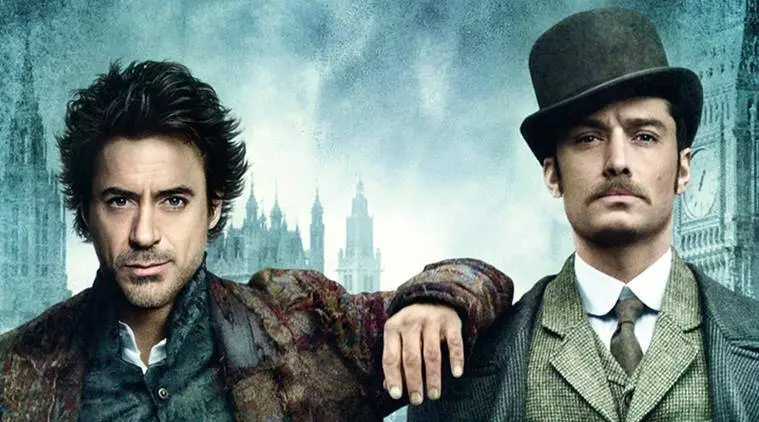
The Sherlock Holmes 3 development hold has run thirteen years. Across the same thirteen years, Law has booked The Young Pope, The New Pope, three Fantastic Beasts films, Captain Marvel, Skeleton Crew, The Order, Black Rabbit, and Wes Anderson’s ensemble work. The franchise will eventually return or it will not. Either way, Law’s career has continued compounding throughout the wait. Notably, the wait was never the strategy. The work during the wait was.
Related Reading
- Hollywood’s $26 Billion Hidden Economy: How Product Placement Built Modern Stardom
- Natalie Portman Net Worth: How Dior’s 15-Year Contract Built $90M
- Ralph Fiennes Net Worth: How Voldemort And Bond Funded A $50M Director’s Career
- Daniel Radcliffe Net Worth: $110M And The West Village Walkup Strategy
- Broadway And Tentpole: How 6 Stars Built Eight-Figure Wealth Running Both Lanes
- Hugh Jackman Net Worth 2025: The Boy Who Waited for His Mother to Come Home
How To Work With Social Life Magazine
A fish does not notice the water. A reader does not notice the placement. That is the entire point. Furthermore, it is the entire opportunity for the brand founder who has just finished reading an article and is, without having fully realized it yet, about to scroll down and click one of the following five links.
Six Ways To Connect
If you are a brand, a founder, a creative director, or an in-house marketing lead who has read this far and would like to be considered for an editorial feature in Social Life Magazine’s print or digital ecosystem, the editorial team reviews brand submissions year-round. Pitch us at sociallifemagazine.com/contact.
If you are a brand with a ready-to-run campaign and would like to move faster than the traditional editorial cycle, the Paid Feature program offers three tiers of guaranteed placement across Social Life Magazine’s digital properties, with pricing starting at $975. Full details at sociallifemagazine.com/submit-a-paid-feature/.
Every piece Social Life Magazine publishes reaches an email list of 82,000 pre-qualified affluent readers. The majority summer in the Hamptons and spend the off-season in Manhattan’s core luxury zip codes. The email blast is the single most efficient distribution mechanism in the Hamptons editorial ecosystem. Inquire about placement at sociallifemagazine.com/enflyer.
Events, Print, And Independent Editorial
Polo Hamptons 2026, Social Life Magazine’s flagship event property, returns for its 17th year in July and August 2026. Platinum, Gold, and Corporate Cabana sponsorship packages are available for select categories (automotive is locked by BMW North America, real estate is at capacity, all other categories open). Demographic data, sponsor decks, and custom activation proposals available at polohamptons.com.
Social Life Magazine’s print edition, now in its 23rd year, distributes 25,000 copies per summer issue across Westhampton, Southampton, Bridgehampton, East Hampton, Sag Harbor, Amagansett, and Montauk boutiques, restaurants, and private clubs. Annual subscriptions, including fall/winter Upper East Side doorman distribution, available at sociallifemagazine.com/subscription.
If you’d like to support independent luxury editorial in the age of AI-generated content farms and private-equity-owned media conglomerates, donations to Social Life Magazine’s editorial operations are received via PayPal. Every dollar funds original reporting, photography, and the kind of writing that brands send their marketing teams to study.
Author

Written by
Recent Posts

Inside Sushi by Bou’s Custom VIP Sushi Experience at Palm Tree Music Festival Hamptons
Face of Summer 2026: The Institutional Trader Who Reads Markets at Dawn and Drinks Rosé at Sunset

7 Common Mistakes New Dog Owners Make (and How to Avoid Them)

A Vacation Emergency Guide: How to Ask for Help After an Unexpected Accident
Post and Beam Homes Are Having a Moment in Oregon Wine Country
Categories
- Art
- Articles
- Business of Luxury
- Celebrities
- Entertainment
- Events
- Faces of Summer 2026
- Fashion
- Fashion & Style
- Featured
- Finance
- Food, Spirits, Wine
- Hamptons
- Hamptons Celebrities
- Health
- Health & Beauty
- Lifestyle
- Luxury Lifestyle
- Press
- Profiles
- Real Estate
- Technology
- The Chronicles
- Travel
- Uncategorized
- Weddings