
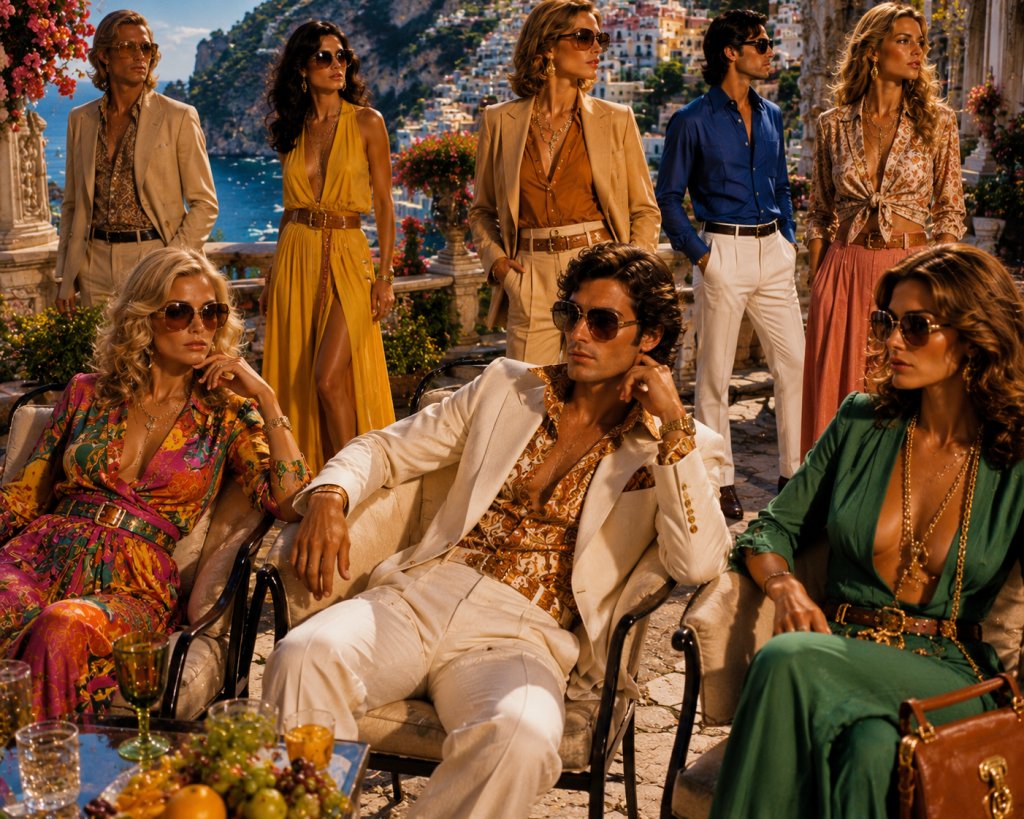
The 1970s were the decade when Italian fashion stopped being a regional craft industry and started being a global commercial force. Before 1970, Paris set the agenda and Milan followed. By 1980, Milan had built a ready-to-wear infrastructure so efficient and so commercially powerful that Paris would spend the next four decades trying to catch up. Fashion in the 1970s was the decade that invented the modern fashion business: the designer as brand, the runway as marketing event, and the Italian supply chain as the engine that made luxury scalable without sacrificing the craft that justified its prices.
Three forces converged to make this transformation possible. First, the counterculture of the late 1960s had shattered haute couture’s authority. Young people did not want to be told what to wear by Parisian ateliers staffed by septuagenarians who had never worn a pair of jeans. Second, Italian manufacturers had developed textile and production capabilities that could deliver ready-to-wear at quality levels approaching couture, at a fraction of the price, in a fraction of the time. Third, a generation of Italian designers emerged who understood that fashion’s future was not in one-of-a-kind garments for aristocrats but in beautifully made clothes for the professional class that was remaking the economies of the Western world.
Giorgio Armani and the Birth of Modern Menswear
Giorgio Armani founded his label in 1975 with his business partner Sergio Galeotti, and within five years he had redefined what a man’s suit could look like, feel like, and communicate about the person wearing it. His unstructured blazer removed the rigid canvas lining, the heavy shoulder padding, and the stiff formality that had made the traditional British and American suit feel like corporate armor. What remained was a jacket that draped rather than constrained, that suggested authority without insisting on it, and that looked as natural in a restaurant as it did in a boardroom.
The timing was perfect. The 1970s professional class needed clothes that bridged the gap between the formality of the 1960s boardroom and the casualness of a culture that had just spent a decade questioning every institution, including the one that dictated what men should wear to work. Armani’s suit was the answer: serious enough for a bank, relaxed enough for a dinner afterward, beautiful enough for a woman to steal from her husband’s closet (which they did, creating the androgynous Armani silhouette that would dominate the 1980s). Revenue grew from zero in 1975 to over $100 million by 1980. Among the Italian fashion houses, Armani’s ascent remains the fastest organic growth in luxury history.
Armani’s innovation was not just aesthetic. It was structural. By controlling both design and production (he insisted on manufacturing in Italy using Italian fabrics and Italian labor), he could guarantee quality at a level that designers who outsourced production could not match. The vertical integration model that Armani pioneered in the 1970s became the template for every Italian luxury brand that followed. Brunello Cucinelli, Zegna, and Prada all adopted variations of this approach: control the supply chain, control the quality, control the margin.
Gianni Versace Arrives in Milan
Gianni Versace launched his eponymous label in 1978, presenting his first womenswear collection at the Palazzo della Permanente in Milan. Where Armani proposed restraint, Versace proposed spectacle. Armani dressed the executive; Versace dressed the celebrity. One palette was neutral, the other nuclear. His clothes were loud, saturated, sexually explicit, and technically virtuosic in ways that even his harshest critics had to acknowledge. The Medusa head logo, the baroque prints, the chainmail, the safety pins: each element announced that Italian fashion could be as theatrically ambitious as French couture while remaining commercially viable at ready-to-wear prices.
Versace’s Calabrian roots gave him an aesthetic vocabulary rooted in classical Mediterranean culture that no Northern European designer could authentically access: Greek mythology, Roman architecture, Byzantine mosaics, the sun-saturated colors of the southern Italian coast. He translated these references into garments with a confidence that bordered on aggression and a craftsmanship that justified the confidence. The result was a brand that divided opinion as sharply as any in the history of fashion. Critics either loved the excess or dismissed it as vulgarity with expensive stitching. Consumers settled the debate by making Versace one of the fastest-growing Italian brands of the late 1970s and early 1980s.
The Armani-Versace polarity established a creative tension that would define Italian fashion for the next two decades and continues to structure the market today. Armani represented intellect, restraint, and the Northern European tradition of elegance through subtraction. Versace represented passion, maximalism, and the Mediterranean tradition of beauty through accumulation. Every Italian designer who emerged after 1980, from Dolce and Gabbana to Tom Ford at Gucci, positioned themselves somewhere on the axis between Armani’s whisper and Versace’s roar.
The Rise of the Italian Supply Chain
Behind every Italian designer’s success in the 1970s was a manufacturing infrastructure that no other country could match and that none has replicated since. The textile mills of Biella (where Zegna had operated since 1910) produced the finest wool fabrics on earth, supplying not only Italian brands but also the French fashion houses and Savile Row tailors who needed quality that their own domestic manufacturers could not deliver. The leather tanneries of Tuscany, centered around Santa Croce sull’Arno near Florence, processed calfskin, lambskin, and exotic leathers to standards that defined luxury worldwide. Ferragamo and Gucci sourced their hides from these tanneries, as did every other Italian leather goods house.
This geographic concentration of specialized manufacturing created a structural advantage that Italian designers exploited ruthlessly. A Milanese designer could source fabric, prototype a garment, produce a sample, receive client feedback, modify the design, and deliver finished inventory within a geographic radius of 200 kilometers and a time frame of weeks. A Parisian designer working with the same level of quality needed to coordinate suppliers across multiple countries, manage international shipping logistics, accept lead times that were double or triple what Italian production required, and pay premium prices for the privilege of not controlling their own supply chain.
Speed, quality, and cost efficiency all favored Milan. The French fashion houses retained their prestige through couture heritage and the institutional authority of the Chambre Syndicale, but the commercial battlefield of ready-to-wear belonged to Italy by decade’s end. Paris designed ideas. Milan manufactured them. The partnership was unequal in prestige and wildly profitable for both, but the economic power was shifting south.
Fendi, Valentino, and the Roman Contingent
While Milan established itself as the capital of Italian ready-to-wear, Rome maintained its position as the capital of Italian glamour. Valentino Garavani had been dressing international celebrities and European aristocracy since the 1960s, and his 1970s collections cemented Valentino Red as a color with the same cultural authority as Tiffany Blue or Hermes Orange. His couture-level construction and romantic sensibility attracted clients who found Milan’s commercial energy too aggressive and Paris’s avant-garde pretensions too intellectual. Valentino offered a third way: Mediterranean warmth delivered with Parisian precision, romantic without being sentimental, luxurious without being crass.
Fendi, under the creative direction of Karl Lagerfeld (who had joined the house in 1965), spent the 1970s transforming from a Roman fur house into a global accessories brand. Lagerfeld’s innovations with fur (shaving mink to the weight of silk, reversing pelts so the leather faced outward, dyeing fox in neon colors, weaving fur strips into knitted fabric) turned a traditional craft into an experimental medium that horrified the fur industry’s old guard and delighted customers who wanted warmth without stiffness. The double-F logo he had designed in the 1960s began appearing on handbags and accessories, establishing the brand’s visual identity beyond fur and prefiguring the logo mania that would consume the industry in the 1980s.
Fendi’s evolution from regional furrier to international luxury brand during the 1970s prefigured the conglomeration that would consume the industry in the 1990s. A house that could manage fur production, leather goods, ready-to-wear, and accessories simultaneously, under a single creative director who also ran Chloe in Paris, was already operating at a scale that suggested the future would belong to multi-category luxury conglomerates rather than single-product artisan workshops.
The American Market Opens
Ralph Lauren transformed American fashion during the 1970s from a derivative of European trends into an independent proposition with a commercial scale that no European house could match. His Polo label, launched in 1967 with a line of neckties, expanded throughout the decade into a full lifestyle brand encompassing menswear, womenswear, and the beginnings of the home collection that would become a multi-billion-dollar business. Lauren’s genius was understanding that the American luxury consumer wanted European aesthetic quality without European cultural baggage. His answer was a fantasy of American aristocracy: old money taste, Ivy League credentials, and Hamptons weekends, all available for purchase at Bloomingdale’s by anyone with a credit card and the aspiration to belong.
The 1974 film “The Great Gatsby”
for which Lauren designed the menswear costumes and the 1977 film “Annie Hall” (which popularized the androgynous, oversized silhouette that Diane Keaton wore using Ralph Lauren menswear pieces) demonstrated that fashion and Hollywood were converging into a single cultural industry. That convergence would accelerate through the 1980s and 1990s until the red carpet became fashion’s most valuable marketing channel and celebrity endorsement became worth more than any advertising campaign. Lauren saw that future first, and he built the brand infrastructure to exploit it before his competitors understood what was happening.
Meanwhile, the American fashion industry was developing its own design identity through Halston (who dressed Jackie Kennedy and Studio 54), Calvin Klein (who was building the jeans empire that would define American casual luxury), and Donna Karan (who was still at Anne Klein but developing the “seven easy pieces” philosophy that would launch her own brand in 1984). Each designer approached the market differently, but all shared Lauren’s fundamental insight: American fashion was not about couture construction or European heritage. It was about lifestyle, accessibility, and the democratization of taste.
What Fashion in the 1970s Built
Fashion in the 1970s established the structural foundation for everything that followed. The Italian ready-to-wear system that Armani and Versace built became the commercial engine that would power Prada, Dolce and Gabbana, and Bottega Veneta in subsequent decades. The designer-as-brand model that Lauren pioneered in America became the template for every fashion company launched after 1980. The supply chain advantages that Italian manufacturers developed became the competitive moat that kept Italian luxury dominant for half a century and counting.
The decade also established the creative polarity (restraint versus excess, intellect versus passion, Northern rigor versus Mediterranean warmth) that continues to organize the luxury market. Every brand that launches today must decide where it sits on the Armani-Versace axis, whether it knows it or not. Every creative director appointed at a major house inherits the structural advantages that Italian manufacturing built in the 1970s, whether they acknowledge it or not. The decade was not glamorous. It was foundational. And foundations, by definition, support everything built on top of them.
For the Hamptons social circuit, the 1970s were the decade that established the aesthetic tension between understated and spectacular that still defines East End dressing. The women who wore Valentino to dinner parties in Southampton and the men who wore Armani to cocktails in Bridgehampton were making the same argument that their grandchildren make today: that what you wear is not vanity but vocabulary, and that the right garment speaks a language that opens doors no resume can unlock. That language was codified in the 1970s. It has been updated every season since. It has never been replaced.
Where The Conversation Continues
Connect With Social Life
Social Life Magazine has covered the intersection of luxury fashion, power, and the Hamptons for over two decades. Our five summer issues, distributed from Memorial Day through Labor Day across the East End, reach 25,000 readers who define the season’s cultural conversation. From Westhampton to Montauk, this is the publication that brands trust when the audience matters more than the impression count.
We deliver an additional 15,000 copies to Upper East Side doorman buildings during fall and winter, extending the Hamptons conversation into Manhattan’s most exclusive residential addresses. Our 82,000 email subscribers receive curated editorial that blends fashion authority with Hamptons insider access.
Polo Hamptons, our signature sporting and lifestyle event in Bridgehampton, brings together the brands and personalities that shape luxury culture. Christie Brinkley hosts. Getty and McMullan photograph. The corporate cabana and sponsor activations create direct engagement with an audience that treats attendance as a social credential.
Contact Cass Almendral, Head of Business Development, at [email protected] to discuss editorial features, event sponsorships, and brand activations for the 2026 season.
For Polo Hamptons corporate cabana inquiries, reach Justin Mitchell at [email protected].
Author

Written by
Recent Posts

The First Decision After a Collision Can Be the Most Important One
Two Weeks in Rome and Beyond: Turkish Airlines Itineraries from Boston, Chicago and Onward to India

Top 10 Hair Transplant Clinics in Turkey 2026
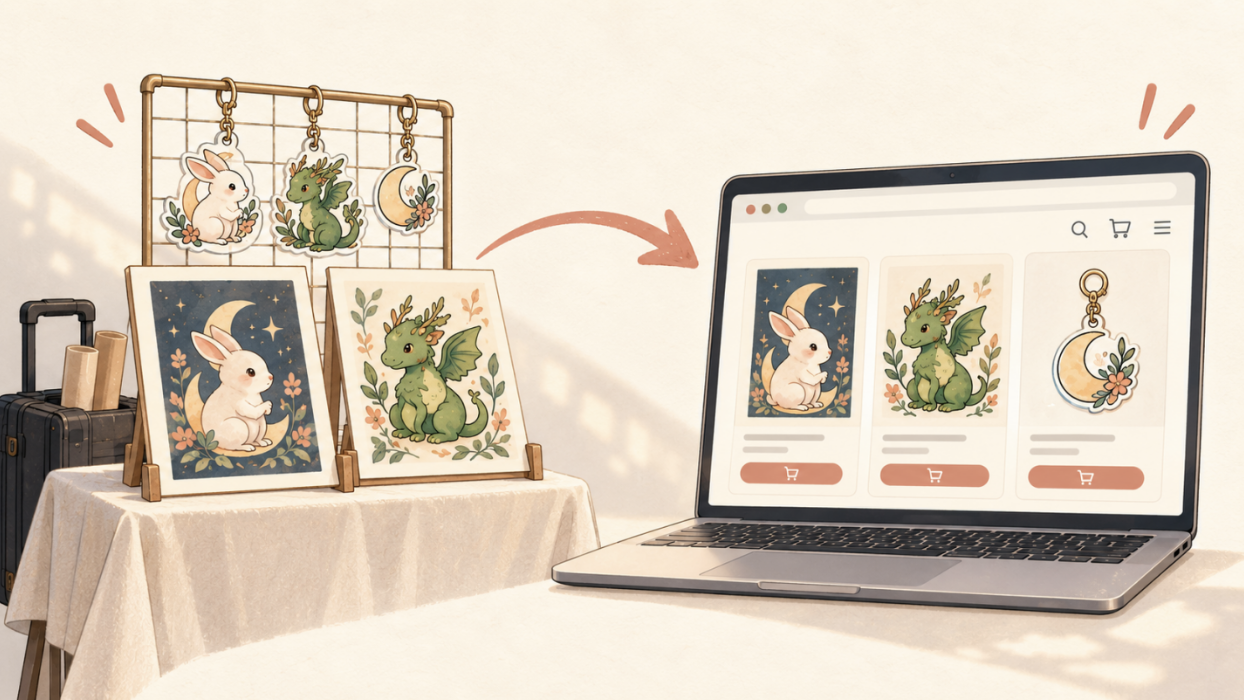
Artist Alley to Online Store: How Convention Artists Can Keep Selling After the Event
When an 18-Wheeler Crash Leaves Lasting Consequences
Categories
- Art
- Articles
- Business of Luxury
- Celebrities
- Culture
- Entertainment
- Events
- Faces of Summer 2026
- Fashion
- Fashion & Style
- Featured
- Finance
- Food, Spirits, Wine
- Hamptons
- Hamptons Celebrities
- Health
- Health & Beauty
- Lifestyle
- Luxury Lifestyle
- Press
- Profiles
- Real Estate
- Technology
- The Chronicles
- Travel
- Uncategorized
- Weddings