
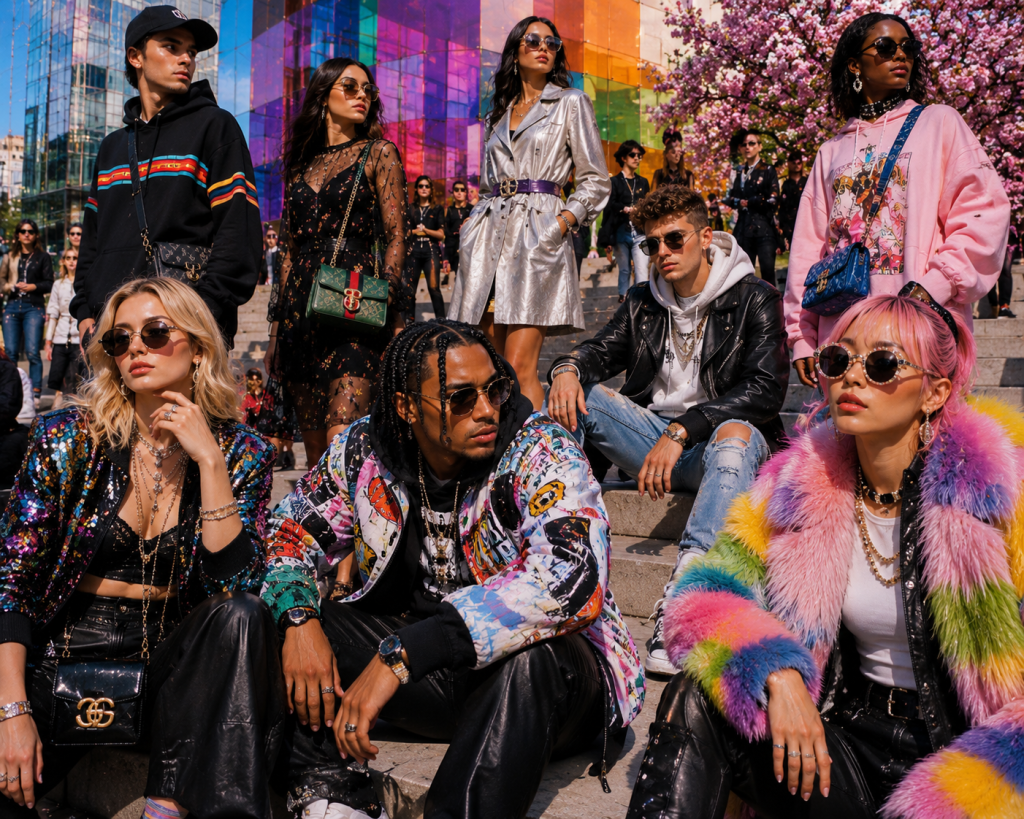
The 2010s began with fashion as an industry and ended with fashion as a content platform. Instagram replaced editorial as the primary distribution channel. Streetwear replaced tailoring as the dominant aesthetic. Creative directors became cultural figures whose influence extended beyond garments into music, architecture, social justice, and the definition of luxury itself. Fashion in the 2010s demolished the hierarchy separating high fashion from street culture. The designers who understood that demolition fastest became the most powerful people in the industry.
Three forces drove the transformation. The smartphone camera became the new runway audience. The collaboration economy became the new business model. A generation of creative directors refused to treat fashion as a discipline separate from everything else in culture. By 2019, the question had shifted. Making beautiful clothes no longer sufficed. A creative director needed to generate enough cultural conversation to justify a $10 billion brand valuation in a market where attention ranked as the only scarce resource.
Alessandro Michele and the Gucci Earthquake
Alessandro Michele’s appointment at Gucci in January 2015 ranks as the decade’s defining creative event. A backstage technician who spent 13 invisible years in the design department received the most commercially important house in the Kering portfolio. He immediately threw out everything the brand had represented for two decades. Where Tom Ford’s Gucci sold minimalist sex, Michele’s Gucci sold maximalist everything. Gender-fluid silhouettes. Baroque ornamentation. Renaissance references colliding with geek culture. Flea market eclecticism curated by a genius.
The $10 Billion Maximalist Machine
Revenue doubled from $4.5 billion to $10 billion between 2015 and 2019. Gucci became the most searched fashion brand on Google for four consecutive years. Michele proved that in the Instagram era, visual density generated more value than visual clarity. A Michele garment contained so many references, layers, and details that a single photograph could fuel dozens of discussion posts. Complexity became content. Content became commerce.
The Dionysus bag, the Marmont collection, the Ace sneaker, and the fur-lined Princetown loafer each generated hundreds of millions in revenue. Harry Styles, Jared Leto, Florence Welch, and Billie Eilish became unofficial brand ambassadors. Each represented a different register of Michele’s inclusive maximalism. Kering’s stock price tripled during his tenure. Francois-Henri Pinault called the Bizzarri-Michele partnership “the best creative-business collaboration in modern luxury.” The statement held until it didn’t. Michele departed in November 2022 as revenue growth decelerated and the maximalist aesthetic that felt revolutionary in 2015 became the establishment by 2022.
Virgil Abloh and the Demolition of Fashion’s Class Ceiling
Virgil Abloh’s trajectory from Kanye West’s creative director to the head of Louis Vuitton menswear represented the decade’s most consequential structural change. Abloh’s Off-White label, founded in 2013, operated on a principle that putting quotation marks on a garment (“JACKET” on a jacket, “SHOELACES” on shoelaces) constituted a valid design gesture. Fashion critics debated whether this was genius or trolling. Consumers settled the debate with their wallets.
The Nike Collaboration That Changed Everything
His Nike “The Ten” collaboration in 2017 deconstructed ten iconic sneakers with zip-tie tags and exposed stitching. Individual pairs resell for $2,000 to $15,000 on secondary markets. The collection generated more resale revenue than most luxury brands generate in primary sales. Abloh proved that the streetwear audience would pay luxury prices for luxury ideas applied to everyday objects. Off-White grew to an estimated $250 million in annual revenue. LVMH acquired a 60% stake in 2021, valuing the brand at over $1 billion.
When LVMH appointed Abloh as artistic director of LV menswear in March 2018, he became the first Black designer to hold a top position at a major French fashion house. The appointment declared that luxury’s demographic assumptions could no longer stand. For 164 years, French houses hired European designers exclusively. Abloh was American, Black, trained as an architect, and famous for putting quotation marks on sneakers. His debut show at the Palais-Royal gardens generated more social media impressions than any men’s fashion show in history. He wept at the finale. Kanye West wept in the front row.
Abloh died of cardiac angiosarcoma on November 28, 2021, at age 41. He told almost no one about the diagnosis. For two years, he designed for both Off-White and Louis Vuitton while undergoing treatment. His death ended the decade’s most culturally significant career before anyone could determine its full commercial ceiling. Pharrell Williams replaced him. The cultural velocity has not been replicated.
Demna and the Provocation Economy
Demna Gvasalia arrived at Balenciaga in 2015 with a design philosophy built from refugee survival aesthetics and post-Soviet irony. His Vetements label had already established the template. DHL uniforms reimagined as fashion. Champion hoodies deconstructed at couture prices. Oversized silhouettes making every wearer look intentionally displaced. At Balenciaga, he scaled that provocation to industrial proportions.
The Triple S and the Ugly Shoe Revolution
The Triple S sneaker (chunky, intentionally ugly, priced at $895) launched the “dad shoe” trend dominating streetwear for three years. The Hourglass bag, the City bag, and the Le Cagole motorcycle bag each generated hundreds of millions in revenue. Balenciaga grew from approximately $400 million to over $1.7 billion by 2022. Nobody predicted that trajectory when Demna arrived.
His runway shows became cultural events transcending fashion. Spring 2022 staged a red carpet where models walked through artificial paparazzi. Fall 2022 took place in a mud pit. Models trudged through shin-deep sludge in couture gowns. Each show generated more social media conversation than most competing brands’ entire seasons combined. Provocation functioned as marketing. Making the audience uncomfortable enough to talk about it meant the talking did the advertising.
Demna proved that in the attention economy, provocation ranked not as a marketing tactic but as a design language. Every trash bag ($1,790), every destroyed sneaker ($1,850), every mud-pit runway argued about what luxury means when everyone can buy a monogram bag. Among the Italian and French houses competing for cultural relevance, Balenciaga generated more conversation per marketing dollar than any competitor.
The Quiet Luxury Counter-Revolution
As maximalism and streetwear dominated the cultural conversation, a counter-movement emerged from Bottega Veneta. Under Daniel Lee (appointed 2018), Bottega deleted its Instagram, removed all visible branding, and built a $1.8 billion business. The proposition: the most powerful luxury statement is the one nobody else can read. The Pouch clutch, the padded Cassette bag, and Bottega Green became status symbols recognizable only to people who already understood them.
Lee’s Instagram Deletion and the Anti-Marketing Thesis
Lee’s decision to delete all of Bottega’s social media accounts in January 2021 inverted every assumption about luxury marketing. In an era measuring relevance by follower counts, Bottega vanished from every platform. Fan accounts filled the vacuum with organic content the brand did not create, control, or pay for. Fashion editors wrote more about the deletion than about the previous ten collections combined. Revenue doubled. Lee proved that in a saturated attention economy, disappearing is the loudest thing you can do.
When Lee departed in November 2021, Matthieu Blazy continued the quiet luxury thesis with deeper material innovation. Leather that felt like denim. T-shirts woven from calfskin strips. Revenue exceeded $2 billion. The quiet luxury movement that Lee and Blazy pioneered at Bottega would eventually produce Blazy’s appointment at Chanel, the most prestigious job in fashion, proved a point. Loudness and respect do not always correlate.
The Collaboration Economy
Kim Jones perfected the collaboration model that Abloh had pioneered. At Louis Vuitton, his Supreme collaboration generated an estimated $500 million in revenue. The move to Dior Men’s produced the Jordan collaboration. Five million people entered a raffle for 13,000 pairs of the Air Jordan 1 retailing at $2,200. Individual pairs resell for $8,000 to $12,000. His Fendi appointment yielded the “Fendace” swap with Donatella Versace, generating $2 million in online sales within 24 hours.
The End of Audience Boundaries
Jones proved that the modern creative director’s most valuable skill lay not in designing garments but in curating partnerships expanding a brand’s cultural reach. A Supreme x LV skateboard trunk ($68,500) and a Dior x Jordan sneaker ($2,200) lived in the same collector’s portfolio. The same consumer purchased both. He wore both to the same events. Boundaries separating streetwear pricing from luxury pricing, streetwear audiences from luxury audiences, and streetwear credentials from luxury credentials dissolved entirely during the 2010s. Nobody has re-established them.
The collaboration economy also created a new revenue math. A standard luxury handbag sells at retail and generates one transaction. A collaboration handbag sells at retail, generates a secondary market transaction at 3x to 10x markup, generates social media content worth millions in earned media, and positions the brand for the next collaboration. Each partnership compounds the brand’s cultural reach. Jones understood this arithmetic before most executives did.
Lagerfeld’s Last Act and the Succession Question
Karl Lagerfeld died on February 19, 2019, at age 85. He had missed the Chanel couture show in January. That absence, the first show he had missed in 36 years, signaled what nobody wanted to acknowledge. His death ended 54 years at Fendi and 36 years at Chanel simultaneously. No single death in the history of fashion created a larger creative vacuum.
Three Answers to One Impossible Question
His passing posed the industry’s most expensive question: can a house built around singular creative genius survive that genius’s departure? Virginie Viard maintained Chanel’s commercial momentum without generating cultural heat. Kim Jones took Fendi womenswear and added it to his Dior portfolio, running two major houses simultaneously in conscious echo of Lagerfeld’s own model. Blazy eventually took Chanel after Viard’s exit. Each succession represented a different answer to the same impossible problem.
Miuccia Prada addressed the succession question from a different angle entirely. She hired Raf Simons as co-creative director in 2020, creating a shared model treating creative direction as dialogue rather than monologue. Prada’s Miu Miu line simultaneously exploded into the Gen-Z conversation. Revenue surged 35% in a single year. At 75, Miuccia proved she could still read a market that most designers half her age misunderstood entirely. The micro-mini skirt she introduced became the defining garment of young fashion in the early 2020s.
Instagram, Influencers, and the Death of the Gatekeeper
Instagram launched in 2010. Within five years, it replaced fashion magazines as the primary channel through which consumers discovered, discussed, and decided on luxury purchases. The shift destroyed the editorial monopoly that Vogue, Harper’s Bazaar, and Elle had maintained for a century. A 23-year-old influencer with two million followers could drive more handbag sales than a Vogue cover story. That math proved undeniable. But the industry’s emotional attachment to print editorial took longer to break.
The Show as Content Event
Fashion shows transformed from trade events (where buyers placed wholesale orders) into content events (where photographers created Instagram posts worth millions in earned media). Front rows expanded to accommodate influencers whose follower counts exceeded the combined readership of every fashion magazine in the country. Seating charts became diplomatic negotiations between editorial tradition and digital reality.
Some houses embraced the shift enthusiastically. Gucci under Michele turned every show into an Instagram content buffet. Each garment contained enough visual detail for five separate posts. Others resisted. Hermes maintained its editorial-first strategy, treating social media as a supplement rather than a replacement. Chanel under Lagerfeld staged spectacular shows designed to photograph beautifully while maintaining a controlled relationship with digital platforms. All three approaches generated billions. The industry never reached consensus on which model worked best because all models worked.
The influencer economy also created a new form of brand risk. A celebrity ambassador’s personal scandal could damage a luxury house overnight. When Kanye West’s public controversies intensified in the late 2010s and early 2020s, brands that had built marketing strategies around his cultural influence scrambled to distance themselves. The lesson: celebrity partnerships generate enormous upside and enormous vulnerability in equal measure. Balenciaga learned this lesson most painfully during the BDSM campaign crisis of 2022, when association with controversial imagery cost the house an estimated 30% of quarterly revenue.
What Fashion in the 2010s Reveals About Power
Fashion in the 2010s proved that the most powerful position in luxury no longer meant owning a house. It meant being the person a house could not afford to lose. Michele at Gucci. Abloh at Vuitton. Demna at Balenciaga. Lee at Bottega. Jones at three houses simultaneously. Each demonstrated that creative directors functioned as portable assets whose cultural capital moved with them when they changed employers.
The Transfer Market
The conglomerates (LVMH, Kering, Prada Group) competed for creative directors the way sports franchises compete for star players. The transfer market in creative directors became luxury fashion’s most consequential business activity. Salaries escalated. Contract terms shortened. Golden handcuffs replaced long-term loyalty. A creative director who generated $5 billion in revenue at one house could command $10 million per year to do the same at a competitor. The economics made creative talent the industry’s most expensive and most perishable asset.
For the Hamptons social circuit, the 2010s expanded the dress code from predictable to contested. Ralph Lauren polos still appeared at benefits. But Off-White hoodies arrived at Surf Lodge. Gucci loafers with fur lining showed up at Meadow Lane dinners. Bottega clutches replaced Chanel flaps at charity galas. Cucinelli cashmere at Sag Harbor cocktail parties. The decade’s aesthetic diversity made the East End social scene more visually interesting and more commercially valuable. When every outfit sparks a conversation, every event becomes content, and every magazine capturing that content earns the sponsorship dollars that fund the next issue.
Where The Conversation Continues
Connect With Social Life
Social Life Magazine has covered the intersection of luxury fashion, power, and the Hamptons for over two decades. Our five summer issues, distributed from Memorial Day through Labor Day across the East End, reach 25,000 readers who define the season’s cultural conversation. From Westhampton to Montauk, this is the publication that brands trust when the audience matters more than the impression count.
We deliver an additional 15,000 copies to Upper East Side doorman buildings during fall and winter. Our 82,000 email subscribers receive curated editorial that blends fashion authority with Hamptons insider access.
Polo Hamptons, our signature sporting and lifestyle event in Bridgehampton, brings together the brands and personalities that shape luxury culture. Christie Brinkley hosts. Getty and McMullan photograph.
Contact Cass Almendral, Head of Business Development, at [email protected] to discuss editorial features, event sponsorships, and brand activations for the 2026 season.
For Polo Hamptons corporate cabana inquiries, reach Justin Mitchell at [email protected].
Author

Written by
Recent Posts
The Skincare Habits That Make a Real Difference Over Time
Hamptons-Ready Beauty: Polished Makeup for Long Summer Days
Is Now a Good Time to Sell a Home in NJ?

The Hidden Work Behind a Seamless Hotel Weekend
Choosing Scratching Furniture for a British Shorthair
Categories
- Art
- Articles
- Business of Luxury
- Celebrities
- Culture
- Entertainment
- Events
- Faces of Summer 2026
- Fashion
- Fashion & Style
- Featured
- Finance
- Food, Spirits, Wine
- Hamptons
- Hamptons Celebrities
- Health
- Health & Beauty
- Lifestyle
- Luxury Lifestyle
- Press
- Profiles
- Real Estate
- Technology
- The Chronicles
- Travel
- Uncategorized
- Weddings