
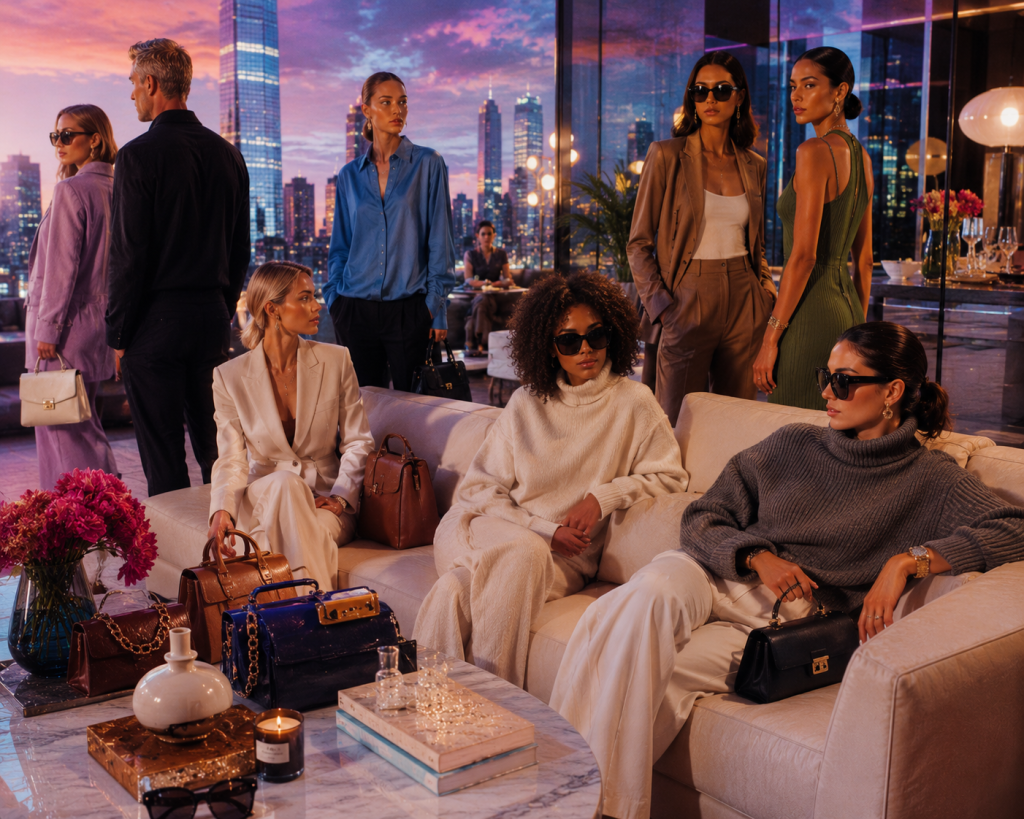
The 2020s opened with a pandemic that shuttered every runway, closed every boutique, and forced an industry built on physical spectacle to rethink its entire operating model. What followed ranks among the most turbulent half-decades in the history of fashion. Creative director chairs spun like revolving doors. A $5.8 billion acquisition reunited two Italian rivals under one roof. A movement called quiet luxury challenged four decades of conspicuous consumption. Fashion in the 2020s is the decade asking whether luxury needs to be loud to be valuable. The industry spent $100 billion answering that question both ways simultaneously.
The Pandemic Reset
COVID-19 closed fashion weeks globally in March 2020. For the first time, the industry confronted a question it had never faced: what is a fashion show actually for? Gucci under Alessandro Michele produced cinematic short films. Those films earned more views than physical shows ever attracted. Other houses discovered something unsettling. Removing the physical runway had no measurable impact on wholesale orders. Shows, it turned out, functioned as marketing events, not commercial necessities.
The pandemic also compressed a decade of consumer evolution into eighteen months. Athleisure, loungewear, and relaxed tailoring went from niche categories to dominant silhouettes overnight. Brunello Cucinelli’s cashmere sweats surged. Zegna’s luxury knitwear flew off shelves. Prada’s nylon everything became the fabric of lockdown. Traditional suiting contracted sharply.
Winners and Losers of the Lockdown Economy
Houses positioned as “quiet luxury” before the pandemic emerged strongest. Bottega Veneta, Loro Piana, and Hermes already sold the kind of understated, comfort-forward product that wealthy people wanted when nobody could see them. Their revenue recovered fastest. Logo-heavy brands faced a harder road. When you can not leave your apartment, a monogram bag loses its social utility.
E-commerce exploded from roughly 12% of luxury sales in 2019 to over 22% by 2021. Digital adoption that analysts predicted would take five years happened in five months. Houses that invested in online infrastructure before the pandemic (Burberry, Gucci, Louis Vuitton) gained market share. Houses that treated e-commerce as an afterthought scrambled to catch up. That digital divide became a competitive moat separating winners from laggards for the rest of the decade.
The Creative Director Carousel
No decade in fashion history has seen more creative director turnover than the 2020s. The revolving door started with tragedy. Virgil Abloh died of cardiac angiosarcoma at 41 in November 2021. His death ended the most culturally significant creative directorship at Louis Vuitton before anyone could determine its full commercial ceiling. Pharrell Williams replaced him. The appointment brought celebrity wattage but generated mixed critical reception.
The Domino Effect
Daniel Lee departed Bottega Veneta in late 2021 after tripling the brand’s cultural relevance in three years. Matthieu Blazy replaced him and continued the momentum. Then Blazy left for Chanel, the most prestigious appointment in fashion. Virginie Viard stepped down from Chanel after five years of commercial stability but insufficient cultural heat. The Wertheimer family chose Blazy’s craftsmanship over celebrity-driven alternatives.
Maria Grazia Chiuri departed Dior after quadrupling revenue to over $10 billion. Alessandro Michele left Gucci and resurfaced at Valentino. Sabato De Sarno took Gucci and lasted less than two years. Demna survived the BDSM campaign crisis at Balenciaga and then received Gucci, the most expensive creative bet in Kering’s history.
Why the Carousel Spins Faster
The velocity reflects a fundamental tension in modern luxury. Conglomerates need creative directors who generate cultural conversation and commercial growth simultaneously. Creative directors need houses offering creative freedom and sufficient budget. When those needs misalign, the relationship ends. Average tenure compressed from decades (Karl Lagerfeld’s 54 years at Fendi) to years (De Sarno’s 18 months at Gucci). The industry’s most important positions now function as high-stakes short-term contracts.
Social media accelerates the cycle. A new creative director generates enormous attention with a debut collection. The second collection gets less coverage. By the fourth, critics start asking what comes next. The attention economy rewards novelty over consistency. Houses that need consistent revenue growth find themselves trapped in a system that rewards constant disruption. That contradiction has no obvious resolution.
Quiet Luxury and the Bottega Effect
The “quiet luxury” movement dominated fashion discourse from 2022 to 2024. Its commercial template came from Bottega Veneta. Daniel Lee and then Matthieu Blazy proved that a brand without visible logos could generate $2 billion in revenue. The proposition was simple. Sell craft, material quality, and the flattering implication that the customer has moved beyond monograms. Charge a premium for the absence of branding rather than its presence.
The Succession Effect
Television amplified the trend. HBO’s “Succession” dressed its billionaire characters in Brunello Cucinelli, Loro Piana, and Zegna. None of these brands use visible logos. The show’s costume design argued that true wealth whispers while aspirational wealth shouts. Measurable sales increases followed at all three brands. Cucinelli’s revenue grew 24% in 2023. Loro Piana became LVMH’s quiet powerhouse. Zegna’s stock price rose 40% in the twelve months following the show’s final season.
The quiet luxury thesis had limits. Not every consumer wanted to whisper. Miuccia Prada’s Miu Miu simultaneously exploded into the Gen-Z conversation with the opposite proposition. Micro-minis, visible underwear waistbands, and deconstructed prep captivated younger consumers who found quiet luxury boring. Miu Miu’s revenue surged 35% in 2025. A 75-year-old Communist designing clothes for 22-year-olds proved that loud fashion and quiet luxury coexist perfectly when different demographics buy them.
The Prada-Versace Reunion
The decade’s most consequential business event landed in December 2025. Prada Group acquired Versace from Capri Holdings for $5.8 billion. The deal brought Versace back to Italian ownership after seven years under Michael Kors/Capri. It placed the loudest brand in Italian fashion under Miuccia Prada and Patrizio Bertelli, whose intellectual minimalism represents everything Versace is not.
The Strategic Logic
Donatella Versace remained as creative director. The arrangement created a fascinating tension: the loudest designer in Italian fashion now reports to the quietest. Whether that tension produces creative friction or corporate suffocation is the most interesting question in luxury right now. Donatella, characteristically, has shown no public concern. She has survived worse.
The acquisition transformed Prada Group from a two-brand company (Prada and Miu Miu) into a three-brand conglomerate. Combined revenue exceeds $7 billion. The move signaled that Bertelli’s conglomerate ambitions, dormant since the failed acquisitions of the early 2000s, returned with sufficient capital and strategic discipline to succeed. Among the Italian fashion houses, the Prada-Versace combination created a portfolio rivaling Kering’s Italian holdings (Gucci, Bottega Veneta, Valentino) in scale and prestige.
For Kering, the acquisition represented competitive escalation on multiple fronts. CEO Francois-Henri Pinault responded by appointing Demna at Gucci and accelerating investment in Bottega Veneta and Saint Laurent. Kering also purchased a 30% stake in Valentino in 2023, placing Michele at a Kering-affiliated house. The Italian luxury landscape now features two major conglomerate blocs competing for the same consumer. Prada Group fields Prada, Miu Miu, and Versace. Kering fields Gucci, Bottega Veneta, Valentino, Saint Laurent, and Balenciaga. LVMH, which owns Fendi, Dior, and Louis Vuitton, watches from a position of comfortable dominance. Bernard Arnault built a $200 billion empire while his competitors fought over the remaining market share.
Lagerfeld’s Shadow and Blazy’s Chanel
Karl Lagerfeld’s death in February 2019 continued shaping the 2020s through the succession challenges it created. Lagerfeld held Chanel and Fendi simultaneously for decades. No single death in fashion history created a larger creative vacuum. Replacing one concurrent creative directorship at one house is difficult. Replacing two at two houses simultaneously borders on impossible.
The Chanel Succession
Virginie Viard maintained Chanel’s $19.7 billion revenue machine for five years. Revenue grew. Stock watchers had no complaints. But the Wertheimer family needed cultural conversation alongside commercial performance. Luxury brands justify their price premiums through cultural relevance. Without it, a $10,000 jacket is just a jacket. Viard delivered reliability. The Wertheimers wanted electricity.
Blazy’s appointment from Bottega represented a clear signal. The Wertheimers chose craft over celebrity. They chose long-term stewardship over short-term spectacle. They chose the designer who made leather look like denim over the designer who would generate the most Instagram impressions. Early assessments suggest the bet is working. But the true test of any Chanel creative director is whether critics eventually stop comparing every collection to Lagerfeld’s 36-year body of work. That comparison may take a decade to exhaust.
The Kim Jones Multi-House Model
Kim Jones continued running Dior Men’s and Fendi womenswear simultaneously throughout the decade. The arrangement proved that Lagerfeld’s multi-house model could function in the post-Lagerfeld era. Jones maintained commercial momentum at both houses through the collaboration economy he pioneered. The Supreme x Louis Vuitton partnership, the Dior x Jordan sneaker, and the Fendace swap with Donatella Versace established the template for how luxury houses engage with streetwear, sports, and contemporary art audiences.
AI, Sustainability, and the Questions Nobody Has Answered
Two forces emerged during the 2020s that the industry acknowledged but did not resolve. Artificial intelligence began generating fashion designs, marketing copy, and consumer targeting with alarming sophistication. If AI can design a collection that sells, what exactly justifies a creative director’s salary? The answer, for now, is cultural authority. AI generates garments. It cannot generate the social permission to charge $5,000 for them. That distinction may hold for a decade. It may not hold for two. The creative directors who survive the AI era will be those whose cultural authority cannot be replicated by an algorithm.
Several houses experimented with AI-generated imagery for campaigns. Balenciaga used AI-rendered faces in advertising. Valentino explored AI-assisted textile design. Coperni generated viral attention with a robot spray-painting a dress onto Bella Hadid’s body on the runway. Each experiment tested a different boundary between human creativity and machine capability. None produced a definitive answer about where that boundary belongs.
The Sustainability Contradiction
Sustainability became the decade’s most discussed and least resolved challenge. Every major house published sustainability commitments. Few met them. The fundamental contradiction remains intact: luxury fashion sells novelty. Sustainability requires consuming less. No brand has resolved that tension in a commercially viable way.
Prada’s Re-Nylon collection, made from recycled ocean plastic, represented one of the most credible attempts. Zegna’s Oasi Cashmere program offered traceable fibers from certified sustainable farms. Hermes invested in mushroom-derived leather alternatives. Stella McCartney continued operating as the industry’s sustainability conscience. None of these efforts fundamentally altered fashion’s environmental footprint. The industry produces roughly 100 billion garments per year. Luxury accounts for less than 1% of that volume but attracts 100% of the scrutiny.
The China Reckoning
China’s luxury market, which accounted for roughly 35% of global luxury spending in 2021, contracted sharply during the mid-2020s. Post-COVID economic slowdown, youth unemployment, and a cultural shift toward domestic brands reduced Chinese consumers’ appetite for European luxury. Gucci, Burberry, and Saint Laurent reported double-digit revenue declines in Greater China. Houses that diversified their geographic exposure (Hermes into Japan and India, Cucinelli into the American market) weathered the correction more successfully than those dependent on Chinese growth.
The China reckoning forced luxury brands to reconsider a strategy that had driven growth for fifteen years: designing for the Chinese consumer first and treating the rest of the world as secondary. Houses now pursue geographic balance rather than geographic concentration. India, Japan, the Middle East, and Southeast Asia attract investment that previously flowed almost exclusively to Shanghai, Beijing, and Shenzhen. That strategic pivot will reshape product design, marketing spend, and retail investment for the rest of the decade. The next generation of luxury growth will come from consumers the industry has barely begun to understand.
What Fashion in the 2020s Is Still Deciding
Fashion in the 2020s has not settled its defining question: is luxury’s future quiet or loud? The quiet thesis (Bottega Veneta, Loro Piana, Armani, Hermes) argues that in a world saturated with logos and content, discretion is the ultimate status signal. The loud thesis (Demna at Gucci, Miu Miu’s Gen-Z provocation, Versace’s perpetual spectacle) argues that invisibility is commercial suicide. Both generate billions. Both have passionate advocates.
The market has not chosen. It may never choose. The coexistence of both philosophies is itself the defining characteristic of the decade. Quiet luxury and loud fashion serve different consumers, different occasions, and different psychological needs. The woman who carries a Bottega Pouch to a Sagaponack dinner party on Friday night wears Miu Miu to a gallery opening in Chelsea on Saturday. She is not confused. She is fluent in two languages of luxury. The brands that thrive in the 2020s are the ones that speak at least one of them with total conviction.
For the Hamptons social circuit, the 2020s have produced the most aesthetically diverse scene in East End history. A Ralph Lauren polo shirt and Bottega clutch at a Bridgehampton benefit. A Miu Miu micro-mini and vintage Chanel jacket at a Sag Harbor gallery opening. Off-White hoodies at Surf Lodge. Gucci loafers with fur lining at Meadow Lane dinners. Cucinelli cashmere at a Water Mill cocktail party. Valentino red at a Southampton charity gala. The dress code is no longer a code at all. It is a conversation, conducted in garments, about what luxury means when the old rules no longer apply. Every outfit is a position statement. Each benefit doubles as a fashion show. The magazine that captures the conversation is worth sponsoring because the conversation itself has become the content.
Where The Conversation Continues
Connect With Social Life
Social Life Magazine has covered the intersection of luxury fashion, power, and the Hamptons for over two decades. Our five summer issues, distributed from Memorial Day through Labor Day across the East End, reach 25,000 readers who define the season’s cultural conversation. From Westhampton to Montauk, this is the publication that brands trust when the audience matters more than the impression count.
We deliver an additional 15,000 copies to Upper East Side doorman buildings during fall and winter. Our 82,000 email subscribers receive curated editorial that blends fashion authority with Hamptons insider access.
Polo Hamptons, our signature sporting and lifestyle event in Bridgehampton, brings together the brands and personalities that shape luxury culture. Christie Brinkley hosts. Getty and McMullan photograph. The corporate cabana and sponsor activations create direct engagement with an audience that treats attendance as a social credential.
The Social Life Guest House in Sag Harbor offers select brands the opportunity to integrate into our editorial through experiential activations. It is a restored residence designed for content creation, product placement, and the kind of organic media coverage that feels editorial because it is.
Whether you are a luxury brand seeking Hamptons credibility, a wellness company building prestige positioning, or a financial services firm targeting high-net-worth audiences, Social Life Magazine offers a platform that combines print authority, digital reach, and experiential access in one integrated partnership.
Contact Cass Almendral, Head of Business Development, at [email protected] to discuss editorial features, event sponsorships, and brand activations for the 2026 season.
For Polo Hamptons corporate cabana inquiries, reach Justin Mitchell at [email protected].
Author
Written by
Recent Posts
The Skincare Habits That Make a Real Difference Over Time
Hamptons-Ready Beauty: Polished Makeup for Long Summer Days
Is Now a Good Time to Sell a Home in NJ?
The Hidden Work Behind a Seamless Hotel Weekend
Choosing Scratching Furniture for a British Shorthair
Categories
- Art
- Articles
- Business of Luxury
- Celebrities
- Culture
- Entertainment
- Events
- Faces of Summer 2026
- Fashion
- Fashion & Style
- Featured
- Finance
- Food, Spirits, Wine
- Hamptons
- Hamptons Celebrities
- Health
- Health & Beauty
- Lifestyle
- Luxury Lifestyle
- Press
- Profiles
- Real Estate
- Technology
- The Chronicles
- Travel
- Uncategorized
- Weddings